
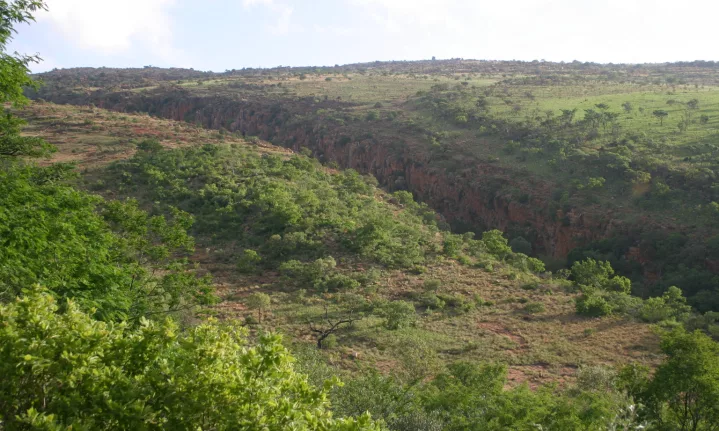
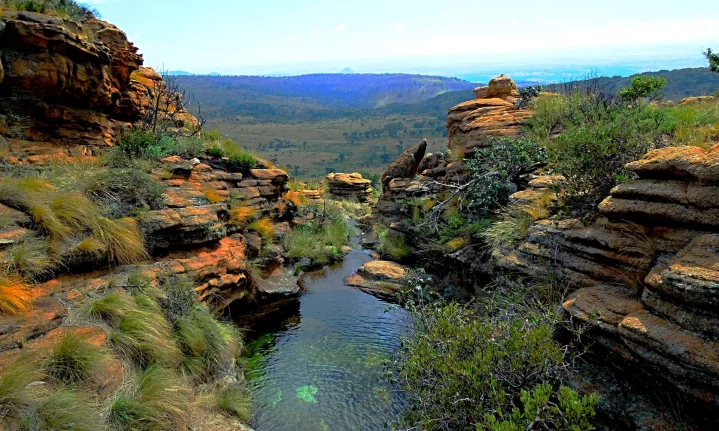
Most weekend visitors know a version of the Magaliesberg: a quick drive from Johannesburg or Pretoria, a country lunch, perhaps a hike, a spa treatment or a night away, and then the road back home.
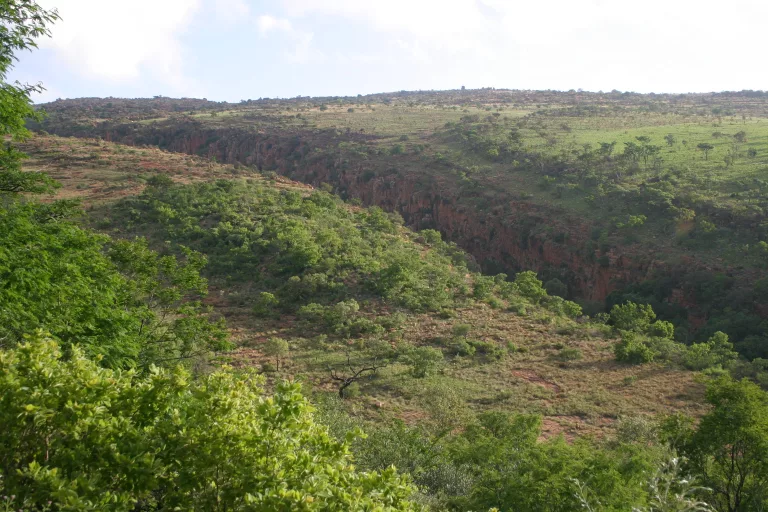
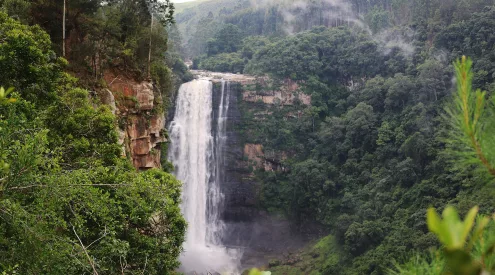
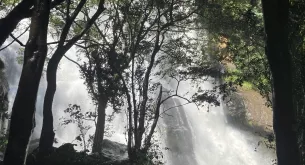
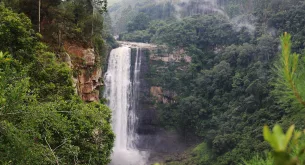
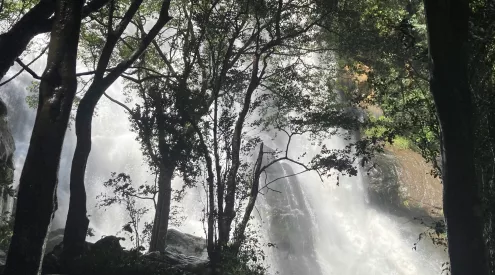
Hamerkop Kloof in the Magaliesberg / Paul venter / Wikimedia Commons
But if you spend a little more time here, the Magaliesberg gradually becomes less of a destination to tick off your bucket list and more of a landscape to explore.
The mountains stretch for about 120km, forming a region of ridges, cliffs, grasslands, bushveld and valleys. The Magaliesberg Biosphere Reserve was recognised by UNESCO in 2015 and is situated between the Central Grassland Plateaux and sub-Saharan savannah, with remnants of Afromontane forest adding another layer of character to its already rich biodiversity.
It’s also a landscape shaped by people. Stone Age and Iron Age sites, Tswana and Ndebele heritage, remnants of the South African Wars, old farmsteads, churches and cemeteries form part of the region’s deep cultural history.
Instead of choosing one lodge and one activity, venture out and take the old roads, follow the mountain line, stop at farms, eat something made locally and leave room in your backpack to explore.
Follow the mountain
The Magaliesberg Biosphere currently lists 67 hiking trails across the reserve, stretching from the Cradle of Humankind and Muldersdrift through Skeerpoort, Hekpoort, Magaliesburg, Maanhaarand and Mooinooi towards Rustenburg.
The trails are privately owned and operated, so access arrangements differ and should be checked before heading out.
There are routes through grassland and bushveld, walks along rivers and through kloofs, and trails that reach the rocky ridges of the range. At B’sorah, hiking routes range from short 2km walks to 15km trails, passing through riverine areas, forests, grassland and rocky outcrops.
Van Gaalen Trails provides another way into the landscape. Its network crosses more than 30 private farms in the Skeerpoort Valley, with more than 80km of routes for hiking, trail running, mountain biking and birding.
The Magaliesberg offers a softer weekend alongside its audacious side. A morning walk followed by a slow breakfast or a short trail before lunch is enough to experience the landscape without feeling like you’ve just subscribed to a premium fitness badge of honour.
Take the farm roads
The Magaliesberg is effortlessly intertwined with country roads, farm entrances and routes that lead away from the obvious tourist stops.
The R24 is the main road through Magaliesburg before continuing west towards Rustenburg, but the wider Magalies Meander strengthens the notion that the journey itself is another rewarding part of the experience.
A farm stall catches your attention. A sign points towards an art gallery. There is a coffee stop beneath trees, a trailhead further down the road or a farm where you can sit overlooking the mountains. At Van Gaalen Cheese Farm, travellers can browse locally made cheeses, take a guided cheese-making tour and have breakfast or lunch, or picnic beside the Skeerpoort River.
It’s the kind of stop that just works because there’s no need to overcomplicate it: good food, a view and the mountains beyond. And more often than not, simplicity is luxury.
Look for the old stories
The Magaliesberg’s geological history stretches back more than two billion years, while its human story comprises archaeology, early settlement, Tswana and Ndebele history and the conflicts of the colonial and South African War periods.
The Magaliesberg Biosphere’s Heritage Map brings together geological, palaeontological, archaeological and more recent historical heritage across the region. The Cradle of Humankind World Heritage Site also overlaps with parts of the area.
Look for historical sites along your route, visit a museum or book a specialist experience. Rob Milne Tours offers geoheritage and cultural heritage experiences covering geology, archaeology, battlefield history, astronomy and ecology.
Suddenly, the mountains become more than a backdrop. A ridge has a geological story. An old farm has history. A road becomes part of a much longer record of movement, settlement and conflict.
Make time for art
The Magaliesberg’s rural character has also created space for artists, makers, collectors and small creative businesses.
MelonRouge brings together food, art, antiques, vinyl records and books, while Voorhuis Art Gallery showcases décor, handmade glass, woodwork and work by local artists. The wider valley also hosts markets, workshops, tastings, live music and cultural events.
These are easy additions to a weekend because they don’t necessarily require an entire afternoon. It’s another side of the Magaliesberg, one that has very little to do with your hiking boots.
Eat your way through the valley
There is a specific agricultural character to the Magaliesberg, and food is one of the easiest ways to experience it. The region’s tourism listings include farm tables, cafés, breweries, farm stalls and restaurants, with local producers forming part of the experience.
Black Horse Estate combines a restaurant with a craft brewery and distillery, while Van Gaalen’s serves its own cheese alongside its farm restaurant and picnic setting.
At African Hills Safari Lodge, the restaurant draws on the history of the farm, which dates to the 19th century, with recipes inspired by an old recipe book found on the property.
For two: trade the city for the mountains
The Magaliesberg has long been associated with romantic escapes, and it’s easy to see why.
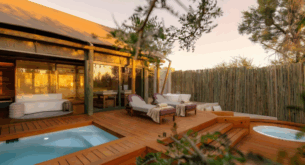
There are cottages tucked against the mountains, farm stays surrounded by grassland and bushveld, fireplaces for colder evenings and private patios opening onto the landscape. Phefumula has three self-catering cottages against the slopes of the Magaliesberg, each with a fireplace, spa bath and patio overlooking a protected nature reserve.
For something more restorative, the region has substantial wellness opportunities. African Hills Safari Lodge & Spa has treatment rooms, a couples’ room, steam rooms, gardens and outdoor relaxation areas, while the wider Magalies Meander includes several accommodation and spa properties.
The appeal is not simply the spa treatment or the accommodation. It’s the change in rhythm that comes with leaving the city behind.
A different kind of weekend
The Magaliesberg is not wilderness in the conventional sense. It’s a lived-in landscape, where farms, conservation areas, restaurants, creative spaces and communities sit alongside the mountains.
Take a trail,but leave time for lunch. Visit a heritage site, then stop at a gallery. Follow a farm road simply because it looks interesting. Book the spa treatment,but make time to sit outside afterwards.
The Magaliesberg has enough adventure for an active weekend, enough history for the curious and enough quiet corners for those looking to step away from the city for a while.
And perhaps that is the appeal. You don’t have to experience the Magaliesberg in one particular way. You can hike it, taste it, wander through it, learn from it or simply let the landscape lead you somewhere you hadn’t planned to go.
Follow us on social media for more travel news, inspiration, and guides. You can also tag us to be featured.
Instagram | Facebook | Twitter | Spotify
ALSO READ: