




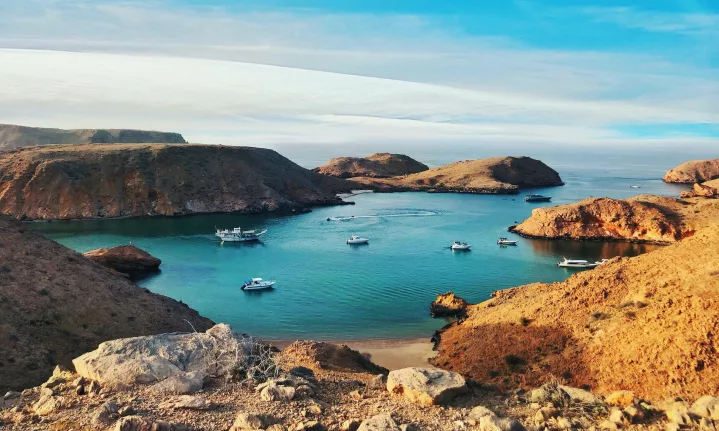
Muscat is an easy introduction to Oman. Whitewashed buildings, mosques, old forts and the Gulf of Oman give the capital a calm, polished feel. But beyond the city, the landscape begins to shift.
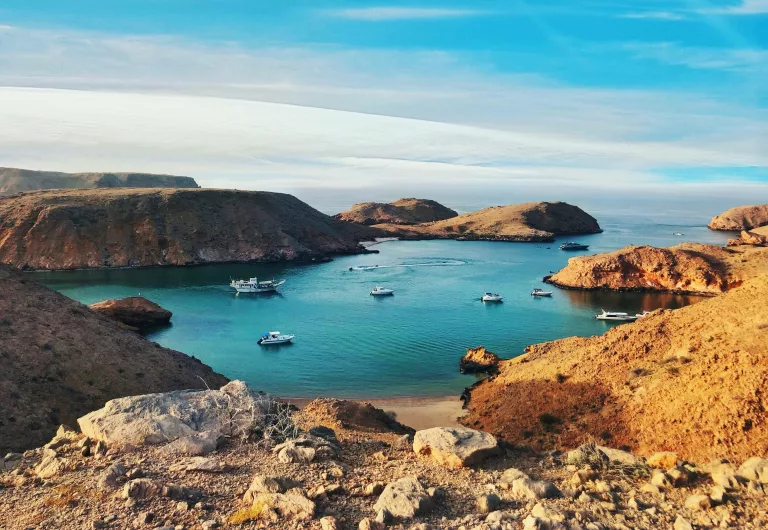
Oman / Katerina Kerdi / Unsplash
Within a few hours, the coast gives way to limestone mountains, palm-filled valleys and vast desert. This is the Oman worth hiring a car for, where a morning swim in a wadi can become an afternoon in the mountains and a night beneath the stars.
Sounds like the perfect day, right?
Follow the coast to Wadi Shab
Leaving Muscat, the road follows the Gulf of Oman towards Sur, with the Hajar Mountains rising inland. The coastline is dotted with fishing villages, beaches and dramatic limestone formations.
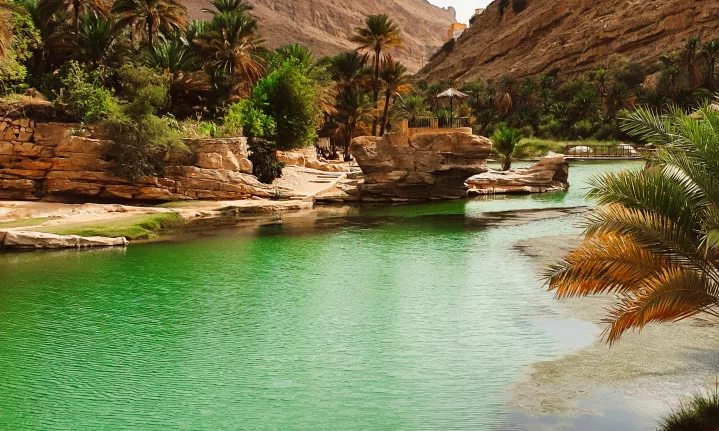
One of the first stops is Bimmah Sinkhole, a natural limestone depression filled with blue-green water. From here, continue to Wadi Shab, where a short boat crossing leads into a narrow valley lined with palms and clear pools.
The trail follows the wadi between steep limestone cliffs before reaching a series of pools. Further in, a narrow cave and waterfall can be reached by swimming through the water, making suitable swimming ability essential.
The contrast is what makes Wadi Shab memorable. Outside, the landscape is dry and sun-baked. Inside the valley, water, shade and greenery create an entirely different world.
Turn inland at Sur
Sur is a natural overnight stop, with a long maritime history and traditional dhow-building heritage.
From here, the road heads inland towards Wadi Bani Khalid. Water feeds a series of pools and channels through the Eastern Hajar Mountains, creating a green valley of palms and vegetation surrounded by dry, rocky slopes.
Across Oman, these watercourses and the traditional aflaj irrigation systems connected to them have shaped agriculture and settlement in an otherwise arid landscape.
Into the Sharqiya Sands
From Wadi Bani Khalid, continue towards Sharqiya Sands, also known as Wahiba Sands.
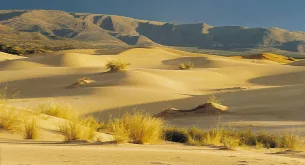
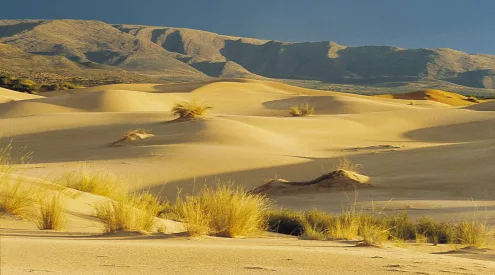
The mountains gradually flatten into open plains before the sand takes over. Dunes stretch towards the horizon, shifting from gold to deeper shades of red as the light changes.
The desert is home to Bedouin communities and a landscape adapted to extreme conditions. A night at a desert camp offers a chance to experience it without rushing through it. Watch the sunset from the dunes, let the temperature drop after dark and look up at a sky far removed from the glow of the cities.
After the movement of the road, the stillness feels surprisingly satisfying.
Climb into the Hajar Mountains
From the desert, head towards Nizwa, one of Oman’s historic centres. Its fort and souq make a natural stop before the road climbs into the Hajar Mountains.
Jabal Akhdar, or the Green Mountain, rises to 2,980 metres and is known for its cooler climate, terraced orchards and mountain villages. Pomegranates, apricots and other crops grow on the slopes, while rose cultivation has become one of the region’s most distinctive traditions.
During the flowering season, traditionally around March and April, roses are harvested in villages including Al Aqr, Al Ain, Al Sharijah and Saiq and distilled into rose water.
Stone terraces, orchards and irrigation channels reveal how communities have cultivated these mountains for generations.
Take the long way through the mountains
Near Nizwa, Misfat Al Abriyeen offers another glimpse of life shaped by the landscape. The old mountain village sits among date palms and terraced farms, with traditional houses built into the slopes.
The mountain roads themselves become part of the adventure, but this is where a little preparation matters. Certain routes require a four-wheel-drive vehicle, and conditions can change quickly in the mountains and wadis. The road trip works best when the journey is treated with respect rather than simply as a route between attractions.
The road beyond Muscat
The beauty of travelling through Oman is in the way the landscape changes. One day can begin in turquoise water at Wadi Shab, pass through the old port of Sur and end beneath the dunes of Sharqiya Sands. Another can move from Nizwa’s historic streets into the cooler air of Jabal Akhdar, where orchards and villages cling to the mountainside.
The landscapes don’t compete with one another. The wadis are about water and shade. The desert is about space and silence. The mountains reveal another side of Oman, shaped by agriculture, altitude and centuries of adaptation.
Muscat may be the introduction, but the road beyond it is where Oman really opens up. Leave room for detours, choose the right vehicle and resist the urge to fill every hour. Here, the road is not simply how you get somewhere. It’s the adventure.
Follow us on social media for more travel news, inspiration, and guides. You can also tag us to be featured.
Instagram | Facebook | Twitter | Spotify
ALSO READ: