

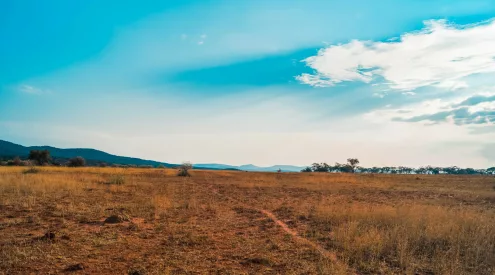



Deep in the rainforests of Central Africa, African forest elephants move through some of the continent’s most remarkable wilderness landscapes. Often hidden beneath dense canopies, these elusive animals are less frequently seen than their savanna relatives, yet their influence on the environment is enormous.
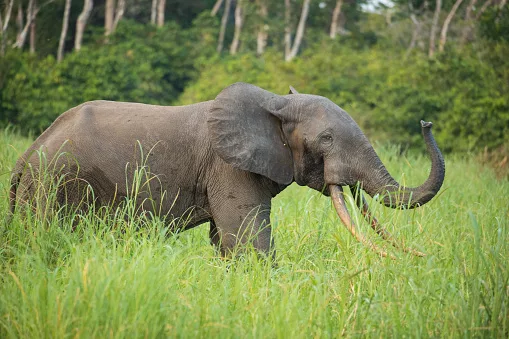
Forest elephant in profile with trunk raised in Loango National Park/By: Richard McManus/Getty Images
From dispersing seeds across vast distances to helping shape the structure of tropical forests, they play an important role in maintaining the ecosystems they inhabit.
Few countries are as important to their survival as Gabon. Covered by extensive rainforest and home to a significant proportion of the world’s remaining forest elephants, the country has become one of Central Africa’s most important conservation strongholds. But protecting these animals involves more than safeguarding a species. It means preserving connected habitats, addressing the illegal ivory trade and finding ways for wildlife and rural communities to coexist.
Meet Africa’s elusive forest elephants
The African forest elephant (Loxodonta cyclotis) is a distinct species, different from the more familiar African savanna elephant. Found primarily in the tropical forests of Central and West Africa, it has several physical characteristics suited to life beneath the rainforest canopy.
Forest elephants are generally smaller than their savanna counterparts, with straighter, downward-pointing tusks and more rounded ears. Their smaller stature helps them navigate dense vegetation, while their diet consists largely of fruit, leaves, bark and other plant material found throughout the forest.
Unlike elephants roaming open grasslands, forest elephants can be difficult to observe. Thick vegetation makes them challenging to track, and their movements often take them far from roads and frequently visited areas. They are particularly associated with forest clearings, known as bais, where mineral-rich soil and accessible water attract elephants and other wildlife.
These clearings offer some of the best opportunities to observe forest elephants in their natural habitat, although sightings are never guaranteed.
The elephants helping to shape the rainforest
Forest elephants are sometimes described as gardeners of the rainforest, and for good reason. Their feeding habits and extensive movements influence the distribution of plants and contribute to the regeneration of forest ecosystems.
Nature’s seed dispersers
Fruit forms an important part of the forest elephant’s diet. As they travel through the rainforest, elephants consume fruit and carry seeds over considerable distances before depositing them elsewhere through their dung.
This process, known as seed dispersal, helps plants colonise new areas and supports the regeneration of tropical forests. Some tree species depend heavily on large animals to transport their seeds, making elephants important contributors to the long-term health and diversity of these ecosystems.
Their movements also connect different parts of the forest, helping maintain ecological relationships that might otherwise be disrupted by fragmented habitats.
Creating space for other wildlife
Elephants influence their surroundings through feeding, trampling and the movement of vegetation. Their activities can alter the structure of forest habitats, creating opportunities for different plant species and other animals.
Forest clearings, or bais, are particularly important. These open spaces within dense rainforest often contain mineral-rich water and exposed ground that attract elephants, gorillas, buffalo and numerous other species.
At places such as Langoué Bai in Ivindo National Park, these natural gathering points provide researchers and visitors with opportunities to observe wildlife that would otherwise remain hidden beneath the canopy.
The relationship between elephants and forest regeneration is complex, however. Their impact varies according to the plant species, habitat and local conditions. What is clear is that their disappearance would have consequences extending well beyond the loss of a single species.
ALSO READ:
Africa’s biggest cities set for a shake-up, with Cape Town and Joburg slipping by 2050
A life on the move through Gabon’s forests
Understanding where forest elephants travel is an important part of protecting them. Their home ranges can extend across hundreds of square kilometres, taking them through different habitats in search of food, water and suitable conditions.
Research conducted in Gabon’s Wonga-Wongué Presidential Reserve has used GPS tracking to investigate their movements. A study involving 17 collared elephants found that they travelled an average of approximately 2,840km annually, with average home ranges of around 713 square kilometres.
These findings demonstrate why conservation cannot be limited to individual national parks or isolated patches of forest. Elephants need room to move, and their survival depends on maintaining connections between habitats.
Roads, settlements and agricultural development can disrupt these movements, increasing the likelihood of encounters with people and making some areas more difficult for elephants to access.
Protecting wildlife corridors and managing land beyond formally protected areas are therefore important parts of Gabon’s wider conservation efforts.
Gabon: A stronghold for forest elephant conservation
Gabon is one of the most important remaining habitats for African forest elephants. Its extensive rainforests form part of the Congo Basin, the world’s second-largest tropical rainforest region, which stretches across several Central African countries.
A nationwide survey published in 2021 estimated that approximately 95,000 forest elephants remained in Gabon. Although the estimate came with considerable uncertainty, it confirmed the country’s exceptional importance to the species.
Gabon has also established an extensive network of national parks, protecting important rainforest habitats and providing a foundation for wildlife research and conservation.
Minkébé National Park
Located in northern Gabon, Minkébé National Park protects a vast area of relatively intact rainforest. It has historically supported an important population of forest elephants, but it has also experienced severe poaching pressure.
Between 2004 and 2014, researchers estimated that the park lost approximately 78–81% of its forest elephant population, largely because of illegal ivory hunting. The scale of the decline highlighted how quickly even remote wilderness areas can be affected by organised poaching networks.
Loango National Park
On Gabon’s western coast, Loango National Park is known for its unusual combination of rainforest, lagoons, wetlands, beaches and coastal habitats.
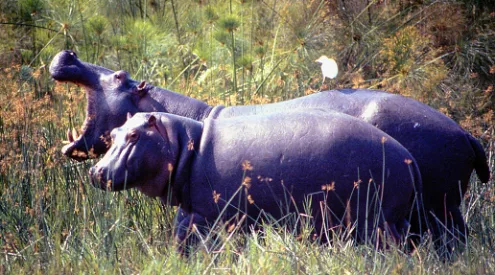
The park is particularly interesting because it demonstrates the diversity of environments used by forest elephants. It is also part of a wider landscape that supports gorillas, chimpanzees, hippos, buffalo and a variety of birdlife.
Its combination of coastal and forest scenery has made Loango one of Gabon’s most distinctive wildlife destinations.
Ivindo National Park
In eastern Gabon, Ivindo National Park protects extensive rainforest, rivers and spectacular waterfalls. It is also home to Langoué Bai, one of the country’s best-known forest clearings.
The clearing attracts forest elephants and other wildlife, making it an important location for ecological research and observation. Its remote setting also illustrates the challenges of monitoring wildlife in large, densely vegetated landscapes.
Lopé National Park
Lopé National Park offers a different perspective on Gabon’s natural environment, with a landscape where rainforest meets savanna. This combination of habitats supports a rich variety of wildlife and provides opportunities to study how animals use different environments.
The park is also recognised as a UNESCO World Heritage Site, reflecting its ecological and archaeological significance.
The challenges threatening forest elephants
Despite Gabon’s importance as a conservation stronghold, forest elephants remain classified as Critically Endangered. Their populations face several interconnected threats, many of which extend beyond national borders.
The ongoing threat of ivory poaching
The illegal ivory trade has had a devastating impact on forest elephants across Central Africa. Their relatively slow reproductive rates mean populations can take many years to recover from significant losses.
Even protected areas are vulnerable when poaching networks operate across remote forest landscapes. Minkébé’s dramatic population decline remains a stark example of the consequences.
Effective protection requires continued investment in anti-poaching patrols, intelligence gathering, law enforcement and cooperation between neighbouring countries.
Human-elephant conflict
As forests and agricultural areas increasingly overlap, encounters between elephants and people have become an important conservation concern.
Forest elephants sometimes raid crops, damaging fields and threatening the livelihoods of farming communities. For families who depend on their harvests, the loss of food or income can create considerable hardship.
This can lead to retaliatory action against elephants, undermining conservation efforts and creating tension between local communities and wildlife authorities.
Addressing the problem requires more than asking people to tolerate the presence of elephants. Practical measures, community involvement and support for affected households are essential to making coexistence possible.
In 2025, Gabon advanced a two-year initiative involving the government, the Wildlife Conservation Society and Space for Giants to support efforts towards more peaceful human-elephant coexistence.
Protecting forests beyond national parks
Although national parks provide important refuges, elephants do not recognise protected-area boundaries. Many move through forests used for timber production and other economic activities.
Responsible forest management, careful planning of infrastructure and the protection of wildlife corridors are therefore essential.
The challenge is finding ways to balance economic development with the ecological needs of a species that requires large, connected landscapes to survive.
Protecting more than a species
Gabon’s forest elephants represent something much bigger than one of Africa’s most remarkable wildlife populations. Their movements, feeding habits and relationships with other species are woven into the ecological functioning of the rainforest.
Protecting them means maintaining the forests that sustain countless other plants and animals, while also recognising the needs of people who share these landscapes.
The country’s conservation efforts demonstrate both the opportunities and difficulties involved in safeguarding large wilderness areas. Its national parks, research programmes and community initiatives provide important foundations, but long-term success will depend on sustained protection and cooperation.
For travellers, Gabon’s rainforests offer a glimpse into a side of Africa that is often overshadowed by its better-known savannas. Here, wildlife encounters can be quieter and less predictable, sometimes involving hours of waiting at a forest clearing for an elephant to emerge from the trees.
Follow us on social media for more travel news, inspiration, and guides. You can also tag us to be featured.
Instagram | Facebook | Twitter | Spotify
ALSO READ:
Deadly disease threatens hippos in one of Africa’s oldest national parks