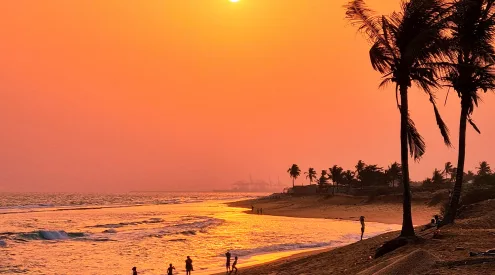



Dakar may sit on the Atlantic, but Senegal’s capital is about much more than its coastline. Over 48 hours, you can move through colourful markets and contemporary art to historic neighbourhoods, Senegalese food, live music and the deeply moving history of Gorée Island.
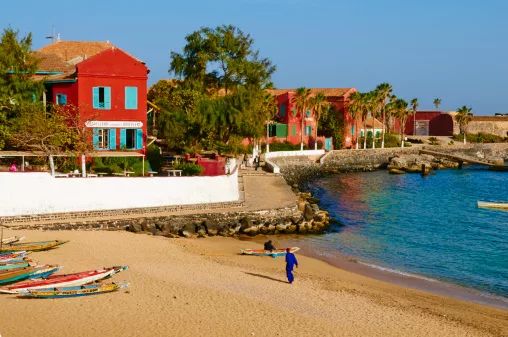
The Island of Goree/By: Tuul & Bruno Morandi/Getty Images
The city has a distinctly creative energy, with museums, galleries, artisan markets and cultural spaces woven into everyday neighbourhood life. Dakar’s official tourism information also points visitors towards its markets, museums, artisan centres and colourful local districts as some of the best ways to experience the capital.
Here’s how to spend two days getting to know Dakar beyond the beach.
Day 1: Markets, museums and the creative side of Dakar
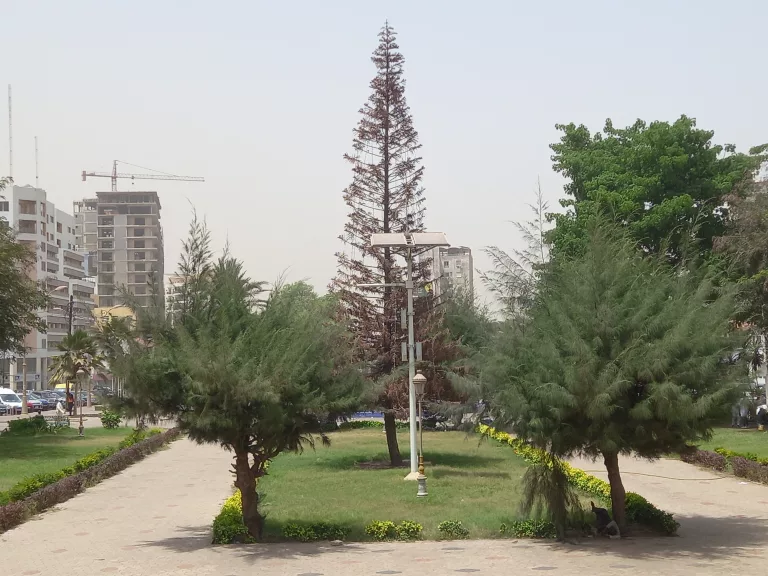
Place de l’indépendance de Dakar/Pamgueye/Wikimedia Commons
Start in Plateau
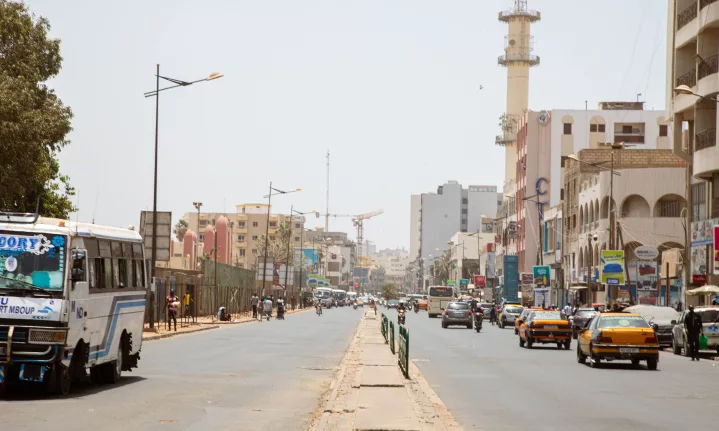
Begin your first morning in Plateau, Dakar’s central district, where colonial-era buildings, busy streets and markets provide an immediate introduction to the capital.
Make your way to Marché Kermel, one of Dakar’s best-known covered markets. Browse stalls filled with fruit, vegetables, flowers, spices and other everyday goods, while the surrounding streets provide a glimpse into the rhythm of city life.
The area is also close to Place de l’Indépendance, the port and Dakar’s historic railway station, making it easy to explore several landmarks on foot.
Rather than rushing between attractions, leave time to watch the city around you. Dakar is a place where markets, cafés, street sellers, craftspeople and commuters all become part of the experience.
Spend time with West African art
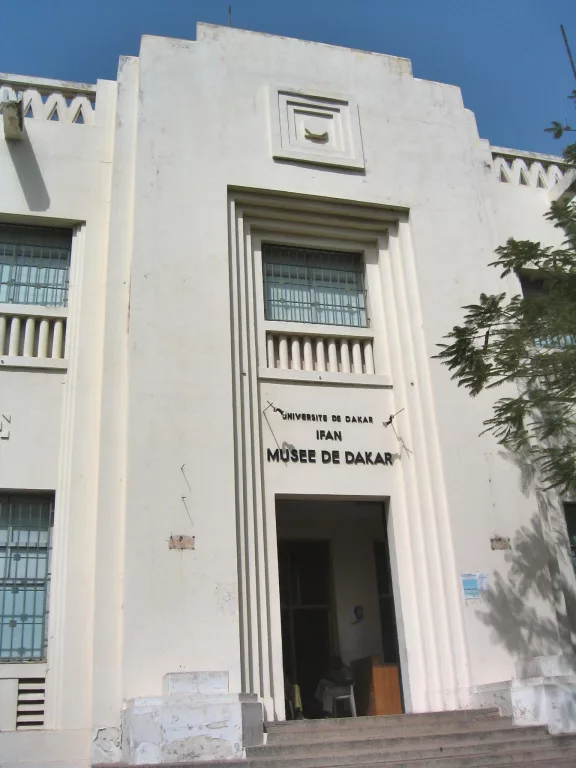
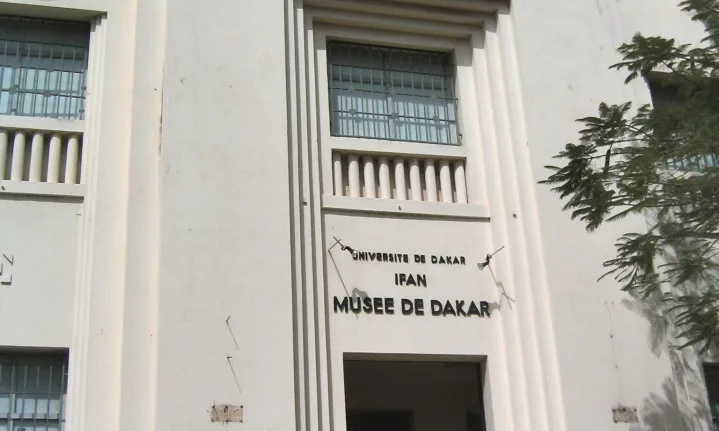
IFAN Museum of African Arts Théodore Monod/Ji-Elle, Public domain, via Wikimedia Commons
Continue to the IFAN Museum of African Arts Théodore Monod, one of Dakar’s important cultural institutions. Housed in a building dating to the colonial period, the museum holds an extensive collection of African art, including masks, sculptures, jewellery, textiles, ceramics and musical instruments.
The museum provides useful context for understanding the wider artistic culture of West Africa before you explore Dakar’s contemporary scene.
If contemporary African art is more your interest, look out for Dakar’s galleries and independent creative spaces. The city has long been an important centre for contemporary African art, with the Dak’Art biennale adding an international dimension to its creative reputation.
Another option is Musée Boribana, which focuses on contemporary African and diaspora art and has a collection spanning sculpture, painting, photography and video.
Take the city into the afternoon
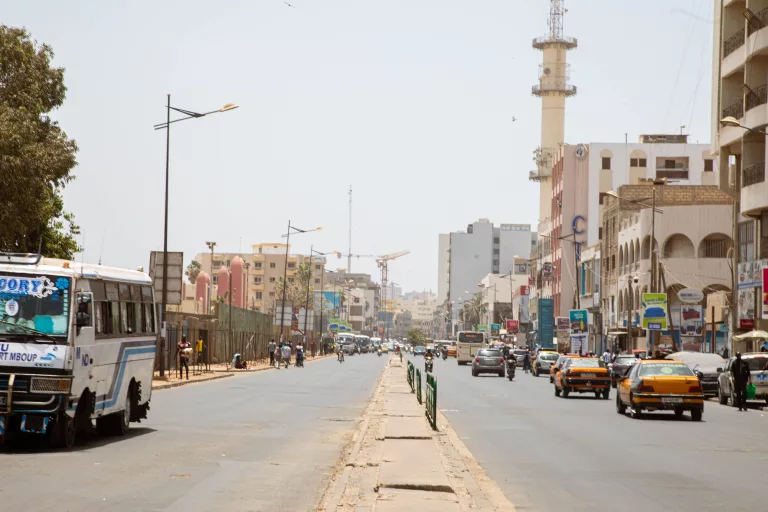
Médina, Dakar/Ozomedia/Wikimedia Commons
Leave the museums behind and explore one of Dakar’s neighbourhoods without trying to tick off every attraction.
Médina is a good place to experience a busier, more local side of the capital, with shops, tailoring businesses, food stalls and street life unfolding around you.
Dakar’s tourism authorities describe the city as one to discover through its markets, artisan centres and colourful, lively neighbourhoods, rather than simply through its formal attractions.
For a different perspective, head towards Soumbédioune, known for its fishing community and artisan market. The market is one of the city’s established craft centres, while the fishing activity adds another layer to the experience.
Eat your way through Senegal
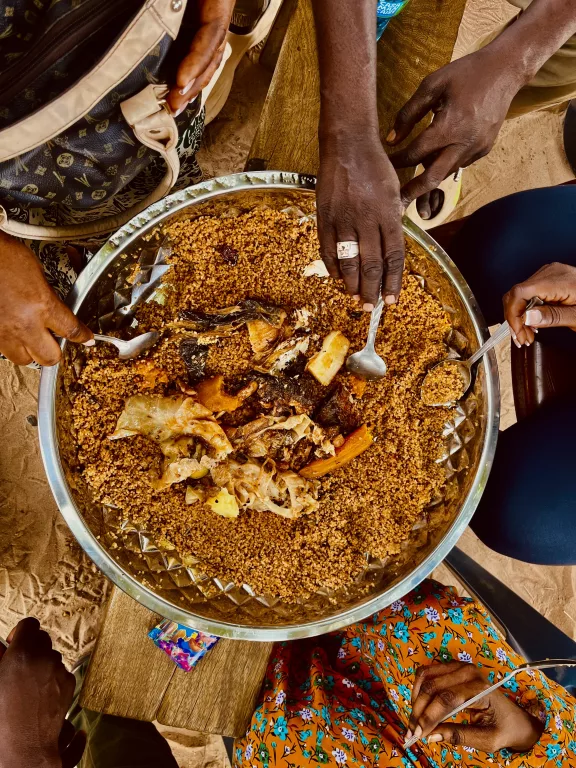
Thiéboudienne (rice and fish dish)/CelmaKoumba/Wikimedia Commons
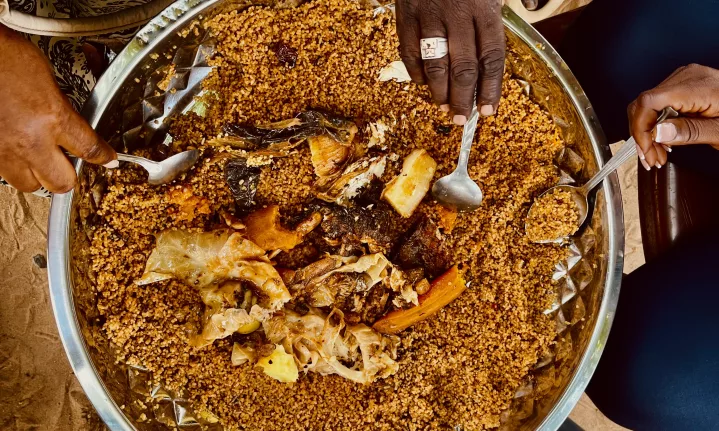
Senegalese food deserves more than a passing mention, particularly thiéboudienne, the country’s famous rice and fish dish. Other staples worth seeking out include chicken yassa, mafé and a variety of grilled meats, fish and street-food snacks.
Dakar’s food scene ranges from informal neighbourhood eateries to restaurants serving more contemporary interpretations of Senegalese cooking. The best approach is to leave room for a few different tastes rather than planning every meal around one restaurant.
End with music
Dakar after dark has its own energy.
Look for a venue hosting mbalax, the Senegalese popular music style associated with artists such as Youssou N’Dour, or seek out a live performance taking place during your visit.
Music is not simply an evening attraction in Dakar. It is part of the city’s cultural identity, and cultural venues across the capital regularly host performances and events. Dakar’s 2026 cultural calendar, for example, has included music events staged at venues such as the Musée des Civilisations Noires.
ALSO READ:
Mto wa Mbu: The small Tanzanian town turning a safari stop into a destination
Day 2: Gorée, memory and everyday Dakar
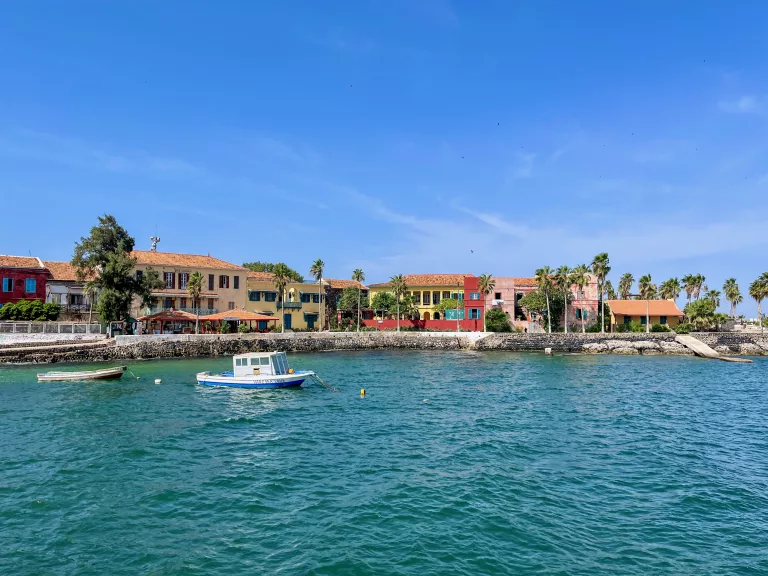
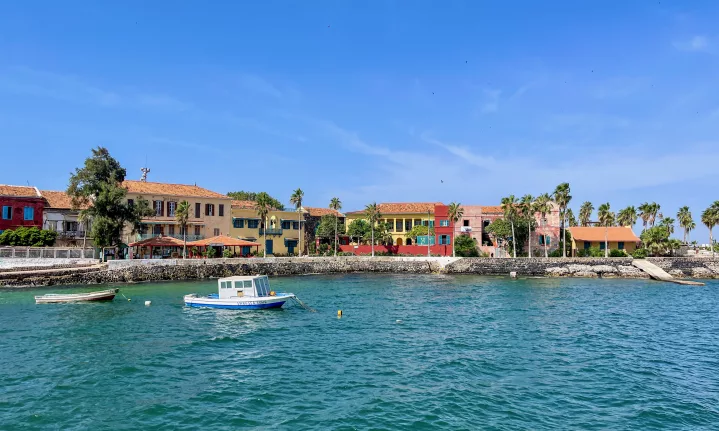
Gorée Island/Fawaz.tairou/Wikimedia Commons
Take the ferry to Gorée Island
Set aside the first half of your second day for Gorée Island, reached by ferry from Dakar.
The crossing is short, but the experience changes dramatically once you arrive. Gorée is known for its colourful colonial-era buildings, narrow streets and bougainvillea, but its significance goes much deeper.
The island is a UNESCO World Heritage Site and an important place of remembrance connected to the history of the transatlantic slave trade. UNESCO describes Gorée as a “memory island” and recognises its exceptional testimony to the history of human exploitation.
Visit the House of Slaves
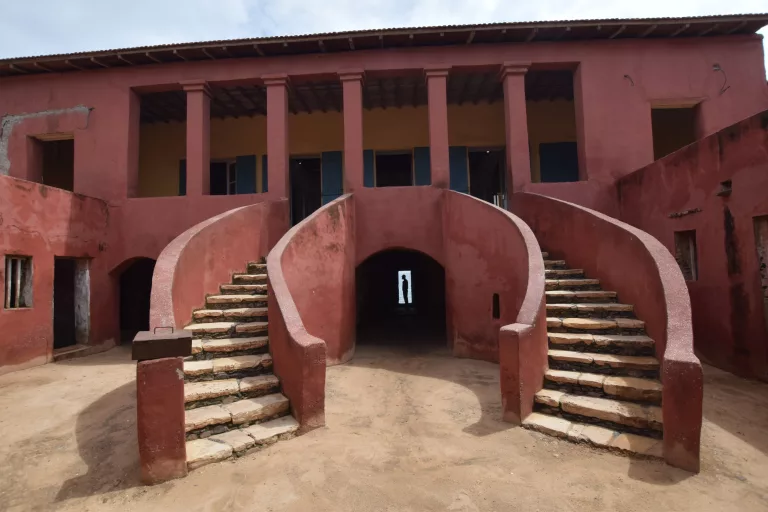
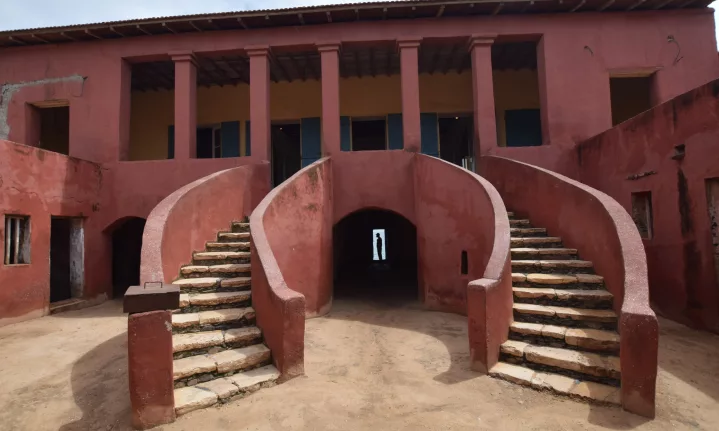
House of Salves/Charlottedkr/Wikimedia Commons
The Maison des Esclaves, or House of Slaves, is the island’s best-known historical site.
The building dates to 1776 and is now a museum and memorial. Its exhibitions and architecture focus attention on the history and human cost of the slave trade.
The site deserves a respectful visit rather than being treated as simply another stop on a sightseeing itinerary. The history of Gorée is complex, and historians have debated the island’s precise role and scale within the wider transatlantic slave trade. Its importance today also lies in its role as a place of remembrance and reflection.
After visiting the museum, take time to walk through the island’s quiet streets, see its historic buildings and explore its smaller museums and galleries.
The absence of cars makes walking particularly pleasant, and the island can feel markedly slower than Dakar across the water.
Return to Dakar for Soumbédioune
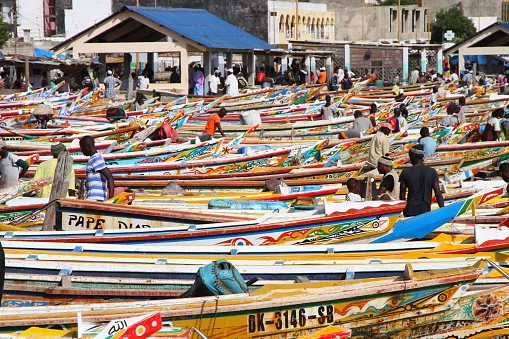
Soumbedioune fish market in Dakar, Senegal/By: giuliano2022/Getty Images
Back on the mainland, spend part of the afternoon around Soumbédioune.
The area combines fishing and craft traditions, offering a more everyday view of Dakar than the formal museums and historic monuments. Dakar’s tourism ministry identifies Soumbédioune as a major artisan centre, alongside the city’s other markets and neighbourhood attractions.
Browse locally made crafts, watch the activity around the fishing community and take in the atmosphere before continuing along the coast.
The point here isn’t necessarily to buy something. It is to see how traditional skills, commerce and daily life remain part of a rapidly changing capital.
See Dakar from above
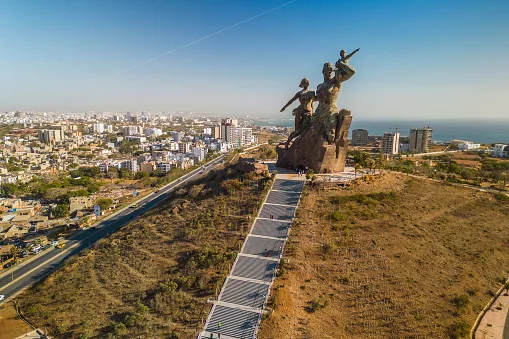
Aerial view of the African Renaissance Monument/By: mirko zanoni photo/Getty Images
Before your final evening, make your way towards the African Renaissance Monument.
The enormous monument stands on one of Dakar’s highest points and offers broad views over the city and Atlantic coastline. It is also an opportunity to reflect on Dakar’s place within the wider story of modern Africa.
If time allows, continue towards the Mamelles, the two volcanic hills on the Cap-Vert peninsula. The area is one of the landmarks highlighted by Senegal’s tourism authorities and provides another perspective on the capital beyond its central districts.
Finish with one more taste of Dakar
For your final evening, return to the food.
Try another Senegalese speciality, order something from a neighbourhood restaurant or seek out a place where locals gather for music and conversation.
After two days, the most memorable part of Dakar may not be a single attraction. It is the contrast between its busy markets, creative spaces, historic streets, fishing communities and music-filled evenings.
The Atlantic is always there, but you barely need the beach to understand why Dakar is one of West Africa’s most compelling cities.
Getting around
Dakar is a large, busy city, so build some flexibility into a 48-hour itinerary. Traffic can make journeys between neighbourhoods take longer than expected.
Gorée is reached by the Dakar-Gorée ferry service from the port. The Port of Dakar publishes current crossing times and fares, so check the official schedule before setting out.
For neighbourhood exploration, walking works well in compact areas, while taxis and other local transport are useful for longer journeys.
If you are visiting Gorée specifically for its historical sites, check opening arrangements before travelling. The Senegalese culture ministry currently lists the House of Slaves as closed on Mondays.
When to go
Dakar can be visited throughout the year, but the experience changes with the weather and cultural calendar.
For travellers particularly interested in art, music and cultural events, it is worth checking what is happening in the city before booking. Major festivals and exhibitions can add another dimension to a short stay.
Follow us on social media for more travel news, inspiration, and guides. You can also tag us to be featured.
Instagram | Facebook | Twitter | Spotify
ALSO READ: