



On South Africa’s Wild Coast, rivers don’t always make a gentle journey to the ocean. At Waterfall Bluff in the Eastern Cape, one plunges over a dramatic coastal cliff and drops almost directly into the Indian Ocean.
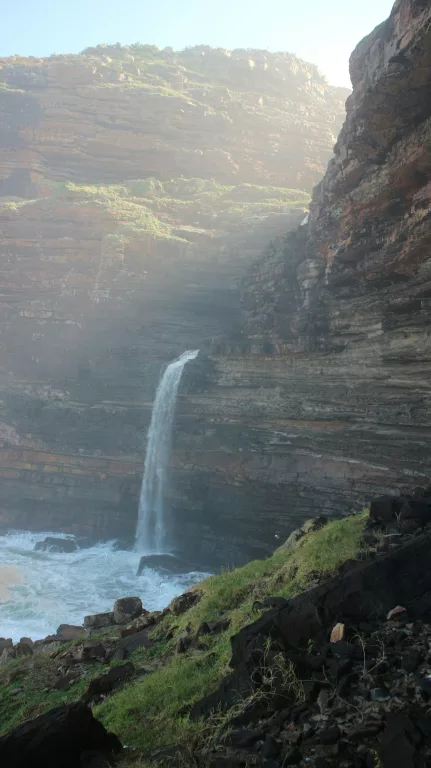
Photo: Unsplash
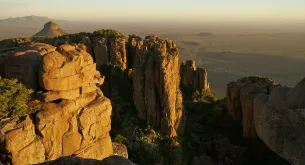
It is the kind of landscape that makes the Wild Coast famous: green grasslands, sheer cliffs, secluded beaches and rivers cutting through the rugged Pondoland landscape before meeting the sea. Waterfall Bluff, near Mbotyi and south of the Msikaba River, is one of its most unusual natural sights.
Where is Waterfall Bluff?
Waterfall Bluff is found along the Wild Coast in the Eastern Cape, between Port St Johns and the Mkambathi Nature Reserve. The area forms part of the rugged Pondoland coastline, known for its steep cliffs, river gorges and largely undeveloped coastal scenery.
The bluff is associated with the Egosa Fault, a geological feature that contributes to the dramatic cliffs along this section of coastline. At Waterfall Bluff, waterfalls drop from the high coastal landscape towards the ocean, with the largest falls plunging close to 100 metres according to the Pondoland Marine Protected Area.
The result is an unusual meeting of freshwater and sea: instead of flowing into a conventional river mouth or estuary, the water drops from the cliffs straight towards the waves below.
A waterfall that falls into the ocean
The waterfall at Waterfall Bluff is fed by the Mlambomkhulu River, whose name translates roughly as ‘big river’. The river reaches the edge of the Wild Coast cliffs before making its spectacular descent towards the sea.
Waterfall Bluff is particularly striking because of the height of the surrounding cliffs. The Pondoland Marine Protected Area describes waterfalls here dropping nearly 100 metres directly into the ocean, making this a rare geological and coastal feature.
It is also worth noting that the waterfall is not the same attraction as the better-known Horseshoe Falls and Mkambathi Falls inside nearby Mkambathi Nature Reserve. Mkambathi has its own series of waterfalls, including one where the river eventually drops into the ocean, while Waterfall Bluff refers to the dramatic coastal waterfall landscape farther along the Wild Coast.
Why the Wild Coast is so dramatic
The waterfall makes more sense when you look at the landscape around it. Northern sections of the Wild Coast are characterised by rivers cutting through hard coastal terrain, with steep cliffs forming where the waterways meet the ocean.
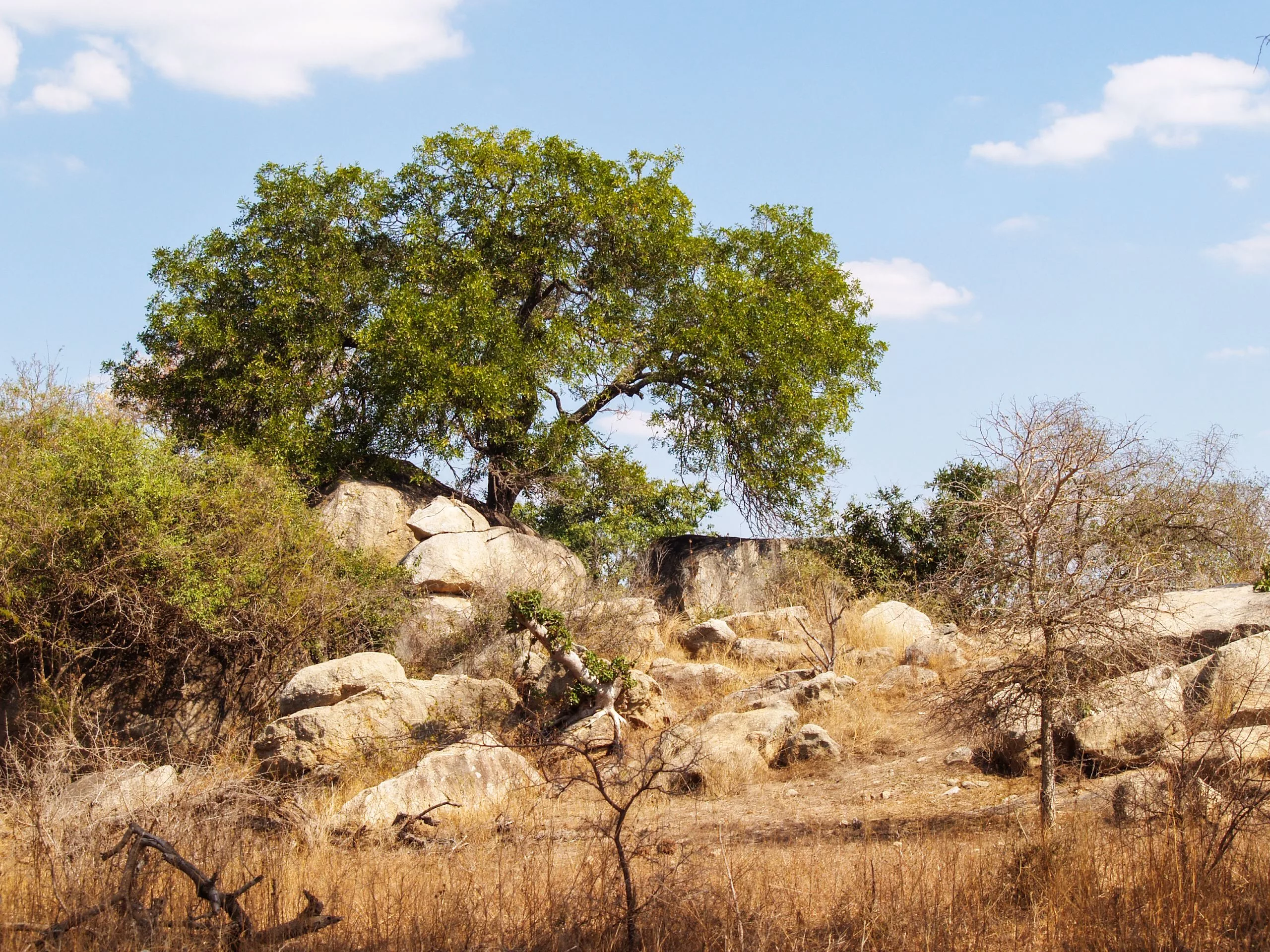
The result is a coastline of deep gorges, rocky headlands, waterfalls and small beaches tucked between cliffs. The nearby Mkambathi Nature Reserve protects 7 720 hectares of this landscape, including grasslands, indigenous forests, wetlands, river gorges and a roughly 10-kilometre stretch of rugged coastline.
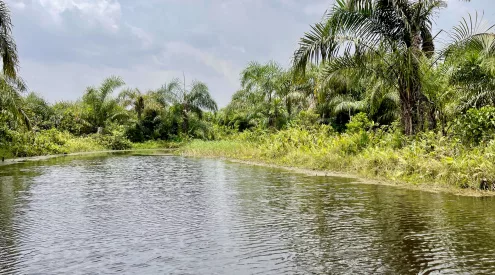
The area is also part of the Pondoland Centre of Endemism, a botanically important region with plant species that are found nowhere else. The coastal reserve supports a variety of wildlife and birdlife, while Cape vultures can be seen around the cliffs of the Msikaba gorge.
How to see Waterfall Bluff
Waterfall Bluff is not the sort of attraction where you can simply park next to a sign and walk a few metres to a viewpoint. Reaching it involves hiking through the Wild Coast landscape, which is part of what makes the experience so special.
The Waterfall Bluff hiking route is listed as a point-to-point trail of about 15.8km, with around 311m of elevation gain. It is considered moderately challenging and takes roughly four hours, although conditions and individual fitness will affect the time.
Longer Wild Coast hiking routes also pass through the area. The broader Wild Coast Hiking Trail stretches for hundreds of kilometres, but hikers can tackle shorter sections rather than attempting the entire route.
For visitors staying around Mkambathi or Mbotyi, the waterfall can therefore form part of a longer Wild Coast adventure rather than a quick sightseeing stop.
What else can you see nearby?
Waterfall Bluff is surrounded by some of the Wild Coast’s most striking scenery. Nearby Mkambathi Nature Reserve is home to a series of waterfalls, including Horseshoe Falls, Strandloper Falls and Mkambathi Falls, as well as forested river gorges and coastal grasslands.
The reserve’s coastline is also close to Cathedral Rock, a distinctive pyramid-shaped rock formation rising from the ocean. The wider area offers opportunities for hiking, fishing, canoeing and wildlife viewing, although much of the landscape remains rugged and remote.
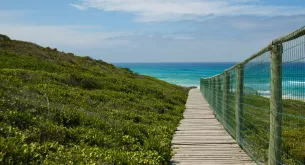
This is a part of South Africa where the journey is very much part of the attraction. There are no polished promenades or busy viewing platforms. Instead, you walk through grassland and coastal wilderness before the landscape suddenly opens up to cliffs, ocean and falling water.
When to visit Waterfall Bluff
The Wild Coast has a warm, humid coastal climate, with most of Mkambathi’s rainfall occurring between September and February. March is generally the wettest month, while June is typically the driest. Strong coastal winds can also affect conditions.
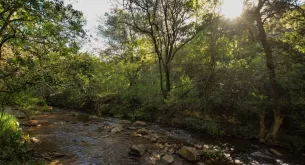
For hiking, always check local conditions before setting out, particularly after heavy rain. River crossings, slippery ground and exposed coastal sections can become more challenging in wet or windy weather.
Waterfall Bluff is best approached as a wilderness experience rather than a conventional sightseeing attraction. Give yourself enough time to walk the route, take in the surrounding landscape and, most importantly, allow for changing conditions.
ALSO SEE: Waterfall Camp: Where the road ends and wonder sets in