



Before weather apps could tell us whether to pack an umbrella, people had another option: look up.
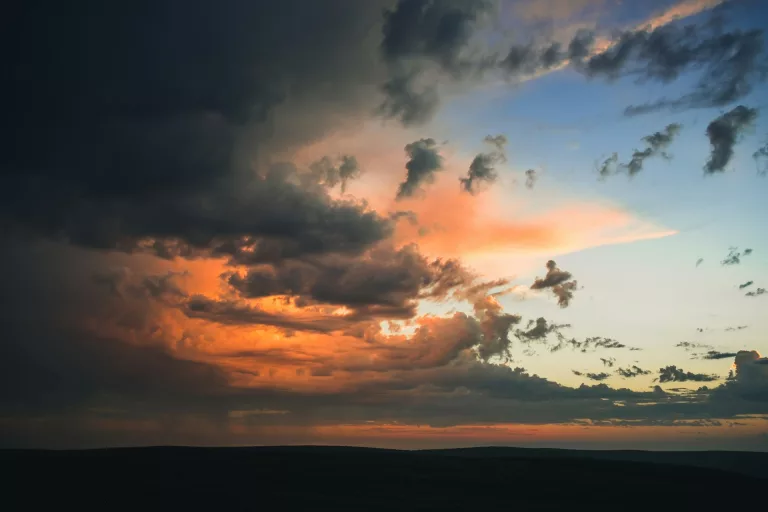
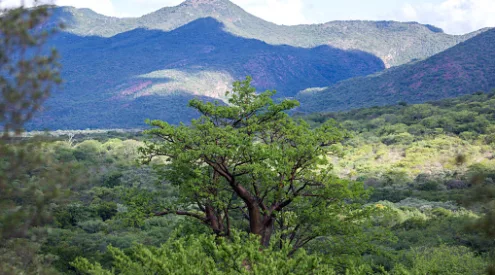
Addo, South Africa/Matthijs van Schuppen/Unsplash
Across the country, generations of farmers, hikers, fishers and rural communities have learned to pay close attention to the landscape. Clouds gathering over a mountain, a sudden shift in wind, the smell of damp earth or animals changing their behaviour can all offer clues about what the weather is doing. These observations are not a substitute for modern meteorology. They are a reminder that the natural world is constantly responding to atmospheric changes, often before we consciously notice them.
Look up: the language of clouds
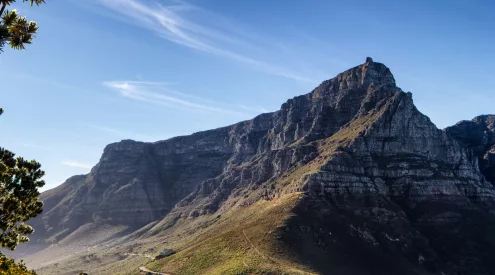
Clouds are one of the oldest weather clues around. Their shape, height and movement can reveal what is happening in the atmosphere. In the Drakensberg, towering cumulonimbus clouds can signal the arrival of summer thunderstorms. Around Cape Town, a blanket of cloud spilling over Table Mountain is familiar enough to have earned its own nickname: the tablecloth.
Cloud watching also has a practical side. Dark, vertically developing clouds, especially when accompanied by thunder, can indicate a developing storm. Wispy high clouds can signal changes higher in the atmosphere, sometimes appearing ahead of a weather system. The trick is learning to see clouds as part of a bigger picture rather than treating one formation as a guaranteed forecast.
Feel the wind
South Africans have some wonderfully dramatic names for their winds, and they can tell us plenty about regional weather. Cape Town’s Cape Doctor is the famous southeaster that sweeps across the city during summer. Strong winds can clear clouds, reshape the coastline and influence fire behaviour, while the direction and strength of winds elsewhere can affect rainfall and temperature.
The berg winds of the interior are another example. These hot, dry winds can occur when air descends from higher elevations towards the coast, causing temperatures to rise rapidly. For people living close to the land, noticing a familiar wind arriving from a particular direction could be useful information. Today, a weather station can quantify it. Previously, experience provided the reference point.
Watch what is growing
Plants are also keeping their own seasonal calendar. Flowering, budding, fruiting and leaf loss are influenced by factors including temperature, rainfall and daylight. In South Africa, where climates range from winter rainfall in the southwest to summer rainfall across much of the interior and east, seasonal changes can look very different from one region to another.
The flowering of Namaqualand after good winter rains is an obvious example. In the Highveld and bushveld, the arrival of summer rainfall can transform dry landscapes remarkably quickly, triggering new plant growth and setting off a chain of activity among insects and other animals.
Can animals predict rain?
This is where weather lore gets especially interesting.
You may have heard claims that animals become restless before storms, insects appear in greater numbers before rain or birds behave differently ahead of changing weather. There is some science behind the broader idea that animals respond to weather-related environmental changes. Many species are sensitive to temperature, humidity, air pressure, wind and changes in food availability. These cues can influence feeding, movement and shelter-seeking behaviour.
That does not mean an animal can reliably predict tomorrow’s forecast. A bird taking shelter before a storm may be responding to conditions that have already changed. An insect emerging after rainfall may simply be responding to moisture and temperature. The animal is reacting to its environment rather than consulting its own miniature weather app.
Read the land
Some of the most useful clues are remarkably ordinary. Damp soil, dust moving across a road, changes in visibility, a sudden chill or clouds building over a distant mountain can all tell an experienced observer something about current conditions.
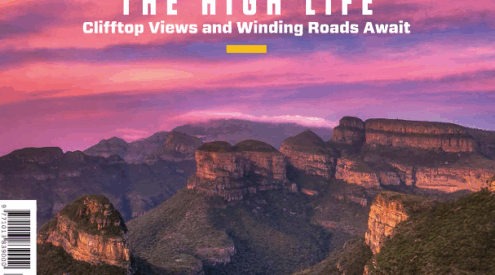
In the Cederberg, Drakensberg and Golden Gate Highlands, mountain weather can change quickly. Along the Wild Coast, wind, cloud and ocean conditions can transform the character of the coastline within hours. In the Kalahari, a growing bank of thunderclouds on the horizon can signal the possibility of dramatic summer storms. The landscape is different in each place, so the knowledge becomes local too.
The old weather app was experience
Modern forecasts give us something previous generations could never access: detailed observations, radar, satellite imagery and numerical weather models. They are enormously useful, particularly when severe weather is approaching. But there is something satisfying about knowing that the landscape itself is also full of information.
The next time you’re hiking in the Drakensberg, standing beneath Table Mountain or watching clouds gather over the Kalahari, put your phone away for a moment. Look at the sky. Feel the wind. Notice what the plants and animals are doing.
You might not know exactly what tomorrow will bring, but you may start noticing that the landscape has been giving you clues all along.
Follow us on social media for more travel news, inspiration, and guides. You can also tag us to be featured.
Instagram | Facebook | Twitter | Spotify
ALSO READ: