


The world is home to some extraordinary coastlines, from remote stretches of sand shaped by volcanic activity to small coves with unusual geological features. Some are known for their striking colours, while others have fascinating stories behind their landscapes.
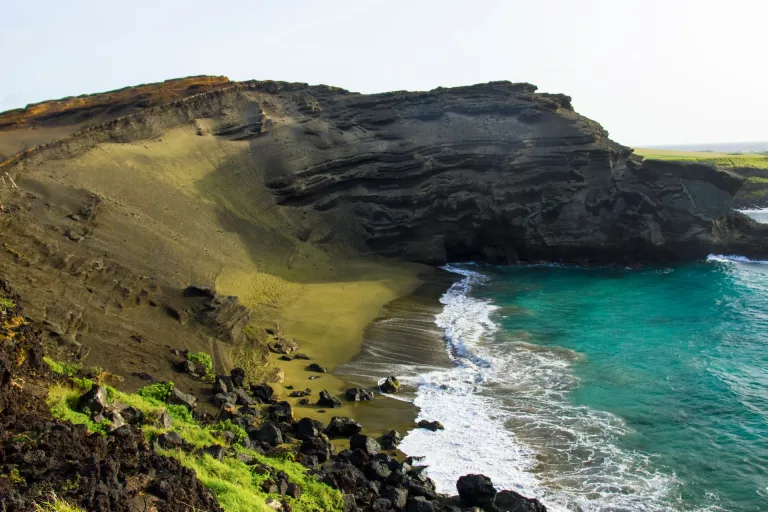
Photo: Pexels
Here are 15 of the world’s most unusual beaches to add to your travel bucket list.
1. Boulders Beach, South Africa
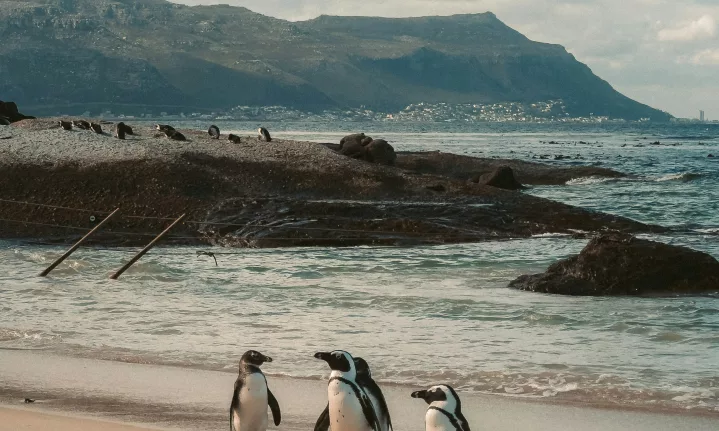
Why it is unusual: It is home to a land-based colony of endangered African penguins.
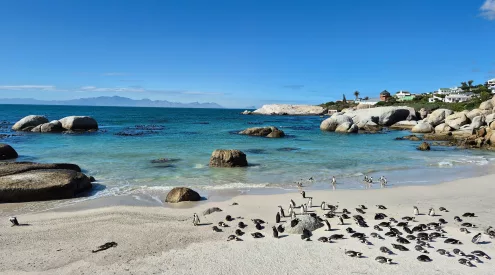
Boulders Beach near Simon’s Town is one of the few places where you can see African penguins living in close proximity to people.
The beach forms part of Table Mountain National Park and is characterised by large granite boulders that create sheltered coves along the False Bay coastline. The African penguin colony became established here in 1983, when a pair began breeding in the area. It has since become one of Cape Town’s best-known wildlife attractions.
The penguins are wild animals, however, and visitors should never feed, touch or attempt to approach them. Boardwalks allow visitors to see the colony while helping to protect nesting areas.
Boulders is also unusual in another respect: you can swim at a beach where African penguins are living nearby.
Good to know: The beach can become busy, so an early visit is worthwhile. Follow SANParks’ instructions and give the penguins plenty of space.
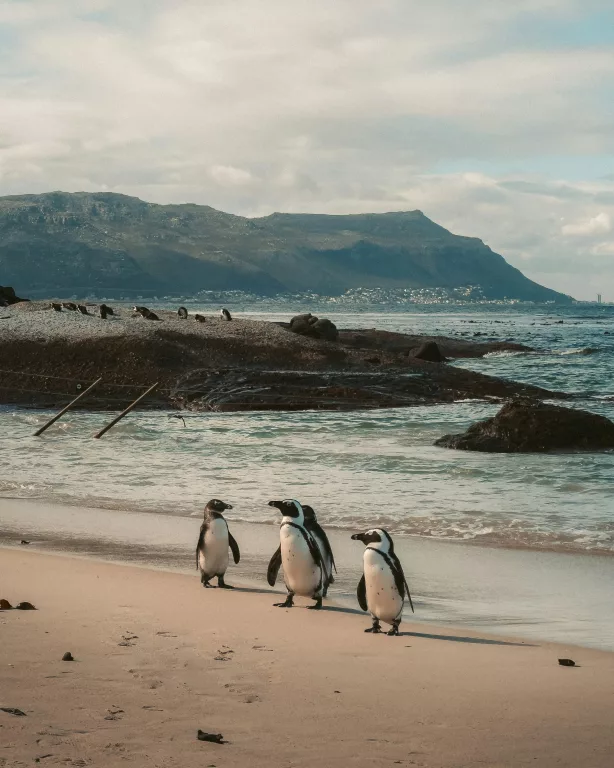
Photo: Unsplash
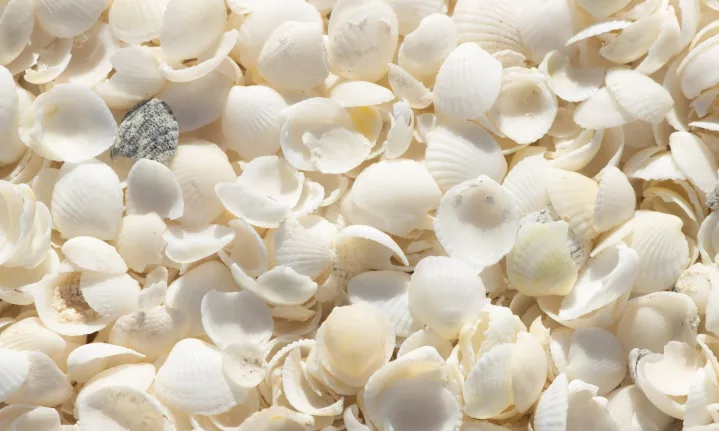
2. Shell Beach, Australia
Why it is unusual: The shoreline is made almost entirely from tiny shells.
Western Australia’s Shell Beach is exactly what its name suggests, but the scale of it is difficult to comprehend until you see it.
Located in the Shark Bay World Heritage Area, the beach stretches for about 70km and is made up of billions of tiny shells from the Hamelin cockle, Fragum erugatum. The unusually salty water in Shark Bay creates favourable conditions for the cockles, allowing their shells to accumulate over enormous periods.
In places, the shell deposits can be several metres deep.
The result is a brilliant white shoreline that can look more like crushed porcelain than a conventional sandy beach.
The hypersaline water also makes floating easier, although visitors should still take normal precautions when swimming.
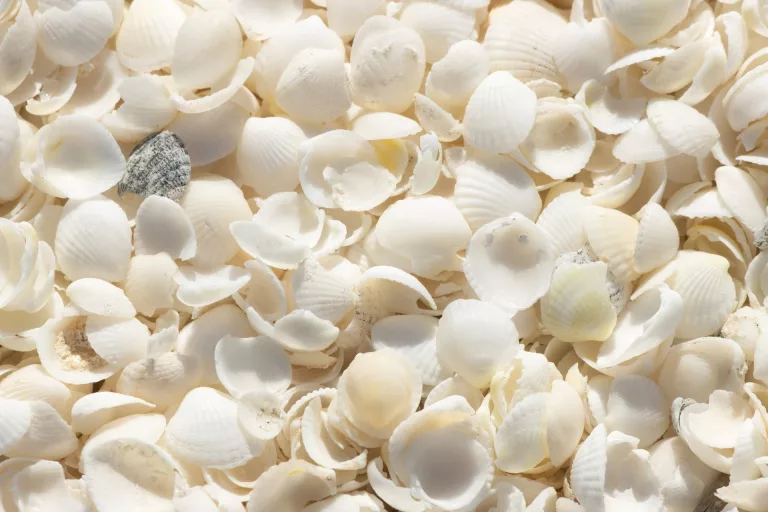
Photo: Pexels
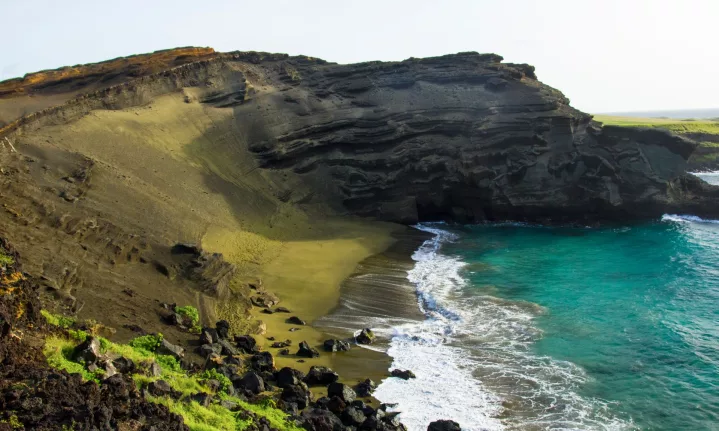
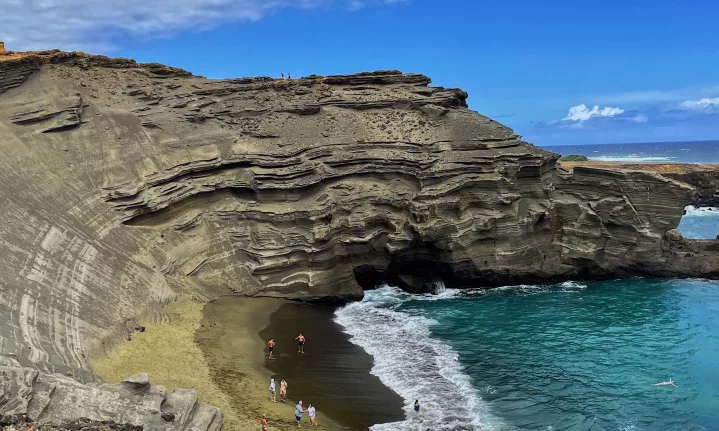
3. Papakōlea Green Sand Beach, Hawaiʻi
Why it is unusual: It is one of only four recognised green-sand beaches in the world.
Green sand sounds improbable, but Papakōlea Beach on Hawaiʻi’s Big Island gets its distinctive colour from olivine, a green mineral found in the volcanic rock of the surrounding cinder cone.
The US National Park Service identifies Papakōlea as one of only four green-sand beaches in the world. The beach formed within the remains of the Puʻu Mahana cinder cone, and erosion has concentrated the relatively heavy olivine crystals along the shore.
Getting there is part of the experience. The beach is remote and exposed, with a walk across volcanic terrain and little shade.
It is worth taking plenty of water and sun protection, and visitors should avoid removing the unusual sand.
Getaway tip: This is one for travellers who enjoy the journey as much as the destination.
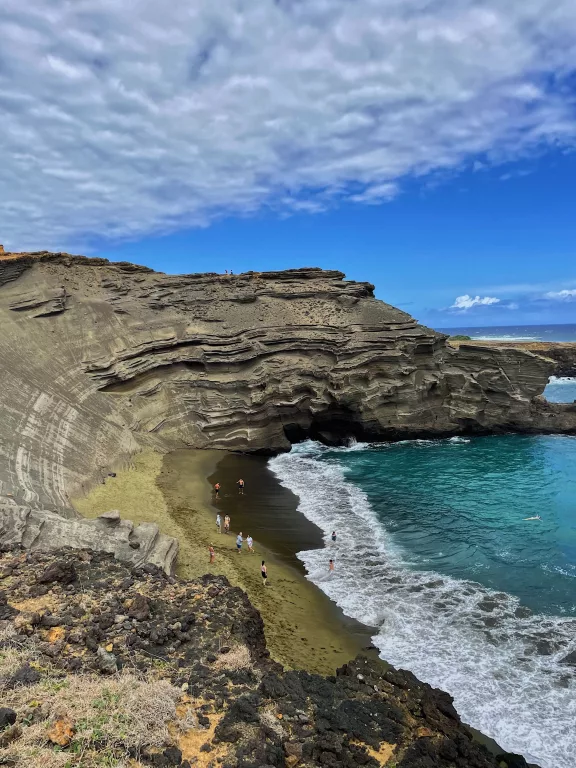
Photo: Pexels
4. Reynisfjara, Iceland
Why it is unusual: Black volcanic sand meets towering basalt columns and offshore sea stacks.
Reynisfjara looks almost otherworldly.
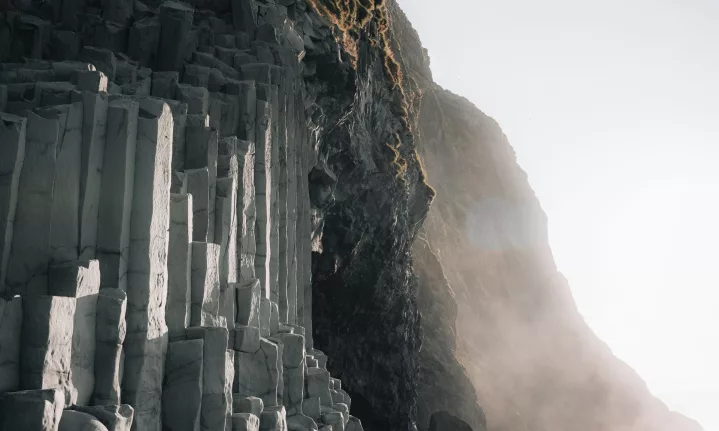
Located on Iceland’s South Coast, the beach has black volcanic sand, enormous basalt formations and the distinctive Reynisdrangar sea stacks rising from the Atlantic.
But while it is one of Iceland’s most photographed beaches, it is not somewhere to treat casually.
The beach is notorious for powerful sneaker waves, which can travel much further up the shore than visitors expect. Iceland’s official tourism authority warns visitors to stay well back from the water and pay attention to safety signs.
The landscape is the result of Iceland’s volcanic geology and the constant erosion caused by the North Atlantic.
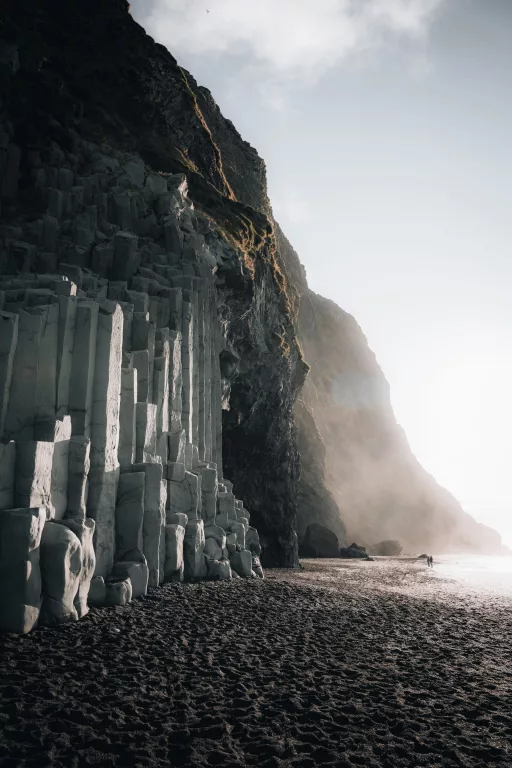
Photo: Pexels
5. Pink Sands Beach, Bahamas
Why it is unusual: Its sand has a natural pink hue.
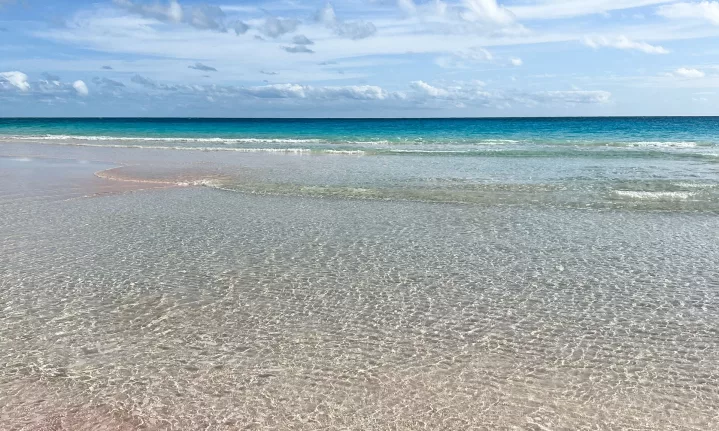
Harbour Island’s Pink Sands Beach is one of the world’s most famous pink beaches, and the colour is not simply a trick of the light.
The Bahamas’ tourism authority explains that microscopic marine organisms called foraminifera contribute to the colour. Their reddish or pink shells are broken down and mixed with sand, coral fragments and other material along the shoreline.
The beach stretches for more than 3 miles and is relatively wide in places, giving visitors plenty of room to appreciate the unusual colour.
The pink tends to be most noticeable in wet sand close to the water.
It is one of those rare natural phenomena that is immediately visible without needing a special season or unusual weather conditions.
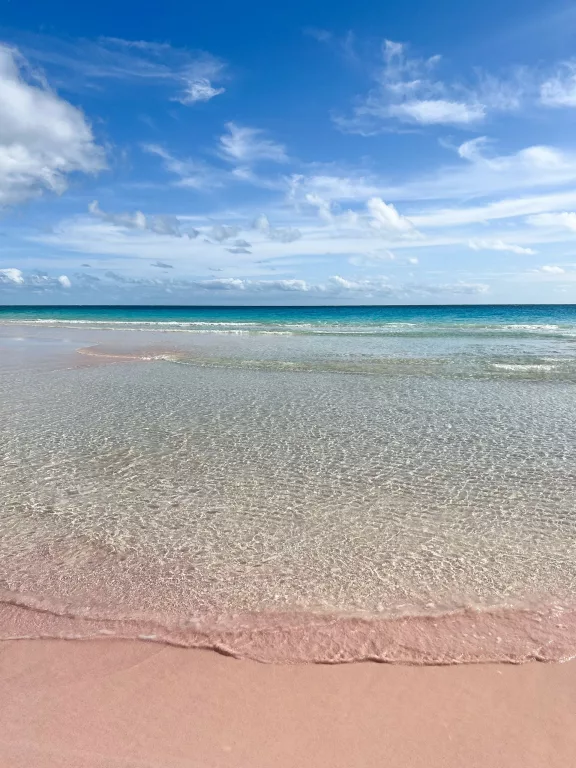
Photo: Pexels
6. Gulpiyuri Beach, Spain
Why it is unusual: It is an inland beach connected to the sea through underground passages.
Gulpiyuri Beach in Asturias looks as though someone picked up a small piece of coastline and dropped it into a green meadow.
The tiny sandy beach sits inland from the open sea, with seawater reaching it through underground passages in the surrounding limestone. Spain’s official tourism authority describes it as a natural phenomenon created by the connection between the beach and the Cantabrian Sea.
At only around 40m long and 15m wide, it is much smaller than most beaches that feature on international travel lists.
Its unusual position means the experience is as much about the geology as the beach itself.
Visit around low tide and you may find very little water in the cove, while high tide brings the sea back through the underground channels.
7. Glass Beach, California, USA
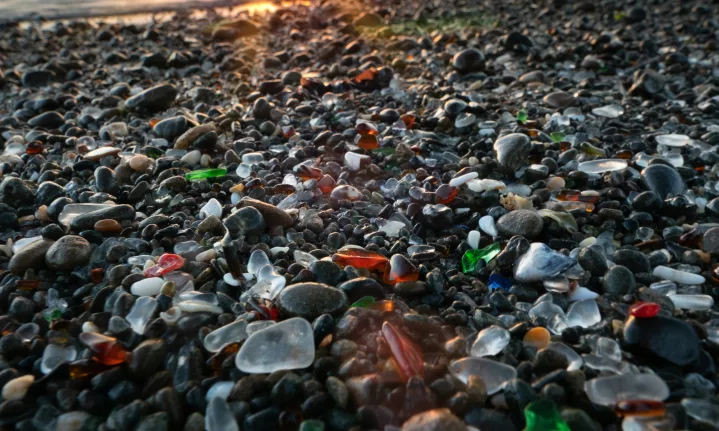
Why it is unusual: Decades of discarded glass have been polished by the sea into colourful pieces.
Glass Beach in Fort Bragg has a history that is very different from the other beaches on this list.
The area was once used as a rubbish dump, with glass, bottles and other discarded items ending up along the coast. Over decades, waves gradually broke down and polished the glass, leaving smooth, colourful pieces scattered along parts of the shoreline.
The beach is now part of the wider MacKerricher State Park area, and the transformation from rubbish dump to unusual coastal landscape is part of what makes it so fascinating.
But there is an important rule for visitors:
Do not take the glass home.
The remaining sea glass is part of the site’s history and natural landscape, and visitors are prohibited from removing it.
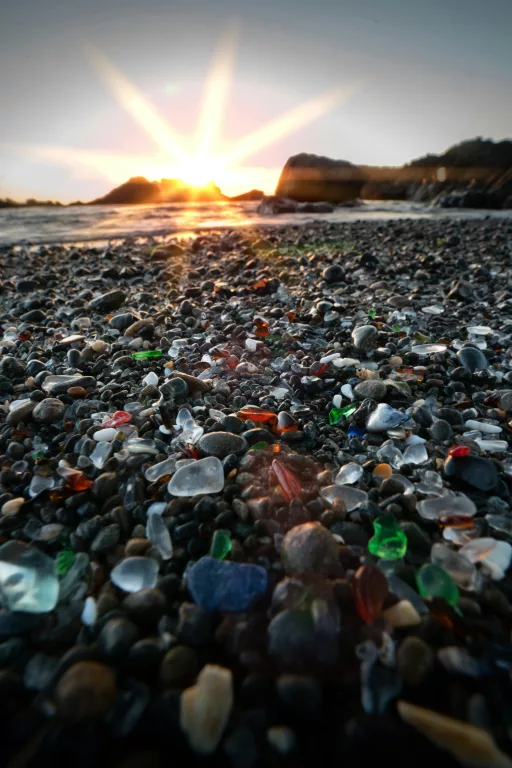
Photo: Unsplash
8. Whitehaven Beach, Australia
Why it is unusual: Its exceptionally pure white sand is made almost entirely from silica.
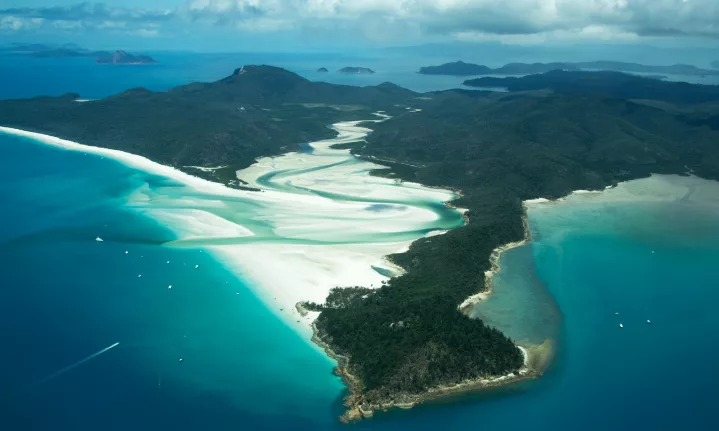
Whitehaven Beach in Queensland’s Whitsunday Islands is famous for its brilliant white shoreline and swirling patterns where the sand meets the turquoise water.
The Queensland Government describes the sand as exceptionally pure silica, with the beach stretching for approximately 7km.
The silica-rich sand also has an unusual texture. It is extremely fine and does not retain heat in the same way that darker sands do, making it surprisingly comfortable underfoot even in warm weather.
Whitehaven can be reached by boat and forms part of the protected Whitsunday Islands National Park.
It may not be the strangest-looking beach on this list, but its combination of geology, colour and clarity makes it one of the world’s most distinctive.
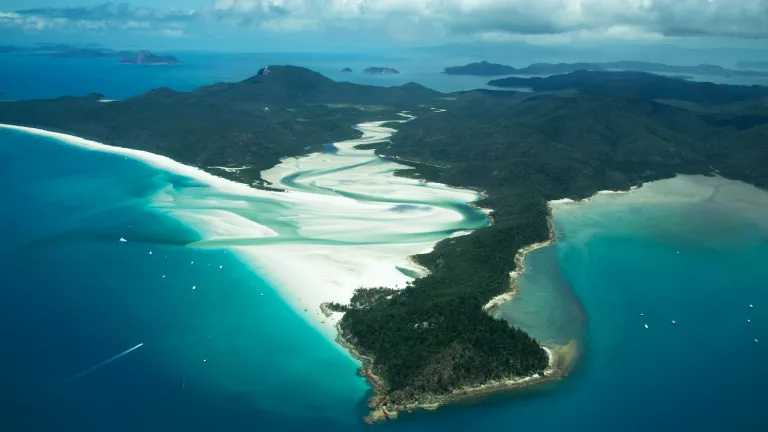
Photo: Unsplash
9. Kaiji Beach, Japan
Why it is unusual: Its sand contains tiny star-shaped remains of marine organisms.
On Taketomi Island in Okinawa, Kaiji Beach is also known as Hoshizuna no Hama, or Star Sand Beach.
Look closely at the sand and you may find tiny shapes that look like stars.
They are actually the microscopic calcareous remains of marine organisms. Their distinctive shapes are created by the structure of their shells and skeletons, which are deposited along the beach after the organisms die.
Okinawa’s official tourism information highlights the star-shaped sand as one of the beach’s main attractions.
It is another reminder that unusual beaches are not always about dramatic cliffs or brightly coloured sand. Sometimes the strange feature is only visible when you get close enough to look.
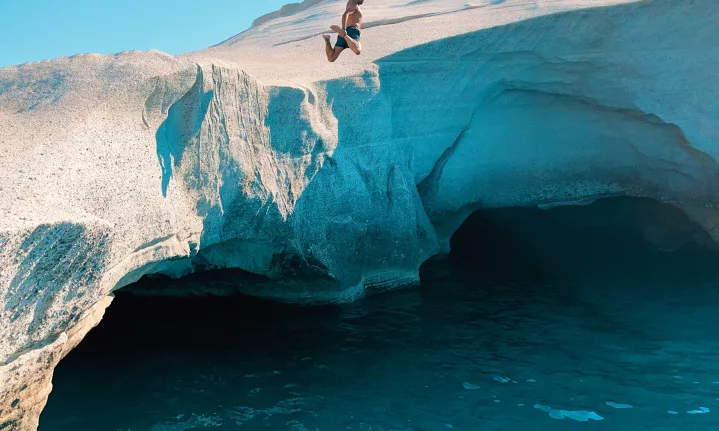
10. Sarakiniko, Greece
Why it is unusual: Its white volcanic landscape looks almost like the surface of the Moon.
Sarakiniko on the Greek island of Milos is often described as lunar, and it is easy to understand why.
Wind and waves have sculpted the island’s pale volcanic rock into smooth curves, ledges and hollows. Against the deep blue Aegean Sea, the stark white landscape creates a scene that looks more like another planet than a traditional Mediterranean beach.
Milos is particularly rich in volcanic landscapes, with beaches ranging from white and red to black and golden.
Sarakiniko’s unusual appearance has made it one of the island’s most recognisable natural attractions.
The best photographs tend to come from the contrast between the almost-white rock and the intensely blue water.
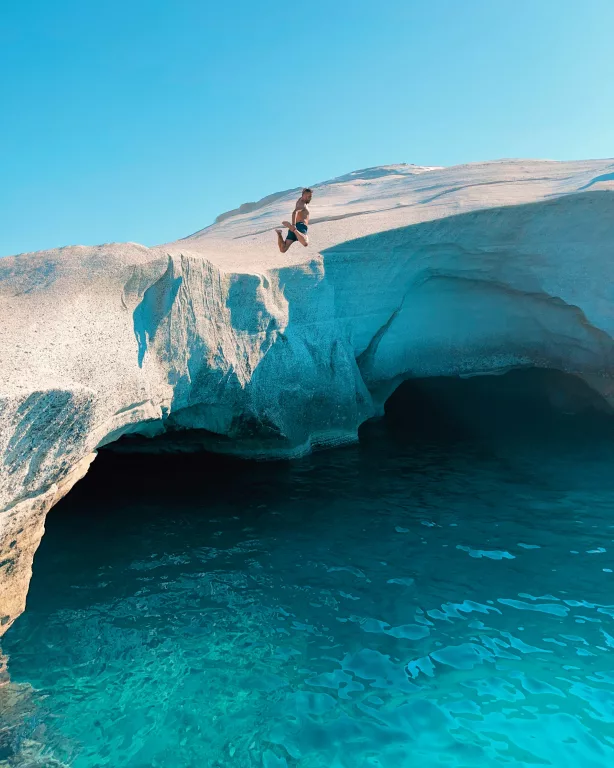
Photo: Unsplash
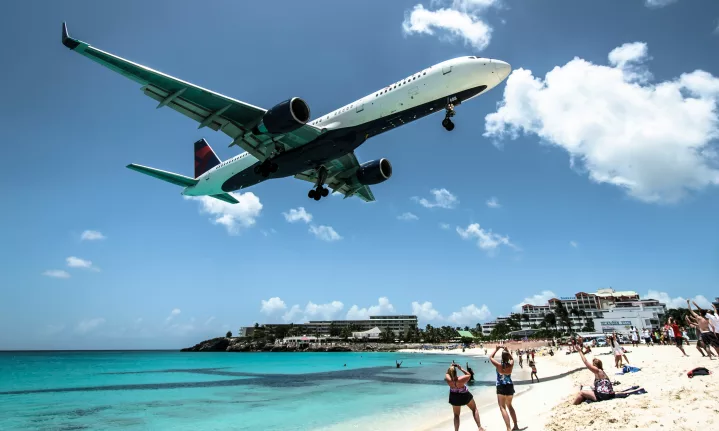
11. Maho Beach, Sint Maarten
Why it is unusual: Commercial aircraft fly extremely close to the beach when landing.
Maho Beach in Sint Maarten may be one of the world’s most unusual places to watch an aircraft come in to land.
The beach sits immediately beside Princess Juliana International Airport’s runway, meaning arriving aircraft pass low over the shoreline before landing. The Sint Maarten Tourism Bureau promotes the area for its famous plane-watching experience.
It has become a major attraction in its own right, with visitors timing their beach visits around arriving flights.
But there is a serious safety point here. Jet blast from aircraft can be extremely powerful, and visitors should never stand in restricted areas or deliberately position themselves directly behind an aircraft during take-off.
In other words, watch the planes, but don’t try to become part of the spectacle.
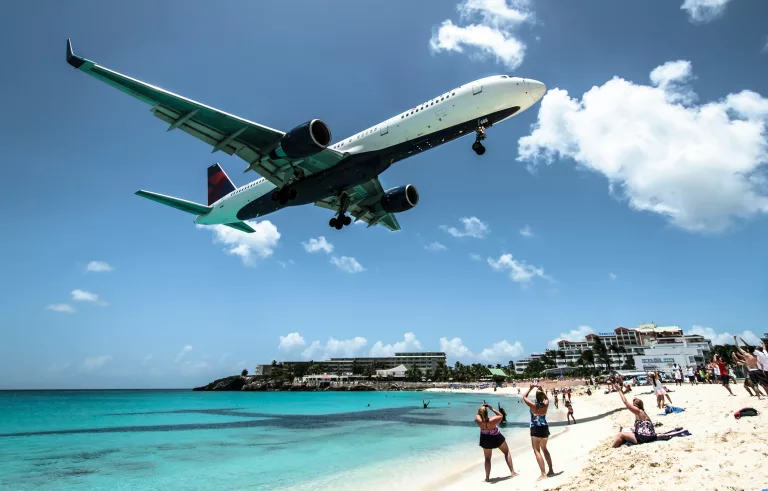
Photo: Unsplash
12. Chandipur Beach, India
Why it is unusual: The sea can retreat several kilometres from the shoreline at low tide.
Chandipur Beach in Odisha has earned a reputation as the “vanishing beach” because of its extraordinary tidal range.
During low tide, the sea can retreat several kilometres, exposing a broad stretch of seabed before returning with the incoming tide. Odisha Tourism says the sea can recede by as much as 5km in certain conditions.
The exposed area provides an opportunity to see marine life and coastal ecosystems that would normally be hidden beneath the water.
But this is not a phenomenon to underestimate.
Visitors need to pay attention to tide times and local advice, because the water eventually returns across the exposed shoreline.
For photographers, it is an especially unusual sight: a beach where the horizon can seem to move dramatically during the course of a day.
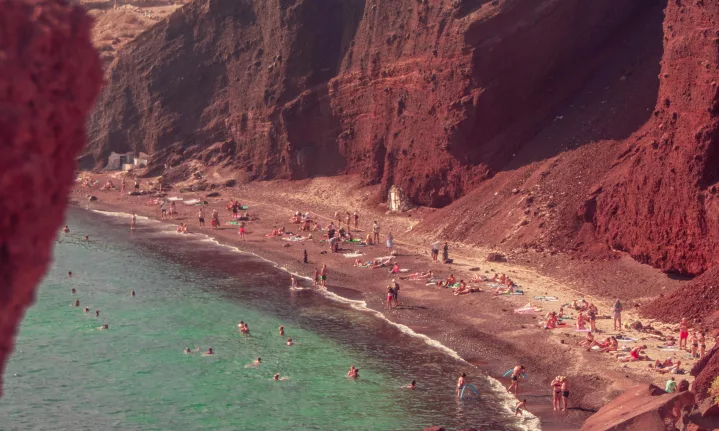
13. Red Beach, Santorini, Greece
Why it is unusual: Deep-red volcanic cliffs surround its dark shoreline.
Santorini is known for whitewashed villages and blue-domed churches, but its coastline tells a very different geological story.
Near Akrotiri, Red Beach is backed by striking red and black volcanic cliffs. The unusual colours are a result of Santorini’s volcanic geology, including iron-rich material in the surrounding rocks.
The contrast between the dark volcanic landscape and the Aegean Sea makes this one of the island’s most distinctive beaches.
It is also a reminder that Santorini’s famous scenery was shaped by enormous volcanic events rather than simply being a picturesque Mediterranean setting.
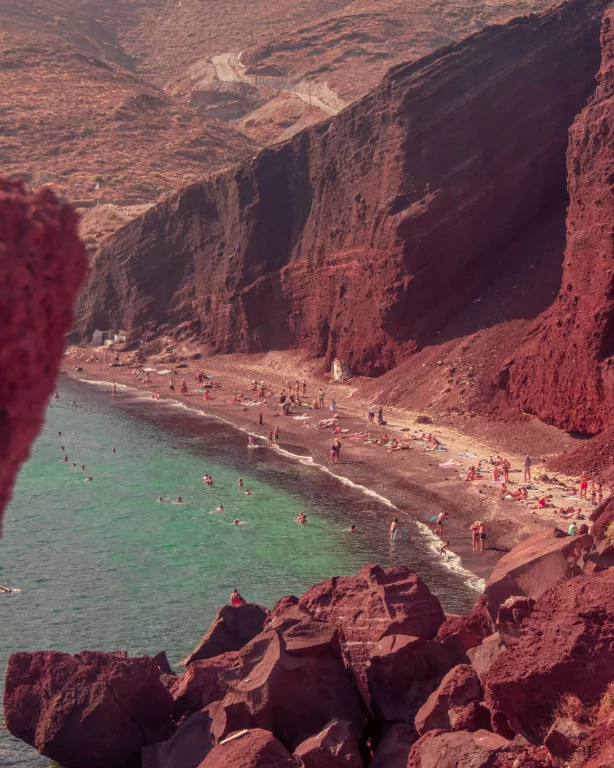
Photo: Unsplash
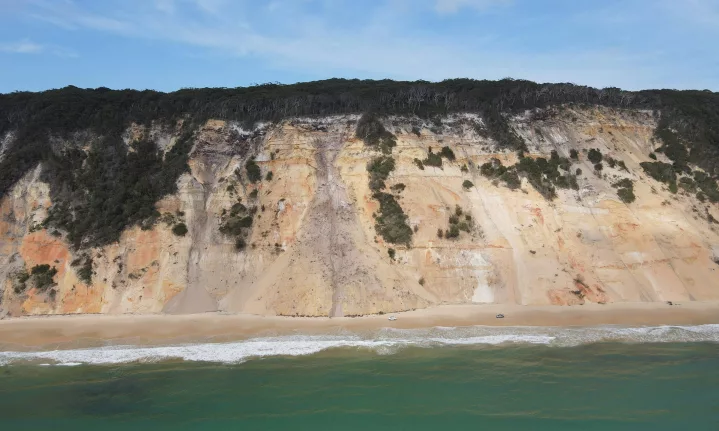
14. Rainbow Beach, Australia
Why it is unusual: Its coastline is backed by naturally coloured sand cliffs.
The name Rainbow Beach is not particularly subtle, but the colours behind it are entirely natural.
Along Queensland’s Cooloola Coast, the Coloured Sands rise above the beach in layers of yellow, orange, red and brown. Queensland Parks explains that the colours are created by minerals, including iron-rich compounds, within the sand and rock.
The cliffs are particularly striking when viewed from the beach, where the different colours form bands across the coastal landscape.
The wider area is part of the Great Sandy National Park, making this more than simply a place to stop for photographs.
It is one of Australia’s more unusual examples of how minerals can transform an otherwise ordinary stretch of coastline.
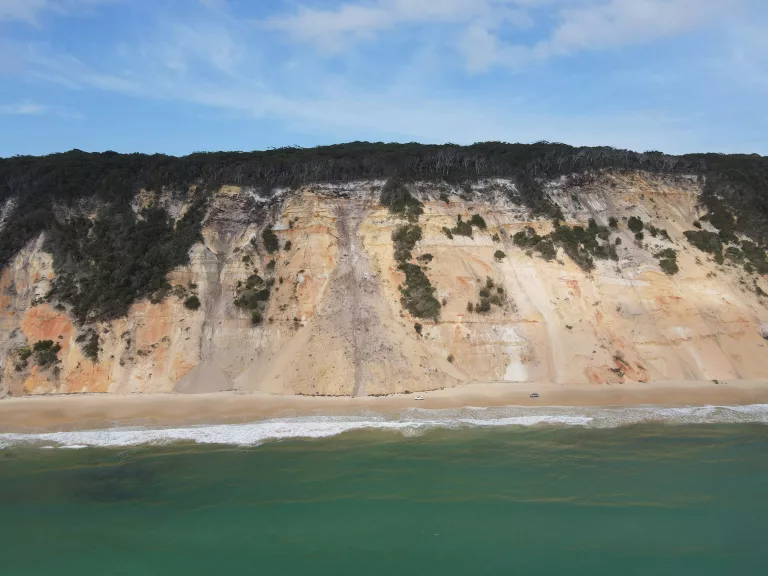
Photo: Unsplash
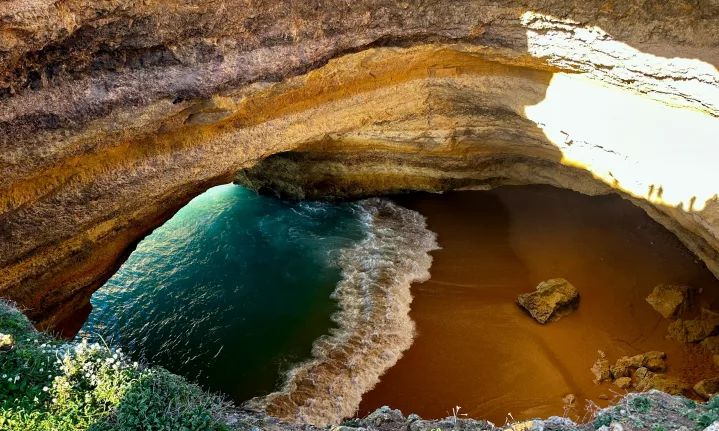
15. Benagil Beach, Portugal
Why it is unusual: A dramatic sea cave and limestone cliffs have been carved into the coastline around the beach.
Benagil may be one of the Algarve’s best-known coastal sights, but the geology remains remarkable.
The small beach sits below steep limestone cliffs, while erosion has created caves, arches and grottoes along the surrounding coastline. The most famous is the enormous Benagil sea cave, with an opening in its roof that allows sunlight to reach the sandy interior.
Portugal’s official tourism authority highlights Benagil’s cliffs and sea caves as one of the distinctive features of the Algarve coastline.
Because access rules and conditions can change, visitors should check the latest local guidance before planning a swim or boat or kayak trip into the caves.
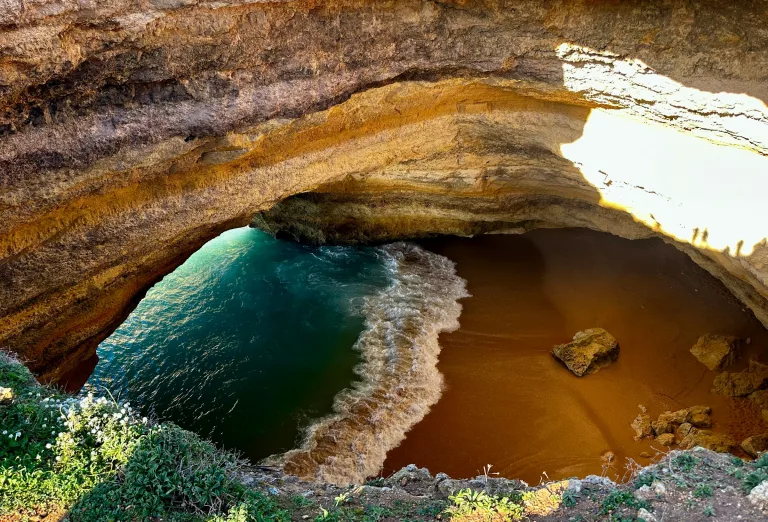
Photo: Unsplash
ALSO SEE: Eight Cape Town beaches retain Blue Flag status, with four more in the pipeline
Eight Cape Town beaches retain Blue Flag status, with four more in the pipeline