
South Africa has no shortage of beautiful landscapes, but some of its most intriguing destinations come with a darker atmosphere.
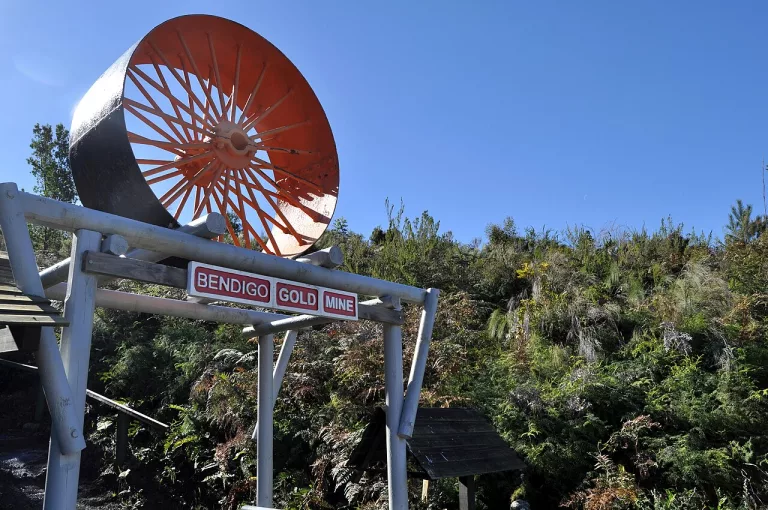
Meraj Chhaya/Wikimedia Commons
These places have fascinating histories, local legends and an undeniable sense of mystery. Whether you enjoy a good ghost story or simply appreciate destinations that feel frozen in time, these six places offer a different kind of South African adventure.
1. Millwood Goldfields, Western Cape
The remains of the Millwood Goldfields recall a gold rush that promised fortune but delivered relatively little. The first gold nugget was reportedly found in the area in 1876, and the goldfield was officially proclaimed in 1887. Prospectors and business owners soon arrived, hoping to make their fortunes in the forest.
Their enthusiasm did not last. By 1888, gold yields were disappointing, and many miners had abandoned the settlement for more promising opportunities elsewhere. The forest gradually reclaimed much of the landscape, leaving behind traces of an industry that briefly transformed this quiet corner of the Garden Route.
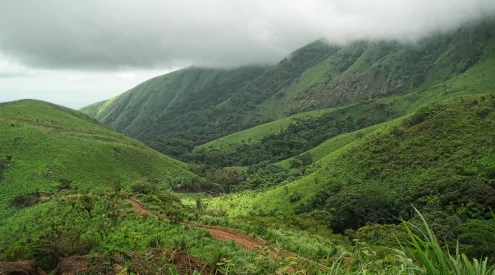
Today, the surrounding Goudveld forest offers walking opportunities, picnic spots and glimpses into the area’s mining past. Nearby Jubilee Creek is a worthwhile stop for travellers exploring the region. The atmosphere is wonderfully eerie, particularly when mist settles between the trees. It is easy to imagine the sounds of a busy mining camp disappearing into the forest, leaving silence in their wake.
2. Leydsdorp, Limpopo
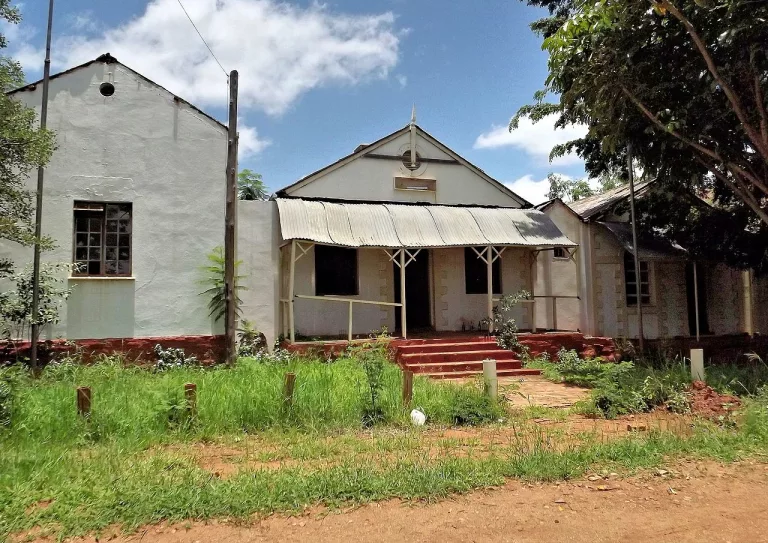
Once a bustling gold-rush settlement, Leydsdorp is now a reminder of how quickly fortunes can vanish. Gold discoveries in the Murchison Range during the late 1880s attracted prospectors hoping to strike it rich. At its height, the settlement had thousands of residents, businesses and the usual assortment of frontier-town characters.
Its success was short-lived. Difficult living conditions, disease and the attraction of richer gold deposits elsewhere contributed to its decline. As miners departed, buildings fell into disuse and the bushveld gradually reclaimed the settlement. Leydsdorp’s history has also inspired colourful stories about its former residents and the rough realities of gold-rush life. These tales lend the place a macabre atmosphere, although local legends should be distinguished from documented historical events.
Situated near Gravelotte, Leydsdorp makes an intriguing detour for travellers exploring Limpopo’s historical goldfields. Check local access before visiting and stick to safe, accessible areas. The settlement’s appeal lies in its history and the unsettling thought of a once-promising town slowly disappearing into the bush.
3. Eureka City, Mpumalanga
The ruins of Eureka City recall one of the more colourful chapters of South Africa’s gold-rush history. The settlement developed in 1885 after gold discoveries around the Sheba and Fairview mines attracted fortune seekers to the area. By 1886, Eureka City had become a lively mining camp with three hotels, shops, a bakery, a chemist, a racecourse, a music hall and numerous bars. Around 700 diggers lived in the area, creating a settlement that was as notorious for its rowdy atmosphere as it was for its promise of wealth.
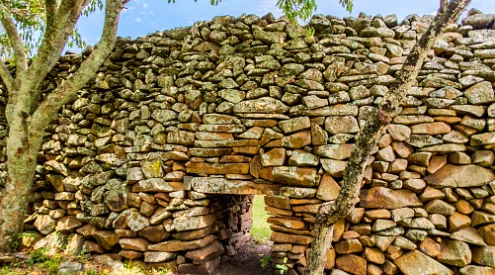
The boom did not last. As miners moved towards new discoveries on the Witwatersrand, businesses closed and the settlement emptied. Today, the ruins of the old Victoria Hotel and neighbouring Sheba School are among the surviving reminders of the town’s brief existence. The abandoned buildings and mountain setting make a striking contrast with the bustling settlement that once occupied the site.
Eureka City is a fascinating destination for travellers interested in mining heritage, but it is not a place to wander into unprepared. Arrange access through local tourism or accommodation providers in Barberton, check permit requirements and consider a guided visit. The surrounding landscape is spectacular, but the ruins themselves are fragile reminders of a vanished community.
4. The Owl House, Nieu-Bethesda, Eastern Cape
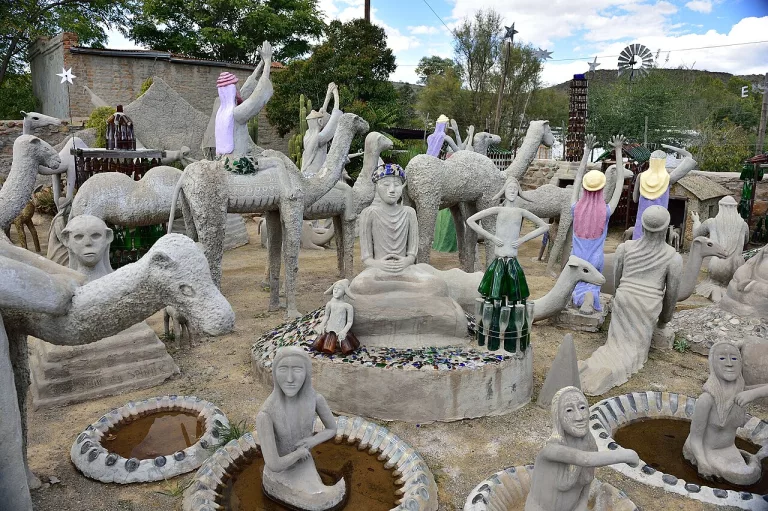
Owl House/South African Tourism/Wikimedia Commons
The Owl House is not a ghost town, but it may be one of the strangest and most mesmerising places in the Karoo. Artist Helen Martins transformed her home and garden between 1945 and 1976, using cement, glass, mirrors and other everyday materials to create a deeply personal artistic world.
Owls, camels, pilgrims and other unusual figures fill the garden, their faces and glass eyes catching the light in unexpected ways. The result is beautiful, unsettling and difficult to forget. In the stillness of Nieu-Bethesda, the sculptures can seem almost alive, especially when shadows stretch across the courtyard.
Yet the house’s real story is more compelling than any supernatural explanation. Martins created the environment as an expression of her imagination and spiritual interests, working with local craftsman Koos Malgas. Her work invites visitors to consider art, isolation and the human need to create meaning.
The Owl House is an established heritage attraction open to visitors. Allow time to appreciate the sculptures and their intricate details rather than rushing through. No ghost story is necessary when the real history is this extraordinary.
5. Uniondale, Western Cape
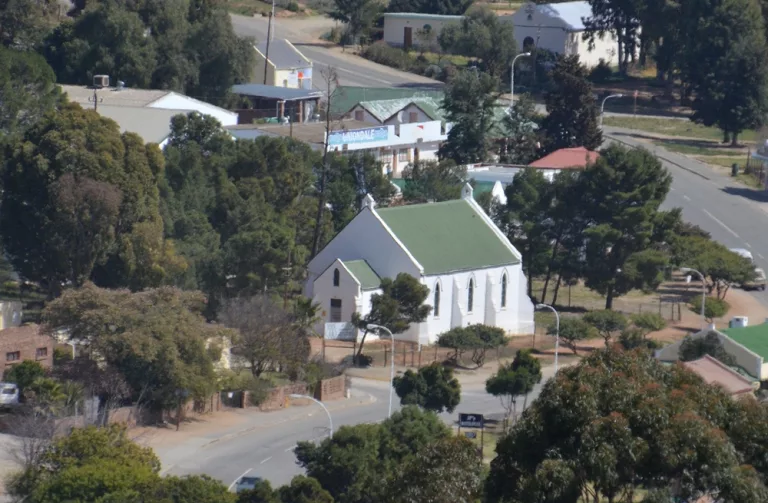
Uniondale/Suzi-k/Wikimedia Commons
Few South African road-trip legends are as enduring as the ghost of Uniondale. The story centres on a young woman said to have died in a car accident near the town in 1968. In subsequent tellings, motorists travelling through the area have reported encountering a female hitchhiker who disappears before reaching her destination.
As with many ghost stories, details vary between accounts, and there is no verified evidence of a supernatural apparition. Nevertheless, the legend has become part of Uniondale’s folklore, lending an eerie reputation to the surrounding roads.
The town itself deserves more than a spooky roadside anecdote. Positioned between the Little Karoo and the Garden Route, Uniondale is surrounded by scenic mountain landscapes and routes into the wider region. Its agricultural history and quiet streets make it an appealing stop for travellers seeking a slower journey through the countryside.
Visit for the scenery, stay for the stories, and remember that folklore is part of the experience, not proof of paranormal activity.
6. Alicedale’s railway heritage, Eastern Cape
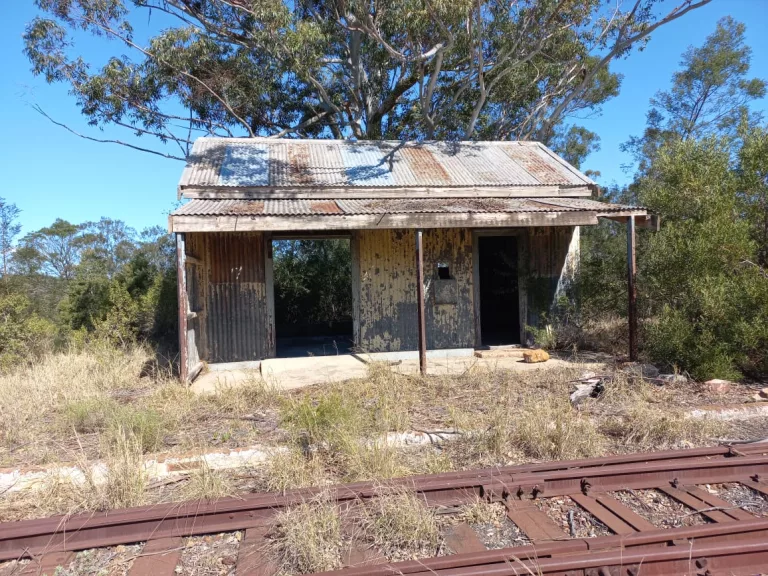
The Atherstone Railway station was one of the stops between Grahamstown and Alicedale/Wynlib40/Wikimedia Commons
There is a particular melancholy to railway infrastructure after the trains have stopped running. In Alicedale, that feeling is tied to a real chapter of South African history.
The Eastern Cape town developed around its railway connections, which linked routes between Port Elizabeth and the interior. Railways brought employment and supported the local economy, making the station an important part of community life. As railway operations changed and employment declined, Alicedale experienced the effects of losing a major economic anchor.
The station and its railway heritage evoke journeys interrupted, departures remembered and communities reshaped by industrial change. Their haunting quality comes from the contrast between the railway’s former importance and the quieter life that followed.
If you plan to visit, confirm the condition of the station and current access arrangements with local tourism contacts before travelling. Do not enter restricted railway property or unsafe buildings.
Follow us on social media for more travel news, inspiration, and guides. You can also tag us to be featured.
Instagram | Facebook | Twitter | Spotify
ALSO READ:
South African destinations that feel straight out of Twilight