





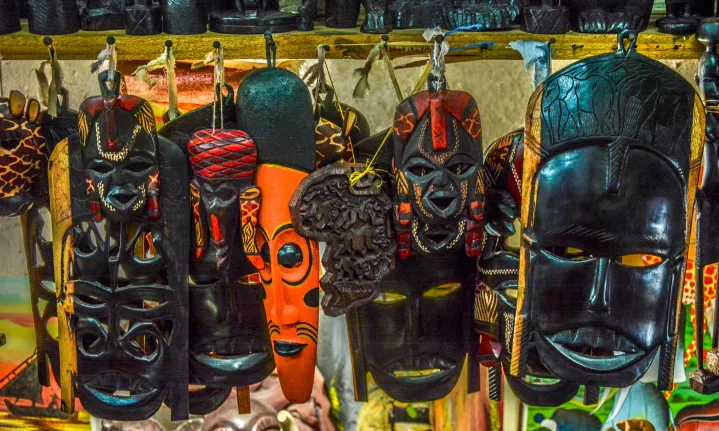


Long before factories and mass production, Africa’s artisans were weaving, carving, shaping and forging objects that reflected their cultures, beliefs and ways of life. Today, many of these traditions continue in villages, workshops and historic quarters where skills are passed from one generation to the next.
For travellers seeking more meaningful experiences, visiting these places offers the chance to meet the makers behind the crafts, watch centuries-old techniques in action and take home pieces that tell a story. Here are seven African destinations where craftsmanship is as much of the attraction as the scenery.
1. Bonwire, Ghana: The home of Kente weaving
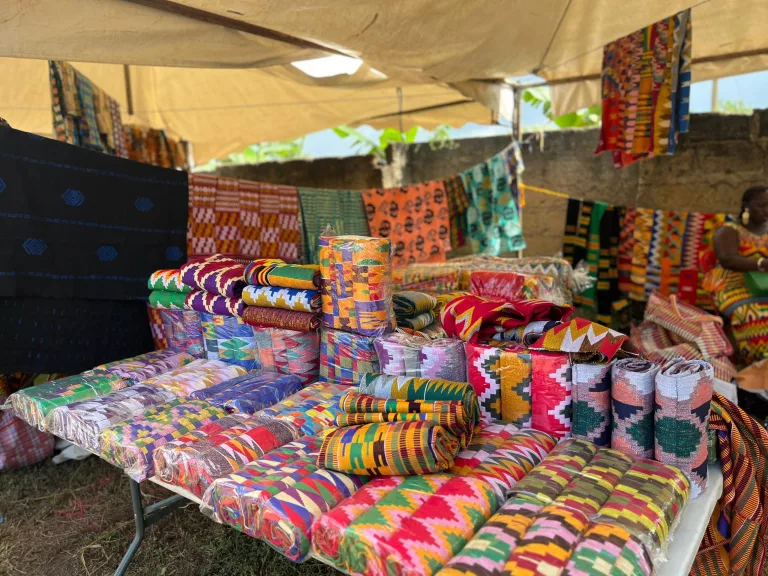
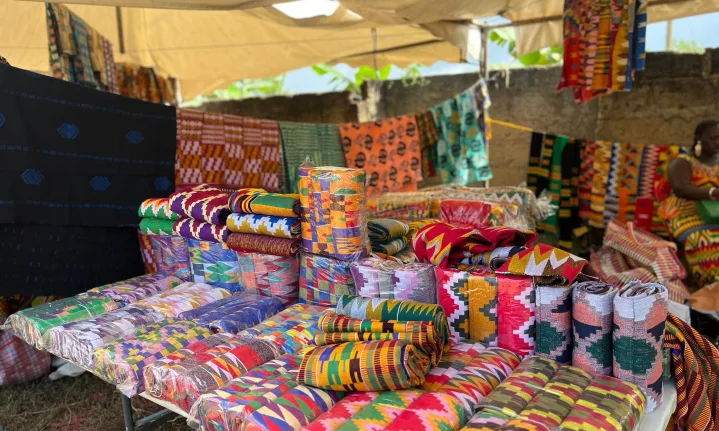
Bonwire Kente cloths/Baah Badu Kurfass 1/Wikimedia Commons
A cloth woven with meaning
In Ghana’s Ashanti Region, the village of Bonwire is widely regarded as the birthplace of Kente cloth, one of Africa’s most recognisable textiles. Traditionally reserved for royalty, Kente is woven on narrow-strip looms using brightly coloured silk or cotton threads, with each pattern and colour carrying symbolic meaning.
Visitors can watch master weavers work their looms, learn about the stories behind different designs and browse workshops where families have practised the craft for generations. Rather than simply purchasing fabric, travellers gain an appreciation for the skill and cultural significance behind every woven strip.
2. Okavango Delta villages, Botswana: Basket weaving rooted in nature
Functional art inspired by the wetlands
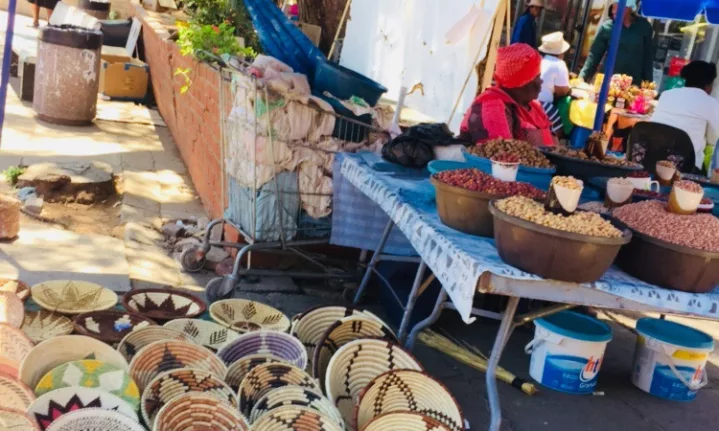
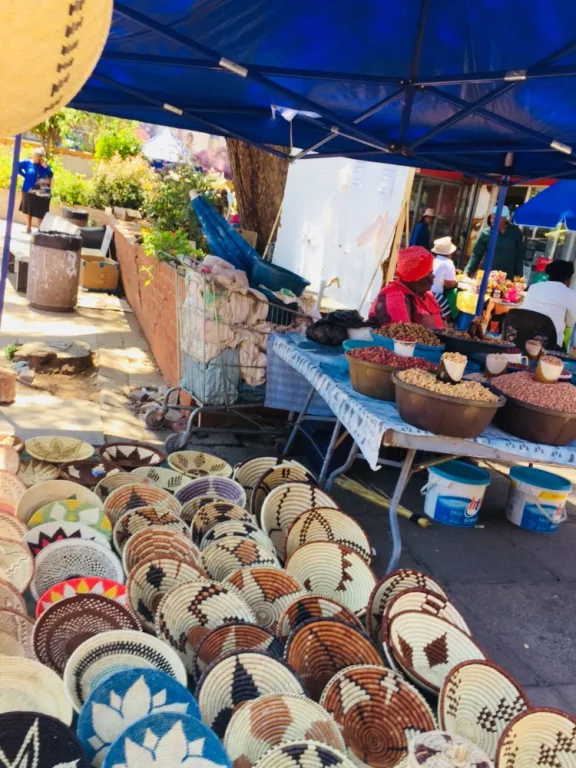
The communities surrounding the Okavango Delta have long transformed locally harvested Mokola palm into intricately woven baskets. Once created for storing grain, carrying food and fishing, these baskets are now admired around the world as works of art.
Villages such as Etsha and Gumare are home to women-led weaving cooperatives where visitors can observe every stage of the process, from collecting and dyeing fibres with natural pigments to weaving the detailed geometric patterns that make each basket unique.
The designs often reflect local wildlife, waterways and everyday life in one of Africa’s most extraordinary ecosystems.
ALSO READ:
6 South African destinations every geology lover should explore
3. Malkerns Valley, Eswatini: Creativity around every corner
A hub for contemporary and traditional crafts
Eswatini has earned a reputation for supporting local artisans, and nowhere is this more evident than the Malkerns Valley.
The region is home to renowned craft centres where visitors can watch recycled glass transformed into colourful sculptures, candles carved into intricate designs and skilled craftspeople producing woven baskets, ceramics, textiles and woodwork.
Many workshops encourage visitors to observe the production process, making it easy to appreciate the craftsmanship that goes into every handmade piece.
4. Stone Town, Zanzibar: Where wood tells stories
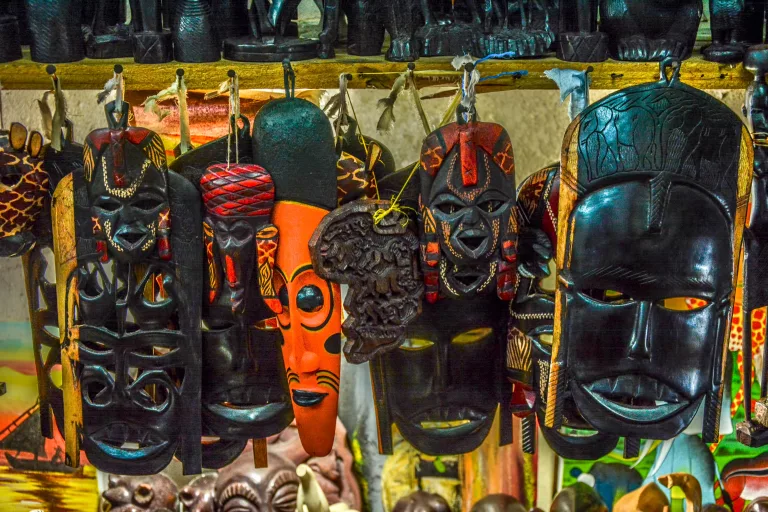
Souvenirs on streets of Zanzibar/DjordjeMarkovic/Wikimedia Commons
The art behind Zanzibar’s famous carved doors
Walking through the winding streets of Stone Town is like stepping into an open-air museum of craftsmanship. The historic town is famous for its elaborately carved wooden doors, many decorated with floral motifs, Arabic inscriptions and Indian-inspired details that reflect Zanzibar’s rich trading history.
Beyond the iconic doorways, small workshops continue to produce furniture, decorative carvings and traditional artworks using techniques refined over generations.
Exploring these artisan spaces offers a fascinating glimpse into one of East Africa’s most distinctive artistic traditions.
5. Fustat, Cairo, Egypt: Ancient glassmaking lives on

Corning Museum of Glass – Ancient Mesopotamian obsidian bowls and tools and early glass decorative items, 2nd and 3rd millennium /Andre Carrotflower/Wikimedia Commons
Fire, colour and centuries of tradition
Glassmaking has flourished in Egypt for thousands of years, and the historic district of Fustat remains one of the country’s best places to experience the craft.
Inside traditional workshops, furnaces glow as artisans blow, shape and colour molten glass using techniques that have changed remarkably little over the centuries.
Visitors can also explore neighbouring ceramic studios and artisan markets, making the district a rewarding stop for anyone interested in handmade design and heritage crafts.
6. Kumasi, Ghana: The enduring art of Adinkra printing

Sample of Adinkra Symbols/Bosomba Amosahother versions=/Wikimedia Commons
Symbols that tell powerful stories
Not far from Bonwire, the Ashanti city of Kumasi is another important centre of Ghanaian craftsmanship, known for its Adinkra cloth.
Unlike Kente, Adinkra textiles are decorated with hand-stamped symbols, each representing concepts such as wisdom, courage, unity or perseverance. Traditionally printed using natural dyes made from tree bark, the cloth has long been worn during important ceremonies and cultural events.
Visiting workshops allows travellers to see how the symbols are carved into stamps, prepared by hand and carefully pressed onto fabric, preserving a tradition that remains deeply connected to Ghanaian identity.
7. Tuareg silverwork: A heritage shaped by the Sahara
View this post on Instagram
Jewellery that carries generations of tradition
Across the Sahara, Tuareg artisans have long been celebrated for crafting elegant silver jewellery distinguished by geometric patterns, engraved details and symbolic designs.
Cross pendants, bracelets and necklaces are more than decorative objects; they often represent identity, protection and family heritage. Although security conditions mean many Tuareg communities are not currently accessible to travellers, their craftsmanship continues to be showcased through museums, cultural exhibitions and artisan markets across parts of North and West Africa.
Learning about this enduring tradition offers valuable insight into one of the continent’s most distinctive artistic legacies.
Why craftsmanship makes for memorable travel
Experiencing traditional crafts goes beyond shopping for souvenirs. Watching a basket emerge from palm fibres, seeing molten glass shaped into delicate forms or learning the symbolism woven into a piece of cloth creates a deeper connection with the destination itself.
These encounters also support local artisans and help preserve skills that have survived for centuries despite rapid modernisation. For travellers seeking authentic cultural experiences, Africa’s workshops, villages and artisan communities offer stories that remain as enduring as the crafts they produce.
Follow us on social media for more travel news, inspiration, and guides. You can also tag us to be featured.
Instagram | Facebook | Twitter | Spotify
ALSO READ:
What’s in season? Your guide to travelling South Africa in August