





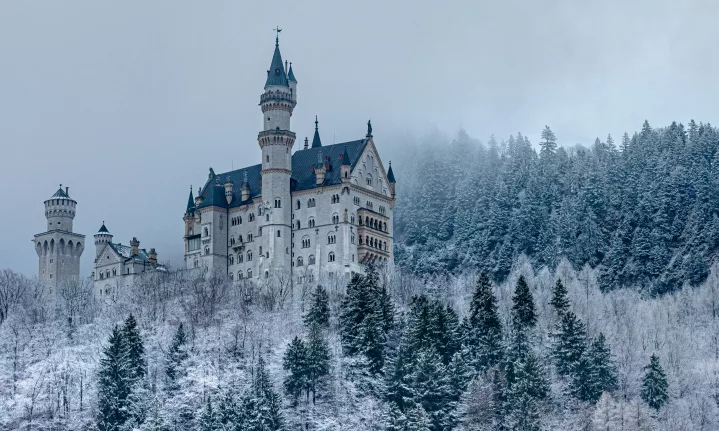
Some castles feel as though they belong to another world. They rise from misty islands, cling to rocky hillsides and emerge from forests like something from a storybook.
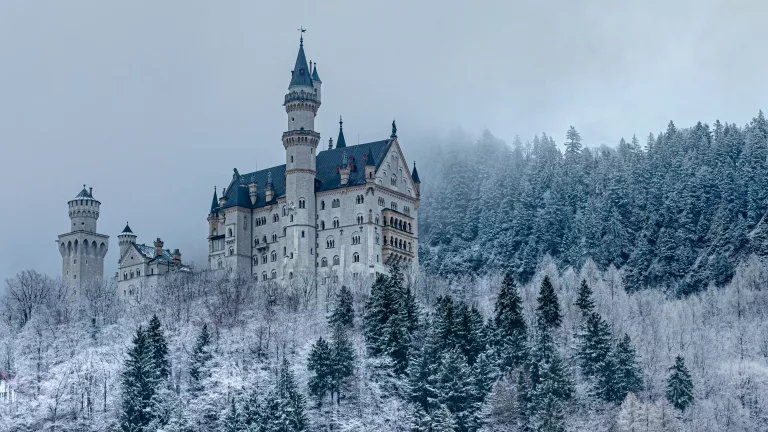
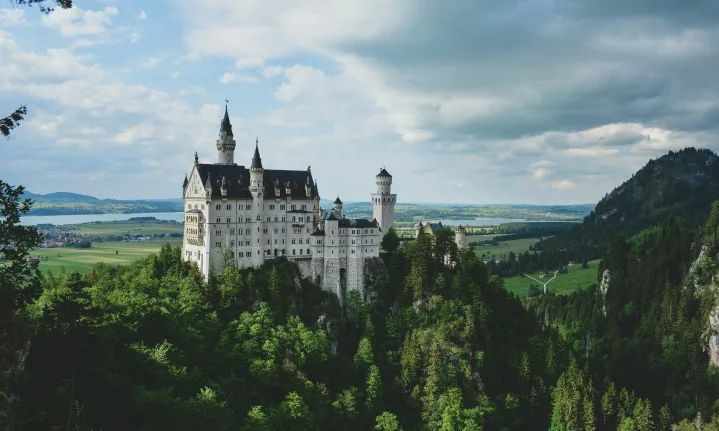
Castle Neuschwanstein, Bavaria Germany / Lanju Fotografie / Unsplash
But behind the turrets and dramatic views are stories of kings, war, survival and ambition. These seven castles stand out not just for how they look, but for the stories that made them extraordinary.
Neuschwanstein Castle, Germany
High above the Bavarian village of Hohenschwangau, Neuschwanstein looks almost too perfect to be real. King Ludwig II commissioned the castle in 1869, inspired by medieval legends, German knights and the operas of Richard Wagner. It was never intended to be a conventional fortress. Ludwig wanted a private retreat that reflected the romantic world he had imagined since childhood.
Even its interiors were theatrical, with elaborate murals and rooms inspired by medieval legends. Modern technology was hidden among the fantasy, including running water and a sophisticated heating system. Ludwig died in 1886 before the castle was finished. It opened to visitors only weeks later.
Today, the castle is one of Germany’s most recognisable landmarks, framed by forests and the Alps. It’s fairytale appearance is fitting. Neuschwanstein was, in many ways, a fairytale brought to life.
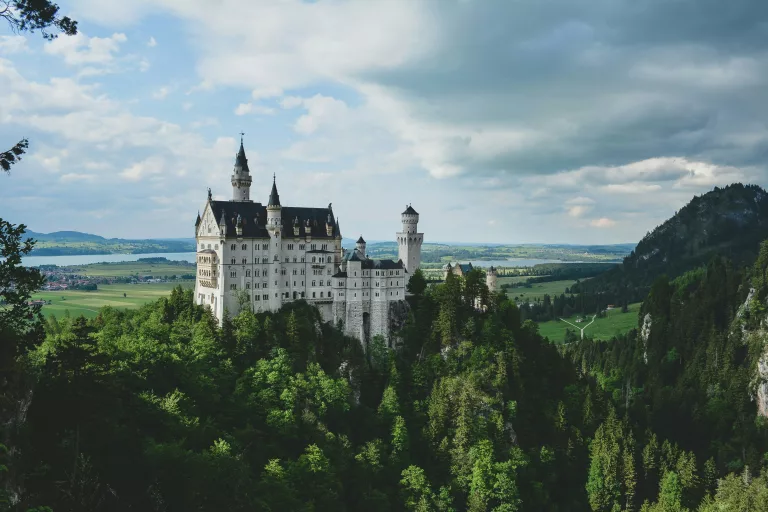
Neuschwanstein Castle, Schwangau, Germany / Rachel Davis / Unsplash
Himeji Castle, Japan
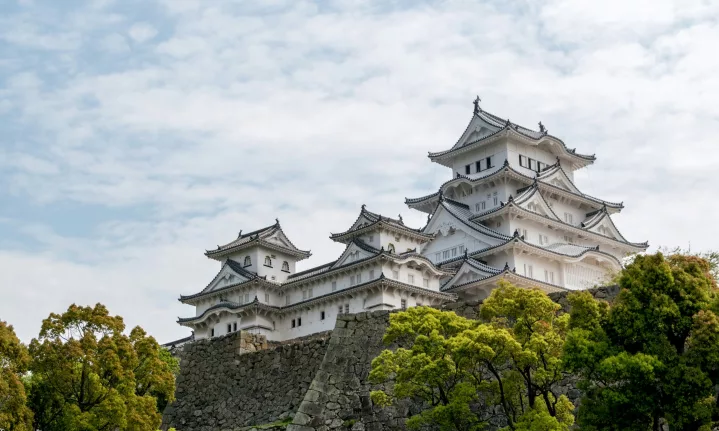
Himeji Castle is striking for its beauty, but its real brilliance lies in what you cannot immediately see. Known as the White Heron Castle for its brilliant white exterior, Himeji is one of Japan’s best-preserved original castles. The complex took its present form in the early 17th century, after generations of fortifications had been built on the site.
It’s elegant appearance hides a carefully designed defensive system. Winding paths, narrow passages, steep stairways and confusing routes were intended to slow invading forces and make it difficult to reach the main keep. Himeji survived wars, earthquakes and the destruction that claimed many other Japanese castles.
Walking through it today, the contrast is striking. From a distance, it looks graceful and almost delicate. Up close, every turn reveals another reminder that this was built to withstand an attack.
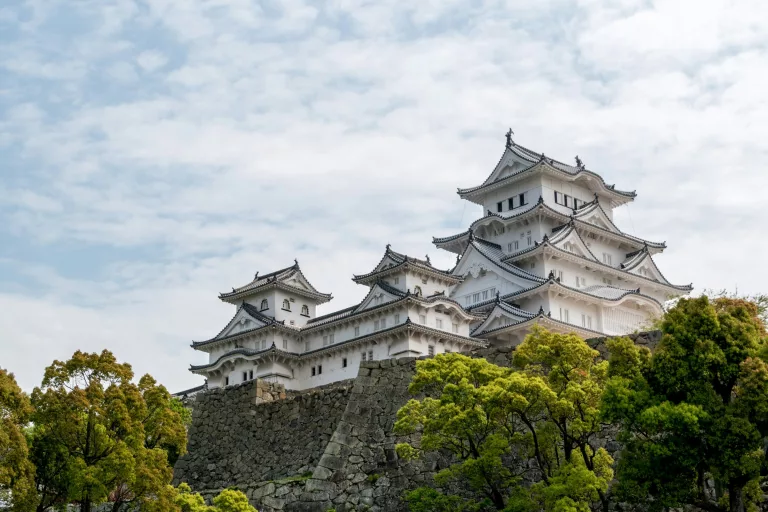
Himeji Castle, Hyogo, Japan / Vladimir Haltakov / Unsplash
Eltz Castle, Germany
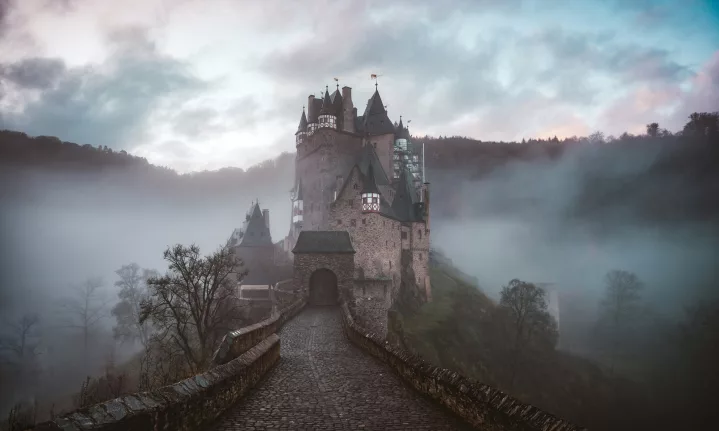
Deep in the forests of western Germany, Eltz Castle feels like a discovery. The castle sits on a rocky outcrop above the Eltzbach, surrounded by woodland. Its towers, timber-framed sections and steep roofs have changed surprisingly little over the centuries.
The Eltz family has owned the castle for generations, with the first documented member of the family appearing in records in 1157. Different branches later added their own homes around the central courtyard, creating the unusual collection of towers and buildings seen today. Unlike many European castles, Eltz was never destroyed by war.
That is part of its appeal. Rather than feeling like a monument frozen in time, it still carries the atmosphere of a family home that happens to be centuries old.
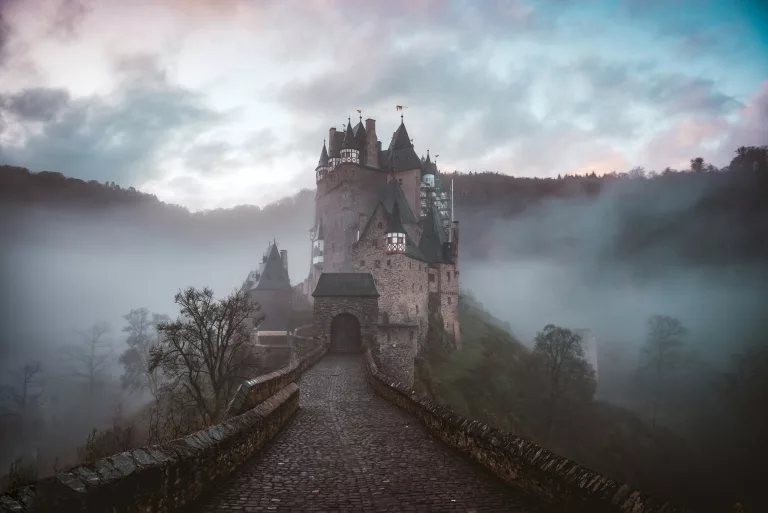
Eltz Castle, Wierschem, Germany / Cederic Vandenberghe / Unsplash
Eilean Donan Castle, Scotland
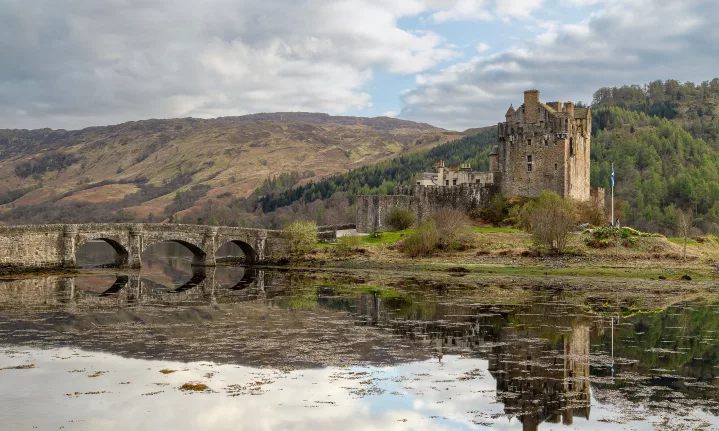
Few castles have a setting quite like Eilean Donan. The Scottish castle stands on a small tidal island where three sea lochs meet, surrounded by mountains and reached by a stone bridge. Mist, water and shifting Highland weather only add to the drama.
It’s history is less peaceful than the view suggests. Eilean Donan was repeatedly caught up in conflict and was destroyed in 1719 after government forces bombarded the castle when Spanish troops supporting the Jacobite cause occupied it. The ruins remained abandoned for almost 200 years.
Restoration began in 1912 under John MacRae-Gilstrap and continued for two decades. The castle visitors see today is therefore partly medieval history and partly a remarkable restoration story.
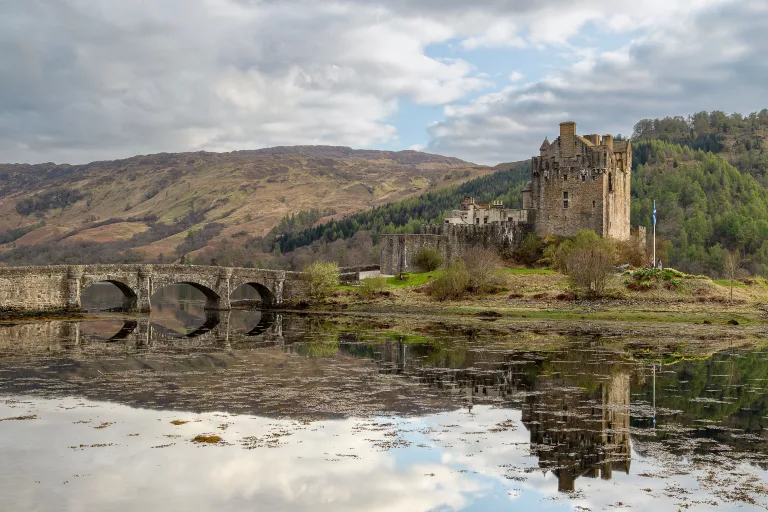
Eilean Donan Castle, Dornie, Scotland / Stuart Robinson / Pexels
Pena Palace, Portugal
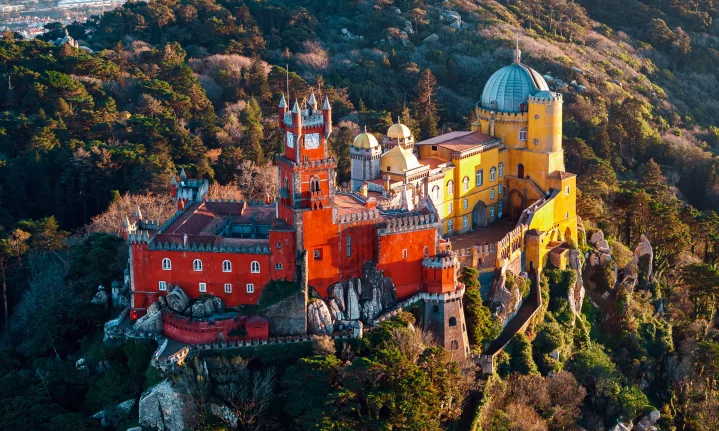
Pena Palace does not do subtle. Perched above Sintra, it’s brightly coloured façades, towers and domes combine Gothic, Moorish and Manueline influences in one exuberant Romantic masterpiece.
The story began with a 16th-century monastery, which was badly damaged by the 1755 Lisbon earthquake. In the 19th century, King Ferdinand II acquired the ruins and transformed them into a summer palace. Instead of choosing one architectural style, he embraced the Romantic fascination with the past. The result is wonderfully eccentric, with bold colours and unexpected details at almost every turn.
The surrounding park adds another layer to the experience. The 85 hectares of gardens and woodland contain plants from around the world, along with lakes, pathways and viewpoints. Pena feels less like a fortress than a dream someone decided to build on a mountain.
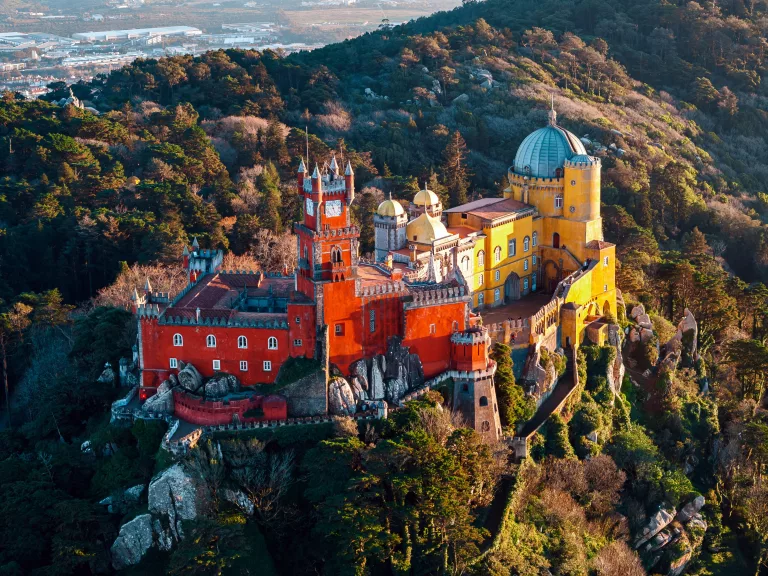
Pena Palace nestled in the lush hills of Sintra, Portugal / Matej Simko / Pexels
Alcázar of Segovia, Spain
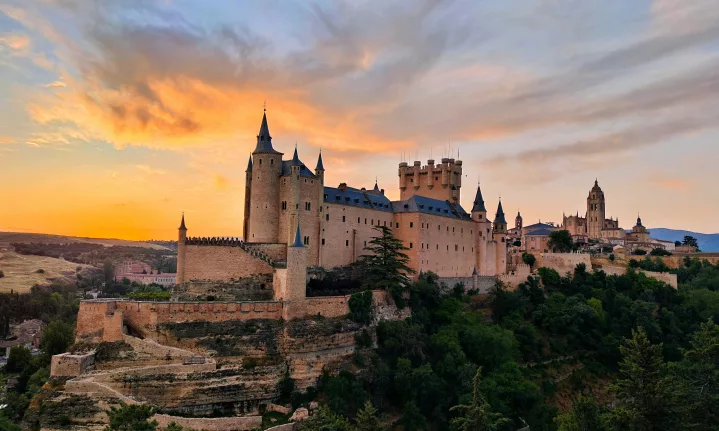
With its pointed turrets rising above a rocky outcrop, the Alcázar of Segovia looks like the castle you might draw as a child. It’s history is considerably more complicated.
The fortress dates back to at least the 12th century and was gradually transformed into a royal residence. Successive rulers added to the building, creating the distinctive mix of defensive walls, grand rooms and soaring towers seen today. The castle is closely linked to Isabella I of Castile, who was proclaimed Queen of Castile in Segovia in 1474.
It’s location is just as impressive as the building itself. The Alcázar rises above the historic city, with views towards the surrounding landscape, while Segovia’s famous Roman aqueduct and cathedral sit nearby. It’s easy to understand why this particular castle has become so closely associated with the fairytale image of Spain.
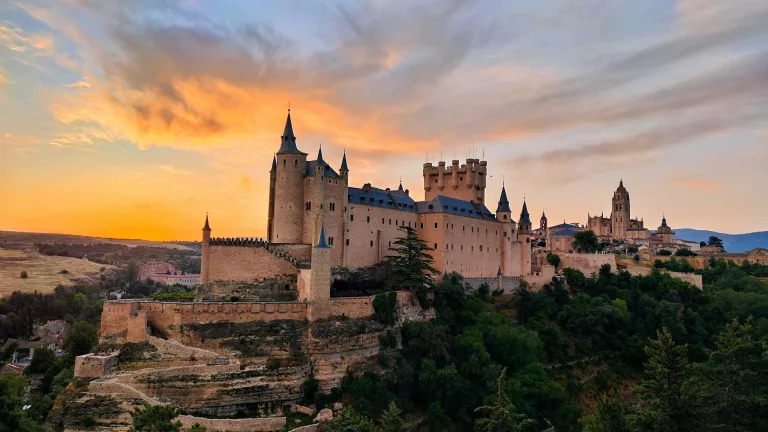
Alcázar of Segovia, Segovia, Spain / Isabel Déniz / Unsplash
Château de Chambord, France
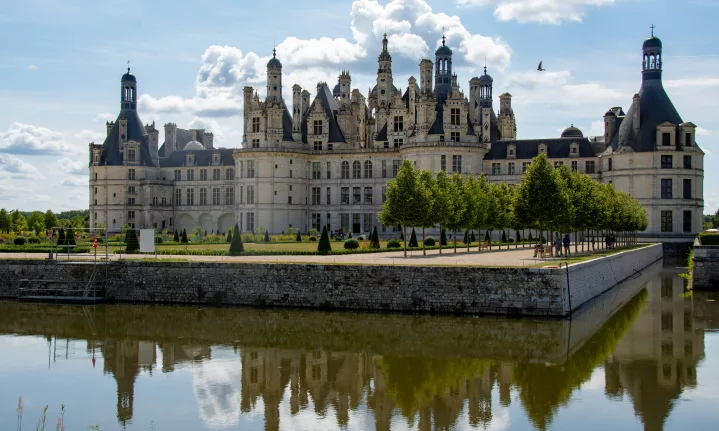
Château de Chambord was never really about defence. It was about making an impression. King François I began construction in 1519, creating an enormous Renaissance retreat filled with towers, turrets and elaborate architectural details.
It’s most famous feature is the double-helix staircase, where two separate staircases wind around a central core. You can see people on the other staircase without actually crossing paths. The design has also long been linked to Leonardo da Vinci, who spent the final years of his life at the French court. While there is no definitive proof that he designed the staircase, his influence can be seen in the building’s Renaissance ideas.
Chambord’s defensive-looking towers are largely decorative. By this point, castles no longer offered the military protection they once had. This was architecture as spectacle. François I wanted something that would impress, and more than 500 years later, it still does.
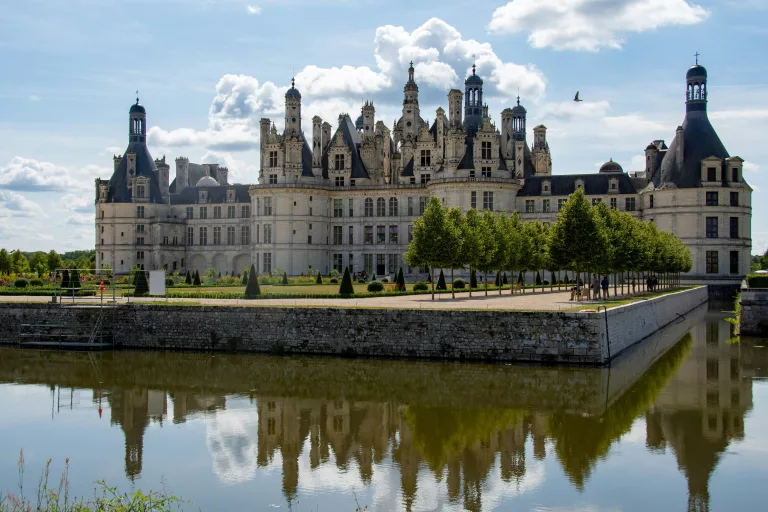
Château de Chambord, Chambord, France / Daan Oosters / Unsplash
Castles built from more than stone
The best castles stay with you for reasons that have little to do with their size. Some were built to defend kingdoms. Others became royal retreats, family homes or extravagant expressions of power. Some survived wars and disasters, while others were rebuilt from ruins.
That’s the magic of a great castle. It doesn’t just tell you where people lived centuries ago. It lets you imagine, for a moment, what it might have felt like to live there.
Follow us on social media for more travel news, inspiration, and guides. You can also tag us to be featured.
Instagram | Facebook | Twitter | Spotify
ALSO READ: