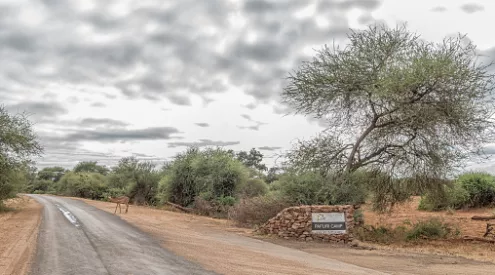


In the remote southeastern corner of Chad, where vast grasslands meet seasonal wetlands and acacia woodlands, lies one of Africa’s most remarkable conservation success stories. Zakouma National Park is a wilderness shaped by seasonal rains, extraordinary wildlife encounters and a determined effort to protect a landscape that was once on the brink of ecological collapse.

Aerial view of a forest of acacias in the savannah in Zakouma National Park/By: Westend61/Getty Images
Today, the park is home to recovering elephant populations, endangered Kordofan giraffes, large buffalo herds and an extraordinary diversity of birdlife. Its transformation is particularly significant because, just over a decade ago, rampant ivory poaching had decimated its elephant population, threatening the future of one of Central Africa’s most important wildlife sanctuaries.
Through sustained conservation management, stronger anti-poaching operations and greater community involvement, Zakouma has gradually reclaimed its place among Africa’s important wildlife destinations. For travellers willing to venture beyond the continent’s more familiar safari circuits, it offers an opportunity to discover an extraordinary wilderness while witnessing what long-term conservation can achieve.
A national park on the brink of collapse
Established in 1963, Zakouma National Park covers approximately 3,054 square kilometres in southeastern Chad. Situated between the Sahara Desert and the rainforests of Central Africa, it protects an important stretch of Sudano-Sahelian wilderness characterised by open savannah, woodlands, river systems and seasonal floodplains.
The park forms the heart of the much larger Greater Zakouma Ecosystem, which extends across approximately 28,000 square kilometres and incorporates neighbouring protected areas and wildlife corridors.
For decades, however, Zakouma faced mounting pressure from organised poaching. Between 2002 and 2010, the park lost approximately 95% of its elephant population, with nearly 4,000 elephants killed for their ivory. The crisis was particularly devastating because entire family groups were sometimes slaughtered, disrupting the social structures essential to elephant populations.
By 2010, the remaining elephants were in danger of disappearing from the landscape altogether.
The situation prompted the Chadian government to seek a long-term conservation partner. It entered into a management partnership with African Parks, a non-profit conservation organisation that works with governments and local communities to manage protected areas across the continent.
The partnership marked the beginning of a significant effort to restore Zakouma, strengthen wildlife protection and address the challenges facing communities living around its boundaries.
How Zakouma became a conservation success story
Restoring Zakouma required more than protecting its remaining elephants. It meant rebuilding the systems needed to safeguard an entire ecosystem.
One of the priorities was strengthening anti-poaching operations. Ranger teams received improved training, equipment and communications infrastructure, while patrols were expanded to monitor wildlife movements and respond to illegal hunting activity.
The work was not without sacrifice. Rangers faced considerable risks while confronting organised poaching networks, with several losing their lives in the line of duty.
The efforts gradually began to produce results. Stronger law enforcement, improved wildlife monitoring and sustained protection helped bring elephant poaching inside the park under control. Following a decade of zero recorded elephant poaching, the population began to recover.
African Parks currently reports approximately 800 elephants in Zakouma, representing an increase of around 40% since 2010. The presence of younger animals and calves is an encouraging indication of successful reproduction and the population’s long-term prospects.
Conservation that includes local communities
The park’s recovery has also demonstrated why successful conservation cannot happen in isolation from the people who live alongside wildlife.
For communities around Zakouma, the presence of a protected area must bring tangible benefits if conservation is to remain sustainable. African Parks has invested in local employment, education, healthcare and environmental awareness programmes, while supporting alternative livelihood opportunities.
The Greater Zakouma Ecosystem has become one of the region’s largest employers, creating opportunities for people to work in conservation, tourism and related services.
Environmental education is another important part of the programme. Camp Dari, an environmental education hub, welcomes thousands of local visitors each year, providing opportunities to learn about wildlife, ecosystems and the importance of protecting natural heritage.
Healthcare initiatives, support for schools and wildlife clubs have also helped strengthen relationships between conservation teams and surrounding communities.
This approach recognises that the long-term survival of Zakouma’s wildlife is closely connected to the wellbeing of the people living nearby. When communities have a stake in protecting the landscape, conservation becomes a shared responsibility rather than an external intervention.
ALSO READ:
Northern KZN’s seasonal pans: Where water brings the wilderness to life
A wilderness rich in wildlife
Beyond its conservation history, Zakouma is an extraordinary wildlife destination. Its combination of perennial water sources, seasonal floodplains and open grasslands creates habitats for a diverse range of mammals and birds.
The park supports approximately 66 mammal species, including several threatened species that have become increasingly important to conservation efforts across Central Africa.
Elephants returning to the floodplains
Elephants remain one of Zakouma’s defining attractions. Large family groups move across the park’s grasslands, woodlands and floodplains, often gathering around rivers and water sources during the dry season.
Seeing these herds is particularly meaningful given the park’s history. Their presence represents years of sustained protection and the gradual restoration of a population that was once dangerously close to disappearing.
The elephants also play an important ecological role. Through their feeding habits, movement and seed dispersal, they help shape the habitats on which numerous other species depend.
Their recovery has also created opportunities to support elephant conservation beyond the park. Wildlife monitoring and tracking initiatives help conservation teams understand seasonal movements, including the animals’ movements outside protected boundaries during the rainy season.
A stronghold for the endangered Kordofan giraffe
Another of Zakouma’s conservation highlights is the Kordofan giraffe, a critically endangered subspecies found across parts of Central Africa.
The park is particularly important for its survival, protecting more than 1,300 individuals according to African Parks’ published figures. The latest conservation information identifies Zakouma as one of the subspecies’ most important strongholds, supporting a substantial proportion of its remaining global population.
These giraffes are recognisable by their irregular, pale-edged patches and their ability to browse on leaves from trees and shrubs that other grazing animals cannot reach.
Their recovery is another indication of the positive impact that sustained conservation and habitat management can have on threatened wildlife.
Buffalo, antelope and predators
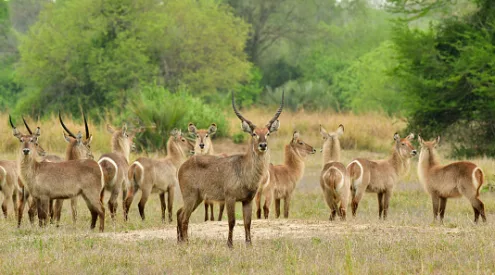
Zakouma’s grasslands support impressive concentrations of grazing animals, particularly during the dry season. Buffalo herds can number in the thousands, while roan antelope, tiang and Lelwel hartebeest are among the other species that roam the landscape.
The park’s buffalo population has experienced a particularly notable recovery, increasing from approximately 220 individuals in 1986 to more than 13,000 by 2025.
These large gatherings attract predators, including lions, creating opportunities for travellers to witness the natural interactions between prey and predator.
The recovery has also required careful wildlife management. More than 900 buffalo were relocated to neighbouring Siniaka Minia National Park in 2022 to help manage population pressure and support conservation efforts elsewhere.
A birdwatcher’s paradise
For bird enthusiasts, Zakouma offers an entirely different reason to visit. Its floodplains, marshes, rivers and seasonal pans attract resident and migratory birds, making the park an important wetland habitat.
Among the most spectacular sightings are black-crowned cranes, pelicans, spur-winged geese and white-faced whistling ducks. During certain periods, enormous flocks of red-billed queleas gather in the park, creating dramatic displays as they move across the landscape.
The southeastern wetlands form part of the Inundation Plains of Bahr Aouk and Salamat Ramsar site, an internationally recognised wetland area. This network of waterways and floodplains is essential for breeding, feeding and supporting wildlife throughout the changing seasons.
Exploring Zakouma National Park
For visitors, Zakouma offers a safari experience that feels a world away from Africa’s more established wildlife destinations. Its relatively low visitor numbers, expansive landscapes and seasonal wildlife concentrations make it particularly appealing to travellers looking for something different.
Game drives are among the main activities, allowing visitors to explore the park’s grasslands, woodlands and floodplains in search of elephants, giraffes, buffalo and predators. The experience changes throughout the season, with different habitats and water sources attracting wildlife at different times.
The drying pans are particularly rewarding during the latter part of the dry season. As water becomes scarcer, large herds gather around the remaining pools, while birds congregate in impressive numbers. These concentrations create some of the park’s most memorable wildlife-viewing opportunities.
Birdwatching is another highlight, especially for those interested in wetland species and migratory birds. The variety of habitats means that a single outing can reveal an impressive range of wildlife.
Unlike some of Africa’s busier safari destinations, Zakouma offers a sense of space and remoteness. The absence of large crowds allows visitors to experience its wilderness at a more relaxed pace, with the landscape itself becoming as much a part of the journey as the wildlife.
When to visit Zakouma
Zakouma experiences two distinct seasons: a wet season, generally from May or June until October, and a dry season that runs from November until May.
The park is closed to tourist activities during the wet season, when heavy rainfall transforms the landscape and makes many roads inaccessible. The visitor season typically opens towards the end of November, when conditions become more suitable for exploring.
Each part of the dry season offers a different experience.
November and December
The early dry season brings lush green landscapes and large bodies of water left behind by the rains. Thousands of pelicans gather around rivers and pans, while the park’s vegetation provides beautiful scenery for photography.
Wildlife is more dispersed during this period, but sightings remain rewarding.
January and February
As water levels begin to drop, birds and wildlife become increasingly concentrated around the remaining water sources. Large flocks of queleas move through the park, while thousands of antelope and buffalo begin gathering around the main bodies of water.
Temperatures are generally more moderate, although early mornings and evenings can be cool. January can see temperatures drop to around 10°C, making warm clothing useful for early game drives.
March, April and May
The late dry season is considered one of the best periods for wildlife viewing. As the landscape becomes increasingly dry, animals congregate around the remaining pools, creating opportunities to see large concentrations of buffalo, antelope and their predators.
Temperatures can become extremely high, reaching 40°C to 45°C during the day, so visitors should be prepared for the heat.
Where to stay and how to get there
Accommodation within the park allows visitors to experience the wilderness beyond their daily game drives. African Parks lists Tinga Camp and Camp Salamat among its visitor accommodation options.
Tinga Camp
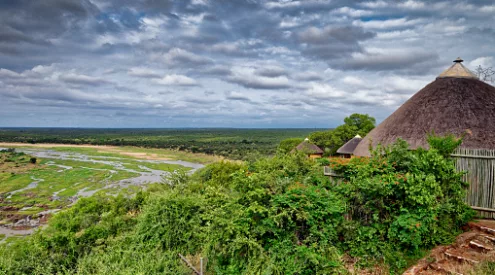
Located along the Salamat River and shaded by mature tamarind trees, Tinga Camp offers a comfortable base from which to explore the park.
The camp has 24 chalets with en-suite facilities, mosquito nets and ceiling fans. Its setting provides an opportunity to relax between safari activities while remaining immersed in the surrounding natural environment.
Camp Nomade
For a more immersive wilderness experience, Camp Nomade offers a seasonal camping option. It is particularly suited to visitors looking for a closer connection with the landscape and the experience of spending time in the bush.
Accommodation options and seasonal availability should be confirmed directly with the park before travelling.
Getting to Zakouma
Reaching Zakouma requires some planning. The park is approximately 860km from Chad’s capital, N’Djamena, and the journey by road can take between 12 and 18 hours, depending on the season and route.
A four-wheel-drive vehicle is strongly recommended, and visitors can arrange transport with a driver familiar with the route. Alternatively, private charter flights offer access to the park’s airstrip, which is approximately 15 minutes from Tinga Camp by vehicle.
Given the remote location, travellers should arrange accommodation, transport and entry requirements well in advance.
Most international visitors require a visa to enter Chad, and a valid yellow fever vaccination certificate is required. Visitors should also arrange appropriate travel and medical insurance and consult their healthcare provider about malaria prevention and other travel health precautions.
Before making arrangements, check the latest travel advisories issued by your government, as well as the park’s official visitor information.
A conservation story still being written
Zakouma’s recovery is a reminder that conservation is not a once-off achievement. Protecting wildlife requires consistent investment, effective management and cooperation between governments, conservation organisations and local communities.
The partnership between the Chadian government and African Parks has itself undergone challenges. Following a period of discussions and renewed dialogue in 2025, the two parties signed new partnership agreements on 2 July 2026, reaffirming their commitment to the co-management of Zakouma and other protected areas in Chad.
The renewed agreements provide a foundation for continued conservation work, community development and the protection of the wider Greater Zakouma Ecosystem.
There are still challenges, including illegal hunting pressure, regional instability and the ongoing need to protect wildlife beyond the park’s boundaries. However, the progress made over the past 15 years demonstrates what sustained conservation efforts can achieve.
For travellers, Zakouma offers more than the chance to see elephants roaming across an African floodplain or giraffes moving through open savannah. It provides an opportunity to experience a wilderness that has fought its way back from the brink.
And perhaps that is what makes this corner of Chad so compelling: its greatest attraction is not simply the wildlife that lives here, but the remarkable story of how it survived.
Follow us on social media for more travel news, inspiration, and guides. You can also tag us to be featured.
Instagram | Facebook | Twitter | Spotify
ALSO READ:
Wildflowers sweep across Chile’s Atacama Desert after record rains