


At the northernmost reaches of Kruger National Park, where South Africa meets Mozambique and Zimbabwe, lies a corner of wilderness that feels quite different from the rest of the reserve.
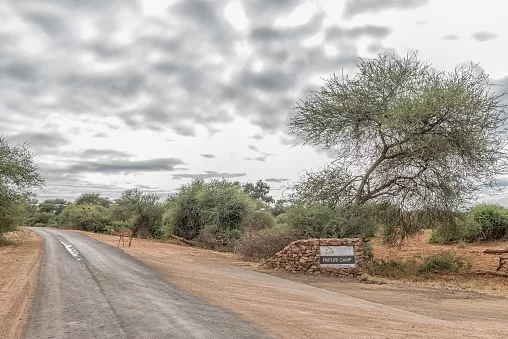
Turn-off from road H1-9 to Pafuri Camp/By: GroblerduPreez/Getty Images
Here, ancient baobabs rise above the woodland, pale fever trees line winding riverbanks, and dense forests provide shelter for some of the country’s most fascinating birdlife.
This is Pafuri, a remarkable landscape shaped by the Luvuvhu and Limpopo rivers. While much of Kruger is celebrated for its open savannahs and Big Five sightings, the far north offers a different kind of safari experience. Its appeal lies in its unusual vegetation, diverse wildlife and rich cultural history.
For travellers willing to venture further north, Pafuri reveals another side of one of Africa’s most celebrated wilderness areas.
A landscape shaped by two rivers
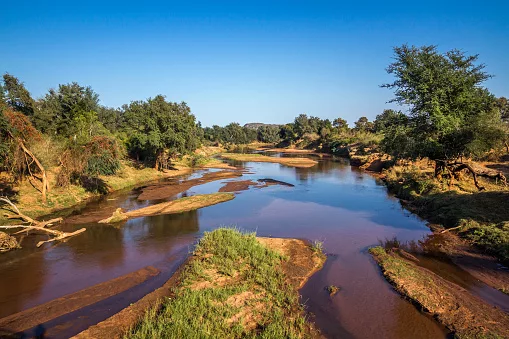
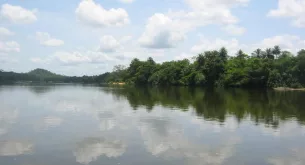
Luvuvhu River in Pafuri, Kruger National Park/By: Utopia_88/iStock
Pafuri occupies the far northern section of Kruger in Limpopo, close to the borders of Mozambique and Zimbabwe. The region is shaped by the Luvuvhu River, which winds through the landscape before meeting the Limpopo River near the park’s northern boundary.
These waterways sustain a variety of habitats, including riverine forests, floodplains, mopane woodland and dry savannah. The result is a landscape where lush green corridors contrast with open, sun-baked terrain.
One of Pafuri’s most distinctive features is its unusual combination of fever-tree forests and enormous baobabs. Along the riverbanks, fever trees stand out with their smooth, yellow-green trunks, while baobabs dominate the drier woodland with their enormous trunks and distinctive branches.
It is this contrast that gives the region much of its character, offering a landscape quite unlike the open grasslands often associated with Kruger.
A birdwatcher’s paradise
Pafuri is widely regarded as one of South Africa’s premier birdwatching destinations. Its combination of riverine forests, woodland and floodplains attracts an impressive variety of resident and migratory species.
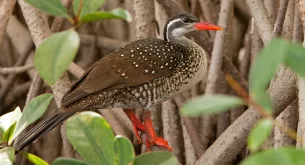
Birds worth looking out for include Pel’s fishing owl, African finfoot, Narina trogon, trumpeter hornbill, broad-billed roller and crested guineafowl.
The Pafuri Picnic Site, situated beside the Luvuvhu River, is a particularly rewarding place to spend time observing the birdlife. The surrounding trees and riverbanks provide habitats for numerous species, while the nearby S63 and S64 scenic drives offer further opportunities for sightings.
Summer brings migratory birds to the region, although birdwatching remains rewarding throughout the year.
Wildlife and history in the far north
Although Pafuri is particularly celebrated for its birdlife and vegetation, it is still very much part of the greater Kruger wilderness. Elephants, buffalo, leopards and various antelope species inhabit the region.
Nyala are particularly associated with the northern riverine forests, while crocodiles and hippos can be spotted along the waterways.
Another fascinating landmark is Crooks’ Corner, near the meeting point of the Limpopo and Luvuvhu rivers. Here, the borders of South Africa, Mozambique and Zimbabwe converge.
The area has a colourful history associated with hunters, smugglers and traders who once used its remote location to move between territories and evade authorities. Today, visitors can appreciate both its geographical significance and its remarkable natural surroundings.
Pafuri also has deep cultural significance for the Makuleke community, who were forcibly removed from their ancestral land in 1969. Following a successful land claim, ownership was restored in 1998, with the area becoming the Makuleke Contractual Park. Today, the community and SANParks work together to manage the conservation landscape, creating opportunities for community participation in tourism and conservation.
Things to see and do in Pafuri
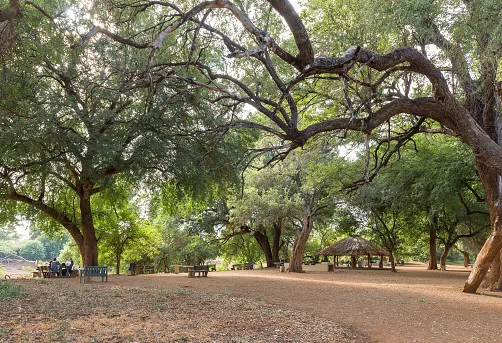
View of the Pafuri Picnic Site/By: GroblerduPreez/Getty Images
Pafuri is best explored at a leisurely pace, with several worthwhile stops for visitors wanting to experience its natural and cultural attractions.
Explore the Luvuvhu River drives
The S63 and S64 routes are among the highlights of northern Kruger. Following the Luvuvhu River through riverine forest and woodland, these scenic drives offer opportunities to spot elephants, antelope, crocodiles and an impressive variety of birds.
Stop at Pafuri Picnic Site
Set beneath shady trees along the Luvuvhu River, Pafuri Picnic Site is an ideal place to stop for a break. Visitors can enjoy a picnic, take in the surrounding scenery and spend time looking for birds in the nearby vegetation.
Visit Crooks’ Corner
A visit to Crooks’ Corner offers an opportunity to stand near the meeting point of three countries. The surrounding landscape is particularly scenic, with riverine vegetation and views across the waterways.
Discover Thulamela
For a glimpse into the region’s ancient history, consider arranging a guided visit to Thulamela, an archaeological site within northern Kruger.
The remains of this late Iron Age settlement offer insight into the communities that once inhabited the region and their involvement in long-distance trading networks. Gold and ivory were among the commodities traded through these networks, with connections extending towards the Indian Ocean.
Guided visits can be arranged through SANParks, with booking recommended.
Planning a visit to Pafuri
Pafuri is situated in the far north of Kruger, making it a longer journey for visitors entering from the park’s southern gates. Pafuri Gate provides access to this section of the park, while Punda Maria Gate is another useful entry point.
The drier winter months, from May to September, generally offer good wildlife-viewing opportunities as animals gather around available water sources. Summer, from November to March, brings migratory birds and lush green vegetation, although afternoon thunderstorms are common.
Visitors can explore the public self-drive routes or book accommodation at nearby safari lodges for guided activities and a more immersive wilderness experience.
Before travelling, check current road conditions, gate times, conservation fees and visitor requirements with SANParks.
Pafuri offers a reminder that Kruger National Park is far more than its famous open plains and Big Five sightings. In its northern reaches, ancient baobabs, unusual fever-tree forests and winding rivers create a landscape with a character all its own. For travellers looking to discover a different side of South Africa’s most celebrated national park, this remarkable corner is well worth the journey.
Follow us on social media for more travel news, inspiration, and guides. You can also tag us to be featured.
Instagram | Facebook | Twitter | Spotify
ALSO READ:
Why flamingos thrive in lakes where few other birds can survive