

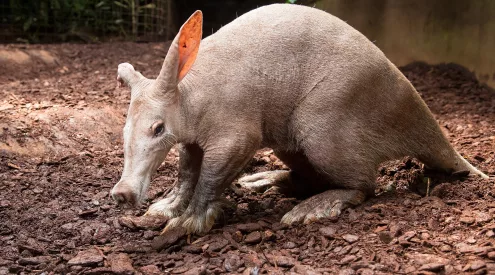


South African history is often simplified down to colonisation and apartheid, writes Joshua Kearney.
In truth, this is a restrictive view of the nation’s past. There are a vast number of ruins, remains, and forgotten wonders all across the country. From the earliest evidence of humans as we know them today, to the rich, complex peoples and cultures that lived here long before Europe arrived in the Cape.
Explore pre-colonial South African history through these incredible sites.
1. The Cradle of Humankind

Maropeng Visitor Centre, the Cradle of Humankind/Wikimedia Commons

Hominid Fossils from the Cradle/Wikimedia Commons
Among the most famous paleoanthropological sites, the Cradle of Humankind is home to the largest concentration of human ancestral remains in the world. With the first fossils unearthed in the early 20th Century, the Cradle’s reputation began with the examinations made by palaeontologist Robert Broom in 1936.
One of the most influential fossils found was the 2.3-million-year-old remains of an Australopithecus africanus. Nicknamed “Mrs. Ples”, she represented a major step forwards in uncovering human origins.
Another incredible discovery came with the Rising Star Cave system in 2015. In the Dinaledi Chamber (“Chamber of Stars”), no less than 15 skeletons were found. These all belonged to an extinct species provisionally named Homo naledi.
2. Blombos Cave

Outside View of the Cave/Wikimedia Commons

Stone Pieces from the Cave/Wikimedia Commons
Just 300km East of Cape Town, this site proved invaluable in studying human development. Deposits dating to the Middle Stone Age – more than 70,000 years ago – gave researchers an invaluable insight into our shared past.
The most significant finds prompted a paradigm shift in our understanding of humanity. Engraved ochre and bone, ochre processing kits, marine shell beads, refined bone and stone tools, and a broad range of animal remains. Together, these indicate a much greater degree of development than previously expected.
In all, the cave was key to realising human origins to the degree we know today.
3. Mapungubwe Cultural Landscape

Mapungubwe Structures/Wikimedia Commons

Art from the Area/Wikimedia Commons
This 30,000-hectare area is home to the remains of three distinct capitals. Together, they demonstrate the rise and fall of the first indigenous kingdom in South African history. Dated to between 900 and 1,300 AD, Mapungubwe was home to the most important inland settlement of its time.
The kingdom flourished from trade with Eastern nations like China and India. With gold and ivory, rare commodities elsewhere, they grew wealthy and thrived for more than 200 years. Sadly, despite this historical landmark, the kingdom’s original name has been lost to time. Its current name is instead derived from various Bantu languages to mean “land of many jackals”.
4. Diepkloof Rock Shelter

The Rock Shelter/Wikimedia Commons

Eggshell Engravings/Wikimedia Commons
Just 17km from the shoreline and 150km North of Cape Town, this simple shelter is home to some of the earliest evidence of human symbols.
It was first excavated in 1973 by John Parkington and Cedric Poggenpoel. The most significant finds are 270 ostrich eggshell fragments. Once formed into containers, these 60,000-year-old fragments are decorated with distinctive, repeated patterns. Unlike many other, older finds, these are clearly deliberate in nature. They may be the first known example of attempts to convey information through symbols.
5. Thulamela

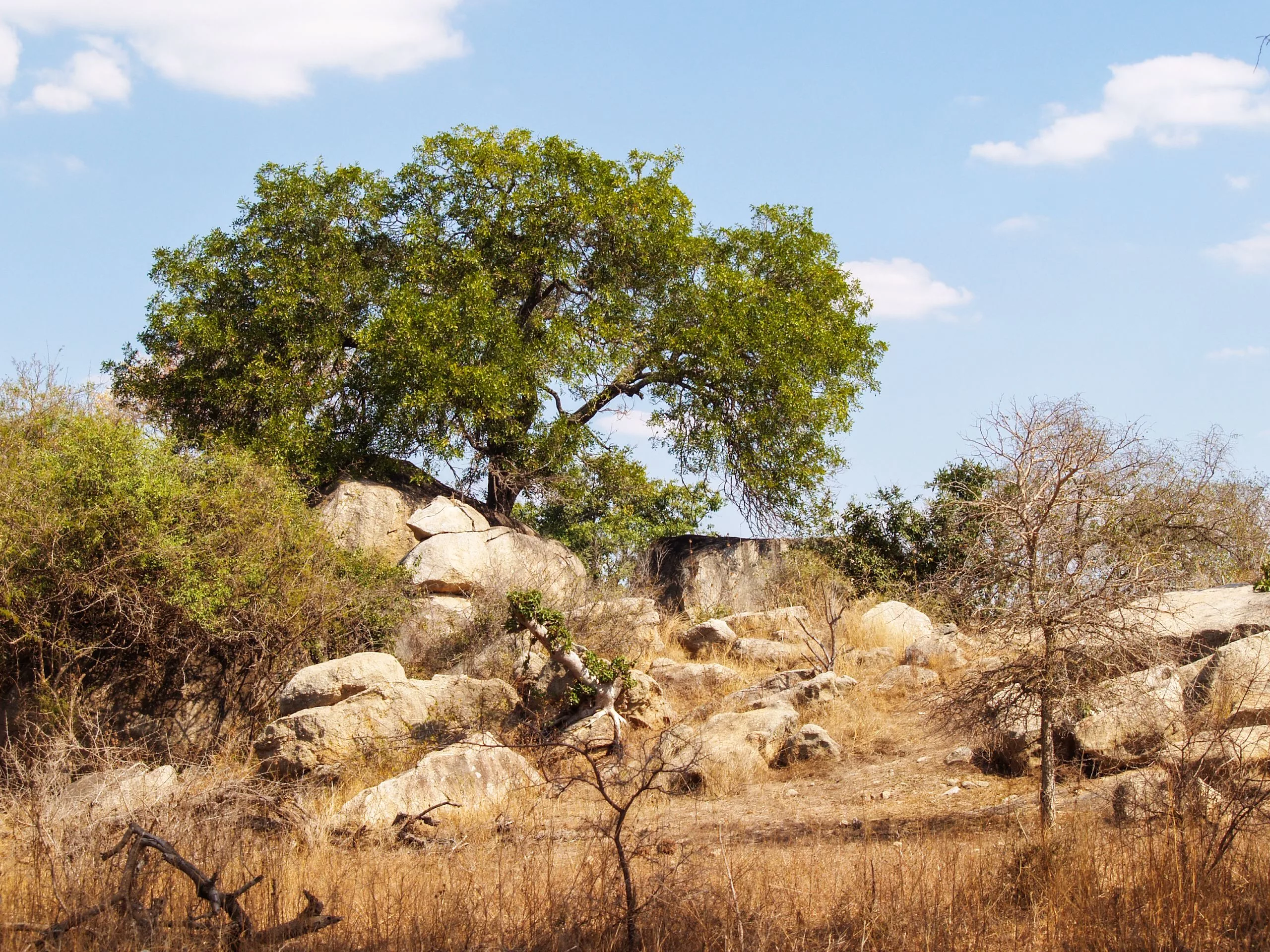
Baobabs near the Thulamela Ruins/Wikimedia Commons
Another sequence of remnants from an ancient civilisation, Thulamela is the greatest of 300 such sites present throughout Kruger National Park. Found on the heights South of a riverbank, a kingdom was founded in the 13th Century near where the Limpopo and Levubu rivers meet.
This kingdom was a contemporary of Mapungubwe, Great Zimbabwe, and Khami. It regularly interacted and traded with them throughout its lifespan. Thulamela’s kingdom notably specialised in the creation of various items from smelted copper, iron, and gold. The collapse of the nearby kingdom of Butua in the 17th Century was likely the cause of its own decline and abandonment. Today, it yet remains a stunning reminder of African cultures.
Takeaways
It’s easy to forget that South Africa is more than its colonial past. However, it’s equally important that this older history is remembered. If nothing else, looking upon these ancient remains is a breathtaking experience.
Follow us on social media for more travel news, inspiration, and guides. You can also tag us to be featured.
TikTok | Instagram | Facebook | Twitter
ALSO READ: