



With three hearts, remarkable camouflage abilities and an uncanny talent for squeezing through tiny spaces, the octopus is one of the ocean’s most extraordinary residents.
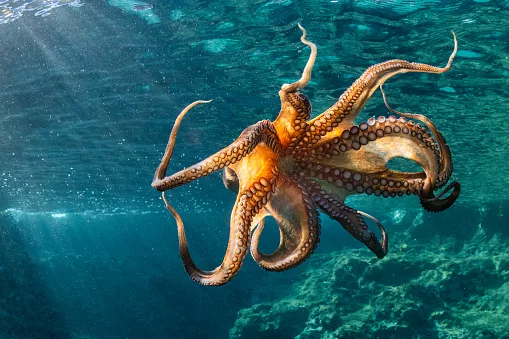
A beautiful scene of an octopus swimming in the Adriatic Sea/By: EXTREME-PHOTOGRAPHER/Getty Images
World Octopus Day, celebrated annually on 8 October, is an opportunity to learn more about these intelligent and fascinating marine animals and the challenges they face in the wild.
Octopuses are found in every ocean on Earth, from shallow coastal waters to the deep sea. While they may look alien, their intelligence, complex behaviour and ability to interact with their surroundings have made them some of the most intriguing animals in the marine world.
Here are eight fascinating things to know about them.
1. They have three hearts
An octopus has three hearts. Two pump blood through its gills, while the third pumps blood around the rest of its body.
Interestingly, the main heart stops beating while the octopus swims, which is one reason these animals often prefer crawling along the ocean floor rather than swimming long distances.
2. Their arms can process information independently
Octopuses have one central brain as well as neural networks in each of their eight arms.
These networks allow the arms to process information independently, including information relating to touch, taste and smell. This unusual nervous system contributes to the octopus’s extraordinary ability to explore and interact with its surroundings.
3. They can regrow lost arms
Octopuses have an incredible ability to regenerate. If an octopus loses an arm, it can gradually regrow it, including the nerves and other structures needed for the arm to function. Some species can even continue using their remaining arms while the new one develops.
4. They are masters of disguise
Camouflage is one of an octopus’s most impressive survival skills.
By changing the colour and appearance of their skin, some species can blend into rocks, sand, coral and other parts of their surroundings. This can help them avoid predators while also allowing them to approach prey without being noticed.
Some species can even alter the texture of their skin to make their disguise more convincing.
5. They can squeeze through surprisingly small spaces
An octopus has no internal skeleton or protective shell, which gives it an extraordinary degree of flexibility.
If its beak can fit through an opening, the rest of its body can often follow. This ability allows octopuses to disappear into cracks, crevices and other spaces that appear far too small for them.
It also helps explain why these animals have earned a reputation as underwater escape artists.
ALSO READ:
A lost Ice Age relative of the yak has been uncovered in Siberia
6. They don’t live very long
Despite their intelligence and complex behaviour, many octopus species have relatively short lifespans.
World Animal Protection says octopuses generally live for around one to two years, although there are exceptions. One deep-sea mother octopus, for example, was documented caring for her eggs for an extraordinary 53 months.
7. They face growing threats in the ocean
Octopuses are not currently considered endangered as a group, but that does not mean they are free from threats.
Changing ocean temperatures and poor water quality can affect them, while marine pollution can pose additional risks. Octopuses have also been found to ingest plastic waste, which can affect their health.
Overfishing is another concern. People catch octopuses for food and the aquarium trade, and some fisheries use unsustainable or illegal practices.
8. Octopus farming has sparked controversy
The growing interest in farming octopuses has raised questions about animal welfare and the environmental impact of keeping these highly intelligent animals in captivity.
In July 2026, plans for what had been described as the world’s first commercial octopus farm were abandoned in Spain’s Canary Islands after years of opposition from animal welfare groups, scientists and members of the public. World Animal Protection had campaigned against the project, citing concerns about the welfare of octopuses in intensive farming systems.
The organisation has also highlighted concerns about octopus farming’s environmental footprint, including the use of wild-caught fish as feed.
There is plenty to celebrate about these remarkable animals
World Octopus Day is more than an excuse to share photographs of these unusual creatures. It is also a chance to appreciate the complexity of marine life and think about what can be done to protect the oceans they call home.
For travellers, one of the easiest ways to celebrate is to learn more about the marine life found along our coastlines and visit reputable aquariums, marine centres or conservation organisations that educate visitors about ocean ecosystems.
And the next time you spot an octopus in a rock pool, while diving or snorkelling, remember that you’re looking at an animal with three hearts, an extraordinary nervous system and some of the ocean’s most impressive survival skills.
Source: World Animal Protection
Follow us on social media for more travel news, inspiration, and guides. You can also tag us to be featured.
Instagram | Facebook | Twitter | Spotify
ALSO READ: