





The European Commission has introduced its first Sustainable Tourism Strategy, outlining plans to make Europe’s tourism industry more competitive, manage overcrowding and encourage travellers to explore destinations beyond the continent’s most popular hotspots.
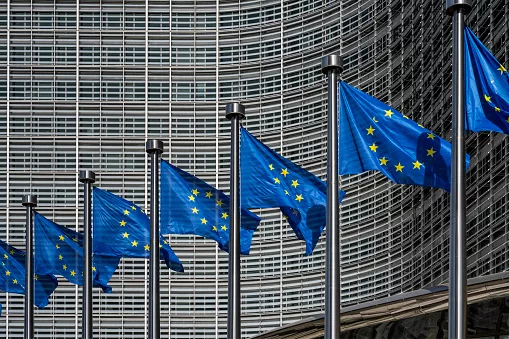
European flags in front of headquarters of European Commission in Brussels/By: Jacek Kadaj/Getty Images
Announced in Brussels on 9 November, the strategy aims to address some of the biggest challenges facing the travel industry, including climate change, skills shortages, geopolitical uncertainty and changing traveller expectations.
The initiative also places greater emphasis on protecting local communities, supporting tourism businesses and ensuring that the economic benefits of travel reach more regions across Europe.
Tourism plays a significant role in the European economy. According to figures cited by the European Commission, the sector supports approximately 20 million jobs and five million tourism businesses, 99% of which are small and medium-sized enterprises. It also contributes around 10% of the European Union’s gross value added.
However, as visitor numbers continue to place pressure on established destinations, the Commission believes a more coordinated approach is needed to ensure the industry’s long-term sustainability.
What does the new EU Sustainable Tourism Strategy involve?
The strategy aims to strengthen Europe’s position as a leading international travel destination while making tourism more beneficial for the people who live and work in its regions.
One of its central proposals is the establishment of a high-level EU Tourism Alliance. The initiative will bring together member states, regional authorities, local governments, tourism businesses and industry stakeholders to coordinate policies and encourage more balanced tourism development.
The Commission also wants to make it easier for smaller tourism businesses and destination management organisations to access digital tools, industry data and professional training.
Among the proposed initiatives is a new EU Tourism Academy, which will focus on developing skills needed across the industry. Plans also include a Common European Tourism Data Space and an EU Tourism Observatory to help identify emerging trends and support better-informed decisions.
These measures are intended to improve the competitiveness of the tourism sector while reducing unnecessary administrative barriers for businesses.
Encouraging travel beyond Europe’s busiest destinations
A major focus of the strategy is addressing the uneven distribution of tourism across Europe.
While destinations such as Paris, Barcelona and Venice continue to attract millions of visitors, less-visited towns, rural communities and regional destinations often receive a smaller share of tourism spending.
The Commission wants to encourage travellers to look beyond these established hotspots, spreading tourism more evenly across the continent.
Promoting travel throughout the year is another priority. By encouraging visitors to explore destinations outside the traditional peak holiday seasons, the strategy aims to reduce seasonal pressure while creating more consistent opportunities for local businesses and tourism workers.
Proposed measures include an EU Model for Tourism Management, a Toolbox for Balanced Tourism and a European Tourism Crisis Coordination Network.
The broader objective is to develop tourism in a way that supports local economies without compromising the cultural identity, natural resources and quality of life of the communities that welcome visitors.
How has the tourism industry responded?
The strategy has received a positive response from several organisations representing Europe’s travel and tourism sector.
The European Travel Agents’ and Tour Operators’ Associations (ECTAA) welcomed the initiative, describing it as an important step towards more balanced, connected and resilient tourism across the continent.
The organisation highlighted the importance of supporting smaller tourism businesses, investing in professional skills and improving transport connections, particularly through rail and aviation.
The International Road Transport Union (IRU) also welcomed the announcement. It pointed to the challenges faced by coach operators navigating different vehicle access restrictions across European cities, noting that better access to information and more consistent regulations could improve travel connectivity.
Meanwhile, the European Travel Commission (ETC) described the strategy as a positive step towards closer cooperation between European institutions and tourism industry stakeholders.
What could this mean for the future of travel?
The new strategy reflects a wider shift in how destinations are approaching tourism growth. Rather than focusing solely on attracting more visitors, the emphasis is increasingly on managing tourism responsibly, protecting local communities and encouraging exploration beyond well-established destinations.
For travellers, this could eventually mean more opportunities to discover smaller towns, rural landscapes and lesser-known cultural destinations, while experiencing popular regions outside their busiest travel periods.
Although the strategy focuses specifically on the European Union, its priorities reflect challenges faced by tourism destinations around the world, including those in Africa.
From managing visitor numbers in popular national parks to supporting smaller tourism operators and encouraging travel beyond established hotspots, the balance between tourism growth and conservation remains an important consideration for destinations seeking long-term sustainability.
The European Commission’s strategy sets out a framework for addressing these challenges across Europe, with its success ultimately depending on how effectively the proposals are implemented.
Source: Euronews, European Commission launches the EU Sustainable Tourism Strategy: Here’s what you need to know
Follow us on social media for more travel news, inspiration, and guides. You can also tag us to be featured.
Instagram | Facebook | Twitter | Spotify
ALSO READ:
Luxury expedition cruise ship set to visit Hermanus this November