




At Game Pass Shelter in KwaZulu-Natal’s Kamberg Nature Reserve, a painted eland lowers it’s head, it’s hind legs crossed beneath it. A figure holding it’s tail mirrors it’s stance.
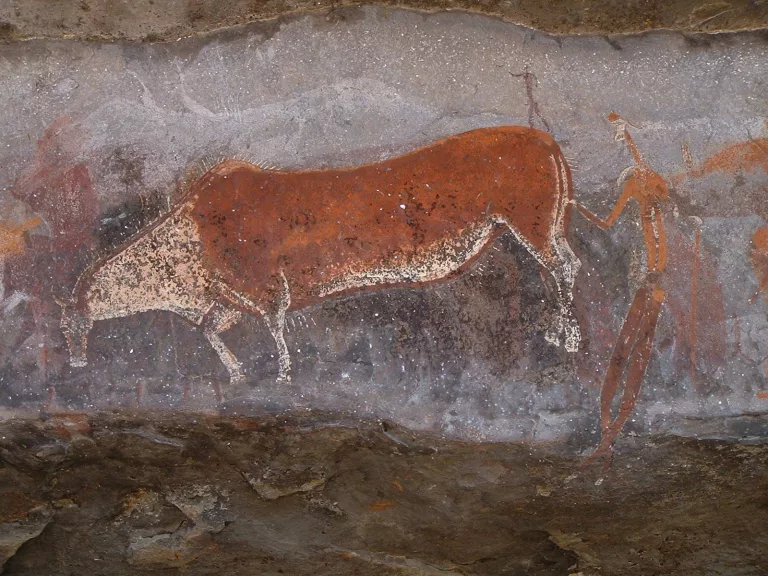
Rock art of a human figure holding the tail of an eland. This is thought to be a depiction of a shaman in a trance, with n/om (power) being transferred to the shaman from a dying eland. This painting has been referred to as the ‘Rosetta Stone’ of South African rock art. Game Pass Shelter, Kamberg, KwaZulu-Natal Drakensberg, South Africa. / Alandmanson / Wikimedia Commons
These details helped researchers understand the spiritual meaning behind San rock art, making this mountain shelter one of South Africa’s most significant painted sites.
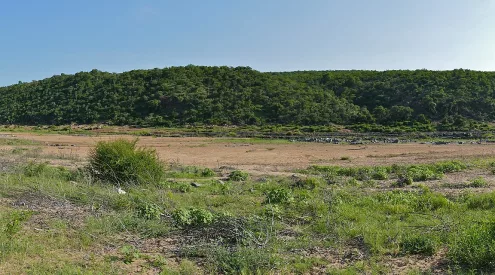
Reaching it takes a guided uphill walk, with time to appreciate the landscape before turning your attention to the rock face.
The walk to the shelter
The route starts at the Kamberg Rock Art Centre and passes Waterfall Shelter on it’s way up to Game Pass. Drakensberg Hikes lists the return distance at approximately 6.8 kilometres. Allow around 90 minutes to two hours for the uphill approach, depending on your pace, and leave a generous half-day for the outing. Wits University describes the climb as relatively strenuous, so give yourself time to enjoy it.
Game Pass lies within the Maloti-Drakensberg Park World Heritage Site, recognised for it’s natural importance and exceptional concentration of rock paintings. Across the wider park, the art records San spiritual life over several millennia.
Visitors must go with a trained guide or custodian. Amafa, KwaZulu-Natal’s provincial heritage authority, requires an Amafa-trained custodian to accompany visitors to it’s publicly accessible rock art sites. They help protect the paintings and explain what you are looking at.
Why the paintings matter
Eland dominate Game Pass’s shaded, multicoloured paintings. Alongside them are human figures and therianthropes, beings that combine human and animal features. For the San painters, eland carried spiritual power that could be drawn on during rituals such as trance dances.
The shelter’s best-known panel became an important key to interpreting that relationship. Professor David Lewis-Williams named it the Rosetta Stone in the early 1980s because of the insight it offered into the beliefs and rituals behind the imagery.
Look closely at the dying eland and the figure holding it’s tail. Their crossed legs, lowered heads and raised hair echo one another. Researchers linked these similarities to San understandings of trance as a form of dying, sometimes described as a “half-death”.
A guide can help you follow those connections across the panel. What initially looks like an encounter between a person and an animal becomes a way of expressing spiritual transformation. That shift in understanding is central to Game Pass’s importance in rock art research.
A place that still holds meaning
Game Pass remains spiritually significant. Wits records that Zulu traditional healers and Khoe-San descendants make pilgrimages here, while the site provides employment for members of the nearby Thendela community. It also closes on certain days so local people can conduct ceremonies in private.
The South African Heritage Resources Agency recognises these continuing connections to cultural practice and ancestral identity. For visitors, that is a reason to approach the shelter with care and follow the guide’s lead.
Research continues, too. An August 2026 study examined the shelter’s acoustics and found conditions that could keep voices, music and rhythmic sounds clear. The findings cannot prove that particular performances happened here, but they offer another way to consider how people may have experienced the space around the paintings.
Planning your visit
Book a guided walk through Kamberg reception and confirm access, departure arrangements and current fees before travelling. Comfortable walking shoes, water, a hat, sunscreen and snacks are sensible essentials for the outing.
At the shelter, look closely without touching or leaning against the paintings. Never wet the images to make their colours clearer. Wits’ visitor guidance recommends taking photographs while leaving the rock surface undisturbed.
On the walk back, you may find yourself thinking about that eland again. A lowered head, crossed legs, a figure reaching for it’s tail. Once the details have been pointed out, they are difficult to forget.
Give Game Pass enough time. The mountain walk gets you there, but understanding a little of what is painted on the rock makes the visit stay with you.
Follow us on social media for more travel news, inspiration, and guides. You can also tag us to be featured.
Instagram | Facebook | Twitter | Spotify
ALSO READ:
Gansbaai beyond the sharks: Discover caves, coastal trails and conservation