

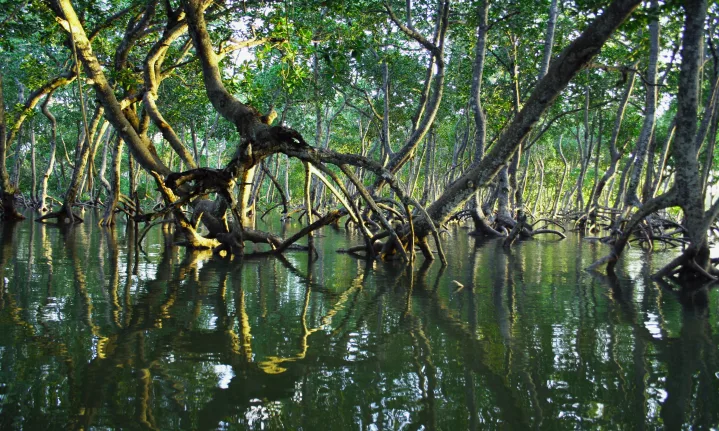
The Eastern Cape’s Wild Coast is famous for it’s rugged beaches, rolling green hills and winding rivers. But near Port St Johns, a different kind of landscape awaits.
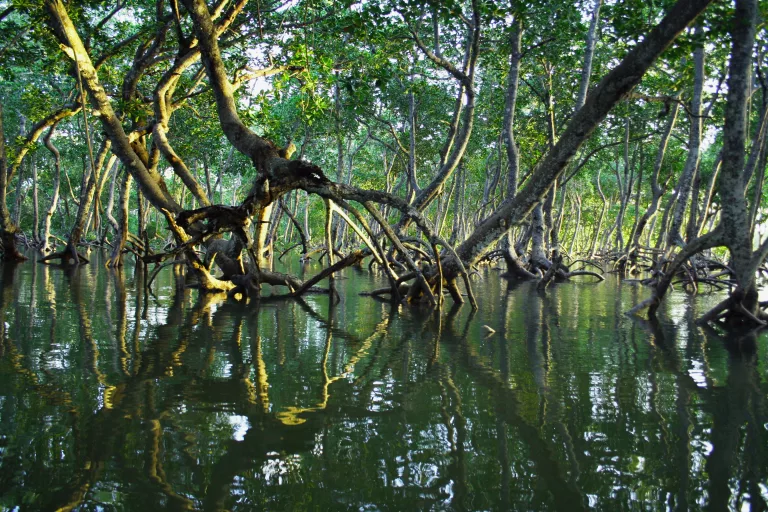
mangrove forest / timothy K / Unsplash / Illustrative purposes only
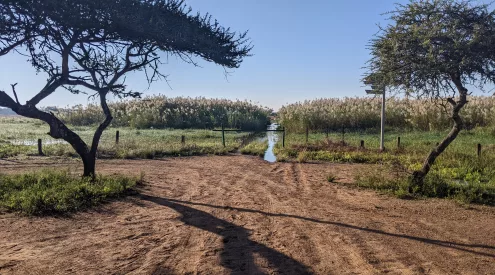
The Mngazana Estuary is home to one of South Africa’s largest mangrove forests, where a maze of waterways and tangled roots creates a natural attraction unlike any other along this stretch of coastline.
Exploring the forest by kayak or canoe offers a closer look at an ecosystem that is easy to overlook but plays an important role in coastal life.
A forest shaped by the tides
About 20km south of Port St Johns, the Mngazana Estuary supports South Africa’s third-largest mangrove forest. Recent provincial mapping recorded it at approximately 146 hectares.
Mangroves thrive where rivers meet the sea, growing in muddy, salty conditions that few other trees can tolerate. Three species occur at Mngazana: white mangrove (Avicennia marina), red mangrove (Rhizophora mucronata) and black mangrove (Bruguiera gymnorrhiza).
Their unusual roots are part of what makes the forest so interesting. White mangroves have pencil-like roots that emerge from the mud, red mangroves develop arching stilt roots, while black mangroves have distinctive knee-shaped roots. Each is adapted to help the trees survive in waterlogged, oxygen-poor sediment.
Mngazana is also close to the southern limit of mangrove distribution in Africa, making it an important site for understanding and protecting these coastal forests.
Life among the roots
There is much more happening beneath the canopy than first meets the eye. The mangroves’ dense root systems provide shelter for fish, crabs and other marine creatures, while fallen leaves help sustain the estuary’s food chain.
The roots also trap sediment, limit erosion and help protect the surrounding coastline. Like other mangrove forests, Mngazana stores carbon and supports a range of species that depend on healthy estuarine habitats.
Research has recorded a diverse mix of tropical, subtropical and temperate fish species in the estuary, highlighting it’s importance as a nursery and feeding habitat.
A forest with a community connection
For the villages surrounding Mngazana, the forest has long been more than a natural attraction. Communities have traditionally relied on the mangroves and estuary for resources such as firewood, building materials and fishing bait.
There are also efforts to create alternative livelihoods around the forest. One example is the Sise Cwebeni Bee Farming Cooperative, established in 2010 by eight villagers.
The cooperative keeps beehives within the mangroves and harvests honey as a source of income. Reaching the hives means walking several kilometres through the forest, but the initiative offers a way to benefit from the natural environment without depending entirely on extracting it’s resources.
A fire destroyed the cooperative’s training and processing facility in 2020, affecting it’s operations. Members continued working on a smaller scale, however, keeping the initiative alive. It’s an interesting example of how conservation and community livelihoods can work alongside one another.
Exploring the Mngazana mangroves
The best way to experience the forest is from the water. Guided canoe and kayak trips take visitors through the estuary, past the mangroves and their unusual root systems.
Birdwatching is another reason to visit, with the estuary and surrounding habitats supporting a variety of birdlife. Moving quietly along the waterways offers opportunities to spot birds feeding along the banks and among the vegetation.
Mngazana Adventures, a family-run operator based in Madakeni village, offers mangrove tours, kayaking and birdwatching experiences. A local guide can also provide insight into the area’s wildlife and the communities that have lived alongside the estuary for generations.
Take your time here. The forest is best appreciated slowly, whether you’re watching the water move between the roots or spotting small creatures along the muddy banks.
Protecting the forest
Despite it’s ecological importance, Mngazana faces pressure from human activity. Research published in 2026 examined mangrove forests across 17 Eastern Cape estuaries, identifying wood harvesting, livestock browsing and trampling among the threats to their health.
At Mngazana, researchers recorded harvesting pressure affecting red and black mangroves, alongside gaps in the forest canopy and concerns about natural regeneration.
Government mapping and botanical surveys are helping to improve understanding of the forest, while wider conservation initiatives through the Eastern Cape Parks and Tourism Agency aim to strengthen protection along the Wild Coast. For the mangroves to survive, conservation efforts need to consider both the ecosystem and the communities that depend on it.
A different side of the Wild Coast
The Mngazana mangroves offer a different perspective of the Eastern Cape. Away from the beaches and familiar coastal viewpoints, this is a landscape best explored slowly, with a paddle in hand and a local guide leading the way.
It may not have the dramatic scenery the Wild Coast is known for, but it’s appeal lies in discovering something less familiar. Beneath the tangled canopy is an entire ecosystem, a history of community connections and a reminder of how much these coastal forests contribute to the natural world.
Follow us on social media for more travel news, inspiration, and guides. You can also tag us to be featured.
Instagram | Facebook | Twitter | Spotify
ALSO READ:
Nylsvley: The Limpopo wetland that can attract thousands of birds