




Several suspected endangered parrot eggs seized at Johannesburg’s OR Tambo International Airport have hatched after a Thai national was arrested for allegedly attempting to smuggle them out of South Africa.

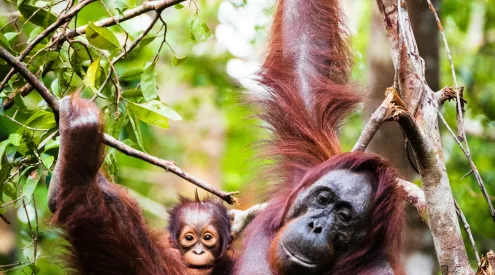
Image used for ilustrative purposes/By: Nathan Griffith/Getty Images
According to the BBC, 50 eggs were intercepted on 20 August after a 50-year-old Thai national was arrested at the airport. The eggs were allegedly concealed in a homemade incubator bag carried as hand luggage.
The Department of Forestry, Fisheries and the Environment (DFFE) said many of the rescued eggs have since hatched. The chicks are now receiving intensive care at the National Zoological Garden in Pretoria to give them the best possible chance of survival.
Eggs believed to belong to protected parrot species
Preliminary investigations indicate that the eggs came from parrot species protected under the Convention on International Trade in Endangered Species of Wild Fauna and Flora (CITES).
The species has not yet been publicly confirmed, and investigations into the case are continuing.
If convicted, the suspect could face a fine of up to R10 million or 10 years in prison, or both.
The arrest followed a joint intelligence-led operation involving the DFFE’s Environmental Management Inspectorate, known as the Green Scorpions, SAPS Crime Intelligence, SAPS Border Police and the Stock Theft and Endangered Species Unit.
ALSO READ:
A second parrot egg seizure
The case is the second involving suspected parrot egg trafficking at OR Tambo in recent months.
On 16 July, a 23-year-old Thai national was allegedly caught at the same airport with 418 parrot eggs hidden inside two homemade incubator bags.
Authorities say the two cases point to the increasingly sophisticated nature of international wildlife trafficking networks.
Improvised incubation devices can also put eggs and developing chicks at risk, with authorities warning that trafficking can severely affect their viability and welfare.
South Africa’s wider wildlife trafficking problem
The arrests highlight a less visible side of the illegal wildlife trade. While elephants, rhinos and pangolins are among the species most commonly associated with wildlife trafficking, birds and their eggs can also be targeted for the international market.
South Africa has responded to the growing threat through its National Integrated Strategy to Combat Wildlife Trafficking, which brings together government departments, conservation authorities, law enforcement agencies, customs officials, prosecutors and international partners.
Environment Minister David Maynier praised the agencies involved in the latest operation, saying coordinated enforcement was essential to tackling wildlife trafficking.
For the rescued hatchlings, the immediate priority is more straightforward: specialist care and survival after what officials say was a dangerous journey in an improvised incubator.
Source: BBC, with additional information from South Africa’s Department of Forestry, Fisheries and the Environment.
Follow us on social media for more travel news, inspiration, and guides. You can also tag us to be featured.
Instagram | Facebook | Twitter | Spotify
ALSO READ:
Nepal flash floods leave at least 165 dead as hundreds of tourists remain missing