







In a developing story that has raised alarm among marine researchers and fishery stakeholders, laboratory sequencing has confirmed the presence of pilchard herpesvirus (PHV) genetic material in sardines amid an ongoing investigation into unexplained mass mortality events along South Africa’s West Coast, Cape {town} Etc reports.
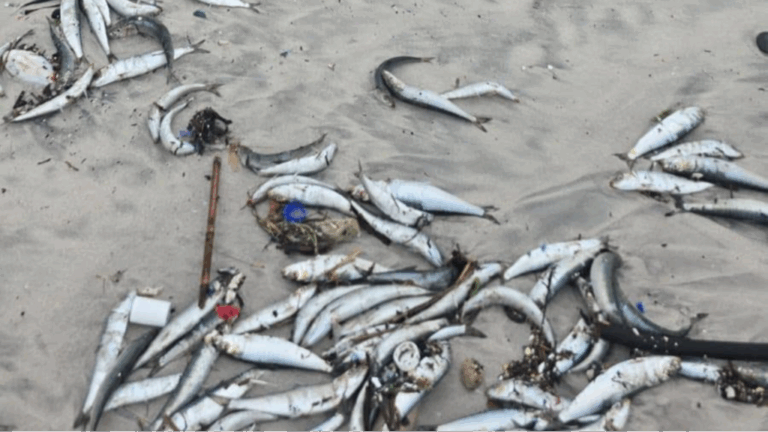
Picture: Beauty Without Cruelty / Jason Lava Smith
The Department of Forestry, Fisheries and the Environment (DFFE) issued a statement on Friday detailing the findings which have implications not only for local fish populations but also for the broader ecosystem.
PHV was identified in both deceased sardines and, notably, in some apparently healthy specimens collected from the region.
This discovery, however, has raised further questions rather than answers, as the DFFE cautioned that the presence of the virus alone may not be the sole factor responsible for the alarming number of sardine deaths observed recently.
Environmental stressors under investigation
In light of these findings, scientists are exploring whether additional environmental stressors—such as harmful algal blooms, oxygen depletion, or unusual oceanographic conditions—may have either triggered or exacerbated the mass mortality event.
The DFFE described this hypothesis as requiring further investigation, suggesting that the situation remains complex and multi-faceted.
The department conducted thorough testing for toxins in sardines collected from Saldanha Bay, Cape Canyon, and Gansbaai, as well as a control sample from St Helena Bay. Remarkably, no paralytic toxins, commonly associated with harmful algal blooms, were found in the samples tested.
However, low levels of two additional algal toxins, domoic acid and yessotoxin, were detected. Interestingly, the highest concentrations were present in the apparently healthy sardine sample.
These results indicate that while the tested toxins are unlikely to be the direct cause of the sardine deaths, they do not entirely discount the potential impact of harmful algae or other environmental factors on fish health.
Collaborative response to the crisis
In response to this crisis, the DFFE has convened urgent briefings with stakeholders in the small pelagic fishing industry and aims to form a dedicated task team.
This team will include representatives from the department, the fishing industry, and other relevant stakeholders to devise a coordinated response to the PHV-associated sardine mortality in South African waters.
The department is also enhancing disease surveillance efforts along the country’s West, South, and East coasts, with ongoing investigations into environmental conditions. The next routine hydroacoustic biomass survey, set for October/November, will provide further insights on the sardine population and the potential impact of these recent events.
Public safety remains a priority
Importantly, the DFFE has clarified that the detection of PHV does not render commercially caught or canned sardine products unsafe for human consumption, nor does it necessitate a general fishing suspension. The department advises members of the public to refrain from consuming or feeding dead or dying fish to pets, while maintaining standard food-safety practices.
As investigations continue, the DFFE promises to keep the public informed with updates on new findings and developments.
Article shared by Cape Etc.
Follow us on social media for more travel news, inspiration, and guides. You can also tag us to be featured.
Instagram | Facebook | Twitter | Spotify
ALSO READ:
Cape Town ranked among the world’s most stunning destinations for luxury stays