
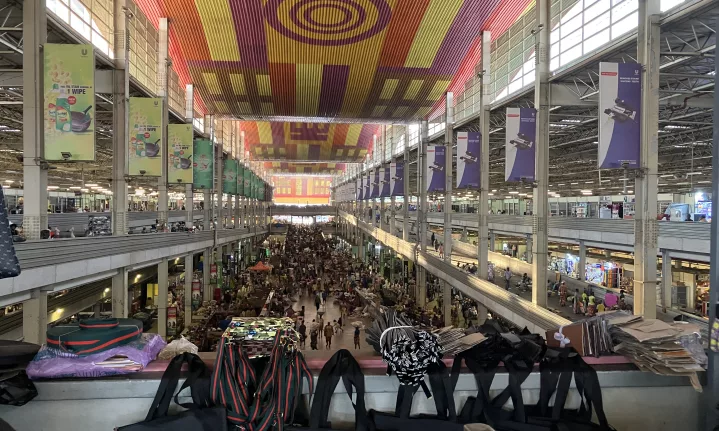
Across Africa, these markets range from vast trading hubs to historic food halls and evening squares transformed into open-air kitchens. In Kumasi, the scale of Kejetia reveals the importance of food trade to Ashanti life.
Dakar’s Kermel brings fresh produce and seafood into the heart of the city, while Addis Ababa’s Mercato offers a window into Ethiopia’s vast ingredient culture.
In Antananarivo, rice and highland produce dominate the stalls, while Marrakech saves one of its greatest food experiences for after dark.
These five markets are worth building a trip around.
1. Kejetia Market, Kumasi, Ghana
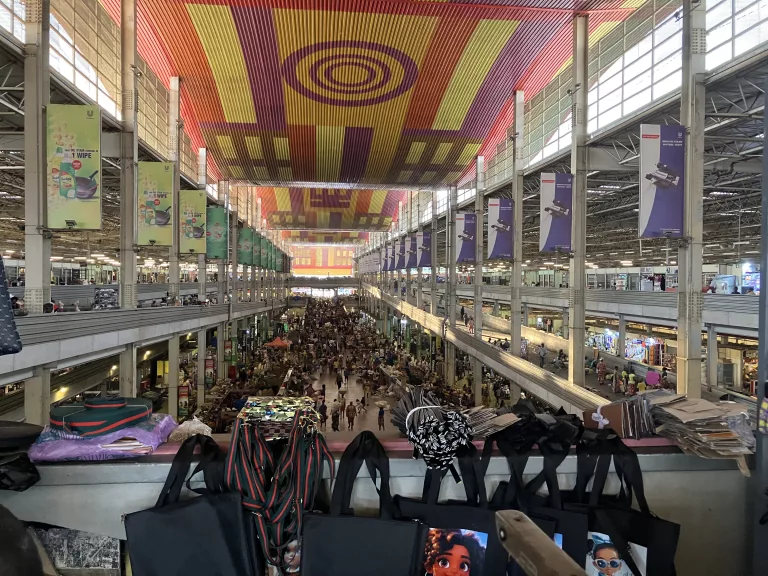
Modern market hall of Kejetia market/Afus199620, CC0, via Wikimedia Commons
Where Ghana’s food trade comes together
Kumasi’s Kejetia Market is less a market you quickly visit than a place you could spend hours trying to understand. The sprawling trading hub is one of the defining commercial spaces of the Ashanti capital, with foodstuffs sold alongside clothing, textiles and household goods.
Its food trade reflects the agricultural wealth of the region. Plantains, cassava, yams, maize, cocoyam, tomatoes and hot peppers are among the produce traded here, linking Kumasi with farming areas beyond the city.
The market is also somewhere to eat. The food areas offer prepared local dishes and street food, with options including fufu, waakye, jollof rice, grilled fish and fried yam.
What to look for
Come with an appetite, but also give yourself time to simply watch the trade. The piles of produce tell their own story: enormous yams, bunches of plantains, sacks of cassava and brightly coloured peppers.
Fufu with soup is one of the dishes to seek out if you want to experience a staple of Ashanti cuisine. Kelewele – spicy fried plantain – is another good introduction to Ghanaian flavours, particularly as a quick snack.
Kejetia is also a reminder that food markets aren’t necessarily designed as attractions. It remains a working market first, and travellers are visitors to an established commercial ecosystem.
Best for: experiencing the scale and energy of Ghanaian food trading.
2. Marché Kermel, Dakar, Senegal
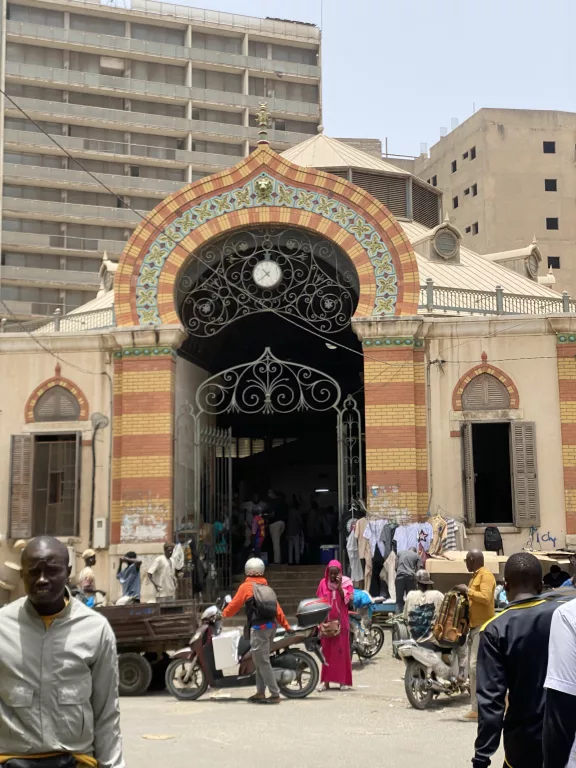
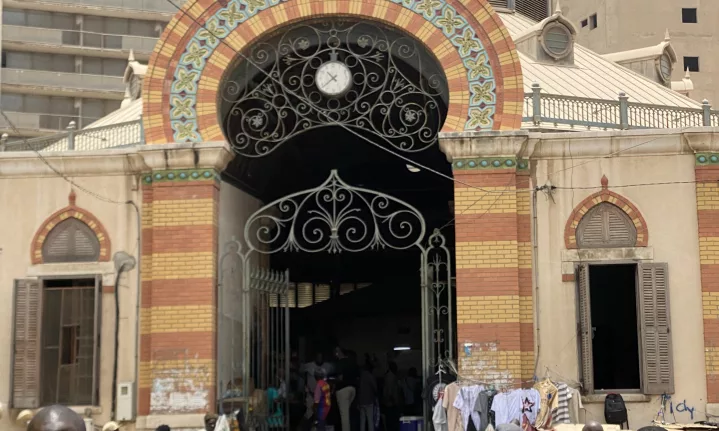
Marché Kermel in 2025/Self Otentic/Wikimedia Commons
Follow the Atlantic to the market
In Dakar, food and the sea are inseparable. Marché Kermel, in the Plateau district, offers an accessible introduction to that relationship.
The historic market dates back to the 19th century and occupies a distinctive domed building that was reconstructed after a fire. Inside, stalls sell fresh produce, meat and seafood, while traders outside add to the colour and movement.
Fish is particularly important. Depending on the season and supply, shoppers can find species such as thiof, dorade, prawns and squid alongside fruit and vegetables.
Look beyond the souvenirs
Kermel is often visited for its architecture and crafts, but food is what makes it particularly interesting for travellers who want to understand Dakar.
Look at what is being sold rather than simply what catches the eye. Fresh fish, vegetables, fruit, spices and other ingredients provide clues to the city’s cooking. Senegalese cuisine is built around combinations of rice, fish, vegetables and intensely flavoured sauces, and Kermel gives you a glimpse of those ingredients before they become lunch or dinner.
Visit in the morning, when the market is at its freshest and busiest, and allow time to wander rather than rushing through the stalls.
Best for: seafood, fresh produce and seeing Dakar’s relationship with the Atlantic.
ALSO READ:
3. Addis Mercato, Addis Ababa, Ethiopia
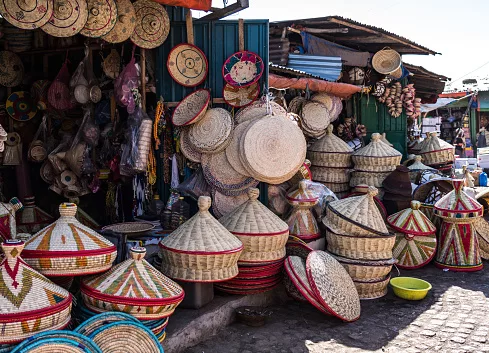
Addis Mercato in Addis Ababa, Ethiopia, the largest market in Africa/By: Rudolf Ernst/iStock
Shop for the ingredients behind Ethiopian cuisine
Addis Mercato spreads through the Addis Ketema district and is described by current Ethiopian travel sources as one of Africa’s largest open-air markets. Its narrow lanes bring together food, coffee, spices, textiles and crafts, making it as much a window into everyday Addis Ababa as a place to shop.
For food-focused travellers, the most interesting sections are those where ingredients take centre stage.
Coffee is an obvious starting point. Ethiopia’s coffee culture is deeply embedded in daily life, and the market offers an opportunity to see beans and other ingredients being bought and traded rather than encountering them only once they have been prepared in a café.
Spices are equally important. Look for colourful piles of dried ingredients and the ingredients associated with Ethiopia’s distinctive berbere spice blends.
Think beyond the plate
A visit to Mercato works best when you treat it as an ingredient safari.
The market’s size also reflects Ethiopia’s diversity, bringing together traders and products from across the country.
Best for: coffee, spices and understanding the ingredients behind Ethiopian cuisine.
4. Analakely Market, Antananarivo, Madagascar
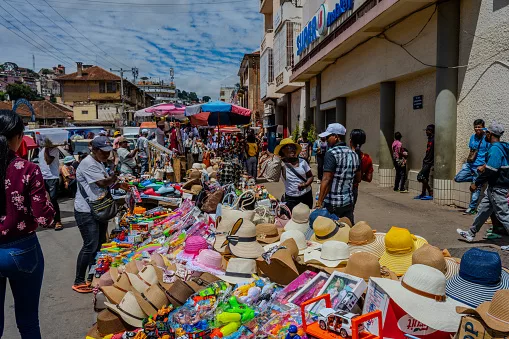
Analakely Market, Antananarivo/By: Emad aljumah/Getty Images
Discover Madagascar’s highland pantry
Antananarivo’s Analakely Market is a more intimate food-market experience than the giant trading floor of Kumasi or Addis Ababa, but it offers something equally valuable: a close look at what people in Madagascar’s capital actually buy and eat.
The market sits at the heart of the city and has long been associated with food trading and everyday commerce. Fresh fruit, vegetables and rice remain central to the experience. Historical accounts of Analakely describe farmers arriving early with produce from around the region, continuing the market’s role as a meeting point between rural producers and urban shoppers.
Rice is only the beginning
Rice is fundamental to Malagasy food culture, and its presence is impossible to miss. But don’t stop there.
Look for local fruit and vegetables, dried fish and ingredients used in everyday Malagasy cooking. If you want something ready to eat, keep an eye out for snacks such as mofo gasy, rice-flour pancakes traditionally cooked in small moulds, or koba, a dense cake made with ingredients including rice flour, banana and peanuts.
The market also reveals Madagascar’s unusual position in the Indian Ocean. African, Asian, Arab and European influences have all shaped the island’s food culture, and the combination feels different from many mainland African destinations.
Best for: rice, highland produce and discovering Madagascar’s distinctive culinary identity.
5. Jemaa el-Fnaa, Marrakech, Morocco
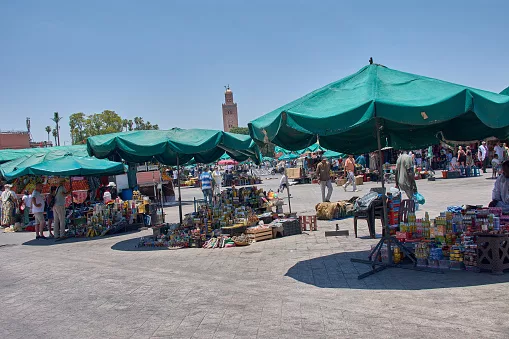
Jemaa el-Fnaa, Marrakech/By: Uvamen/iStock Editorial
Stay until the market comes alive at night
Marrakech’s Jemaa el-Fnaa is perhaps the most theatrical market on this list. During the day, the famous square is a place of performers, juice sellers and activity. As evening approaches, food stalls appear and the open space becomes an enormous outdoor dining area.
The transformation is part of the experience. Braziers glow, smoke rises into the evening air, and communal tables fill with people eating under the lights.
The Moroccan National Tourist Office highlights Jemaa el-Fnaa’s fresh fruit-juice stalls, while the square’s evening food scene includes everything from grilled meats and harira to tanjia, snails and Moroccan pastries.
Eat with the evening crowd
This is the market to visit when you want food to feel like an event.
Start with a fresh orange juice or another fruit juice, then browse before choosing a stall. Grilled skewers, kefta, harira and tanjia are among the dishes associated with the square.
The best part is not necessarily finding one perfect dish. It is watching the square change as Marrakech moves from afternoon into evening and the food stalls turn the centre of the medina into a giant open-air kitchen.
Best for: Moroccan street food and the spectacle of eating in one of Africa’s great public spaces.
More than somewhere to eat
The appeal of Africa’s food markets lies in their ability to connect food with place.
At Kejetia, yams and plantains tell a story about regional agriculture and trade. In Dakar, fish connects the market to the Atlantic. Addis Mercato reveals the ingredients and trading networks behind Ethiopia’s food culture, while Analakely introduces travellers to Madagascar’s rice-based highland cuisine.
And in Marrakech, food becomes theatre.
That is what makes these markets worth travelling for. You aren’t simply going somewhere to find something to eat. You are stepping into the part of the destination where food begins.
Follow us on social media for more travel news, inspiration, and guides. You can also tag us to be featured.
Instagram | Facebook | Twitter | Spotify
ALSO READ: