

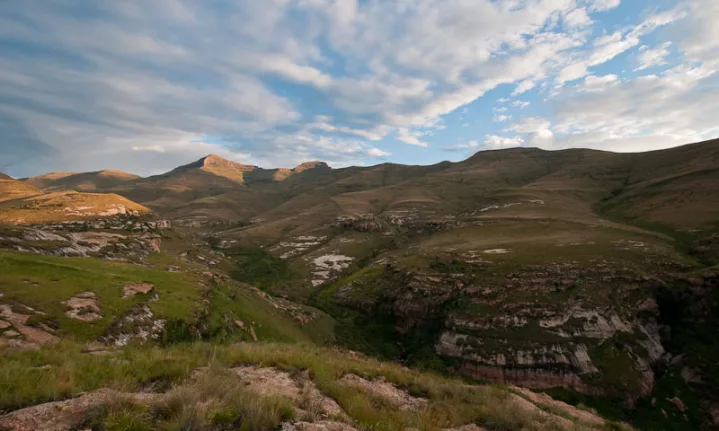
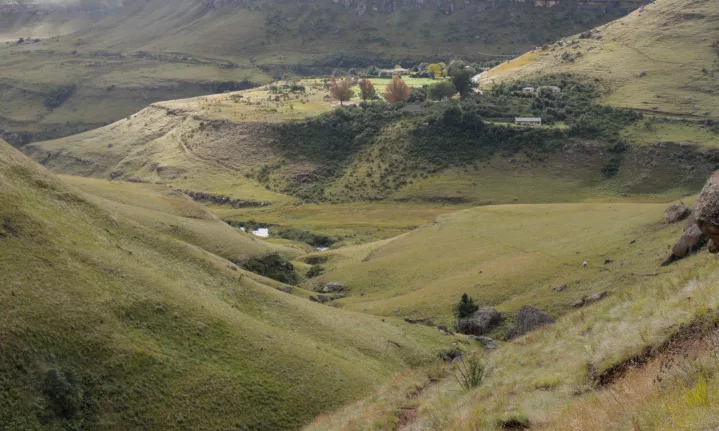
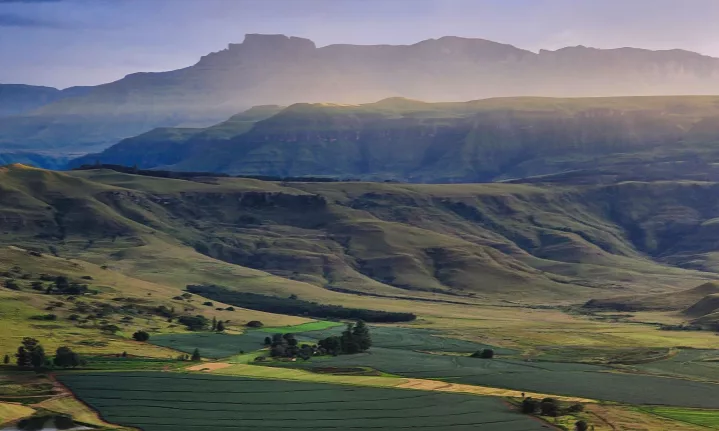
There are places you visit with a plan, and then there are places that quietly make you abandon it. In some corners of South Africa, the road stretches longer than expected, the mountains demand a slower drive and the nearest town is small enough that an afternoon can disappear over coffee. Here, the point is not to see everything. It is to notice where you are.
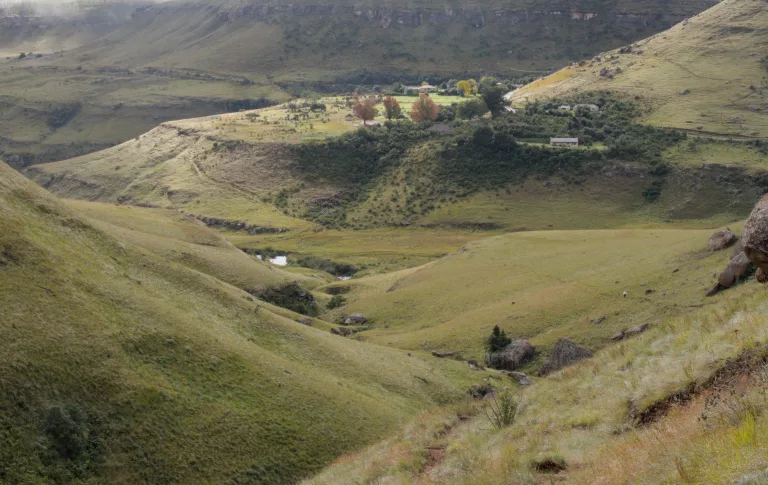
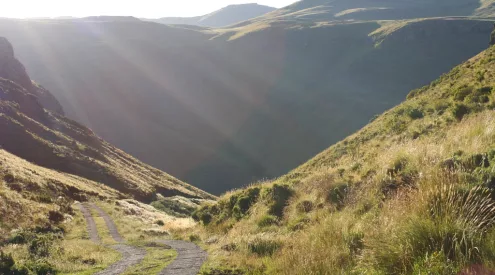
Lush green valleys and grass fields in the Drakensberg mountains, South Africa / Stefan Venter / Pexels
These are destinations where the landscape does much of the persuading. The Karoo asks you to stop and look. The Cederberg rewards wandering. Along the Wild Coast, the tide becomes the clock. In the Waterberg, the bush is best experienced at walking pace, while Golden Gate’s mountains make even a short drive feel like a journey.
This is not about doing nothing. It is about doing less, better.
The Cederberg, Western Cape
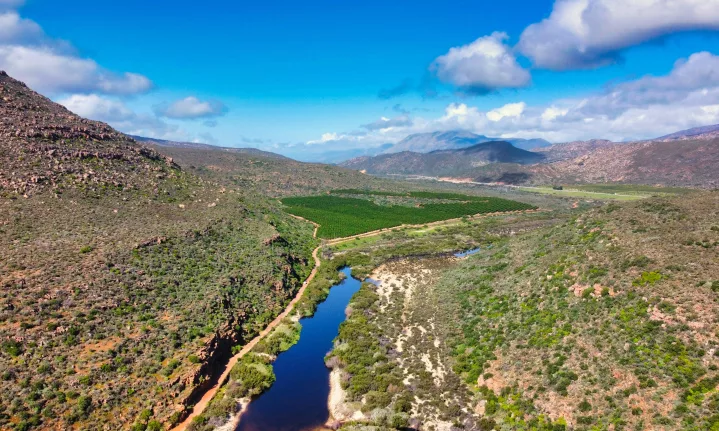
A couple of hours from Cape Town, the Cederberg feels considerably further away. The mountains become more rugged, the roads quieter and the landscape increasingly untamed. It is the kind of place where you can leave your phone behind for an afternoon and realise you haven’t thought about it.
The Cederberg’s story stretches far beyond its modern reputation as a hiking and adventure destination. The mountains contain thousands of years of human history, with more than 2,500 San rock-art sites recorded in the region. Mission settlements including Wupperthal, Heuningvlei and Elandskloof add another layer to the area’s history, alongside remnants of its colonial and Anglo-Boer past.
That history is best encountered slowly. Follow a trail to ancient rock art, stopping to look rather than simply passing through. Hike towards the Wolfberg Arch or Maltese Cross, swim in a mountain pool or spend an afternoon exploring the area’s smaller settlements. The official Cederberg tourism body also highlights birding, climbing and bouldering at Rocklands, as well as the region’s mountain landscapes and coastal extensions towards Lambertsbaai and Elandsbaai.
But you don’t have to fill the day. In the Cederberg, sitting outside as the mountains change colour towards sunset can be an activity in itself. The landscape is dramatic enough that it does not need constant entertainment.
Why go: For wilderness, ancient rock art, mountain trails and the rare luxury of having nowhere else you need to be.
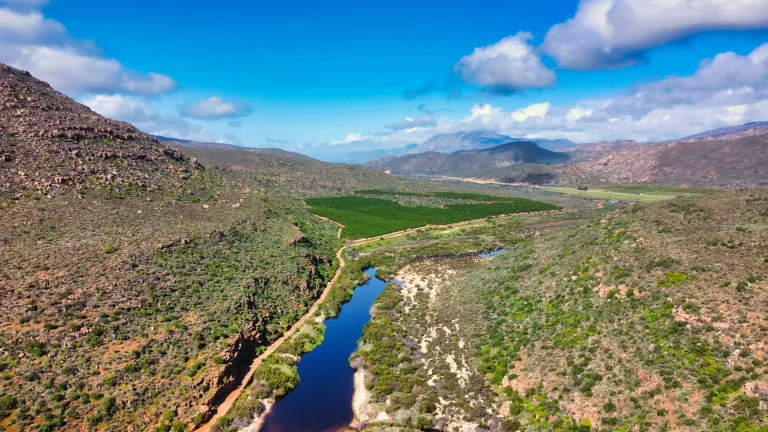
DJI Drone photo in Cederberg, between Citrusdal and Clanwilliam (South Africa). Olifants River / blouberg_adventurer / Unsplash
Camdeboo National Park, Eastern Cape
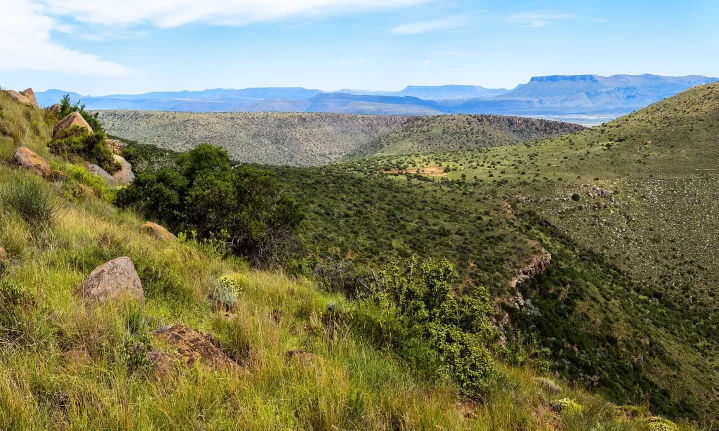
The Karoo has a way of making you aware of distance. At Camdeboo National Park, the road winds through semi-arid country before opening onto enormous views. The park virtually surrounds historic Graaff-Reinet, making it easy to combine a stay in town with days spent exploring the landscape beyond it.
Camdeboo was proclaimed a national park in 2005, growing from the Karoo Nature Reserve established in 1979. But its human history goes considerably further back: archaeological evidence records early Stone Age occupation, while Khoisan communities left rock paintings in the area. The Inqua occupied parts of the region in the 1600s, followed by white settlement from the 18th century.
The park’s most recognisable landmark is the Valley of Desolation, where towering dolerite columns rise above the Great Karoo. The formations were created through geological processes involving Jurassic-era magma and millions of years of erosion. The Valley was declared a National Monument in 1939.
It would be easy to drive up, take a photograph and leave. Don’t. Take the short Crag Lizard Trail around the viewpoints, or spend longer on one of the Eerstefontein Day Walk routes, which range from 5km to 14km. There are also 4×4 routes, birding opportunities, game viewing and picnic spots.
Then return to Graaff-Reinet and slow down further. Wander its historic streets, find a long lunch and let the afternoon light do what it does best in the Karoo. The appeal is not that there is nothing to do. It is that nothing feels urgent.
Why go: For geological drama, big skies, wildlife and the particular silence of the Karoo.
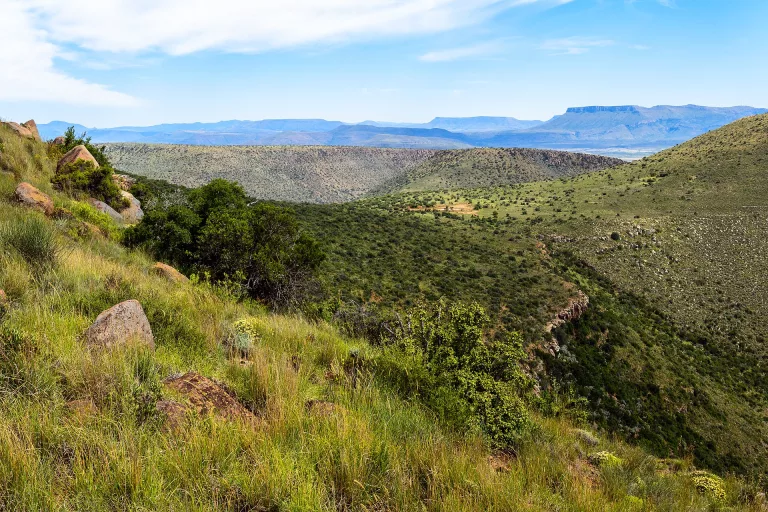
Camdeboo National Park / dconvertini / Wikimedia Commons
The Wild Coast, Eastern Cape
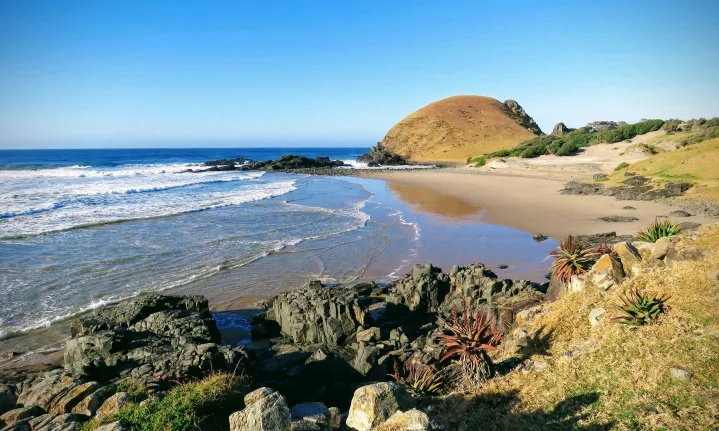
The Wild Coast is perhaps the clearest example of a place where the landscape decides the timetable. This is not a coast built around neat resort strips and a succession of attractions. The coastline moves between beaches, rolling green hills, cliffs, rivers and rural settlements. In Pondoland, the landscape is inseparable from its history and people: the region is the traditional home of the Pondo people, one of the Xhosa-speaking peoples of the Eastern Cape.
Even the names tell stories. Hole-in-the-Wall was named in 1823 by Captain Vidal during a British Admiralty surveying expedition. Coffee Bay acquired its name after a ship carrying coffee beans ran aground there in 1893; some of the beans reportedly germinated, although the plants could not survive the local conditions.
Come here for the walking rather than the checklist. Follow coastal paths towards Hole-in-the-Wall, spend time on the beaches around Coffee Bay or explore forest and coastal trails further along the coast. The point is not to race between viewpoints but to let the walk become the experience.
There is also an opportunity to engage more meaningfully with local communities and Xhosa culture. That means approaching village visits and cultural experiences respectfully, with an interest in listening rather than treating people’s everyday lives as an attraction. And then there is the simple pleasure of an evening beside the ocean, when the day’s walking is done and there is nowhere else you need to be.
Why go: For coastal walking, rural landscapes, living heritage and a coastline that still feels wonderfully untamed.
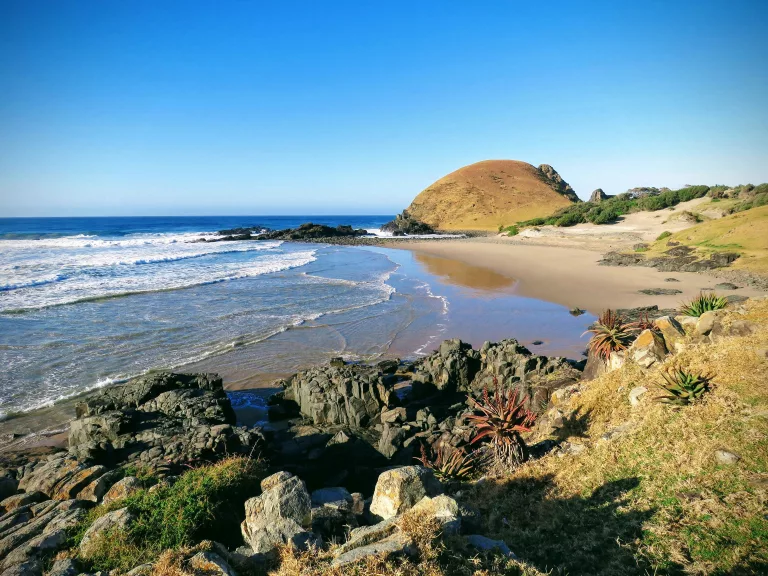
Mgxotyeni, Wild Coast, South Africa / Joshua Gaunt / Unsplash
Marakele National Park and the Waterberg, Limpopo
The Waterberg is bushveld with a different sense of scale. Mountains rise from the savanna, wildlife moves through the valleys and the absence of dense urban development leaves large stretches feeling genuinely wild.
The wider Waterberg Biosphere Reserve covers about 650,000 hectares and is characterised by open spaces and relatively low human density. It has also been inhabited for hundreds of thousands of years and contains important San rock-art areas.
At its heart, Marakele National Park offers one of the easiest ways to experience this landscape at a slower pace. The park was established in 1988 as Kransberg National Park before being renamed Marakele, a name with Tswana roots meaning “the place of herding”.
The temptation on safari is always to chase sightings. Marakele offers another option. Take a guided bush walk and learn to pay attention to tracks, plants, birds and smaller details rather than simply looking for the Big Five. Game drives depart in the cooler early morning and late afternoon, when wildlife is more active. The park also offers guided walks and a three-day, two-night 4×4 Eco Trail through its wilderness zone.
The Waterberg is also an important refuge for Cape vultures, with Marakele supporting one of the continent’s significant colonies. The region’s archaeological heritage adds another reason to linger, with Iron Age sites recorded within the park. Here, slowing down means looking more closely. A morning walk can become a lesson in spoor. A game drive can become an exercise in patience. A sunset can simply be a sunset.
Why go: For bushveld wilderness, wildlife, mountains, birding and a safari experience that rewards attention rather than speed.
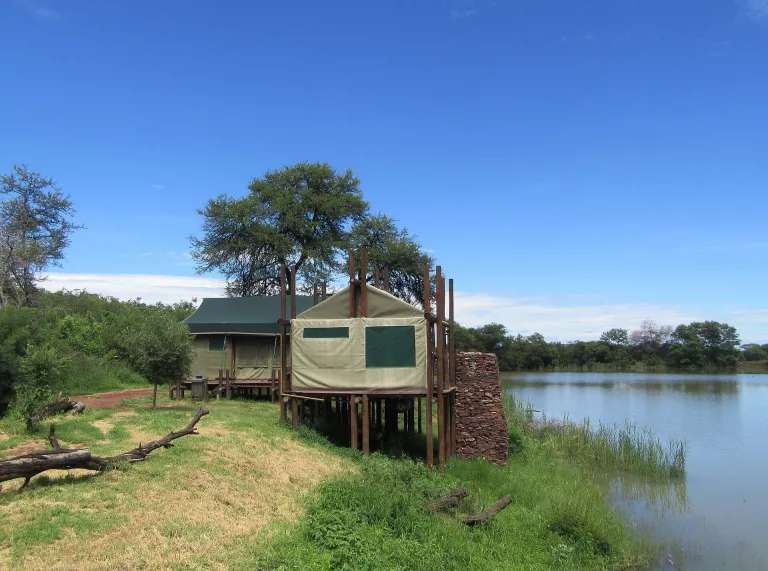
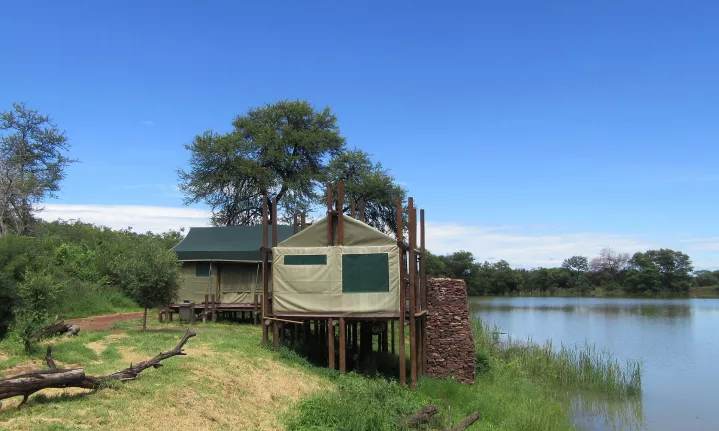
Safari Tent Tlopi Tented Camp at Marakele National Park South Africa / amanderson2 / Wikimedia Commons
Golden Gate Highlands National Park, Free State
There are landscapes that make you stop the car. Golden Gate is one of them. The park’s sandstone cliffs glow gold in the changing light, while grasslands and mountains stretch towards the Maloti range. Its history begins long before the modern park: San communities occupied the area and left behind rock paintings, while Basotho communities and later European settlers shaped its more recent history.
Today, the easiest way to experience Golden Gate is to resist the urge to turn it into a collection of stops.
Drive slowly through the park. Take one of the shorter walking trails. Sit at a viewpoint. Watch for wildlife. Or commit properly and tackle the 28km Ribbok Hiking Trail, where hikers may encounter black wildebeest, blesbok, eland, springbok and other species.
The nearby Basotho Cultural Village offers another way into the region’s history, including a museum, cultural route and guided herbal trail that continues towards San rock-art sites.
And when you’ve had enough mountain air, Clarens is close enough for an unhurried afternoon of galleries, restaurants and coffee.
Golden Gate works because the scenery does not need much from you. It simply changes as the sun moves across the cliffs.
Why go: For sandstone mountains, hiking, heritage and the kind of scenery that makes taking the long way worthwhile.
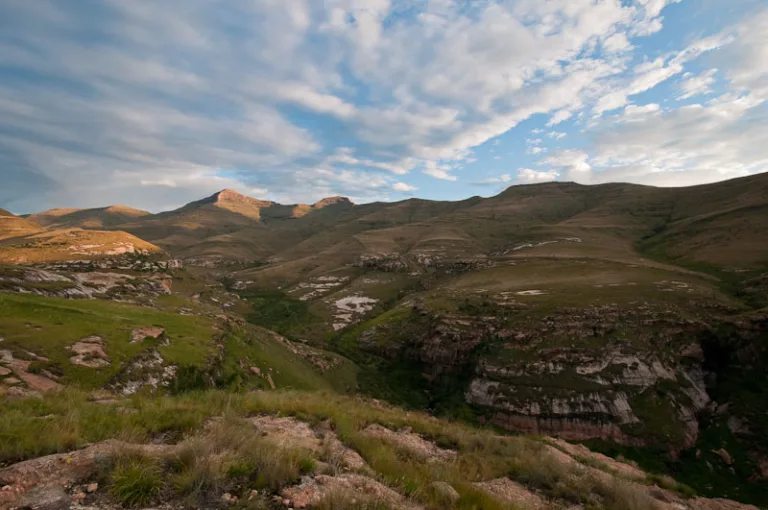
Sunset over the Ribbokspruit valley, Golden Gate Highlands National Park / Pavel Tcholakov / Wikimedia Commons
Let the destination decide
Perhaps the best thing about travelling slowly is that it changes what counts as an experience.
A hike does not have to end at a famous viewpoint. A game drive does not need a checklist of animals. A road trip does not need an itinerary packed with stops. Sometimes the most memorable part of a journey is the hour you spent sitting outside watching the light move across a mountain, or the gravel road you took because there was no reason not to.
South Africa has no shortage of places worth seeing. But some places are better when you stop trying to see everything.
In the Cederberg, the mountains ask you to wander. In the Karoo, the horizon gives you space to think. Along the Wild Coast, the tide sets the rhythm. In the Waterberg, the bush rewards patience. And in Golden Gate, the changing light makes a journey of even the simplest drive. Perhaps that is the real luxury of these places: they give you permission to stop measuring the day by how much you managed to do. And for once, that is more than enough.
Follow us on social media for more travel news, inspiration, and guides. You can also tag us to be featured.
Instagram | Facebook | Twitter | Spotify
ALSO READ: