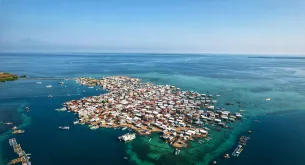
A nation on the move: more trips, more risk, more responsibility
South Africans are travelling more frequently than ever before and not just for one big annual holiday.
Sourced: X{@ndtv}
A recent Marriott Bonvoy study found that in 2025, locals are planning an average of 6.5 trips per year, including short getaways and nearly two long-haul journeys annually.
Even more interesting? Around 80% of respondents said they feel braver when travelling, actively seeking out destinations that offer unique or once-in-a-lifetime experiences.
But as travel ambition rises, so does exposure to risk and that’s where experts say many travellers are still underprepared.
Why travel insurance is becoming non-negotiable
According to Jason Veitch, Head of Travel, Accident and Health at Santam Travel Insurance, modern travel habits combined with rising global medical costs make proper insurance more important than ever.
And it’s not just about lost luggage or delayed flights anymore.
Medical emergencies, cancellations, and evacuation costs are now among the most expensive and frequently claimed travel incidents worldwide.
In many cases, insurance isn’t even optional—some countries require proof of cover before issuing visas.
The core types of travel insurance every traveller should know
Veitch explains that travel insurance is not one-size-fits-all. Different trips require different layers of protection.
1. Medical cover: the most critical protection
Medical insurance is the foundation of any travel policy, especially for international trips.
It typically covers:
Emergency medical treatment abroad
Hospitalisation
Emergency evacuation or repatriation
It is also the most commonly used—and most expensive—type of claim.
Simply put: if you can only afford one type of cover, this is it.
2. Trip cancellation and disruption cover
This protects your money when your plans fall apart before or during travel.
It can cover:
Non-refundable bookings
Flight cancellations
Unexpected travel interruptions
With global travel still vulnerable to disruption, this type of cover is increasingly seen as essential peace of mind rather than an optional extra.
3. Comprehensive travel insurance
This is the “all-in-one” option most recommended for regular travellers.
It typically combines:
Medical cover
Cancellation protection
Baggage loss
Travel delays
It’s more expensive—but far more reliable when things go wrong unexpectedly.
4. Business and corporate travel cover
For work travellers, policies can extend to:
Work-related injuries
Loss of business equipment or samples
Corporate travel risks
This is particularly relevant for frequent flyers and international professionals.
How to choose the right cover for your trip
Veitch says choosing insurance starts with understanding your travel behaviour—not just your destination.
Before buying a policy, travellers should ask:
How often do I travel? (Annual policies may be cheaper for frequent trips)
Where am I going? (Remote or high-risk areas may need stronger medical cover)
What will I be doing? (Adventure travel requires specialised protection)
How much have I prepaid? (Non-refundable costs increase cancellation risk)
Do I have medical conditions? (These must be declared to avoid rejected claims)
The idea is simple: match your cover to your real-life risk.
Why price isn’t the only thing that matters
Like flights and hotels, insurance pricing changes based on personal and trip-related factors.
These include:
Age
Destination
Length of travel
Basic policies may meet minimum requirements, but they often exclude broader risks. Comprehensive policies cost more but offer far greater protection.
Veitch advises travellers not to cut corners on one key area: medical cover should always come first, even if budgets are tight.
Adventure travel is changing the insurance conversation
With more South Africans seeking adventure-driven holidays, insurance needs are evolving too.
High-risk activities like:
Adventure sports
Winter activities abroad
Group tours with specialised requirements
often require additional cover beyond standard policies.
This reflects a broader travel shift: people are no longer just “going on holiday”—they’re chasing experiences, sometimes in unpredictable environments.
A growing travel culture meets a reality check
South Africans are travelling more boldly, more frequently, and with higher expectations than before.
But experts warn that confidence alone isn’t enough.
Travel insurance, often seen as a boring add-on, is actually becoming one of the most important parts of modern travel planning. It protects not just money, but entire journeys—and in some cases, even lives.
As travel habits evolve, one message stands out clearly: the best trip is not just well-planned, but well-protected.
This website uses cookies to improve your experience while you navigate through the website. Out of these, the cookies that are categorized as necessary are stored on your browser as they are essential for the working of basic functionalities of the website. We also use third-party cookies that help us analyze and understand how you use this website. These cookies will be stored in your browser only with your consent. You also have the option to opt-out of these cookies. But opting out of some of these cookies may affect your browsing experience.
Necessary cookies are absolutely essential for the website to function properly. These cookies ensure basic functionalities and security features of the website, anonymously.
Cookie
Duration
Description
cookielawinfo-checkbox-analytics
11 months
This cookie is set by GDPR Cookie Consent plugin. The cookie is used to store the user consent for the cookies in the category "Analytics".
cookielawinfo-checkbox-functional
11 months
The cookie is set by GDPR cookie consent to record the user consent for the cookies in the category "Functional".
cookielawinfo-checkbox-necessary
11 months
This cookie is set by GDPR Cookie Consent plugin. The cookies is used to store the user consent for the cookies in the category "Necessary".
cookielawinfo-checkbox-others
11 months
This cookie is set by GDPR Cookie Consent plugin. The cookie is used to store the user consent for the cookies in the category "Other.
cookielawinfo-checkbox-performance
11 months
This cookie is set by GDPR Cookie Consent plugin. The cookie is used to store the user consent for the cookies in the category "Performance".
viewed_cookie_policy
11 months
The cookie is set by the GDPR Cookie Consent plugin and is used to store whether or not user has consented to the use of cookies. It does not store any personal data.
Functional cookies help to perform certain functionalities like sharing the content of the website on social media platforms, collect feedbacks, and other third-party features.
Performance cookies are used to understand and analyze the key performance indexes of the website which helps in delivering a better user experience for the visitors.
Analytical cookies are used to understand how visitors interact with the website. These cookies help provide information on metrics the number of visitors, bounce rate, traffic source, etc.
Advertisement cookies are used to provide visitors with relevant ads and marketing campaigns. These cookies track visitors across websites and collect information to provide customized ads.