



There is a particular moment on safari when the noise of everyday life falls away.

redcharlie/Unsplash
It might happen at dawn, when the light stretches across open plains or in the quiet pause before a herd moves through the bush. Today, these experiences are carefully curated, often bucket list journeys built around wildlife. Yet the safari has undergone a remarkable transformation. Its origins are far removed from the modern travel experience, shaped instead by necessity, exploration and shifting cultural values.
Origins in language and trade
The word “safari” itself comes from the Swahili language, derived from the Arabic word safar, meaning journey. In its earliest use across East Africa, it referred simply to travel. Long before it became associated with wildlife tourism, a safari was any overland expedition. Caravans moved through the interior of the continent carrying goods, linking coastal regions with inland communities. These journeys were often long, complex and reliant on local knowledge of terrain, water sources and seasonal conditions.
Exploration and colonial influence
By the 19th century, the meaning of safari began to shift under the influence of European explorers and colonial expansion. Expeditions into Africa were increasingly framed as adventures into the unknown. Figures like David Livingstone and Henry Morton Stanley popularised the idea of the African interior as a place of discovery, even though it had long been inhabited and understood by local populations. Their journeys were documented in journals and reports that captured the imagination of audiences abroad, laying the groundwork for a new perception of safari.
ALSO READ: 5 heritage fruit routes to explore in South Africa
The age of the hunting safari
During this period, safaris also became closely tied to big game hunting. Wealthy Europeans and Americans travelled to Africa to hunt animals such as lions, elephants and rhinos. These hunting safaris were elaborate, often involving large teams of guides, trackers and porters. They were as much about status and storytelling as they were about the hunt itself. Photographs and trophies became symbols of achievement, reinforcing a narrative that placed humans at the centre of the natural world.
Conservation and a changing perspective
The early 20th century marked a turning point. As wildlife populations began to decline due to overhunting and habitat loss, attitudes slowly started to change. Conservation efforts emerged, leading to the establishment of protected areas and national parks. Places like the Serengeti and Kruger National Park were set aside to preserve ecosystems and wildlife, although these initiatives were often complicated by the displacement of local communities.
At the same time, advances in technology began to reshape the safari experience. The introduction of motor vehicles replaced long caravans on foot, making previously remote areas more accessible. Photography also played a crucial role. Instead of rifles, visitors increasingly carried cameras, capturing images rather than trophies. This shift helped redefine the purpose of a safari, from extraction to observation.
ALSO READ: 8 farm stalls that are worth the detour in the Western Cape
The rise of the photographic safari
By the mid to late 20th century, the modern photographic safari had taken shape. Tour operators began to offer structured itineraries, combining wildlife viewing with accommodation and guided experiences. The focus moved toward education and appreciation of ecosystems. Travellers were encouraged to understand animal behaviour, seasonal migrations and the delicate balance that sustains biodiversity.
The modern safari experience
In recent decades, the safari has continued to evolve in response to global trends and local priorities. Conservation is now central to many safari experiences. Private reserves and community run conservancies have emerged as key players, often reinvesting tourism revenue into environmental protection and local development. Visitors are no longer passive observers but participants in a broader effort to sustain natural landscapes.
There has also been a growing emphasis on responsible travel. Ethical considerations shape decisions about where to go, how to engage with wildlife and which operators to support. Low impact lodges, renewable energy use and community partnerships are increasingly part of the safari landscape. This reflects a wider shift in travel, where experiences are valued not only for their personal impact but also for their contribution to the places and people involved.
ALSO READ: Fynbos in fall: A trail through the Cape Floral Kingdom
A more Immersive offering
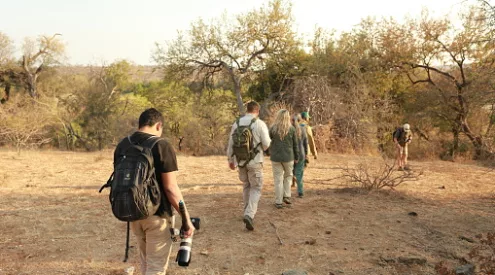
At the same time, the safari has diversified. While traditional game drives remain central, travellers can now choose from walking safaris, birding excursions, photographic workshops and even wellness retreats set within wilderness areas. This variety allows for deeper, more personalised engagement with the environment. It also broadens the appeal of safari travel, attracting visitors with different interests and expectations.
A journey reimagined
Despite these changes, certain elements remain constant. The sense of journey, the connection to place and the unpredictability of wildlife encounters continue to define the safari experience. What has changed is the context in which these moments are framed. Where safaris once symbolised conquest and control, they now increasingly represent stewardship and respect.
The evolution of the safari mirrors broader shifts in how people relate to nature. It reflects a move away from dominance toward coexistence, from extraction toward preservation. For modern travellers, a safari is no longer just a trip. It is an opportunity to engage with landscapes and ecosystems in a way that is both meaningful and mindful.
As interest in sustainable travel continues to grow, the safari is likely to keep evolving. New technologies, conservation strategies and community initiatives will shape its future. Yet at its core, the idea of a safari remains rooted in its original meaning. It is, above all, a journey. One that invites travellers to see, to learn and to reconsider their place within the natural world.
Follow us on social media for more travel news, inspiration, and guides. You can also tag us to be featured.
TikTok | Instagram | Facebook | Twitter
ALSO READ: