
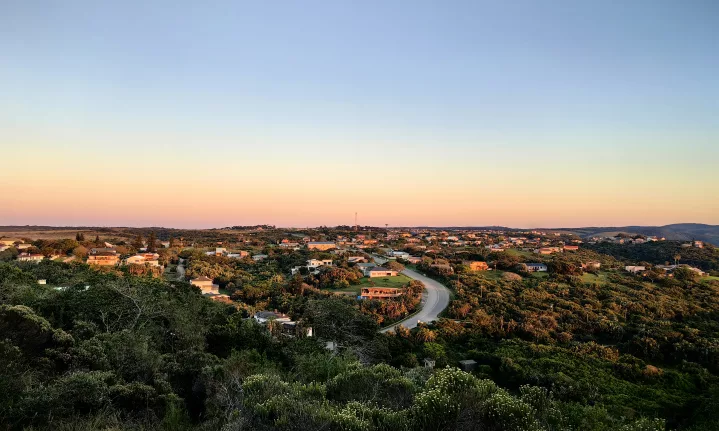
The Great Kei is a quieter corner of the Eastern Cape, where the river meets the sea and small coastal villages give way to green hills and rural countryside.
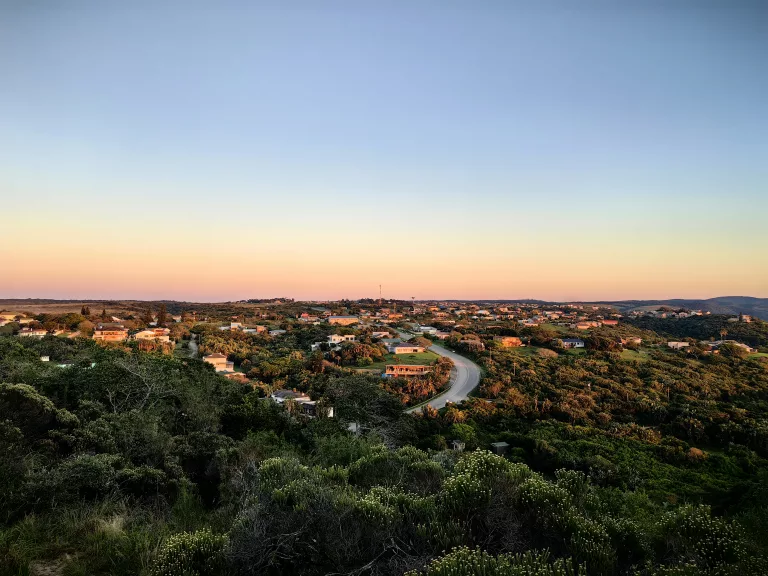
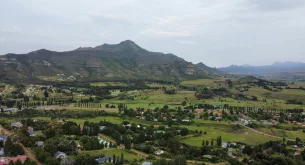
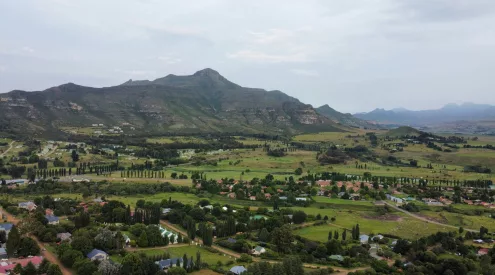
Kei Mouth from above/Claidheamhmor/Wikimedia Commons
Over 72 hours, explore Kei Mouth, Morgan’s Bay and Haga Haga, with time for beaches, walks, local food and a taste of Xhosa culture along the way.
Day 1: Start where the river meets the sea
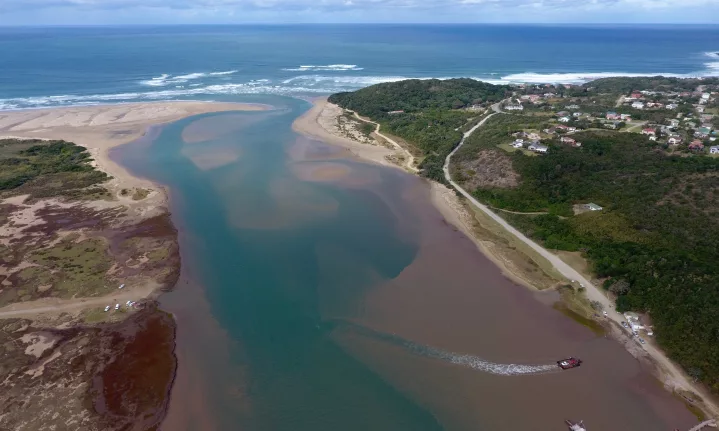
Begin your Great Kei trip in Kei Mouth, where the Great Kei River flows into the Indian Ocean.
The river begins where the Black Kei and White Kei rivers meet northeast of Cathcart and runs for about 320km before reaching the estuary at Kei Mouth. It has long shaped the communities and landscapes around it and remains popular for fishing, boating and birdwatching.
Take the Kei Mouth Pont
One of the area’s most memorable experiences is the historic Kei Mouth Pont.
The car-carrying ferry crosses the Great Kei River and provides a link towards the Wild Coast. It is also one of the defining attractions of Kei Mouth and a reminder of how closely travel in this part of the Eastern Cape has always been tied to the river.
Allow some time to watch the pont cross the river before continuing along the coast.
Spend the afternoon beside the river
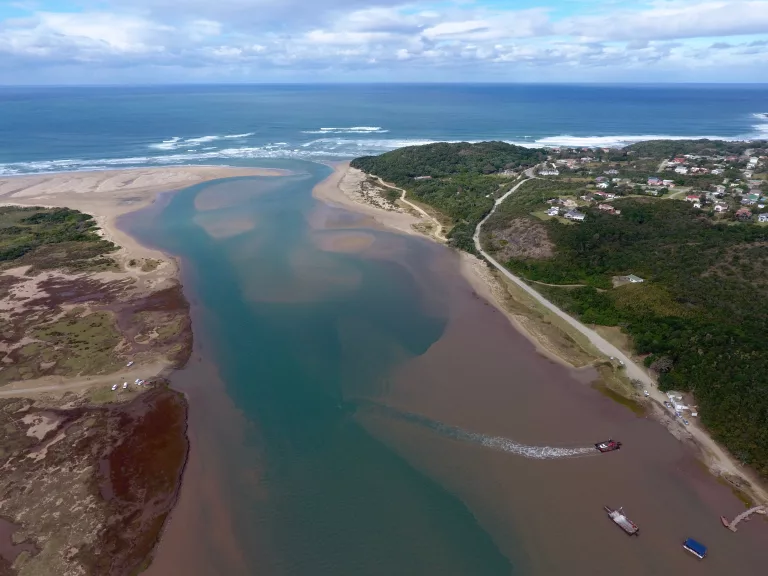
Aerial photograph of the mouth of the Great Kei River as it meets the Indian Ocean/Greg Ritz/Wikimedia Commons
The Great Kei estuary is a natural place to slow down. Depending on conditions, you can spend the afternoon fishing, birdwatching, kayaking or exploring the river by boat.
The estuary and surrounding vegetation support a variety of birdlife, while the river itself remains an important part of the area’s recreational life.
If you would rather stay on land, take a walk around Kei Mouth and along the coastline. The area also provides access to trails towards Morgan’s Bay.
End the day with a coastal dinner
Keep dinner relaxed and local. The Great Kei is not a destination for rushing between restaurants and attractions. Its appeal is in long meals, seafood, country-style food and evenings spent outdoors.
Stay in Kei Mouth or continue a short distance to Morgan’s Bay for the night.
ALSO READ:
Day 2: Beaches, cliffs and coastal walks
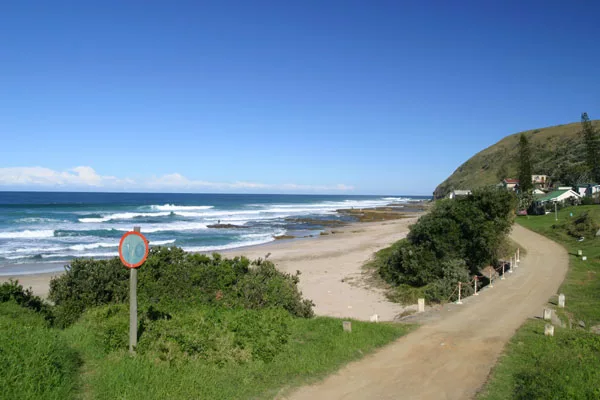
Haga Haga Whale Point/Tyearsley/Wikimedia Commons
Spend your second day exploring the stretch of coast between Morgan’s Bay and Haga Haga.
This is where the Great Kei’s landscape changes from river country to beaches, cliffs, rocky shores and small coastal villages.
Walk the Morgan’s Bay cliffs

Cape Morgan Nature Reserve/~ souTH AFRica ~/Wikimedia Commons
Start in Morgan’s Bay, also known as Gxarha, where a long beach sits beneath dramatic coastal cliffs.
The beach is popular for walking, while trails lead along the cliffs and towards the Cape Morgan Lighthouse. The cliffs themselves rise around 50m above the surf, making this one of the area’s best places for views across the coastline.
If you’re up for a longer walk, routes continue towards Double Mouth Nature Reserve and beyond to Haga Haga. The section from Morgan’s Bay to Double Mouth is around 4km, while the route onwards to Haga Haga adds another 8–9km, so plan according to your fitness and the weather.
Take time at the lighthouse
The Cape Morgan Lighthouse is another worthwhile stop. From Morgan’s Bay beach, a path heads towards the lighthouse through coastal and forested terrain before continuing towards Kei Mouth.
It is a good example of what makes this stretch of the Eastern Cape special: you don’t need a packed itinerary when the landscape itself provides most of the entertainment.
Spend a slow afternoon in Haga Haga
Continue to Haga Haga, a small coastal village known for its beach, rock pools and relaxed atmosphere.
The municipality describes Haga Haga as a family-friendly coastal destination, with safe swimming beaches and ocean views.
This is the afternoon to do very little. Walk along the beach, explore the rocks when the tide allows, have lunch and watch the waves.
If you are travelling with children, the shallow rock pools and quieter pace make Haga Haga an easy place to spend a few hours.
Stay somewhere with a view
Spend your second night around Haga Haga or Morgan’s Bay. There are several accommodation options in the wider area, ranging from hotels and lodges to self-catering properties and campsites.
The Great Kei municipality lists destinations including Morgan Bay Tourism, Crawfords Beach Lodge, Olivewood Private Estate and Yellowwood Caravan Park among its tourism offerings.
Day 3: Into rural Great Kei
For the final day, leave the coast behind and head inland.
The Great Kei is more than its beaches. Inland, the landscape becomes more rural, with farms, villages and open countryside stretching towards Qumrha (Komga). The municipality extends from the Indian Ocean towards the Kubusi River, with the landscape becoming drier further inland.
Explore Qumrha and the surrounding countryside
Qumrha, better known as Komga, is the service and business centre for the surrounding farming areas. It offers a different perspective on the Great Kei from the coastal villages.
Instead of treating the town as a quick stop, use the drive inland to appreciate the changing landscape. The roads lead through farmland and rural settlements, where the pace of life is noticeably different from the better-known coastal destinations.
Experience Xhosa culture through local stories
The rural areas around Great Kei are also an important part of the region’s cultural identity.
The municipality highlights traditional storytelling, cultural tours, historical sites and everyday rural life as ways visitors can experience the area’s Xhosa heritage.
Where possible, choose a locally led experience rather than simply passing through. A guide, community experience or meal prepared by local hosts can add context to the landscapes you’re travelling through.
Food is an especially good way into the story. Look for opportunities to try traditional dishes and locally prepared meals, and allow your hosts to explain the ingredients and traditions behind them.
Finish back on the coast
Make your way back towards the coast in the afternoon, leaving enough time to stop at viewpoints and small villages along the way.
If you have another night, return to Morgan’s Bay or Kei Mouth and end the trip beside the water. If you’re heading onwards, the N2 provides the main connection to the wider Eastern Cape road network.
Why the Great Kei deserves a place on your itinerary
The Great Kei doesn’t rely on one major attraction. Its appeal comes from how its different landscapes fit together.
There is the river and its estuary, the old pont at Kei Mouth, the cliffs and beaches of Morgan’s Bay, the quieter shores of Haga Haga and the rural communities inland. Together, they create a destination that feels distinctly Eastern Cape without requiring a packed schedule.
It is also a useful reminder that the Eastern Cape coast extends well beyond the better-known Wild Coast destinations. In the Great Kei, you can experience beaches, rivers, hiking, food and Xhosa heritage within a relatively compact area.
The best way to experience it is slowly: follow the river, stop when the view catches your attention, eat locally and leave enough space in the itinerary for the places you didn’t plan to find.
A note on swimming
Always check local conditions before entering the water. Great Kei Municipality temporarily closed Kei Mouth Beach in January 2026 after a dead Bryde’s whale was found on the beach and sharks were reported at several beaches in the municipality. Conditions and closures can change, so check current local notices before swimming, surfing or fishing.
Follow us on social media for more travel news, inspiration, and guides. You can also tag us to be featured.
Instagram | Facebook | Twitter | Spotify
ALSO READ: