



Trafalgar Beach is known for it’s stretch of sand, warm Indian Ocean waters and rocky shoreline. But look a little closer and you’ll find something that makes this part of KwaZulu-Natal’s South Coast particularly interesting: evidence of a world that existed millions of years ago.
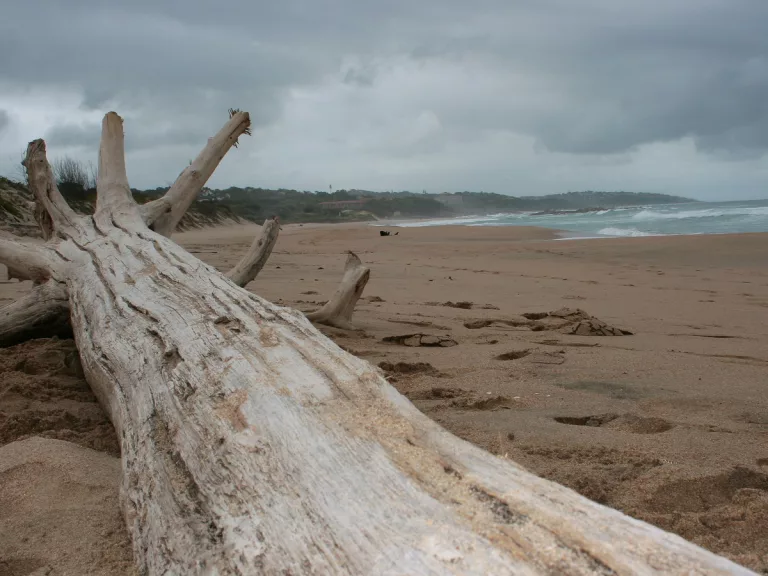
Stump on Trafalgar Beach / Hendrik van den Berg / Wikimedia Commons
Embedded in the sandstone are fossilised trees, ancient marine shells and shark teeth, offering a glimpse into the area’s prehistoric past. It is a reminder that this coastline has a much longer story to tell than the one we see today.
A glimpse into the past
The fossils found along Trafalgar’s shoreline date back to the Cretaceous Period, which lasted from approximately 145 to 66 million years ago.
At the time, the landscape and coastline looked very different. The fossil-bearing sandstone preserves evidence of ancient vegetation and marine life, including tree remains that were transported by water before being buried and eventually fossilised.
The wider geological area around the Mzamba River, near Port Edward, is also known for it’s rich fossil deposits. Research has identified ancient marine species, including ammonites, bivalves and gastropods, as well as silicified wood.
Together, these discoveries help scientists understand the environments that existed along this part of the coast millions of years ago.
Where to find the fossils
The rocky shoreline within the Trafalgar Marine Protected Area is the best place to start exploring. Fossils are preserved in the sandstone and become easier to spot when the tide retreats.
Plan your visit around low tide, when more of the rocky shore is exposed. Look closely at the rock surfaces for fossilised remains and impressions. Some are easy to miss, particularly if you’re expecting to find complete specimens.
The shoreline is also home to living marine life. Rock pools support small creatures such as periwinkles, while seaweeds occupy different sections of the rocks according to their exposure to the tides.
Take your time exploring, but watch your footing. The rocks can become slippery, especially when wet.
A protected natural heritage site
Trafalgar forms part of the Trafalgar Marine Protected Area, established in 1979. Covering approximately 8.3km², the protected area includes sandy beaches, rocky shores, reefs, wetlands and the Mpenjati River estuary.
It’s importance extends beyond it’s geological history. The area protects a variety of marine habitats and the wildlife that depends on them.
The fossils are part of this natural heritage and should be left where they are. Removing or collecting palaeontological material without the necessary permit is prohibited under South Africa’s National Heritage Resources Act. Visitors should also avoid disturbing rock pools or removing marine life.
Planning your visit
Trafalgar is on KwaZulu-Natal’s Lower South Coast, between Marina Beach and Palm Beach. Check the tide tables before visiting, as low tide offers the best opportunity to explore the exposed rock formations.
Wear shoes with good grip and take care around incoming waves. The rocks can be uneven and slippery, so avoid exploring them in rough conditions. You can also combine your visit with a trip to the nearby Mpenjati Nature Reserve, known for it’s wetlands, dune forest and walking trails.
More than just a beach
Trafalgar is worth visiting for more than it’s coastline. It’s fossil-bearing rocks offer a rare opportunity to connect with a part of South Africa’s history that stretches back millions of years.
What looks like an ordinary beach walk becomes something quite different when you realise what lies beneath your feet. And perhaps that’s the best part of visiting Trafalgar: discovering that even a familiar stretch of coastline can hold stories far older than we could imagine.
Follow us on social media for more travel news, inspiration, and guides. You can also tag us to be featured.
Instagram | Facebook | Twitter | Spotify
ALSO READ: