
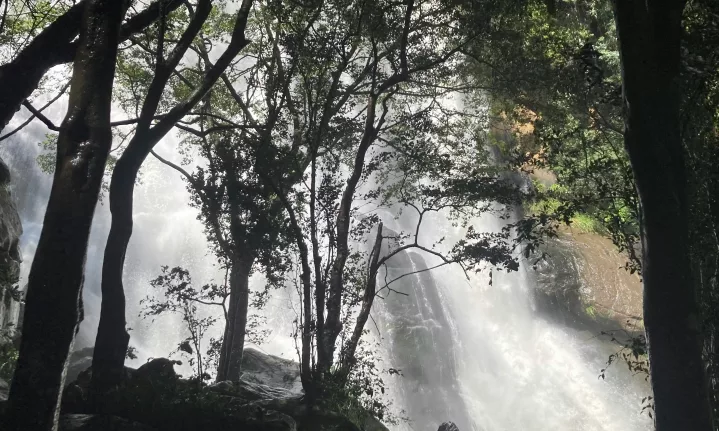
As winter bids us goodbye and loosens its grip on the Eastern Cape, Hogsback begins to change.
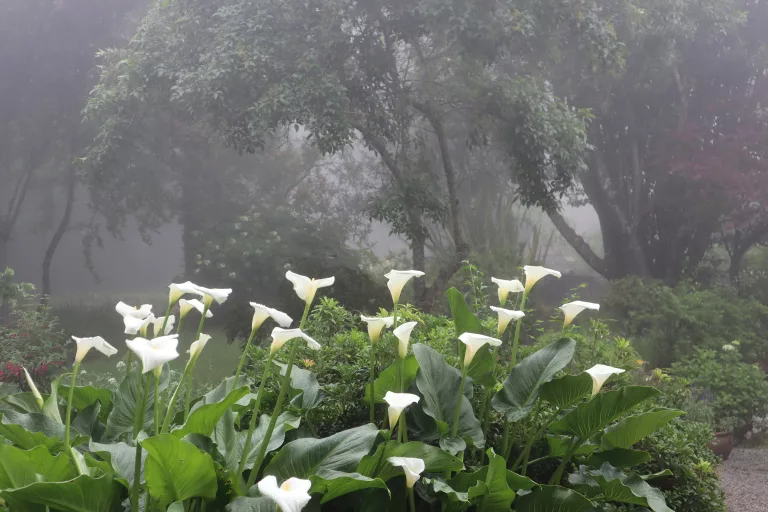
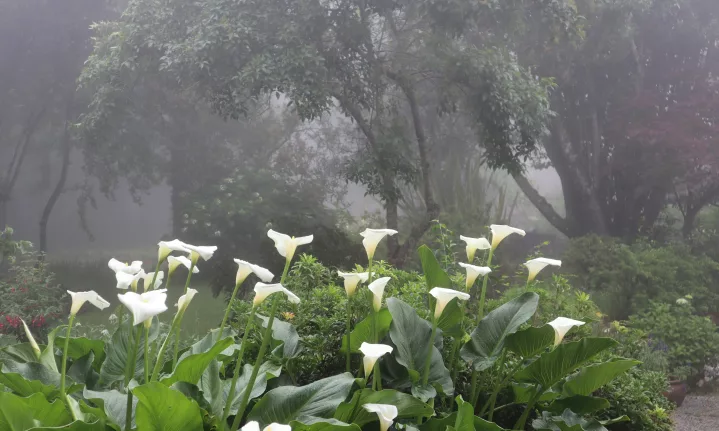
Arum lily in the fog. Garden. Hogsback / Eric Robinson / Unsplash
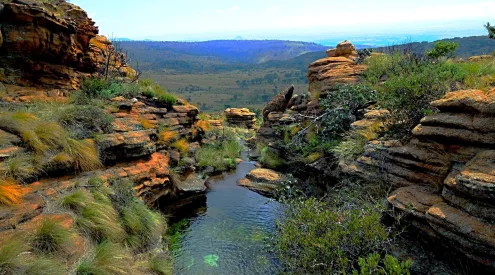
Hogsback sits high in the Amathole Mountains, surrounded by indigenous forest, mountain streams, waterfalls and open grassland. At an elevation of roughly 1,200 to 1,500 metres, Hogsback has a distinctly cool mountain climate, with misty conditions and cold winters giving way gradually to spring.
By September, the landscape begins shifting. Gardens begin to flower, the days are getting warmer and the mountains are showing a little more colour. It’s a great time to explore Hogsback on foot, following the trails into the forest towards the waterfalls that have long defined this mountain village.
Into the forest
The Amathole Mountains form part of South Africa’s Great Escarpment. Indigenous Afromontane forests cover parts of its slopes, while mountainous grassland occurs at higher altitudes.
These forests are woven into the village of Hogsback itself. The local tourism organisation lists 22 permit-free walking and hiking trails, ranging from easier walks to more demanding hikes.
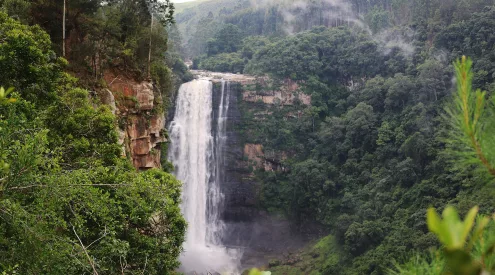
One of the easiest places to begin is the Hogsback Arboretum on Oak Avenue. Established roughly 130 years ago, the Arboretum contains trees from around the world, including Californian redwoods that are now more than a century old. From here, a short walk leads towards the 39 Steps Waterfall, where water drops over a series of rocky ledges beneath the trees.
It’s the kind of walk that doesn’t require an entire day or an ambitious itinerary. A few hours among the trees is enough to understand why Hogsback has become synonymous with forest escapes. For a lengthier experience, the Madonna and Child Falls trail descends into indigenous forest before reaching the waterfall. The route is steeper and requires a climb back out, but takes you deeper into the landscape.
Following the water
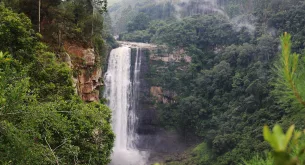
Hogsback is home to around 36 waterfalls in and around the village, from easily accessible falls to those reached by longer hikes.
One of the more unusual is Kettlespout Falls. If conditions are right, wind catches the falling water and blows it upwards, creating its distinctive appearance. The approach can become slippery and wet after rain, so proper footwear is essential. Swallowtail Falls offers another perspective, with a walk following a stream towards a viewpoint overlooking the Tyume Valley.
Spring is also a soft reminder that Hogsback is a landscape shaped by water. Rainfall generally increases through September and October, helping to keep the streams and waterfalls flowing as the season changes. And really, who doesn’t love an adventure that ends at a waterfall?
When the gardens wake up
Hogsback has a long gardening tradition, and its gardens are part of the village’s identity. Spring brings colour to the gardens through azaleas, rhododendrons, roses and other flowering plants.
The annual Hogsback Open Gardens is one of the highlights of the season. In 2026, the event runs across three weekends from 16 October to 15 November, with 11 gardens open to visitors alongside plant sales, markets and food and wine experiences.
Even if you’re here for the event, it’s worth taking time to notice the contrast between the cultivated gardens around the village and the indigenous forests beyond them.
Take the long way around
There are plenty of more adventurous ways to experience Hogsback, including mountain biking, horse riding, climbing and abseiling. The Madonna and Child Falls area, for example, offers a 35-metre abseil into the forest. But Hogsback doesn’t necessarily require an adrenaline-filled itinerary for this getaway to be memorable.
Some of its best experiences are quieter. Walking beneath the trees. Following a stream. Pausing at a mountain viewpoint. Sitting in a garden as the mist moves across the hills.
The weather changes quickly in the mountains, so visitors should still arrive prepared for cool and wet conditions. That same unpredictability that can obscure a view can also transform the forest, with mist settling between the trees and waterfalls swelling after rain.
Hogsback in spring
The appeal of Hogsback after winter is not that everything suddenly becomes bright and green. It’s more gradual than that. Little splashes of colour begin appearing in the gardens. The forest floor starts to come alive. Water moves through the mountains after the rain, and warmer days make longer walks possible.
Hogsback’s beauty is in the transition, in watching a mountain landscape emerge from winter one small detail at a time. By the time spring has properly settled over the Amathole Mountains, the village feels different. Not transformed, exactly, but awakened.
And perhaps that is what makes witnessing the change so special. There is something deeply human about watching a landscape shift with the seasons, quietly reminding us that change doesn’t always have to arrive dramatically. Sometimes, it happens slowly, almost imperceptibly, until one day you look around and realise everything feels a little more alive.
Follow us on social media for more travel news, inspiration, and guides. You can also tag us to be featured.
Instagram | Facebook | Twitter | Spotify
ALSO READ:
Gillooly’s Farm is getting a fresh new chapter in Bedfordview