





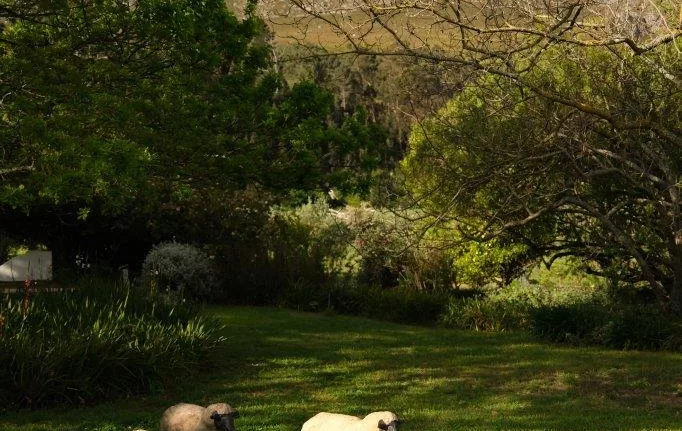
A garden where you can wander beneath centuries-old trees, follow streams through the grounds and come across contemporary sculptures along the way is reason enough to linger. At Wildekrans Country House in the Elgin Valley, there’s also the occasional surprise: a visitor taking a phone call high up in a tree, or guinea fowl helping themselves to the seeds intended for a new meadow.
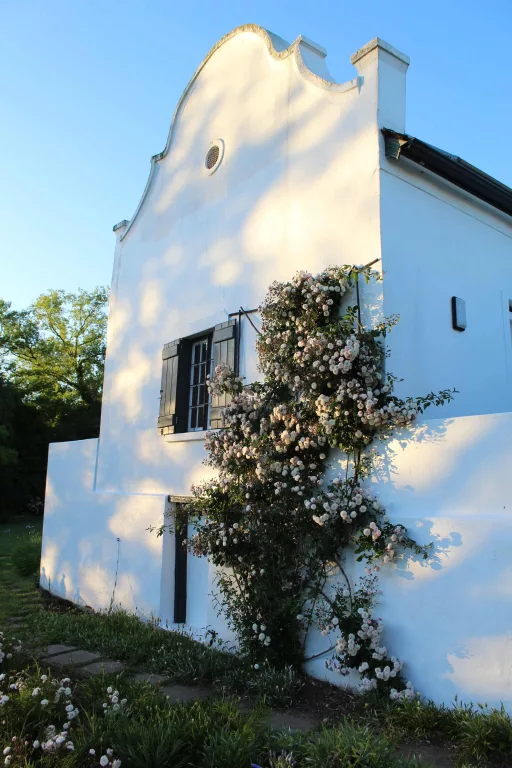
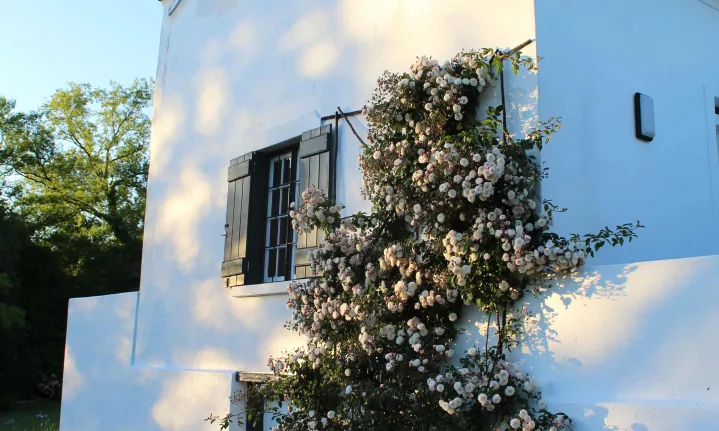
Cape Dutch Gable’s rambling roses at Wildekrans Country House
Dating back to 1811, Wildekrans has a history that stretches across generations, but its garden is far from a carefully preserved relic. It continues to evolve under the care of owners Alison Green and Barry Gould, who have embraced a more natural, water-wise approach to the grounds. Visitors can experience it for themselves during Elgin Open Gardens on 31 October and 1 November, and again on 7 and 8 November 2026.
With its mountain backdrop, mature trees, ponds, indigenous planting and artworks scattered throughout the landscape, Wildekrans is a place best explored on foot, with enough time to see what lies around the next bend.
A country garden with more than 200 years of history
Wildekrans Country House has passed through three families since its early days. Alison’s parents, Eric and Roma Green, bought the property from the estate of local Dr Taylor in the early 1980s. Roma then set about restoring the gardens.
When Alison and Barry moved to the property in 1999, they continued that work, retaining historical features while gradually introducing their own ideas.
“My mother landscaped the garden retaining some historical aspects, the stone fruit trees and the ‘ha-ha’,” Alison explains.
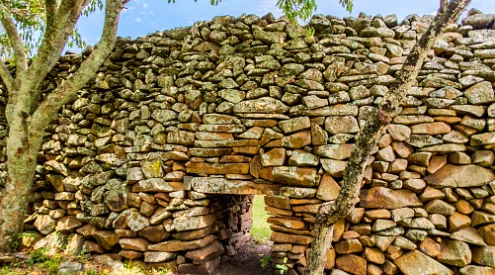
A ha-ha is a sunken boundary that creates a division in the landscape without interrupting the view. Alongside the old stone fruit trees, it remains part of the garden’s historical character.
The couple have since reduced the size of Roma’s rose garden and turned an area of poor soil on the eastern side of the grounds into almond trees. The central beds have also been transformed, with indigenous plants now taking centre stage.
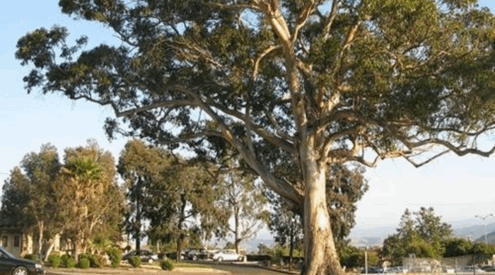
The mature trees remain among the garden’s most striking features. Oaks, pecan nut trees, chestnuts, swamp cypresses and melaleucas provide shade and structure, while the water features and heirloom roses carry personal significance for Alison.
“The mature trees will always stand tall for the people that came before us,” she says.
The olive groves and indigenous planting, meanwhile, reflect Barry’s vision and the work the couple have put into shaping the garden for the future.
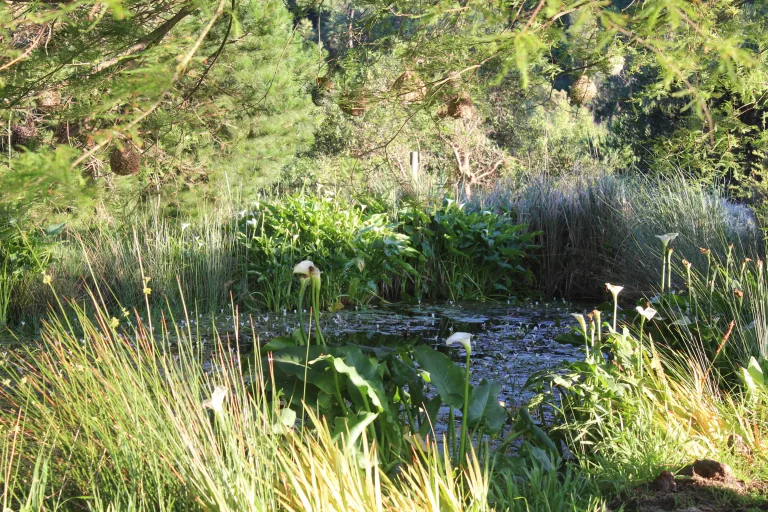
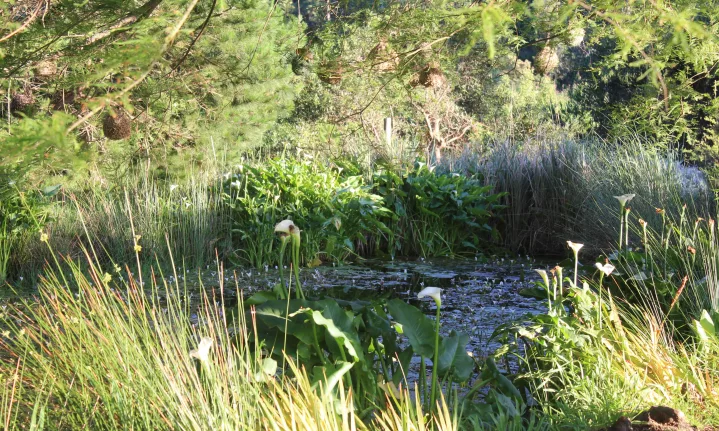
Water gardens of Wildekrans Country House
Letting nature take the lead
The Elgin Valley is known for its green landscapes and country gardens, but Alison and Barry have moved away from the traditional English cottage garden approach that has long influenced the area.
These gardens can be labour-intensive and water-hungry, so the couple have instead developed a more informal style that works with the natural environment.
“We have moved to a water-friendly wild and informal approach,” Alison says.
The garden has what she describes as a “wild, spacious and curious character”. Although it continues to develop organically, there’s still a clear intention behind the planting and the way the grounds are maintained.
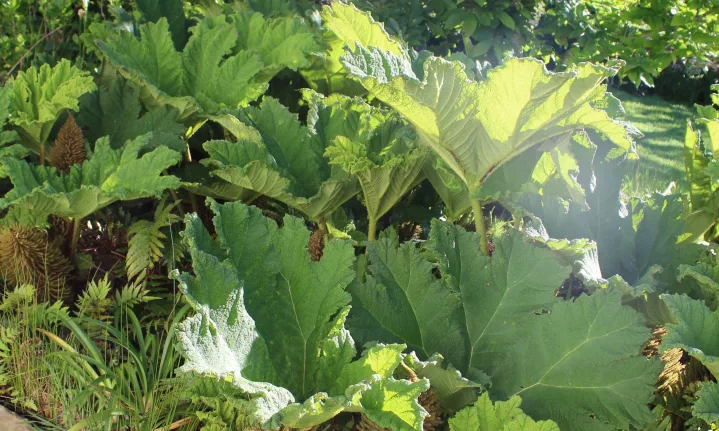
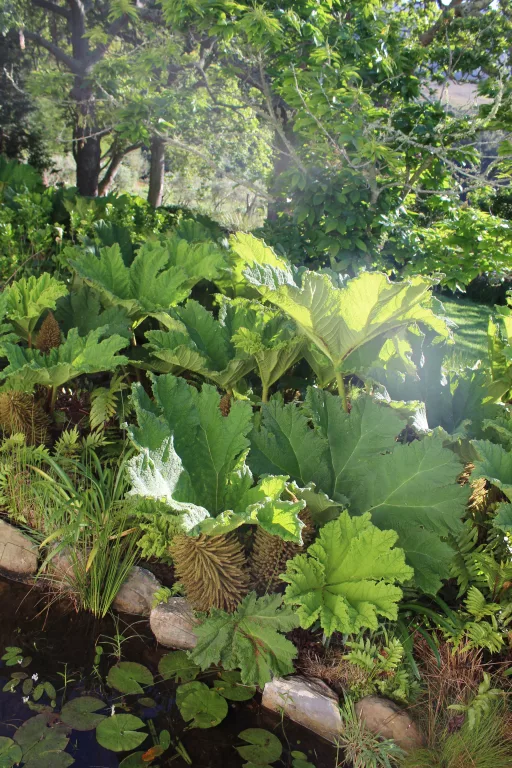
The surrounding Houw Hoek Mountains and the area’s abundant water and pockets of rich soil allow for a varied selection of plants. One of the highlights is the enormous Gunnera, whose dramatic leaves make it a favourite with visitors.
Much of the couple’s approach involves knowing when to step back.
“A large amount of our gardening is about restraint, allowing nature to take its course,” Alison explains.
They avoid harsh insecticides and herbicides, make their own compost and are experimenting with biological pest management products from Real IPM, particularly for their roses and olive trees.
Gardening here also means sharing the landscape with its wildlife. Porcupines eat the arums, buck nibble the juicy rosebuds and feral pigs turn over soft patches of lawn. An attempt to establish a meadow has proved particularly challenging because the guinea fowl keep eating the seeds before they can germinate.
The couple are still working on the meadow, with sunflowers and grasses planted at its lower end. It’s one of the projects they’re most looking forward to seeing develop.
For visitors, these small battles are part of what makes Wildekrans feel like a living landscape rather than a garden arranged solely for appearances.
Art among the trees
There’s another reason to take your time at Wildekrans: contemporary art forms part of the experience.
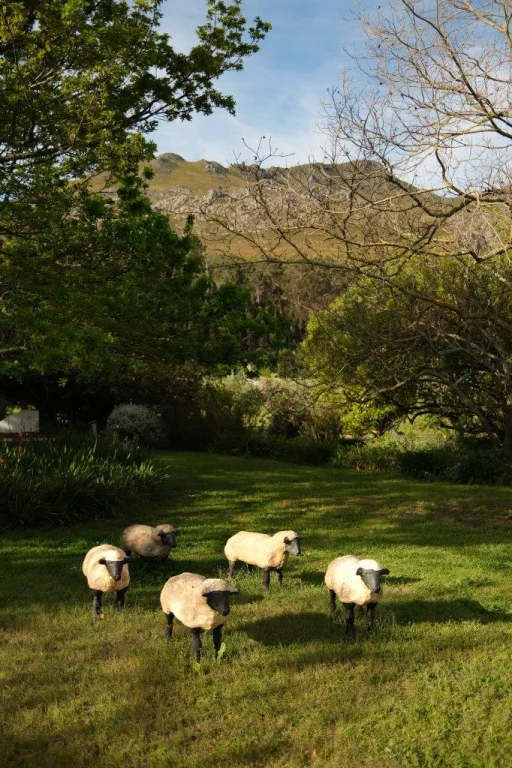
Alison and Barry have collected contemporary art for more than 30 years, and sculptures feature throughout the garden. With the Houw Hoek Mountains providing such a dramatic backdrop, the artworks need a presence of their own.
Alison highlights works by Strijdom van der Merwe, Guy du Toit and Wilma Cruise, whose sculptures can hold their own against the surrounding landscape.
During Elgin Open Gardens 2026, visitors can look out for Wilma Cruise’s POOR HORACE, which will be new to the field this year.
The combination of art and nature encourages a slower walk through the grounds. A sculpture might catch your eye between the trees, while a change in the landscape opens up a view of the mountains or draws you towards a stream or pond.
It’s this mixture of established planting, changing scenery and unexpected details that gives the garden its character.
The unexpected side of opening a garden
For Alison and Barry, opening Wildekrans to visitors each year brings its own rewards, not least seeing people take their time exploring the property.
Some encounters have been more memorable than others. On one occasion, Barry heard a voice but couldn’t see anyone. When he looked up, he discovered a visitor sitting high in one of the trees, chatting on a mobile phone.
Another year, an elderly visitor quietly harvested the entire crop of green figs and left with it.
But not every memorable moment involves a surprise. Alison particularly enjoys seeing people take off their shoes and walk across the soft green lawn, feeling the grass beneath their feet.
Visitors often spend a long time in the garden, and the changing points of interest each year have also helped attract a younger generation of garden enthusiasts.
Children are welcome, too, and Alison says they love the garden.
What to look out for during Elgin Open Gardens 2026
A walk through and around Wildekrans covers approximately 1.5km, taking in the different artworks, mature trees, streams, ponds and planting. Comfortable walking shoes are recommended, along with enough time to explore at a relaxed pace.
This year’s programme includes a focus on fynbos pollination, with 60-minute talks that must be booked in advance. Visitors can arrange a place by contacting Alison and Barry directly.
There will also be plants for sale, as well as home-grown, home-baked and homemade preserves. The Barn will serve apple juice, coffee, bran and pecan nut muffins, carrot cake and panini sandwiches, making it a good place to pause before continuing your walk.
The garden’s Gunnera and established trees are particular favourites, while the indigenous planting and olive groves offer a glimpse of how the property continues to change.
Wildekrans is also a reminder that a historic garden doesn’t have to remain unchanged to retain its character. Its owners are still experimenting, planting and adapting, with the landscape helping to guide what comes next.
A garden for the next generation
There is another special occasion on the horizon at Wildekrans. Alison and Barry’s eldest daughter is getting married in the garden in December, and the couple are looking forward to celebrating there.
It’s a fitting next chapter for a property that has been shaped by generations of families and continues to gather new stories.
For anyone hoping to create a garden with a similar sense of history and maturity, Alison’s advice is to start planting sooner rather than later.
“Don’t wait to get going, future generations will benefit the full growth, and you will be rewarded for initiating,” she says.
She recommends starting close to the house and working further out as time and budget allow. Mature trees can be bought, but they are more expensive, so planting early has its rewards.
Above all, she encourages gardeners to work with their surroundings.
“Allow nature to show you the way and it will look like it has always been so.”
At Wildekrans, that philosophy is evident in the rambling paths, established trees, indigenous beds and the sense that there’s always something new to notice. It’s a garden that rewards curiosity, whether you’re interested in its history, its art or simply spending a morning outdoors.
Plan your visit to Wildekrans Country House
Wildekrans Country House will be open to visitors as part of Elgin Open Gardens 2026 on the following dates:
- Saturday 31 October
- Sunday 1 November
- Saturday 7 November
- Sunday 8 November
Opening time: From 08:00 on all four days. The owners recommend arriving early, when the garden is particularly special.
Suggested donation: R30 per person. All gate donations go to the Bot River Education Foundation, which facilitates learning.
Location: Wildekrans Country House, near Houw Hoek and Botrivier in the Western Cape.
Directions: Take the N2 turn-off for Houw Hoek Hotel and turn left at the hotel.
Fynbos pollination talks: The 60-minute talks must be booked in advance.
Contact: [email protected] or 028 284 9827.
What to bring: Comfortable walking shoes and enough time to explore. Children are welcome, and visitors can stop at The Barn for coffee, cake or a panini.
With more than two centuries of history, art among the trees and a garden that continues to evolve, Wildekrans offers a different way to spend a spring morning in the Elgin Valley. As Alison puts it, the rambling nature of the grounds is what makes it special: walk it.
ALSO SEE: Hannarie Wenhold Botanical Art Gallery is a hidden gem at Grootbos
Hannarie Wenhold Botanical Art Gallery is a hidden gem at Grootbos