





A brightly coloured bird that had not been scientifically documented in 13 years has been photographed in Côte d’Ivoire’s Taï National Park, offering researchers renewed hope for one of West Africa’s elusive forest species.
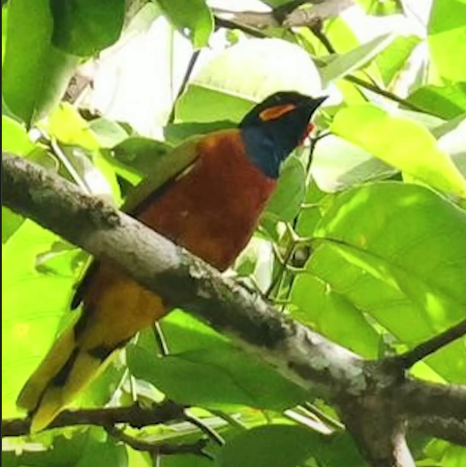
Image from IFLScience Instagram video/Credit: Stephanie Bartlett
The Ghana cuckooshrike (Lobotos lobatus) was photographed during a research expedition led by the International Bird Conservation Partnership (IBCP). Its last confirmed sighting was recorded in 2013 in Ghana’s Atewa Forest.
Field research fellow Stephanie Bartlett captured the photograph while working alongside fellow researcher Paulo Ditzel, who helped track the bird’s movements through the forest. The image revealed its distinctive orange body, complemented by black and yellow wings.
According to Mongabay, the discovery followed months of fieldwork and bird surveys involving researchers from across West Africa.
The species is believed to occur across parts of the Upper Guinean Rainforest, a biodiversity-rich region stretching through several West African countries. However, widespread habitat loss caused by logging and agricultural expansion has fragmented much of this forest, making sightings increasingly difficult.
The Ghana cuckooshrike is listed on the Search for Lost Birds initiative, which documents bird species that have gone more than a decade without a confirmed scientific sighting. Until now, researchers had little information about its remaining population or conservation status.
ALSO READ:
Mother and daughter killed in suspected grizzly bear attack in Canada
Protecting one of West Africa’s biodiversity hotspots
The rediscovery also highlights the ecological importance of Taï National Park, one of West Africa’s most significant remaining rainforest ecosystems.
Located in southwestern Côte d’Ivoire, the UNESCO-listed park protects an extensive area of tropical rainforest and provides habitat for an extraordinary range of wildlife. Its biodiversity includes forest elephants, chimpanzees, pygmy hippos and numerous bird species.
Despite its conservation importance, Taï faces ongoing threats from illegal hunting, artisanal gold mining and human pressure on surrounding forests.
Researchers believe the latest sighting reinforces the need to protect these remaining rainforest habitats, while highlighting how much there is still to discover about West Africa’s wildlife.
For birdwatchers and nature enthusiasts, the discovery reminds us that some of the continent’s most remarkable wildlife encounters happen far from the usual safari routes, deep in its forests.
Source: John Cannon, Mongabay, Lost bird reappears in West Africa’s forests after more than a decade.
Follow us on social media for more travel news, inspiration, and guides. You can also tag us to be featured.
Instagram | Facebook | Twitter | Spotify
ALSO READ:
Why flamingos thrive in lakes where few other birds can survive