


Deserts are often imagined as endless dunes, bare rock and landscapes where little can survive. Yet some of the world’s driest regions conceal wetlands, rivers, seasonal flowers and remarkable wildlife.
From Botswana’s flood-fed Okavango Delta to Namibia’s fog-covered dunes and Chile’s rare desert blooms, these landscapes reveal how life finds a way to thrive where water is scarce.
The Okavango Delta, Botswana: a wetland in the desert
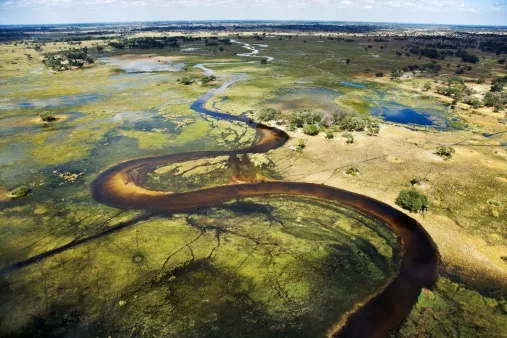
Aerial view of wetlands of Okavango Delta, Botswana/By: Martin Harvey/Getty Images
When the flood arrives in the dry season
At first glance, a vast wetland seems an unlikely feature of the Kalahari region. Yet in north-western Botswana, the Okavango Delta transforms the surrounding dry landscape into a network of channels, islands, marshes and seasonally flooded grasslands.
The water comes from the Okavango River, which carries rainfall from the Angolan highlands southwards into Botswana. Rather than reaching the sea, the river spreads across the low-lying landscape and gradually disappears into the sands of the Kalahari Basin.
One of the delta’s most remarkable features is the timing of its annual flood. Water levels typically rise during Botswana’s dry winter season, supporting plants and animals that have adapted their life cycles to the arrival of the floodwaters. The result is a striking contrast between the surrounding drylands and the green waterways that sustain an extraordinary variety of wildlife.
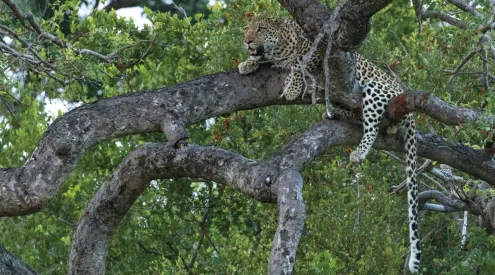
Elephants, buffalo, zebras and red lechwe move through the floodplains, while lions, cheetahs and African wild dogs inhabit the wider ecosystem. Crocodiles, fish and waterbirds also depend on the delta’s wetlands.
The Okavango is a reminder that a desert’s boundaries do not necessarily mark the limits of its biodiversity. In this landscape, water travelling from far beyond the desert creates an ecosystem that would seem impossible without it.
The Namib Desert, Namibia: where fog becomes water
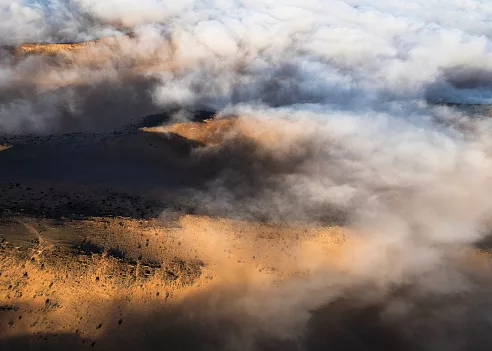
Namib Desert with fog at sunrise/By: Joseph Orsi/Getty Images
Life sustained by the morning mist
Rainfall is not the only way water reaches a desert. Along Namibia’s Atlantic coast, fog provides a vital source of moisture for plants and animals living in the Namib, one of the world’s oldest and driest deserts.
Cool air from the Atlantic Ocean meets warmer air over the land, helping to create fog that drifts inland across the dunes and gravel plains. When moisture settles on the ground, vegetation and animal surfaces, it can provide water to organisms adapted to take advantage of it.
Some Namib beetles are particularly well known for their fog-harvesting behaviour. Certain species position themselves in the path of incoming fog so that droplets collect on their bodies and run towards their mouths. Other animals use fog water opportunistically, while plants benefit from moisture deposited on their leaves and surrounding soil.
The desert’s vegetation may appear sparse, but it supports a wider food web. Research has shown how fog-dependent grasses contribute to the ecosystem by supplying food and energy to invertebrates and the animals that feed on them.
The Welwitschia, a distinctive plant native to the Namib region, is another of the landscape’s remarkable survivors. Its long, strap-like leaves and unusual growth habit make it instantly recognisable, although it is not simply a plant that lives on fog alone.
Here, the desert’s morning mist is more than an atmospheric feature. It is part of the system that allows life to persist in a place where rain can be exceptionally scarce.
The Atacama Desert, Chile: a landscape that bursts into flower
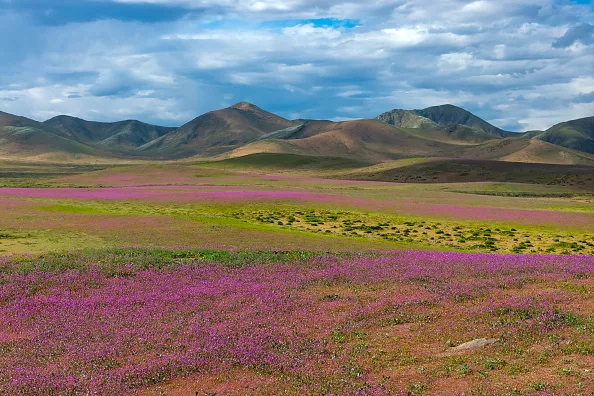
This aerial view shows patches of blooming wildflowers in the Atacama Desert near Copiapo, Chile, on September 18, 2026. (Photo by Javier TORRES / AFP via Getty Images)
The rare spectacle of the blooming desert
Parts of Chile’s Atacama Desert are so dry that rainfall can be absent for long periods. Yet under the right conditions, stretches of this seemingly barren landscape can become covered in wildflowers.
Known as the blooming desert, or desierto florido, the phenomenon occurs when sufficient rainfall triggers the growth and flowering of dormant or otherwise drought-adapted plants. Seeds and other plant structures that have survived unfavourable conditions can respond when moisture finally becomes available.
The transformation can be dramatic. Areas that previously appeared brown, grey or almost lifeless may produce carpets of flowers in shades of purple, pink, yellow and white. The blooms also attract insects and provide food for other animals, temporarily changing the character of the ecosystem.
However, the display is not an annual guarantee. Its timing, extent and intensity depend on rainfall patterns, and some events are considerably more spectacular than others. Researchers studying the Atacama have documented major blooming episodes following unusually high accumulated rainfall.
For travellers, this unpredictability is part of the appeal, but it also means that a visit cannot guarantee a landscape filled with flowers. Anyone planning a trip specifically to see the blooms should check current local conditions rather than relying on photographs from previous years.
The Atacama’s brief bursts of colour demonstrate that an apparently empty landscape can contain the potential for a remarkable transformation.
ALSO READ:
The Sonoran Desert, United States and Mexico: a desert full of life
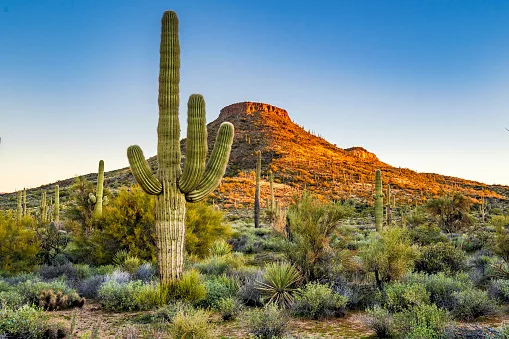
The image shows a large, well-formed saguaro cactus in the foreground and a typical Sonoran desert scene in the midground with a mountain lighted by the rising sun in the distance/By: Thomas Roche/Getty Images
More than cacti and sand
Stretching across parts of Arizona and California in the United States and northwestern Mexico, the Sonoran Desert is another example of why deserts should not be treated as lifeless environments.
Its landscapes include cactus-studded plains, rocky mountains, dry washes and areas of desert scrub. The iconic saguaro cactus, which can grow to impressive heights and develop branching arms, is one of its best-known plants. Yet the region’s biodiversity extends far beyond this familiar silhouette.
Seasonal rainfall, particularly the summer monsoon in parts of the region, can bring new growth and increased activity. Plants adapted to irregular rainfall take advantage of available moisture, while birds, insects, reptiles and mammals exploit the food and shelter provided by the vegetation.
The desert is also home to a variety of specialised habitats. Mountain slopes, valleys and different soil types create conditions that support distinct plant communities. In some areas, a short journey across the landscape reveals considerable changes in vegetation and wildlife.
Even the desert’s dry washes play an important role. These channels may remain dry for long periods, but water can rush through them after heavy rain, moving sediment and reshaping the land. The vegetation along some watercourses can differ significantly from that of the surrounding slopes.
The Sonoran Desert is not an exception to the rule that deserts support life. It shows why the idea of a desert as an empty expanse is misleading in the first place.
The Sahara, North Africa: oases and hidden waterways
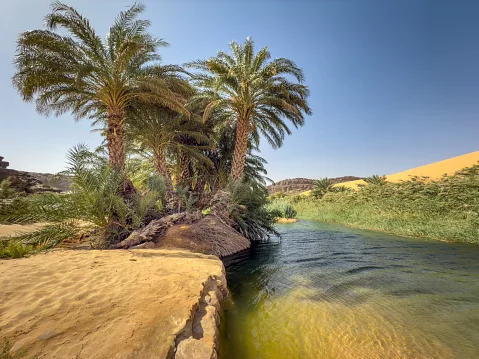
Palm tress in an oasis of the Sahara Desert/By: Kelly Cheng/Getty Images
Finding life among the dunes and rock
The Sahara is often associated with immense sand dunes, but sand seas make up only part of this enormous region. Rocky plateaus, mountain ranges, gravel plains, dry riverbeds and oases create a far more varied landscape than the familiar postcard image suggests.
Water can be found in places where it is not immediately visible. Groundwater sustains oases, where palms and other vegetation grow around springs or wells. These green pockets can support agriculture and provide habitats for birds and other wildlife in the surrounding arid environment.
The Sahara also contains wadis, channels that are often dry but can carry water after rainfall. In some areas, sudden downpours send torrents through these channels, even when the wider landscape remains parched. Such flows can be brief and unpredictable, making them both ecologically important and potentially dangerous.
The region’s mountains and highlands add further variety. Their cooler conditions and local water sources can support vegetation different from that found on the open desert plains. Meanwhile, plants and animals across the Sahara have evolved ways of coping with heat, limited water and large temperature differences between day and night.
These features do not make the Sahara any less of a desert. Instead, they reveal how its ecosystems are shaped by the uneven distribution of water and the ability of life to exploit even small opportunities.
What these landscapes teach us about deserts
Survival depends on more than rainfall
The Okavango Delta, Namib, Atacama, Sonoran and Sahara deserts may look very different, but they demonstrate a shared principle: water availability is not determined by rainfall alone.
Floodwaters can travel hundreds of kilometres before reaching an inland wetland. Coastal fog can supply moisture where rain is rare. Dormant seeds can wait for suitable conditions before flowering, while groundwater sustains oases long after surface water has disappeared.
These systems also show that desert life is not necessarily inactive or absent. Plants and animals have developed adaptations that allow them to survive long dry periods, respond quickly to changing conditions and make use of resources that may be available only briefly.
That balance can be fragile. Changes in rainfall, fog patterns, river flows and groundwater availability can affect the habitats and species that depend on them. Protecting these environments means understanding the processes that sustain them, not simply the animals or plants that attract attention.
For travellers, looking beyond the dunes opens up a different way of experiencing a desert. It might mean watching floodwaters spread across the Okavango, learning about fog-dependent life in Namibia, seeking seasonal flowers in Chile or exploring the oases and rocky landscapes of the Sahara.
The next time a destination is described as a barren desert, it is worth looking a little closer. There may be a wetland beyond the sand, a river beneath the surface or a field of flowers waiting for rain.
Follow us on social media for more travel news, inspiration, and guides. You can also tag us to be featured.
Instagram | Facebook | Twitter | Spotify
ALSO READ:
The ancient Seven Wonders of the world: What happened to them?