
Animals do more than live in a landscape. Some actively reshape it, from elephants that transform vegetation and beavers that redirect streams to termites that create nutrient-rich patches of soil.
Known as ecosystem engineers, these animals alter their surroundings in ways that can affect plants, water, soil and other wildlife. Their influence may be obvious, such as a beaver dam, or much harder to spot, such as the nutrient changes created by a termite mound.
Here are six places where animals are helping shape the landscapes around them.
Kruger National Park, South Africa
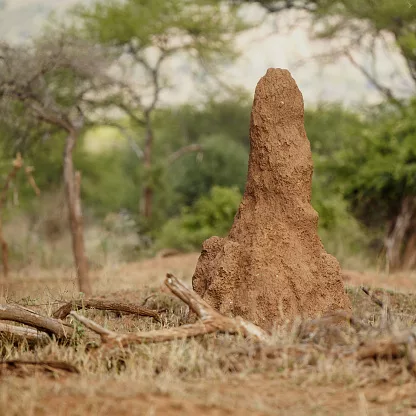
Mounds are constructed out of a mixture of soil, termite saliva and dung. Open woodland in Kruger National Park/By: annick vanderschelden photography/Getty Images
Termites create islands of fertility
The enormous termite mounds scattered across the savanna may look like simple towers of earth, but their influence extends well beyond the mound itself.
Research in Kruger National Park has shown that termite mounds can alter soil nutrients, grass species and where herbivores choose to feed. The mounds act as nutrient-rich patches within the surrounding savanna, creating different growing conditions from those found in the surrounding landscape.
The effect can be surprisingly extensive. Earlier research estimated that the combined area of termite mounds and the soil washed out from them could influence roughly 20% of the landscape in parts of Kruger.
Termites are therefore doing far more than building underground colonies. By moving and modifying soil, they help create a patchwork of different vegetation and feeding opportunities across the savanna.
Where to experience it: Kruger National Park
Addo Elephant National Park, South Africa
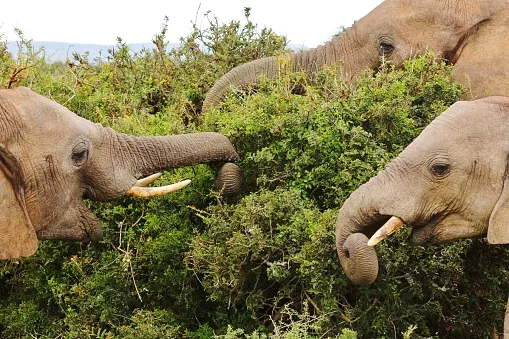
Happy Elephants eating from a Bush at Addo Elephant National Park/By: Smaks K/iStock
Elephants reshape the thicket
Few animals have a more obvious physical effect on their surroundings than elephants.
In Addo Elephant National Park, elephants browse, break branches, strip vegetation and move through dense thicket, influencing both the height and structure of the vegetation. Research using airborne LiDAR found that elephants could reduce vegetation height by as much as four times in some areas, with their effects varying according to factors such as terrain and proximity to water.
Their influence is particularly significant in Addo’s Albany Thicket, a vegetation type that forms a major part of the original park. Historical research has also documented substantial differences in plant biomass and composition in areas exposed to high elephant densities.
An elephant feeding beneath a tree may therefore be doing much more than having lunch. Repeated browsing and movement can gradually change the structure of the vegetation around it, opening some areas while leaving others denser.
Where to experience it: Addo Elephant National Park
iSimangaliso Wetland Park, South Africa
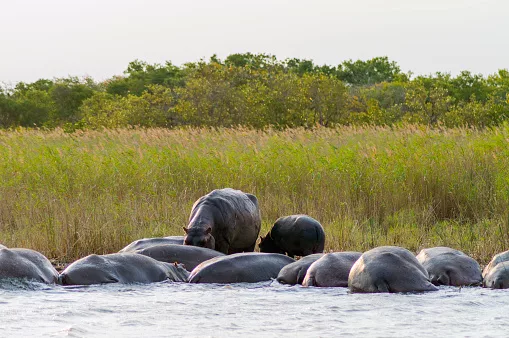
Hippos in iSimangaliso Wetland Park, St. Lucia/By: Piero M. Bianchi/Getty Images
Hippos move nutrients through the wetlands
At the St Lucia Estuary in iSimangaliso Wetland Park, hippos are not simply animals that spend their days in the water.
They graze extensively on land at night before returning to rivers, lakes and estuarine waters. In doing so, they transfer large amounts of terrestrial plant material and nutrients into aquatic ecosystems.
Researchers studying the St Lucia system estimated that hippos can transfer close to 2,000 tonnes of terrestrial grass into the aquatic system each year through defecation.
Their grazing also changes vegetation around waterways. Research elsewhere in African savannas has found that hippopotamus grazing can significantly alter vegetation cover, structure and plant composition, particularly close to rivers.
The result is a landscape influenced by the daily movement of animals between land and water. Hippos effectively connect two habitats through what they eat, where they graze and where they return their nutrients.
Where to experience it: iSimangaliso Wetland Park
Yellowstone National Park, USA
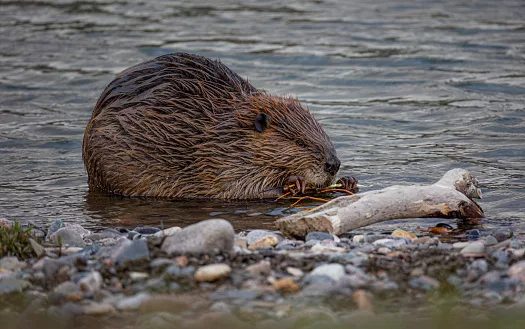
A beaver feeds alongside Slough Creek at Yellowstone National Park/By: Cam-with-the-Camera/iStock
Beavers build wetlands
Beavers may be among the clearest examples of animals physically redesigning their surroundings.
Using branches, mud and other materials, they build dams that slow or redirect streams. The resulting ponds and flooded areas can create new wetland habitat and alter the vegetation growing around waterways. The National Park Service describes beavers as a keystone species because of their ability to change habitat structure through dam building and the felling of trees and other woody plants.
In Yellowstone, their work can be seen along a number of waterways, particularly in areas with suitable willow, aspen and other vegetation. Their dams can create ponds that provide habitat for plants, insects, birds and other wildlife. Yellowstone’s wetlands themselves support a remarkably diverse range of species.
A stream that looks natural to a visitor may therefore have been substantially altered by an animal colony working nearby.
Where to experience it: Yellowstone National Park
Dassen Island, Western Cape
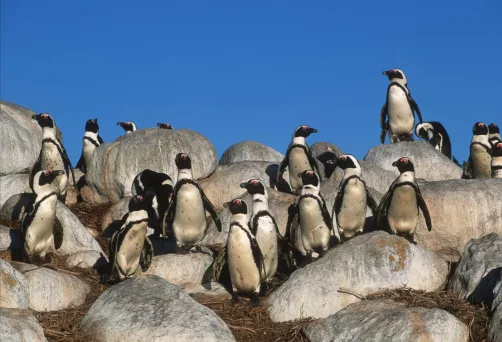
Jackass penguins in Dassen Island/By: Martin Harvey/Getty Images
Seabirds fertilise the coast
Landscape engineering does not always involve digging, damming or knocking down trees. Sometimes it comes from above.
Dassen Island, off South Africa’s West Coast, is an important breeding site for seabirds, including African penguins and Cape cormorants. The island has a long history of seabird colonies and guano accumulation, and it remains an important protected breeding area.
Guano transports nutrients from the ocean onto land. When it accumulates and is washed into surrounding waters, it can enrich coastal ecosystems. Research on seabird-breeding islands off the west coast of southern Africa has found that dissolved guano increases nutrient levels in intertidal waters and can boost the growth of algae.
More recent research from elsewhere has shown that seabird guano can also encourage vegetation that traps sediment, meaning seabirds can indirectly contribute to physical changes in coastal landscapes.
The birds are therefore moving nutrients between two worlds: feeding in the ocean and returning those nutrients to the land.
Where to experience it: Dassen Island is a protected nature reserve managed by CapeNature, so access is restricted. The island is best appreciated through authorised conservation and research activities rather than independent visits.
Grand Canyon National Park, USA
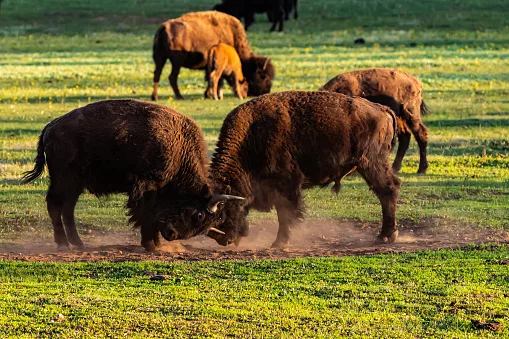
Bison North Rim Grand Canyon National Park/By: Michael Vance Pemberton/iStock
Bison create a patchwork across the landscape
Bison can change a landscape simply by grazing, walking, trampling and rolling in the dirt.
Their wallows are shallow, bowl-shaped depressions created when bison repeatedly roll and lie in the soil. These disturbed areas can collect water and provide conditions for pioneer plants, creating patches that differ from the surrounding grassland.
Their grazing adds another layer. Research and monitoring in Grand Canyon National Park have found that bison herbivory influences grassland structure, including the balance between grasses and other herbaceous plants. Bison wallows can also create new small water sources across the landscape.
Over time, thousands of these small disturbances can produce a mosaic of vegetation rather than one uniform expanse of grassland.
It is a reminder that an animal does not need to build a giant structure to change its environment. Sometimes simply feeding, moving and rolling in the soil is enough.
Where to experience it: Grand Canyon National Park
Animals are part of the landscape
The next time you look at a termite mound, elephant-shaped opening in dense vegetation, hippo trail or beaver pond, it is worth considering the animal behind it.
These changes may happen gradually, but they can influence everything from soil and vegetation to water and nutrient flows. In some cases, animals create new habitats that are then used by dozens of other species.
The landscape is not simply a backdrop for wildlife. Wildlife is helping build it, too.
Follow us on social media for more travel news, inspiration, and guides. You can also tag us to be featured.
Instagram | Facebook | Twitter | Spotify
ALSO READ:
World Octopus Day: 8 fascinating facts about one of the ocean’s strangest creatures