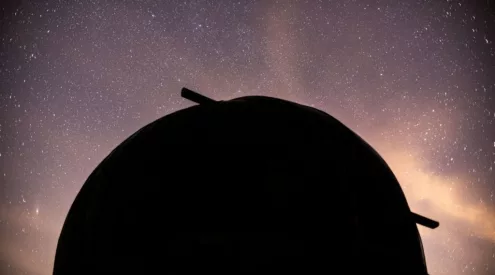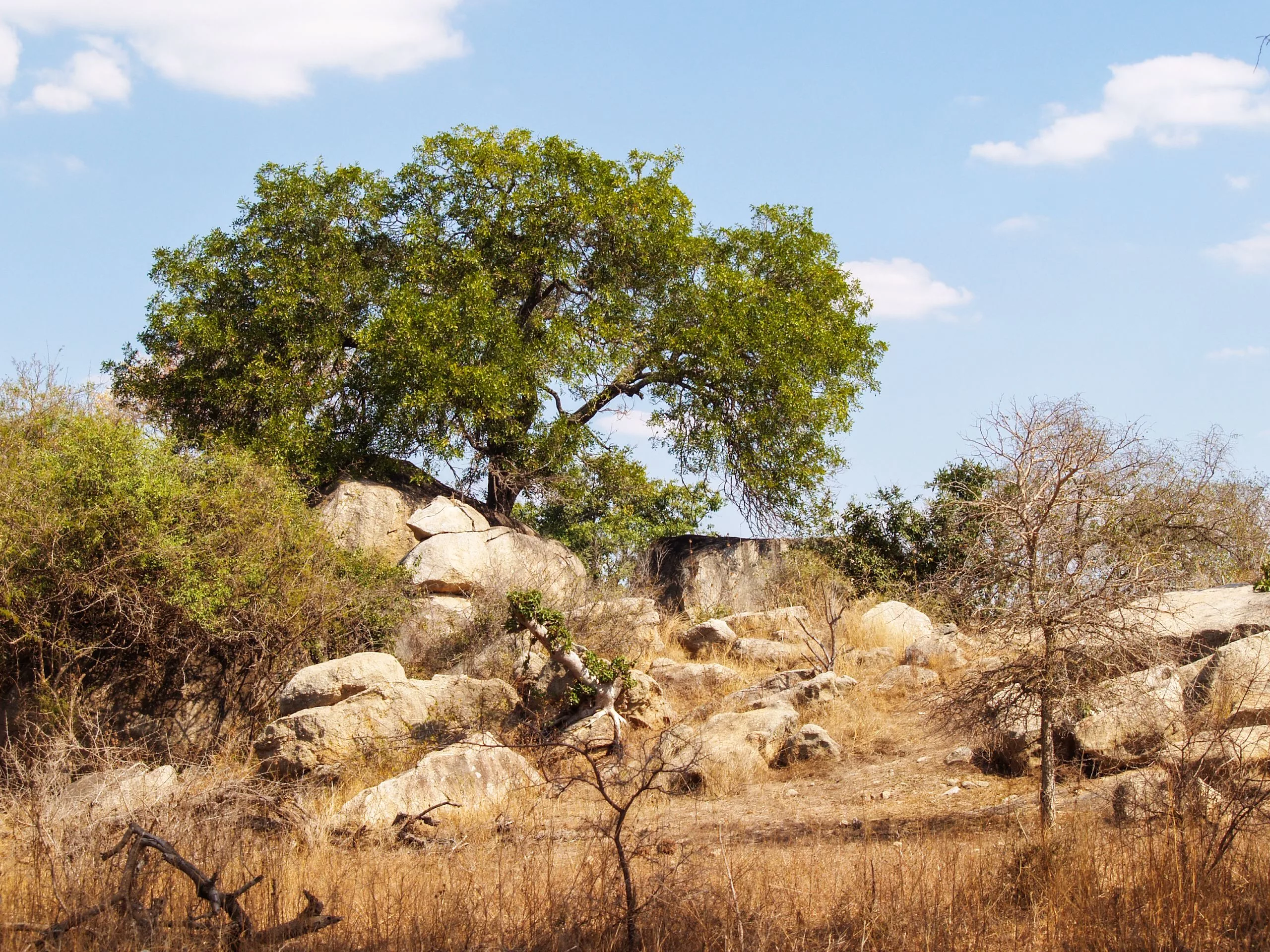



South Africa’s beloved Rooibos tea is preparing for an extraordinary journey — one that will take it far beyond the Cederberg mountains and into orbit.
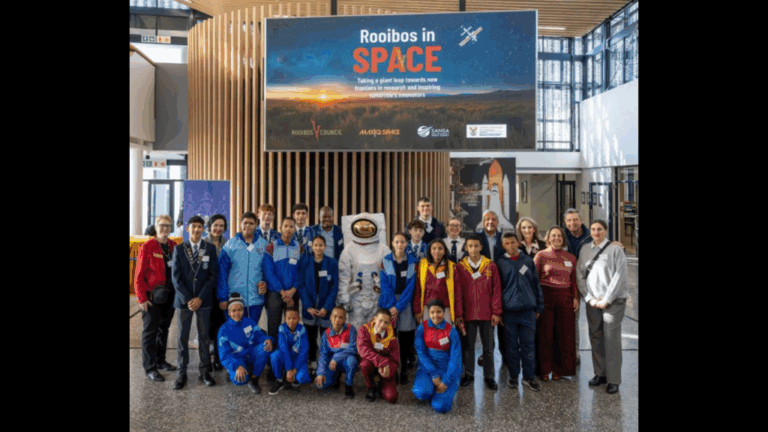
Picture: Photographer Patrick King; Apollo 11 astronaut suit courtesy of Annie’s Wardrobe.
In a first for the country, Rooibos seeds will travel to the International Space Station (ISS) later this year as part of the newly launched Rooibos in Space initiative, a project that combines cutting-edge space research with hands-on science education for South African learners.
The programme was officially launched at Parklands College’s Innovation Centre in Cape Town, bringing together experts from the education, agriculture and space science sectors to celebrate an initiative that blends one of South Africa’s most iconic plants with the future of space exploration.
From the Cederberg to the stars
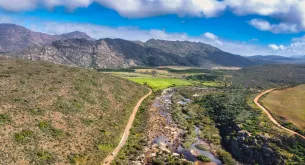
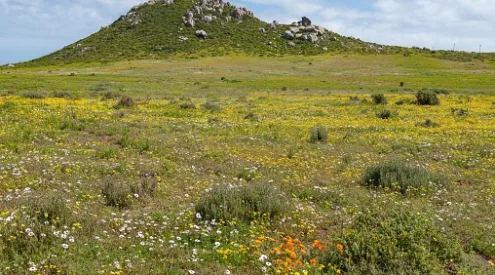
Rooibos has long been recognised as one of South Africa’s most distinctive agricultural products, grown almost exclusively in the Cederberg region of the Western Cape. Now, it is set to become part of international scientific research.
The project, developed by the South African Rooibos Council (SARC) in partnership with MaxIQ Space and supported by the South African National Space Agency (SANSA), will see Rooibos seeds launched to the ISS in October.

Once aboard the orbiting laboratory, the seeds will spend several weeks exposed to microgravity and space radiation before returning to Earth.
Researchers and learners will then compare the space-travelled seeds with a control group that remained on Earth, studying differences in germination, plant growth, resilience and crop yield.
Learners become young scientists
A key part of the initiative is its focus on education.
Learners from seven schools in the Cederberg – the birthplace of Rooibos – will lead the scientific investigation alongside local Rooibos farmers. Parklands College will also conduct a parallel experiment, allowing researchers to compare findings from different growing environments.
Beyond planting seeds, learners will collect data, analyse results and gain first-hand experience of how scientific research is conducted.
The programme is designed to strengthen STEM (Science, Technology, Engineering and Mathematics) education while showing learners how classroom lessons connect to real-world scientific challenges.
ALSO READ:
Beyond safari: Meet the new ‘big five’ on travellers’ wildlife wishlists
Why study plants in space?
Scientists around the world are increasingly exploring how plants behave in space as agencies prepare for longer missions to the Moon and eventually Mars.
Growing crops in space could one day help astronauts produce food, generate oxygen and support long-term human survival during deep-space missions.
Experiments conducted aboard the ISS over the past decade have already shown that several crops can grow in microgravity, helping researchers better understand how plants respond to the unique conditions of space.
South Africa’s Rooibos now joins that growing field of research.
More than a science experiment
The project also highlights South Africa’s growing role in global space science while celebrating a plant that has become a symbol of the country’s agricultural heritage.
To encourage wider participation, learners across South Africa will be invited to design the official Rooibos in Space mission patch during July and August, giving young people another opportunity to become part of the historic mission.
Officials involved in the launch said collaborations between education, science, agriculture and industry are helping create new opportunities for learners while building interest in future careers in STEM.
A mission South Africans can get behind
The announcement has already generated excitement because it combines two proudly South African success stories: Rooibos and scientific innovation.
While countries around the world continue experimenting with crops in space, this marks a unique opportunity for South Africa to contribute to international research using a plant found nowhere else on Earth.
As preparations continue ahead of the October launch, organisers say the public will be able to follow the mission through project updates, learner activities and milestones as Rooibos begins its remarkable journey from the Cederberg to the International Space Station.
Article shared by Cape Etc
Follow us on social media for more travel news, inspiration, and guides. You can also tag us to be featured.
Instagram | Facebook | Twitter | Spotify
ALSO READ:
13 cosy Cape Town cafés serving coffee, tea and hot chocolate