







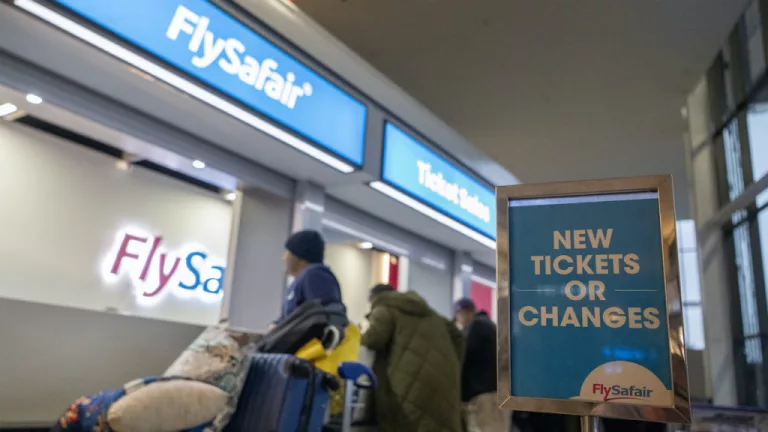
South Africa’s biggest domestic airline is moving closer to a change of ownership after the Competition Tribunal approved Harith General Partners’ proposed acquisition of budget carrier FlySafair, Cape {town} Etc reports.
Originally published via Cape {town} Etc
The decision, announced on Wednesday, 28 October, marks a major step forward for the transaction, which would place one of the country’s most recognisable airline brands under the control of an infrastructure investment group with interests across several sectors.
The deal is not yet complete. The companies said the transaction is expected to close later this year, subject to outstanding regulatory approvals and the fulfilment of the remaining conditions.
For travellers, the immediate question is whether the change will affect the airline they know. FlySafair previously said customers could expect business as usual, with its existing brand, leadership and strategy intended to remain in place.
Why Harith wants to buy FlySafair
Harith General Partners manages more than $3 billion in assets and has built its business around infrastructure investments, including transport, energy and telecommunications.
Buying FlySafair would give the group a significant presence in South African aviation. The airline has grown from a two-aircraft operation when it began passenger services in 2014 to a fleet of more than 30 aircraft, becoming the dominant player in the domestic market.
According to Bloomberg, FlySafair accounts for more than 60% of South Africa’s domestic airline seating capacity.
Harith has said the investment forms part of a broader strategy to build an integrated transport network. The group already has an interest in Lanseria International Airport, making the airline acquisition particularly significant for the country’s aviation sector.
In February, Harith and its affiliates signed an agreement, as announced on their website, to acquire the airline through Harith Aviation, which is buying Safair Holdings, FlySafair’s parent company. The deal is intended to provide long-term investment while allowing FlySafair to continue operating under its established model.
Why the Lanseria connection matters
The acquisition has drawn attention from competition authorities because of Harith’s existing airport interest.
The Competition Commission previously recommended that the deal be approved subject to safeguards intended to prevent FlySafair from receiving preferential treatment over rival airlines at Lanseria.
The conditions include restrictions on the sharing of commercially sensitive information and requirements that airport-related services provided to competing airlines be offered on fair, reasonable and non-discriminatory terms.
These protections are designed to prevent the ownership links between an airline and an airport investor from creating an unfair advantage in the market.
The issue has also attracted opposition from rival airline CemAir, which asked the Tribunal to block the acquisition or impose stronger safeguards. CemAir raised concerns about the relationship between FlySafair, Lanseria and other aviation interests.
The dispute illustrates why competition authorities examine not only who buys a company, but also how the transaction could affect its competitors.
FlySafair’s ownership dispute remains important
The proposed takeover has also unfolded against the backdrop of a long-running dispute over FlySafair’s compliance with South African aviation ownership rules.
In 2024, the Air Services Licensing Council raised concerns about the airline’s ownership structure and compliance with requirements governing local voting rights and effective control. Competitors Lift and Airlink also challenged the airline’s position.
The acquisition by a South African investor is intended to change the ownership structure, but FlySafair previously cautioned that the transaction would not automatically settle the separate licensing issues. Those matters remain subject to the relevant aviation authorities and legal processes.
That distinction matters: approval under competition law does not, by itself, replace the separate regulatory requirements governing an airline’s operating licences.
What happens next?
With the Competition Tribunal’s approval in place, the transaction can move towards completion once the remaining conditions and outstanding approvals have been satisfied.
The final outcome will be significant for Harith’s expansion into aviation and for a domestic airline that carries a substantial share of South Africa’s passengers.
For customers, the stated intention is continuity rather than an immediate overhaul. The bigger test will be whether the new ownership structure delivers long-term stability while ensuring that competing airlines continue to receive fair access to essential aviation infrastructure.
The deal’s completion date and any future changes to FlySafair’s ownership arrangements will depend on the remaining regulatory steps.
Originally published via Cape {town} Etc
Follow us on social media for more travel news, inspiration, and guides. You can also tag us to be featured.
Instagram | Facebook | Twitter | Spotify
ALSO READ:
Luxury lodge fined R10-million for flouting environmental laws