







A remote corner of Indonesia has yielded an exciting discovery for bird lovers, with researchers confirming that a familiar songbird is, in fact, an entirely new species.
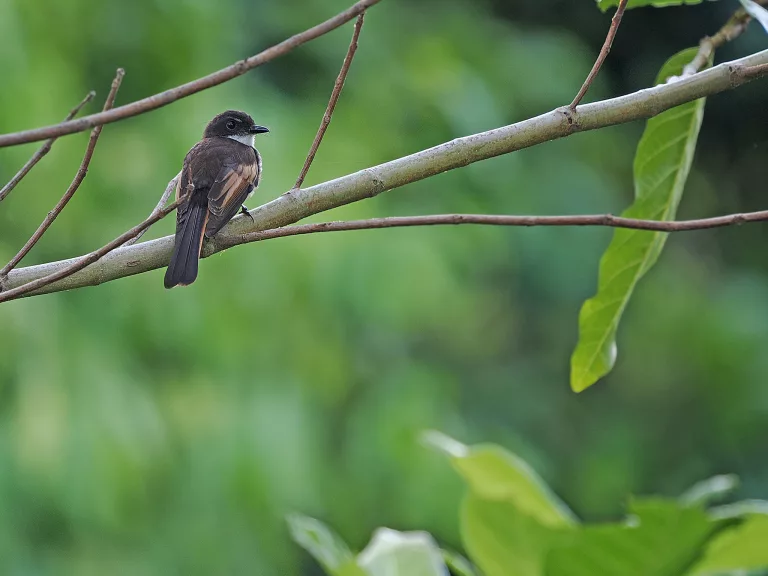
Cinnamon-tailed fantail/James Eaton, CC0, via Wikimedia Commons
The finding, reported by Mongabay, highlights how even well-studied bird groups can still hold surprises in some of the world’s most isolated islands.
For more than 120 years, scientists believed the cinnamon-tailed fantail (Rhipidura fuscorufa) inhabited both the Babar and Tanimbar islands in eastern Indonesia. However, new research has revealed that the birds living on the Babar Islands are a distinct species, now named the cheerful fantail (Rhipidura laguceria).
The study, led by James A. Eaton of Birdtour Asia Limited and Alex J. Berryman of BirdLife International, examined 19 museum specimens collected from both island groups. Researchers also recorded and analysed the birds’ songs before conducting 132 playback experiments over several years.
Although the two fantails look remarkably similar, the researchers found subtle differences in their plumage. The cheerful fantail has slightly darker upperparts and less cinnamon colouring on its underside than its close relative from the Tanimbar Islands.
The biggest distinction, however, lies in their songs.
Birds on the Babar Islands produce single whistles that rise in pitch, while the Tanimbar population sings a more rhythmic sequence of short and long whistles with fluctuating pitch. During playback tests, birds consistently responded to recordings from their own island but ignored calls from the neighbouring population.
Because birds rely heavily on song to recognise potential mates, this behavioural difference provides strong evidence that the two populations have evolved into separate species.
ALSO READ:
Plettenberg Bay Shark Spotters suspended during peak shark season
A conservation rethink
The discovery has important conservation implications. The cinnamon-tailed fantail is currently listed as Least Concern on the IUCN Red List, but recognising the Babar population as a separate species dramatically reduces the known range of both birds.
According to the researchers, their restricted distributions could initially qualify them for a threatened status.
Fortunately, both species appear to be resilient. Rather than depending on untouched forests, they are commonly found in disturbed landscapes, forest edges, scrubland and even areas with taller mango trees. They generally avoid dense, closed-canopy forests and seem well adapted to modified habitats.
A reminder that nature still holds surprises
The Babar Islands remained largely unexplored by ornithologists for more than a century, with significant scientific visits only resuming in 2009. The discovery of the cheerful fantail serves as a reminder that even in the 21st century, remote destinations continue to reveal remarkable wildlife waiting to be documented.
For birdwatchers and nature travellers, Indonesia’s lesser-known islands remain among the world’s richest frontiers for biodiversity and discovery.
Follow us on social media for more travel news, inspiration, and guides. You can also tag us to be featured.
Instagram | Facebook | Twitter | Spotify
ALSO READ: