


At the northern edge of Senegal, where the Senegal River meets the Atlantic, Saint-Louis feels unlike anywhere else in the country. Its narrow historic island is lined with faded façades, ornate balconies and old quays, while fishing boats crowd the neighbouring shores and horse-drawn carriages still move through its streets.
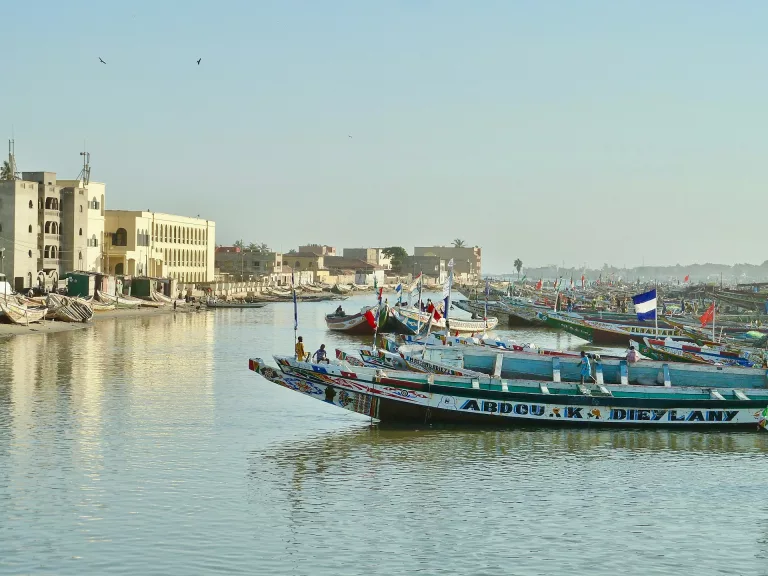
Saint Louis, Senegal/E. Diop/Unsplash
Once known as Ndar in Wolof, Saint-Louis was founded in 1659 as a French colonial settlement and later became Senegal’s capital until 1957. Today, its historic island is a UNESCO World Heritage Site, recognised for its distinctive architecture and unique setting between river and ocean.
A weekend here is less about ticking off attractions and more about slowing down, wandering and watching the city unfold between river, ocean and old colonial streets.
Day one: Discover the historic island
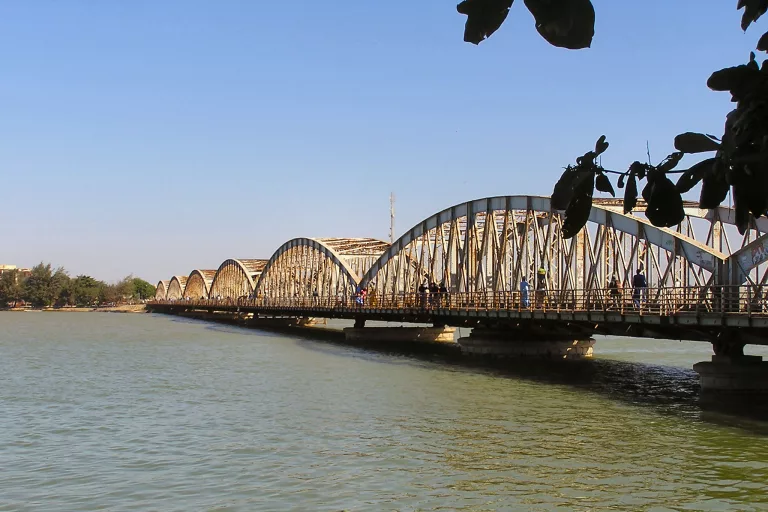
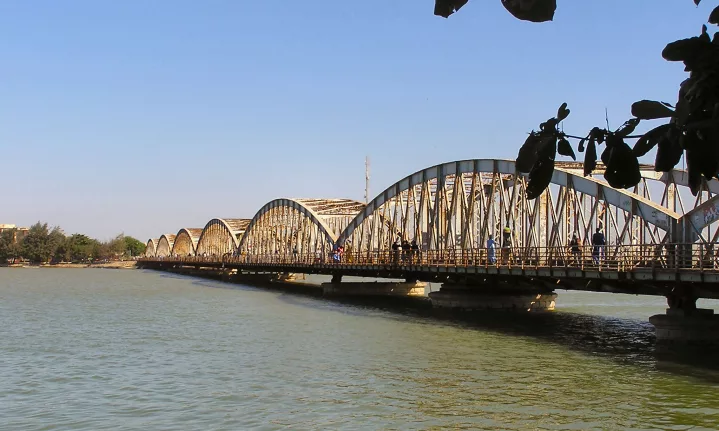
Faidherbe Bridge/Manu25/Wikimedia Commons
Cross the Faidherbe Bridge
Begin your Saint-Louis stay with the city’s most recognisable landmark, which is the Faidherbe Bridge.
The 507-metre-long metal bridge connects the mainland with the historic island and was inaugurated in 1897. Its seven spans stretch across the Senegal River, making the crossing an impressive introduction to the city.
Walk across rather than simply driving over. From the bridge, you can look back towards the mainland, watch pirogues moving along the river and get your first glimpse of the densely packed historic island.
Once across, the pace changes.
Walk the old streets
Saint-Louis is best explored on foot. The historic island follows a remarkably regular grid, with narrow streets running between the riverfront quays and rows of old buildings. UNESCO describes its distinctive architecture through its balconied and gallery houses, which give the city much of its character.
Look beyond the most polished buildings. Some façades are weathered and faded, with peeling paint and ageing shutters that reveal the passage of time. Others have been restored, bringing back the pastel colours and decorative details that once made Saint-Louis an important centre of commerce and administration.
A walking tour can help unpack the stories behind the buildings, particularly the city’s complicated colonial history and its role in the wider history of West Africa.
ALSO READ:
Stop at Place Faidherbe
At the centre of the island, Place Faidherbe provides an easy landmark around which to explore.
The square sits alongside the former Government Palace and forms part of the carefully planned historic centre. From here, wander down towards the quays, where the relationship between the city and the river becomes particularly apparent.
Saint-Louis’ beauty is found in these small details: balconies overlooking the street, colourful doors, old signs, laundry moving in the breeze and everyday life continuing inside buildings that have stood for generations.
See the city from a calèche
If your feet need a break, take a ride through the old city by horse-drawn carriage.
Calèches remain part of the experience of Saint-Louis, offering a slower way to see the historic streets and landmarks. The local tourism organisation also highlights both walking and carriage routes through the island.
It is worth choosing a ride that includes commentary rather than treating it simply as transport. The architecture makes more sense when you understand the history behind the streets and buildings.
Eat like a local
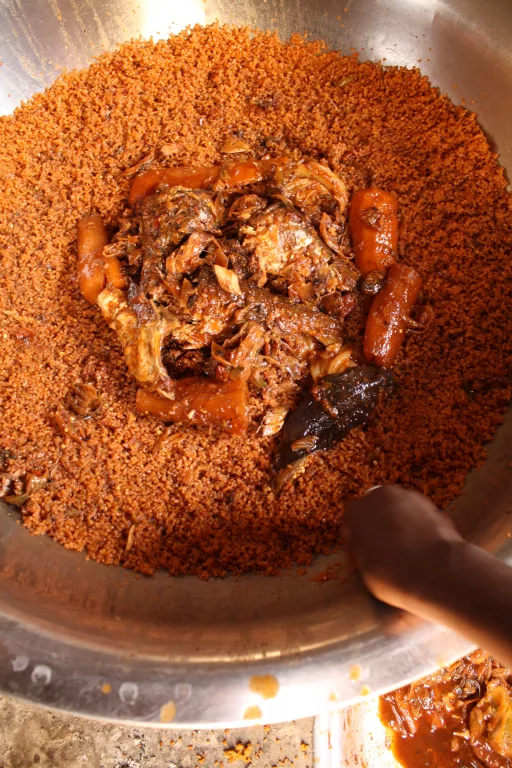
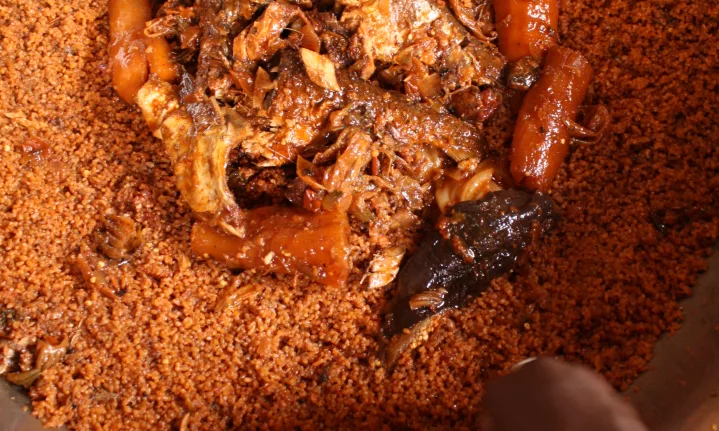
Red thiéboudienne/Dbilakovic/Wikimedia Commons
Make dinner an opportunity to explore Senegalese cuisine rather than defaulting to international dishes.
Saint-Louis has a particularly strong connection with seafood and is closely associated with thiéboudienne, Senegal’s celebrated rice-and-fish dish. The dish is traditionally linked to Saint-Louis and is an obvious choice when eating in the city.
Pair dinner with a slow evening beside the river or a walk along the waterfront as the temperature drops.
Day two: Follow the city towards the ocean
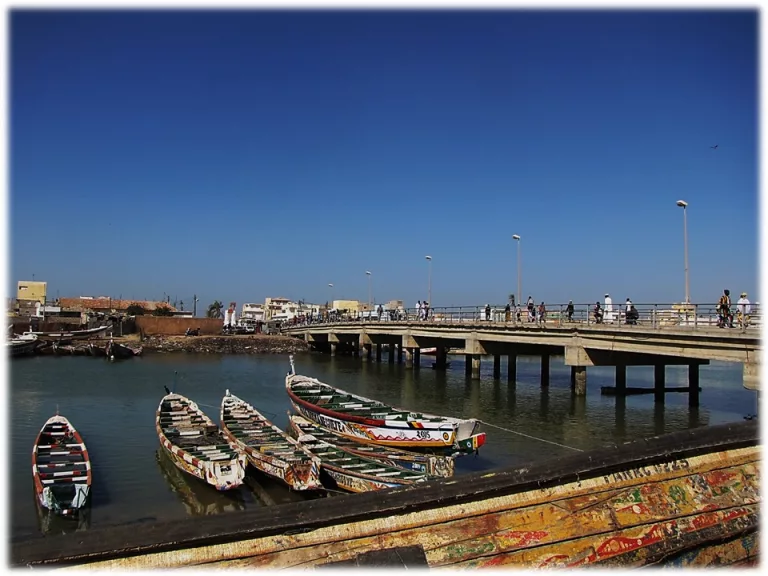
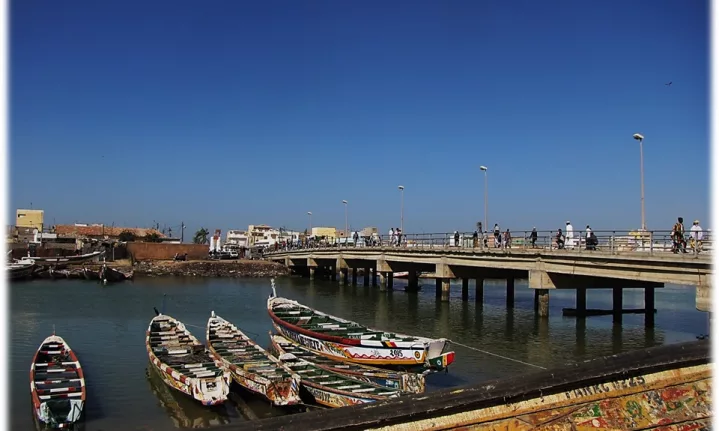
Guet Ndar/T.K. Naliaka/Wikimedia Commons
Start in Guet Ndar
The second day should show you the Saint-Louis that exists beyond its heritage architecture.
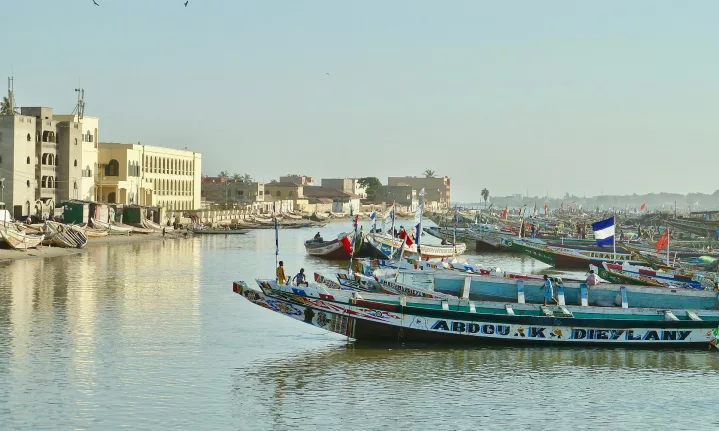
Cross towards Guet Ndar, the city’s historic fishing neighbourhood on the Langue de Barbarie. Here, the atmosphere changes dramatically. Fishing boats, narrow streets and the rhythms of a working coastal community replace the quiet elegance of the historic island.
Guet Ndar occupies the sandy strip between the river and the Atlantic and has long been home to fishing communities. Its waterfront is closely connected to the daily movement of boats, fishers and traders.
This is an important part of understanding Saint-Louis. The city isn’t simply an open-air museum of colonial buildings. It remains a living city shaped by the river and ocean.
Follow the Langue de Barbarie
Continue towards the Langue de Barbarie, the narrow coastal strip that separates the Atlantic from the Senegal River.
This unusual geography is central to Saint-Louis’ identity. UNESCO describes the historic island as a place where land and water form a distinctive landscape, with the city positioned at the mouth of the Senegal River.
The coastline also brings another side of Senegal’s northern landscape into view. Depending on the season and your interests, the surrounding area can be combined with nature and birding experiences.
Make time for the birds
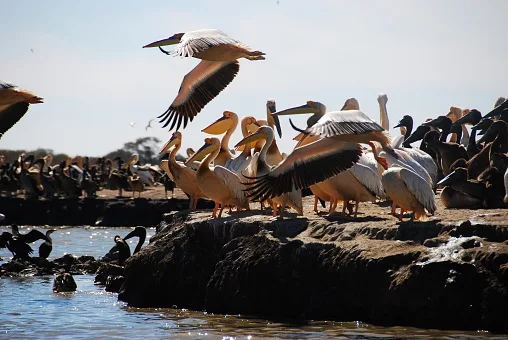
Pelicans in Djoudj National Park, near Saint Louis, Senegal/By: Jaap Hooijkaas/Getty Images
If wildlife is part of your trip, consider using your second day for an excursion beyond the city.
The Djoudj National Bird Sanctuary, in the Senegal River delta, is one of the region’s major attractions and is known for its enormous concentrations of migratory and resident birds. The Saint-Louis area is also a gateway to the Langue de Barbarie National Park.
A full Djoudj excursion can make the 48-hour itinerary feel rushed, however, so it is better suited to travellers who are particularly interested in birding and wildlife.
For a more relaxed weekend, stay closer to Saint-Louis and spend the afternoon exploring the coast.
End with sunset over the river
Return to the historic island for your final evening.
Find a spot along the quays and watch the light change across the Senegal River. As the sun drops, the old buildings take on warmer tones and the bridge becomes a striking silhouette against the water.
It is an appropriate ending to a city that has always been defined by its location.
Saint-Louis grew because of the river and Atlantic trade, developed into an important colonial capital and later lost its political importance when Senegal’s capital moved to Dakar. Yet its unusual setting and historic streets have allowed it to retain an identity all of its own.
Today, the city sits between its past and its future. Conservation work continues across the UNESCO-listed historic area, while communities beyond the old island face modern pressures including urban growth and environmental change. UNESCO notes that conservation and local development initiatives have helped improve the condition of the heritage site since concerns were raised about its preservation.
That tension is part of what makes Saint-Louis worth visiting.
It is not a perfectly preserved colonial postcard. It is a living Senegalese city, where old architecture, fishing traditions, river life and contemporary culture overlap.
And in just 48 hours, you can experience all of them.
Where to stay
For the full Saint-Louis experience, stay on or close to the historic island so that the old city is within walking distance.
Heritage-style accommodation adds to the atmosphere, while smaller guesthouses can offer a more intimate experience. The important thing is location: being close to the riverfront means you can explore early in the morning, return during the heat of the day and head out again for sunset.
Getting around
The historic island is compact enough to explore largely on foot. Walking is also the best way to appreciate the architecture and everyday details that are easy to miss from a vehicle.
Calèches offer another traditional way to see the city, while taxis are useful for reaching areas outside the historic centre.
If you are planning excursions to Djoudj or other attractions outside Saint-Louis, arrange transport in advance.
When to go
Saint-Louis has a hot, dry climate for much of the year, while the surrounding Senegal River delta is particularly attractive to birdwatchers during periods when migratory birds are present.
For a first visit, consider combining cooler sightseeing hours with a slower pace during the hottest part of the afternoon. Early mornings and late afternoons are ideal for walking, photography and spending time beside the water.
Why Saint-Louis deserves a place on your Senegal itinerary
Dakar may be Senegal’s energetic capital, and Gorée Island carries an important and painful history, but Saint-Louis offers something different.
Here, the story is written across an entire city.
It is in the weathered buildings of the historic island, the old bridge spanning the Senegal River, the fishing boats of Guet Ndar, the food served in local restaurants and the vast coastal landscape beyond the city.
Saint-Louis rewards travellers who are willing to slow down.
Give it 48 hours and you may leave with more than photographs of beautiful old buildings. You will have experienced a city shaped by river, ocean, trade, culture and time.
Follow us on social media for more travel news, inspiration, and guides. You can also tag us to be featured.
Instagram | Facebook | Twitter | Spotify
ALSO READ: