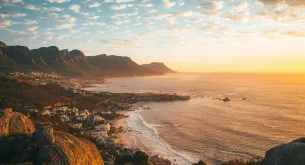



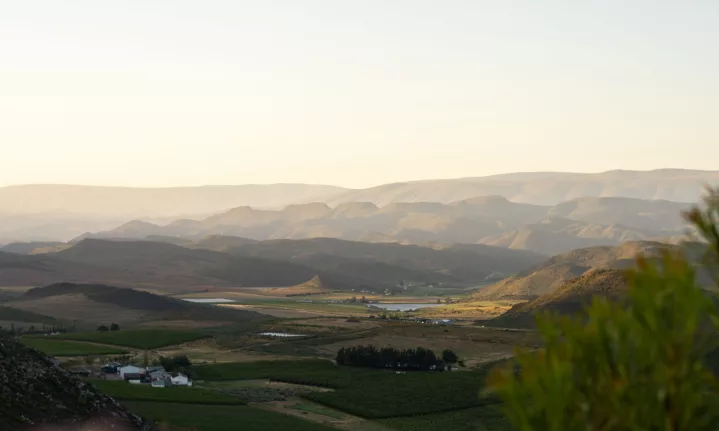
There is something particularly satisfying about visiting mountain towns in South Africa in spring. Winter has loosened its grip, mornings are no longer quite so icy and the landscape starts to change around you. Streams run, gardens wake up and hiking trails become a little more inviting.
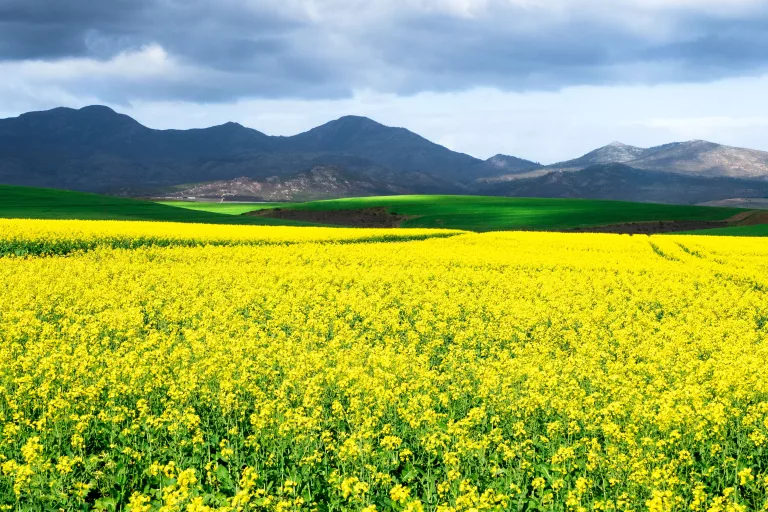
Photo by Matthias Wesselmann / Unsplash
These are the places where you can spend the morning walking through a forest, stop for coffee in a village that still feels wonderfully unhurried, and spend the afternoon watching the light move across a mountain pass. If you want a spring getaway that feels a little less predictable, put these six mountain towns on your map.
Hogsback: a forested mountain escape
There are few places in South Africa that feel quite like Hogsback. Tucked into the Amathole Mountains, the village is surrounded by indigenous Afro-montane forests, waterfalls and flower-rich mountain grasslands. It has the sort of misty, slightly otherworldly atmosphere that makes you understand why people arrive for a short stay and end up wanting to remain.
The name has an uncertain history. One explanation is that the three mountain peaks overlooking the village resemble the back of a hog. The name was recorded by artist Thomas Baines during his travels in 1848. The area also has a much deeper history, with the surrounding mountains long connected to Xhosa communities and the frontier conflicts of the 19th century.
Spring is one of the best times to experience Hogsback. The local tourism organisation highlights 22 permit-free walks and hikes, ranging from easy walks to more challenging scrambles. The trails lead into indigenous forest and towards some of the area’s best-known waterfalls, including Bridal Veil Falls, Swallowtail Falls and Madonna and Child Falls.
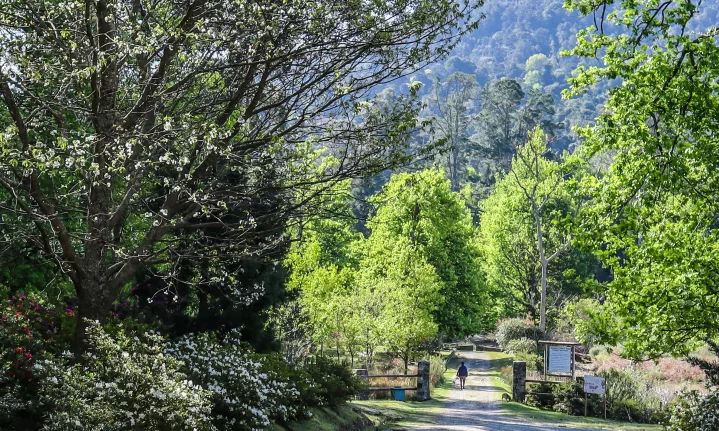
Then there are the gardens. Spring and autumn are particularly colourful here, with azaleas, Watsonias and other flowering plants adding colour to the already lush landscape. The Hogsback Arboretum is an easy place to start, with mature trees, streams and the 39 Steps waterfall. You don’t need to make Hogsback an adventure holiday, either. Spend a morning walking, have lunch in the village, visit a garden and find somewhere with a view for the afternoon. The appeal is as much about slowing down as it is about getting outdoors.
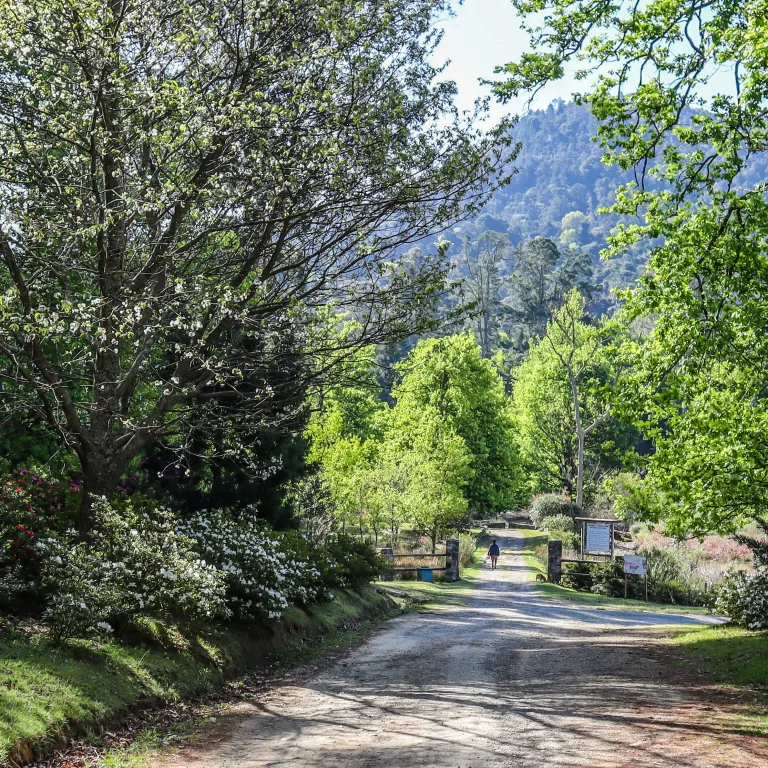
Photo by Eric Robinson / Unsplash
Rhodes: highland scenery at the end of the road
Remote, tiny and surrounded by some of the most dramatic mountain scenery in the Eastern Cape, Rhodes is the kind of place that rewards travellers who don’t mind taking the long way around. The village was established on the farm Tintern in 1891 and was later proclaimed a township in 1897. Its history is closely tied to the Eastern Cape Highlands, including the difficult mountain routes that once connected isolated communities.
Today, the mountains are the reason to come. Rhodes sits close to Naudé’s Nek, one of the country’s highest mountain passes, and the surrounding highlands offer hiking, mountain biking, horse riding, birding and wild-trout fly fishing. The local tourism organisation also offers wildflower viewing and guided walks during the flowering season.
Spring is a particularly good excuse to explore beyond the village itself. The Eastern Cape Highlands are known for their mountain flora, while the surrounding roads and passes turn the journey into part of the experience. You can spend a day driving through the mountains, stop for a picnic, fish a clear mountain stream or simply walk around the village and take in the old buildings.
For the more adventurous, the Eastern Cape Highlands Camino links Barkly East and Rhodes over four days, passing through remote mountain landscapes and alpine meadows. It is a serious walk rather than a casual weekend stroll, but it shows just how much wilderness lies around this tiny settlement. Rhodes isn’t polished in the conventional sense, and that’s exactly the point. It feels remote because it is remote. If your idea of a mountain escape involves silence, gravel roads and a very good chance of having the landscape mostly to yourself, start here.
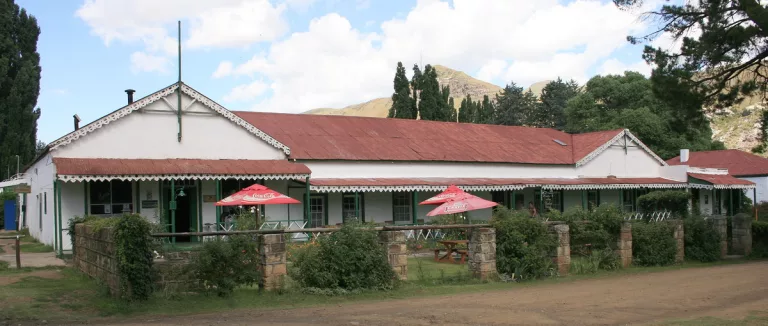
Photo by Hendrik van den Berg / Wikimedia Commons
Wakkerstroom: mountains, wetlands and spring birding
Wakkerstroom doesn’t have the dramatic cliffs of the Drakensberg or the forests of Hogsback. Instead, its mountains rise gently around a landscape of wetlands, grasslands and wide-open valleys. The town was officially established in 1859, although the area has a much older history. The name comes from the Wakkerstroom River, with “wakker” meaning awake or lively and “stroom” referring to a stream or river. The town also played a role during the Anglo-Zulu and Anglo-Boer wars, and several historic buildings and military remnants remain.
For spring, however, the real attraction is outside the town centre. September to March is the peak birding season, when high-altitude grasslands attract species including Rudd’s lark, Botha’s lark, yellow-breasted pipit, blue korhaan and southern bald ibis. After the first rains, the landscape can also produce wild orchids, disas, pink nerines and the locally named Wakkerstroom geranium.
There are plenty of ways to explore it without being a serious birder. The town has walking routes through the wetlands and surrounding countryside, while longer routes venture into the hills and mountains. You can also cycle, ride, fish or take a scenic drive through the surrounding landscape.
Back in town, spend some time looking at the old buildings. The Old Court House, St Mark’s Anglican Church, the old NG Kerk and Paul Kruger Bridge form part of a surprisingly rich collection of heritage sites for such a small settlement.
Wakkerstroom is for the traveller who doesn’t need a mountain to be dramatic to be beautiful. Sometimes rolling hills, wetland mist and a morning spent listening for birds are enough.
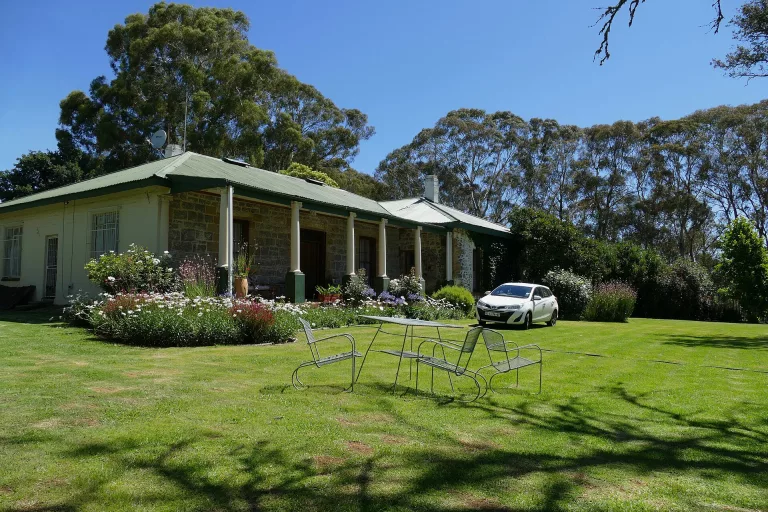
Photo by Bernard DUPONT / Wikimedia Commons
Nieu-Bethesda: beneath the Sneeuberg
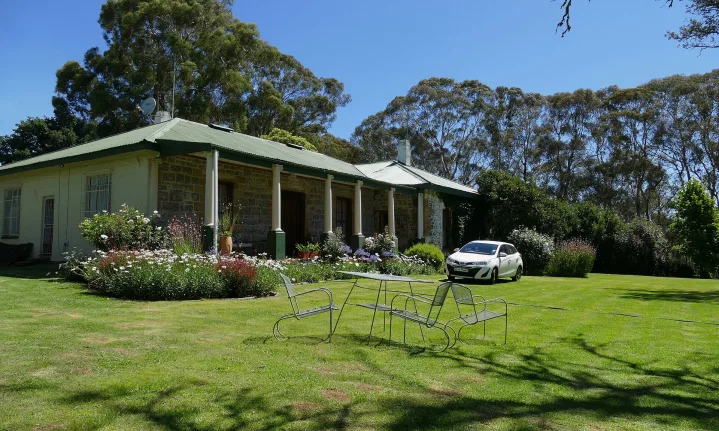
Nieu-Bethesda is not the first place most people would associate with mountain getaways in South Africa. It should be. The tiny Karoo village sits beneath the Sneeuberg, or “Snow Mountains”, in a well-watered valley at the foot of Compassberg. It was established in the late 1870s after local farmers wanted a church closer than Graaff-Reinet, which at the time could take more than seven hours to reach by road.
The village grew around its water furrows and agricultural community before declining during the 20th century. Its fortunes changed again through the extraordinary work of artist Helen Martins, whose home became the famous Owl House. Athol Fugard’s The Road to Mecca, inspired by Martins’ life, later brought international attention to Nieu-Bethesda. Spring softens the Karoo. September is also associated with the village’s Fugard Festival, while pear trees blossom and lambs appear in the surrounding fields. South African Tourism identifies spring, from September to November, as one of the best times to visit.
The obvious starting point is the Owl House, but there is much more to the village than its most famous attraction. The James Kitching Fossil Exploration Centre tells the story of the Karoo’s prehistoric past, while nearby farms offer fossil, rock-art and historical experiences. You can hike, mountain bike, ride horses, birdwatch or simply walk the dusty streets and follow the old water furrows through the village.
The best thing to do in Nieu-Bethesda may be to resist filling every hour. Sit somewhere with a view of the mountains. Eat something local. Visit a gallery. Walk slowly. This is a mountain town for people who want their getaway to feel properly removed from ordinary life.
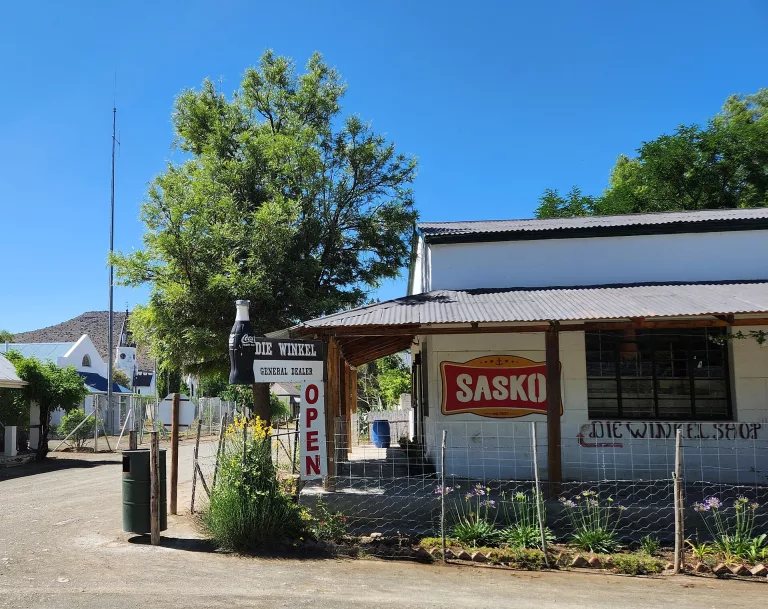
Photo by Discott / Wikimedia Commons
Lady Grey: a gateway to the Eastern Cape Highlands
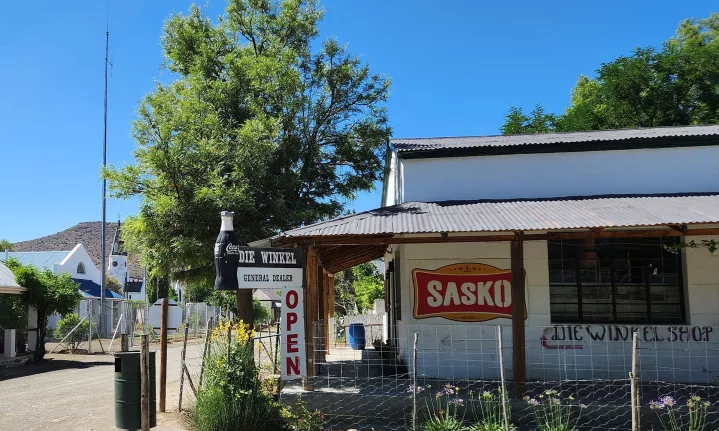
Lady Grey is one of those Eastern Cape towns that can be easy to drive past and a mistake to overlook. The town was founded in the 1850s after the local farming community wanted its own church, and it was named after Lady Eliza Lucy Spencer, the wife of Cape Governor Sir George Grey. The first church was completed in 1860. Later, the arrival of the railway helped establish Lady Grey as an important trading centre between the Eastern Cape and Lesotho.
Today, the town sits in a valley surrounded by mountains, gorges and rivers. It is also a gateway to the Eastern Cape Highlands and the mountain passes of the southern Drakensberg.
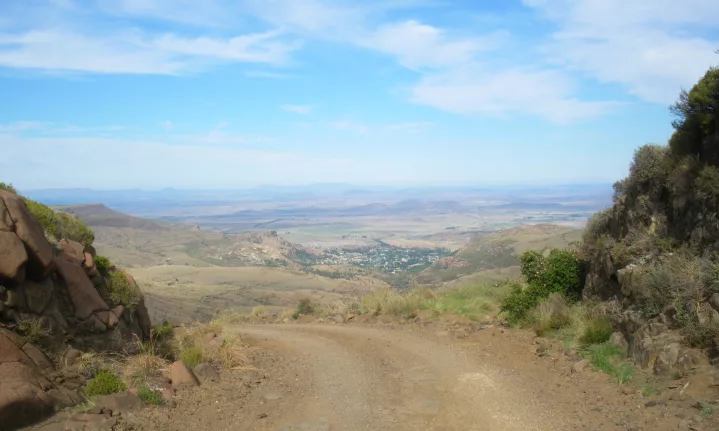
Joubert’s Pass is one of the major attractions. The scenic route climbs into the mountains and forms part of several high-altitude driving and adventure challenges. Around Lady Grey, visitors can hike, mountain bike and fly fish, while the area’s sandstone formations, fossil beds and rock art add another layer to the landscape.
For a slower day, explore the town’s historic buildings and cemetery, where old sandstone architecture and carved headstones offer glimpses into its past. Then head out towards the mountains for a picnic or scenic drive. Lady Grey works particularly well as a base for exploring the Eastern Cape Highlands rather than simply as a one-night stop. Give yourself time to follow the roads into the mountains and see where they lead.
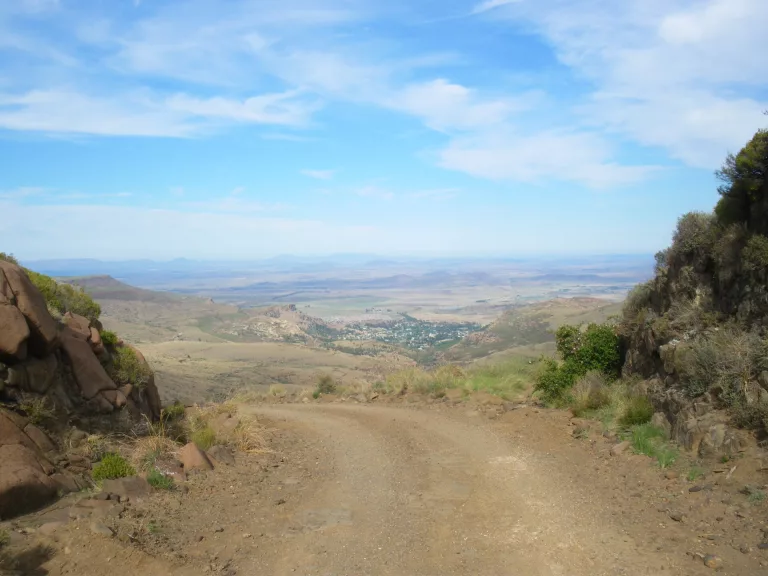
Photo by Utilisateur:Bel Adone / Wikimedia Commons
Montagu: mountains, heritage and hot springs
Montagu is probably the most familiar name on this list, but it still earns its place because it offers something many spring mountain escapes don’t: mountains, hot springs, heritage and easy access from Cape Town.
The town was founded in 1851 on the farm Uitvlucht and was named after John Montagu, the Colonial Secretary of the Cape Colony. It sits between the Langeberg Mountains and the Klein Karoo, with the famous hot springs becoming an important part of the town’s tourism story. The springs were formalised as a public attraction in the 19th century, and Montagu was declared a health resort in 1936.
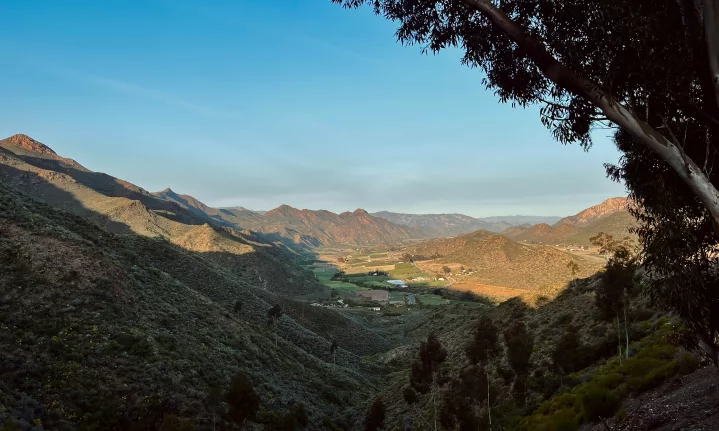
The mountains remain the main draw. There are hiking trails and shorter walks around the Langeberg, while the surrounding landscape also lends itself to mountain biking, climbing and scenic drives. Kogmanskloof provides one of the town’s most memorable entrances, with the road passing through a dramatic mountain gorge between Montagu and Ashton. Spring is also when the wider agricultural landscape starts to become particularly appealing. The Koo Valley north of Montagu is known for fruit production, while the town itself has long been associated with orchards, vineyards and dried fruit.
After a morning on the trails, this is the place to swap hiking boots for a long lunch and a soak in the warm water. Montagu is not as hidden as Rhodes or Nieu-Bethesda, but it offers something equally valuable: an easy mountain escape that doesn’t require you to sacrifice comfort for scenery. The mountain towns worth taking the long way to South Africa’s best mountain getaways aren’t necessarily the ones with the biggest resorts, the most famous viewpoints or the longest list of attractions.
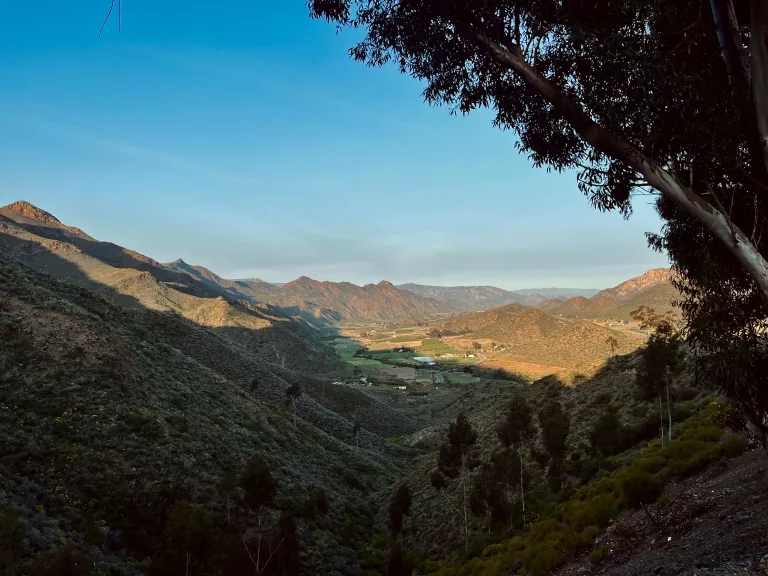
Photo by Rion De Villiers / Unsplash
Take the long way to these South African mountain towns
The best mountain towns South Africa has to offer aren’t necessarily the ones with the biggest resorts, the most famous viewpoints or the longest list of attractions. Sometimes the appeal is much simpler.
Spring is a particularly good time to make the detour. Across the country, the landscape begins to shift after winter, and these quieter mountain towns offer a chance to experience that change without having to follow the usual tourist trail. So, instead of booking the obvious weekend away, look at the map again. Find the mountain road that takes a little longer. It might be the better trip.
Follow us on social media for more travel news, inspiration, and guides. You can also tag us to be featured.
Instagram | Facebook | Twitter | Spotify
ALSO READ:
A love letter to Lanzerac: Where Cape heritage meets quiet luxury