South Africa’s wildlife tourism industry depends on healthy, thriving ecosystems. But bushmeat poaching is putting increasing pressure on wildlife populations, with experts warning that the consequences could extend beyond conservation and affect tourism, rural livelihoods, and the country’s reputation as a safari destination.
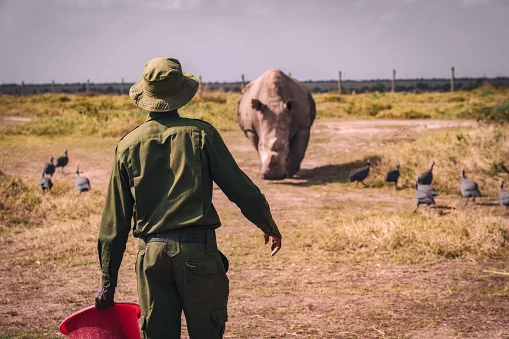
Image used for illustrative purposes/By: Cavan Images / francisco jose garcia gonzalez/Getty Images
Professor Peet van der Merwe of the Tourism Research in Economics, Environs and Society (TREES) research unit at North-West University has warned that illegal bushmeat hunting is removing wildlife from parks, reserves and surrounding farmland.
“Protecting wildlife is not only a conservation responsibility; it is an investment in tourism, rural livelihoods and the country’s international reputation,” Van der Merwe said, according to IOL.
“If the wildlife disappears, the tourists – and the opportunities they create – may follow.”
Wildlife under pressure
Wire snaring and the use of hunting dogs remain significant challenges in several of South Africa’s conservation areas.
Unlike selective hunting, snares can catch virtually any animal that crosses their path. Trapped animals can suffer for days from severe injuries, dehydration, starvation or infection before dying or being found by conservation teams.
The impact is not limited to individual animals. Removing wildlife can alter natural behaviour, reduce prey available to predators and place additional pressure on already vulnerable species.
According to Van der Merwe, this ultimately threatens the wildlife encounters that attract visitors to South Africa’s parks and reserves.
Snaring has been documented in national parks, provincial reserves, private conservation areas and farmland. The Kruger National Park, in particular, continues to face challenges from snares, with species including African wild dogs among those affected.
ALSO READ:
Why poaching affects tourism
South Africa’s safari economy relies on the appeal of its wildlife. Visitors travel from around the world to see elephants, lions, wild dogs, antelope and other species in their natural habitats.
A decline in wildlife numbers could therefore have consequences far beyond the animals themselves.
Fewer animals and disrupted ecosystems can make wildlife viewing less predictable, while the loss of key prey species can affect predator populations and the wider balance of an ecosystem.
The economic ripple effect could also reach accommodation providers, guides, restaurants, transport operators and businesses supplying products and services to tourism destinations.
Van der Merwe said bushmeat is often obtained for food, but can also become a source of income when meat is sold through informal markets.
“For those involved in bushmeat poaching, the issue often comes down to food security,” he said.
Rangers on the front line
Removing snares is a difficult and potentially dangerous job for rangers.
In and around the Kruger National Park, rangers patrol large areas looking for wire snares and other signs of illegal hunting. Van der Merwe said some poachers are armed and may respond violently when confronted.
The use of hunting dogs adds another challenge. Dogs can be used to track and chase wildlife over considerable distances, making it difficult for conservation teams to monitor activity across large landscapes and property boundaries.
The problem is particularly difficult in rural areas away from densely populated centres, where access to conservation resources and law enforcement can be more limited.
Conservation needs communities
Tackling bushmeat poaching cannot rely on ranger patrols and law enforcement alone, Van der Merwe said.
Communities living alongside protected areas need to see clear economic benefits from conservation and tourism if they are to become long-term partners in protecting wildlife.
Employment, skills development, community-owned tourism businesses and better access to affordable food could all play a role in reducing the pressures that drive illegal hunting.
The approach is particularly important in rural areas where communities live alongside wildlife and protected areas but may not always benefit directly from the tourism economy.
Ultimately, South Africa’s wildlife is both a conservation asset and a tourism resource. Protecting it means protecting the ecosystems visitors come to experience – as well as the jobs and businesses that depend on them.
Source: IOL, based on comments by Professor Peet van der Merwe of North-West University.
Follow us on social media for more travel news, inspiration, and guides. You can also tag us to be featured.
Instagram | Facebook | Twitter | Spotify
ALSO READ:
Parrot eggs hatch after suspected smuggler arrested at OR Tambo