


Coffee Bay may be the name that first comes to mind when South Africans start talking about the Wild Coast, but a Wild Coast road trip can begin much further south, along a quieter stretch of the Eastern Cape coastline.
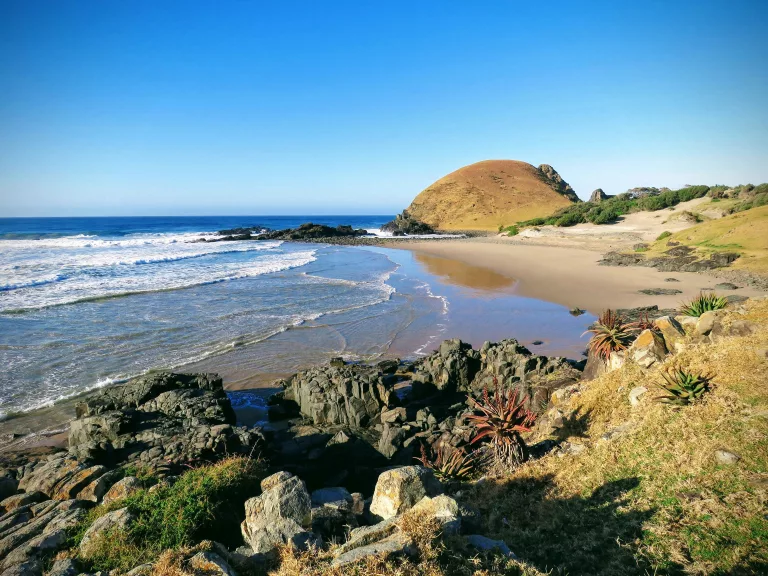
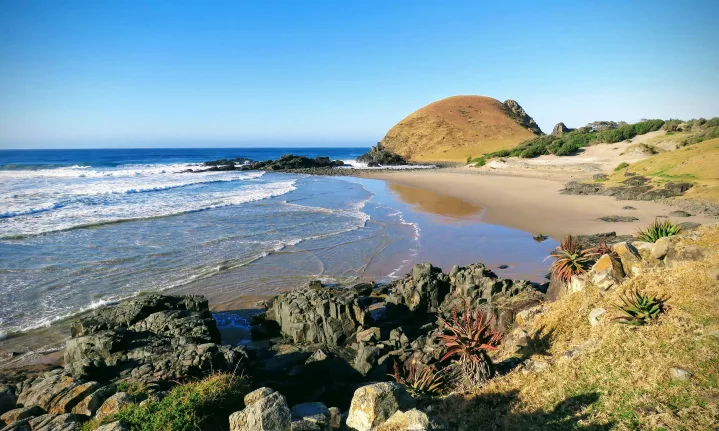
Mgxotyeni, Wild Coast, South Africa / Joshua Gaunt / Unsplash
Around an hour from East London, the coastal villages of Morgan Bay, Haga Haga and Kei Mouth offer a gentler way into this part of the country. Here, dramatic cliffs meet long beaches, forest paths lead towards the sea and the Great Kei River marks the threshold between the more familiar Eastern Cape coast and the wilder landscapes beyond.
This is not a road trip about ticking off attractions. It is about taking three days to follow a short stretch of coastline and letting each stop reveal a different side of the Wild Coast.
Day one: Morgan Bay and the cliffs of Cape Morgan
Start in Morgan Bay, or Gxarha, a small seaside village whose landscape does most of the talking. The village sits roughly 90km from East London and is known for its wide beach, lagoon and towering sea cliffs. Morgan Bay takes its English name from Cape Morgan, which was named in 1822 after A.F. Morgan, master of the Royal Navy survey ship Barracouta. The colonial name remained on maps, although Gxarha is the area’s isiXhosa name.
Morgan Bay’s appeal is immediate but uncomplicated. The beach is long enough for an unhurried walk, while the lagoon offers calmer water than the open sea. It is the kind of place where a morning can easily disappear between a swim, a book and a walk along the sand.
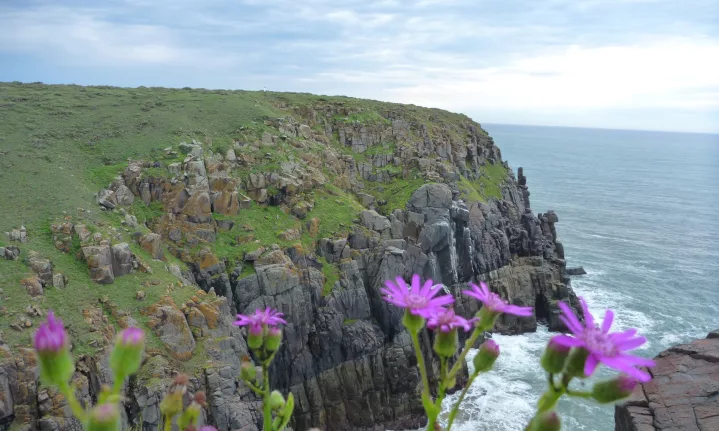
But it is the cliffs that give Morgan Bay its sense of drama. Follow the paths above the shoreline for wide views across the Indian Ocean, or walk from the end of Morgan Bay’s beach towards the tidal pool and forest path leading to the Cape Morgan Lighthouse. From there, the route continues towards Kei Mouth. Morgan Bay is also connected to the longer Strandloper Trail, which follows this stretch of coast from Kei Mouth through Morgan Bay and Haga Haga before continuing south towards Gonubie.
If you have the energy for more exploring, head towards Double Mouth Nature Reserve. The reserve offers camping, hiking, birdwatching, fishing, swimming, surfing and canoeing, making it an easy detour for travellers who would rather spend their first day outdoors than in the car.
There is also a fascinating layer of maritime history along this coastline. Offshore near Double Mouth, the Portuguese vessel Santo Espirito was wrecked in 1608. Fragments associated with the wreck, including Chinese blue-and-white porcelain and carnelian beads, have historically been found along the coast.
Spend the afternoon back in Morgan Bay, preferably somewhere with a view of the cliffs. The best thing to do here is not to over plan the evening. Morgan Bay works precisely because it gives you permission to stop trying to make every hour productive.
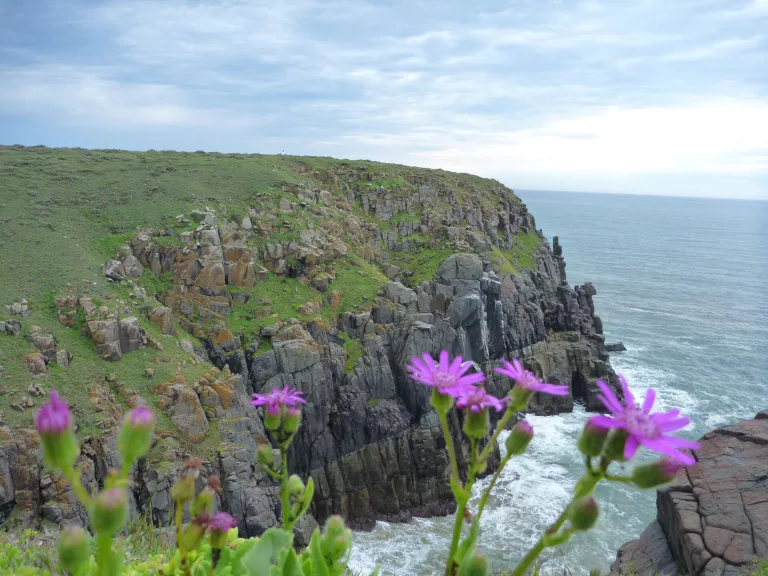
Morgan Bay cliffs / ~ souTH AFRica ~ / Wikimedia Commons
Day two: Take the slower road to Haga Haga
The road to Haga Haga is where the trip starts feeling less like a weekend getaway and more like an actual escape. This small coastal village lies south of Morgan Bay, surrounded by rolling hills and the Indian Ocean. It has remained one of those places where the scenery, rather than a packed itinerary, is the main attraction.
Haga Haga’s history is tied to the inland farmers who began coming to the coast in the early 20th century with livestock for winter grazing. The village’s unusual name has several possible origin stories. One explanation links it to the isiXhosa phrase “Haka Haka”, interpreted as “hook on”, referring to ox teams being joined together to negotiate difficult sections of the route. Other versions of the story have also been passed down over the years, which feels fitting for a place with a name that has become part of its own folklore.
Once you arrive, there is no need to rush. Haga Haga is made for slow coastal days. Walk the beach, explore the rocks and rock pools, swim when conditions allow and spend time looking out to sea. The village is also suited to hiking, birdwatching, fishing and mountain biking. During whale migration season, the coastline can offer opportunities to spot whales and dolphins from shore.
This is the day to leave space in the itinerary. Bring lunch to the beach. Walk until you feel like turning around. Sit somewhere above the water and watch the weather change. There is something increasingly rare about destinations that have not tried to turn every natural feature into an experience with a timetable. Haga Haga still offers that luxury. If Morgan Bay is defined by its cliffs, Haga Haga is defined by its quiet. Stay long enough to notice it.
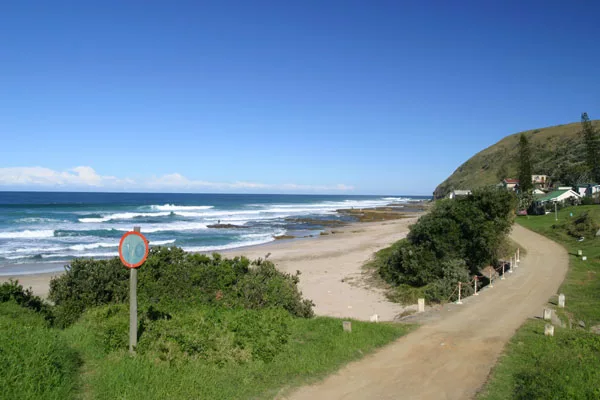
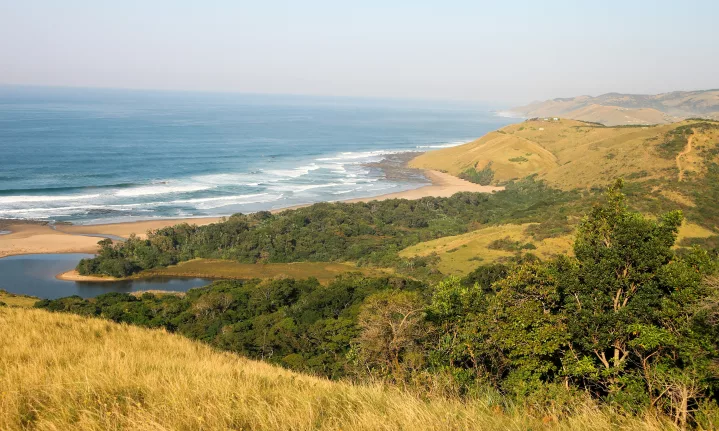
The view of Whale Point lookout from the seaside village of Haga Haga / Tyearsley / Wikimedia Commons
Day three: Kei Mouth and the Great Kei River
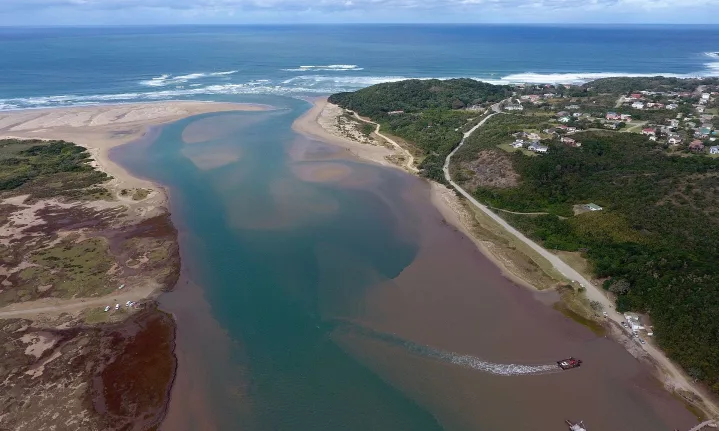
On the final day, turn back north towards Kei Mouth, where the coast meets one of the Eastern Cape’s most significant rivers. The Great Kei River is formed by the meeting of the Black Kei and White Kei rivers before flowing into the sea at Kei Mouth. Historically, the river formed the south-western boundary of the Transkei region, and today it remains a defining feature of this section of coastline.
Kei Mouth is worth visiting for the landscape alone, but the most memorable experience here is the Pont. The Kei River Pont began operating in 1990 and provides a crossing between Kei Mouth and communities on the opposite bank. Before the pont, crossing the river involved a far longer detour via Butterworth or a more difficult journey by boat. Today, the crossing remains both a practical connection and one of the area’s most distinctive travel experiences. The crossing is a reminder that on the Wild Coast, rivers can still shape journeys.
Spend some time around the estuary afterwards. The Great Kei Estuary is known for boating, fishing and birdwatching, while the river and surrounding coastal landscape offer a different kind of scenery to the beaches and cliffs of the previous two days. Kei Mouth also offers easy coastal walks, fishing, surfing and birdwatching, while its links to the Strandloper Trail make it a natural stopping point for travellers who want to explore the coastline on foot.
For a final walk, follow the coastline and take in the meeting of river and sea. It is a fitting place to end the trip.
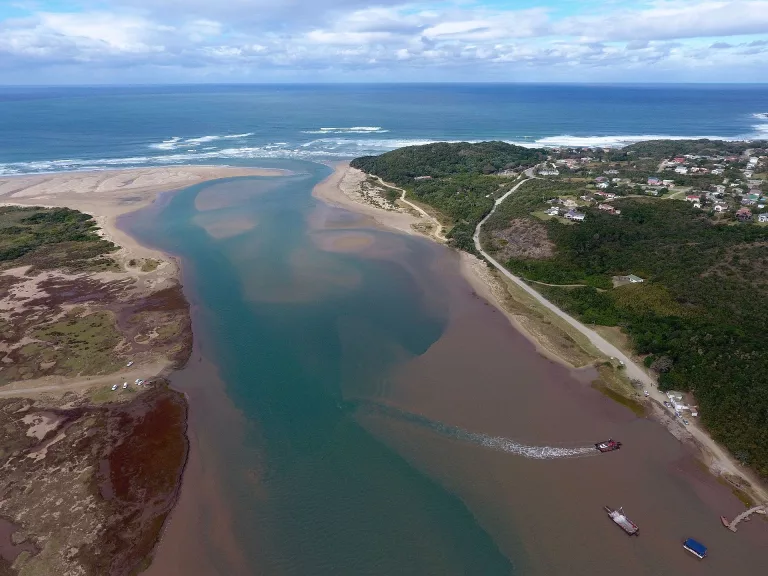
Aerial photograph of the mouth of the Great Kei River as it meets the Indian Ocean. The river ferry allowing vehicles and passengers to cross the river can be seen in the foreground / Greg Ritz / Wikimedia Commons
Why this stretch of coast is worth the drive
The beauty of this three-day route is that Morgan Bay, Haga Haga and Kei Mouth are close enough to combine without spending most of your holiday behind the wheel. Yet each offers something distinct.
Morgan Bay brings the cliffs, beach and lagoon. Haga Haga offers the kind of coastal quiet that encourages you to slow down properly. Kei Mouth adds the Great Kei River and the experience of crossing the Pont, one of the most distinctive journeys on this stretch of coast. Together, they make a strong argument for looking beyond the Wild Coast’s better-known names.
Coffee Bay will always have its pull. But the road north from East London holds its own rewards: sandstone cliffs catching the afternoon light, small villages that have resisted becoming overdeveloped and a coastline that still feels shaped more by tides and rivers than tourism. Three days is enough to see this part of the Eastern Cape.
The better approach, though, is to give yourself three days and stop trying to see everything.
Follow us on social media for more travel news, inspiration, and guides. You can also tag us to be featured.
Instagram | Facebook | Twitter | Spotify
ALSO READ: