



South Africa’s wildlife spectacles are not confined to the savanna. Each year, animals move across the country and its surrounding waters in search of food, suitable breeding grounds and changing environmental conditions. Some journeys involve millions of tiny fish, while others see butterflies fill city skies or whales travel along the coast.
These movements are often less familiar than the great wildebeest migration of East Africa, but they offer another way to experience the country’s extraordinary biodiversity. From the winter sardine run to seasonal whale movements and the remarkable journeys of migratory butterflies, these are some of South Africa’s great animal migrations to know about.
1. The sardine run along the east coast
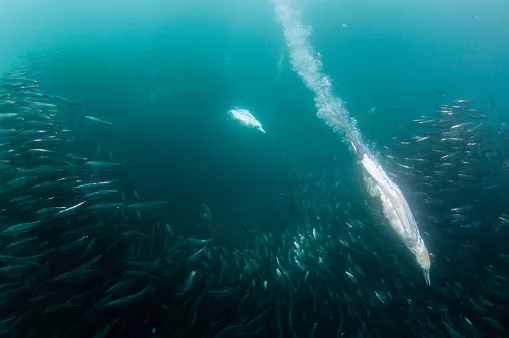
A small pod of common dolphins attack a sardine bait ball during the sardine run, off the east coast of South Africa. The common dolphins work as a team to round up the sardines and push them toward the surface/By: by wildestanimal/Getty Images
Every winter, South Africa’s eastern coastline can become the stage for one of the ocean’s most dramatic wildlife events. Huge shoals of sardines move northwards along the coast, attracting dolphins, sharks, whales, game fish and seabirds.
Known as the sardine run, this seasonal movement is particularly associated with the Eastern Cape and KwaZulu-Natal. As predators gather around the shoals, the sea can erupt into a frenzy of activity. Dolphins herd fish into dense bait balls, sharks pursue their prey underwater, and Cape gannets and other seabirds plunge into the water from above.
The spectacle is not simply about the sardines themselves. It is the chain reaction they set off across the marine food web that makes the event so remarkable.
Where and when to see it
The sardine run generally takes place between May and July, although timing and intensity vary from year to year. The movement can be followed along sections of the Eastern Cape coast towards the KwaZulu-Natal South Coast, with the location of the action changing throughout the season.
Visitors can look out for reports from local tourism organisations and marine operators before planning a trip. Boat-based excursions, diving and snorkelling may offer opportunities to see marine life more closely, while activity can sometimes be observed from the shore.
The run is unpredictable, however, and there is no guarantee that sardines or feeding predators will be visible on a particular day.
2. The butterflies that cross Johannesburg
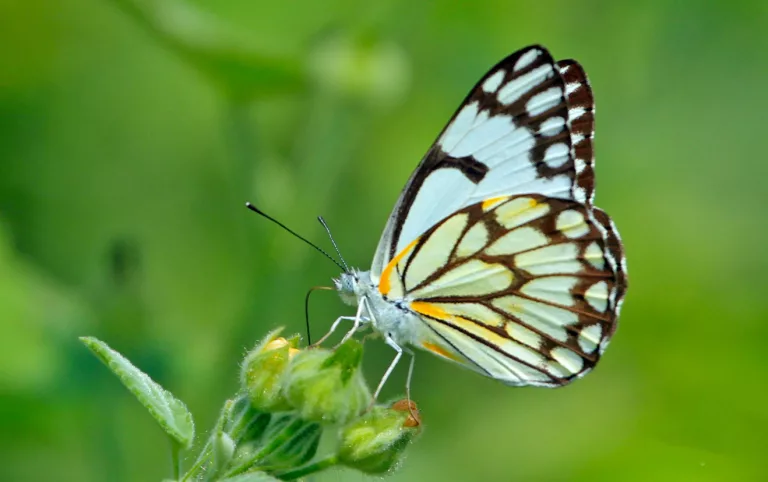
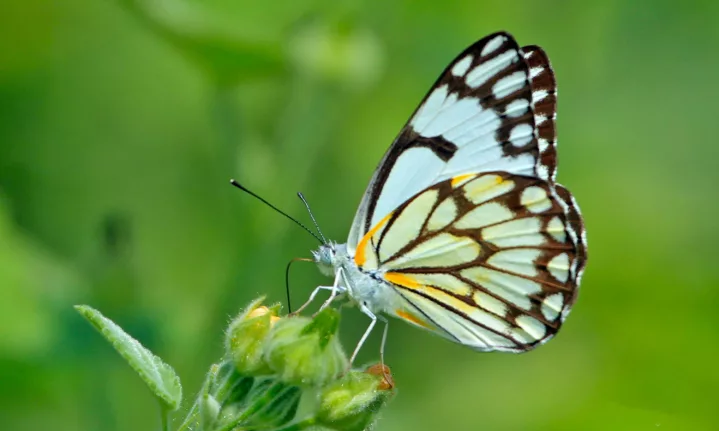
Brown-veined white butterfly/Rahans/Wikimedia Commons
Not all great migrations happen in the ocean or involve large animals. Each summer, the brown-veined white butterfly travels eastwards across southern Africa, passing through Johannesburg on its journey from the drier interior towards Mozambique.
When the butterflies arrive in large numbers, their pale wings can fill the air above roads, gardens and parks. The movement may last only a few days in a particular area, making it a fleeting natural spectacle in the middle of a busy city.
Researchers studying historical records of the migration through Johannesburg found that its timing advanced between 1914 and 2020. The study identified a statistically significant shift towards earlier arrivals, highlighting how the seasonal behaviour of insects can change over time.
Where and when to see it
Johannesburg is one of the places where the migration has been documented, with the butterflies typically passing through around midsummer. January is a useful starting point when planning to look for them, although sightings depend on conditions and the timing of the migration.
There is no formal viewing point or guaranteed route to follow. Instead, the butterflies may be encountered in ordinary urban spaces, making this a reminder that remarkable wildlife movements can happen far from a national park.
3. Whales travelling along the South African coast
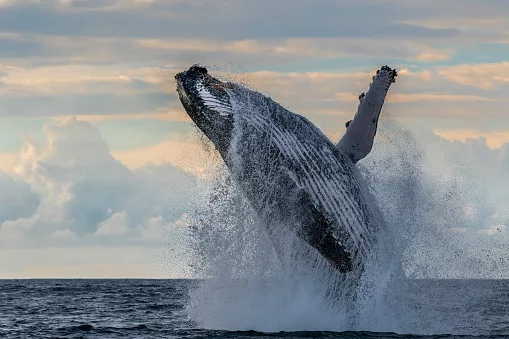
Massive humpback whale breach off the east coast of South Africa/By: by wildestanimal/Getty Images
South Africa’s coastline is an important seasonal route for migrating whales. Each year, southern right whales move into coastal waters to breed and calve, while humpback whales travel along the coast as part of their longer migrations.
Southern right whales are particularly associated with the Western Cape, where sheltered bays provide opportunities for mothers and calves to remain close to shore. Their size, distinctive callosities and tendency to lift their tails or breach make them memorable sightings for visitors watching from land.
Humpback whales also pass South Africa’s coast, travelling between feeding areas in colder waters and warmer breeding grounds. Their journeys connect marine environments across enormous distances, making the coastline an important place to observe wildlife on the move.
Where and when to see them
The southern right whale season generally runs from June to November, while humpback whales may be seen passing the coast over a broader period, from around May to December.
Hermanus is among the best-known destinations for land-based whale watching, but sightings are also possible along other stretches of the Western and Southern Cape coast. The Cape Peninsula, Mossel Bay, Knysna and Plettenberg Bay are among the places where visitors may spot whales.
Whale watching does not require a boat trip. A coastal walk or a visit to a suitable viewpoint may be enough, although sightings can never be guaranteed.
ALSO READ:
Giant horseshoe crab left 5m-long trails 240 million years ago
4. Sea turtles returning to KwaZulu-Natal’s beaches
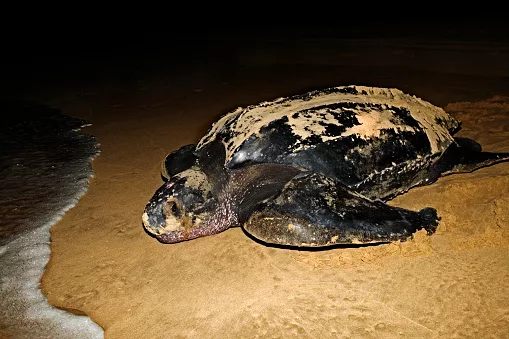
A female leatherback turtle returns to the sea after laying eggs on the east coast of South Africa/By: Martin Harvey/Getty Images
Along the northern KwaZulu-Natal coast, sea turtles return to sandy beaches to lay their eggs. Loggerhead and leatherback turtles nest along this stretch of coastline, including within the iSimangaliso Wetland Park.
Although nesting is not a migration in quite the same sense as the sardine run, it is part of a remarkable life journey. Adult females return to coastal nesting areas, and hatchlings must eventually make their way from the sand into the ocean. Their lives then unfold across a much wider marine environment, with movements shaped by ocean currents, feeding opportunities and breeding cycles.
The nesting season also offers a different kind of wildlife experience: one that depends on patience, conservation and respecting the animals’ space rather than seeking a dramatic encounter.
Where and when to see them
The turtle nesting season generally runs from October to March along the KwaZulu-Natal coast. The iSimangaliso Wetland Park is one of the best-known areas associated with turtle conservation and guided turtle experiences.
Visitors should book with authorised local operators where viewing opportunities are available. Turtle nesting and hatching take place at night, and artificial lights, noise and close approaches can disturb the animals. Responsible viewing helps protect both adult turtles and their hatchlings.
5. Flamingos moving between southern Africa’s wetlands
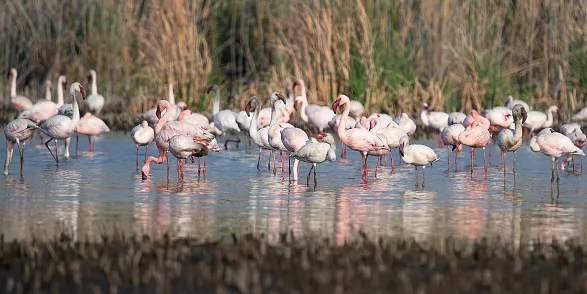
A vibrant flock of lesser flamingos soars together against a clear blue sky during migration/By: AOosthuizen/iStock
Flamingos are often associated with large, pink gatherings on shallow lakes and salt pans. Less obvious is the movement behind those gatherings. Greater and lesser flamingos travel between wetlands across southern Africa, responding to changing water levels, food availability and breeding conditions.
Research tracking flamingos in the region has shown that their movements can extend well beyond individual countries. Birds may gather at important breeding sites and disperse to smaller wetlands when breeding has ended. These smaller water bodies can provide valuable feeding grounds and stopping points along their journeys.
Their movements are not always predictable. A wetland that holds thousands of birds one season may look very different the next, depending on rainfall and the availability of suitable habitat.
Where and when to see them
South Africa’s wetlands and pans can provide opportunities to see flamingos, but the best locations vary with conditions. Coastal lagoons, estuaries and inland wetlands are all worth considering when looking for waterbirds.
Rather than planning around a fixed migration date, visitors should check recent bird reports and local conservation updates before travelling. Wetland visits also offer opportunities to look for other migratory and resident waterbirds, making them rewarding destinations for birdwatchers throughout the year.
6. Migratory birds crossing the country
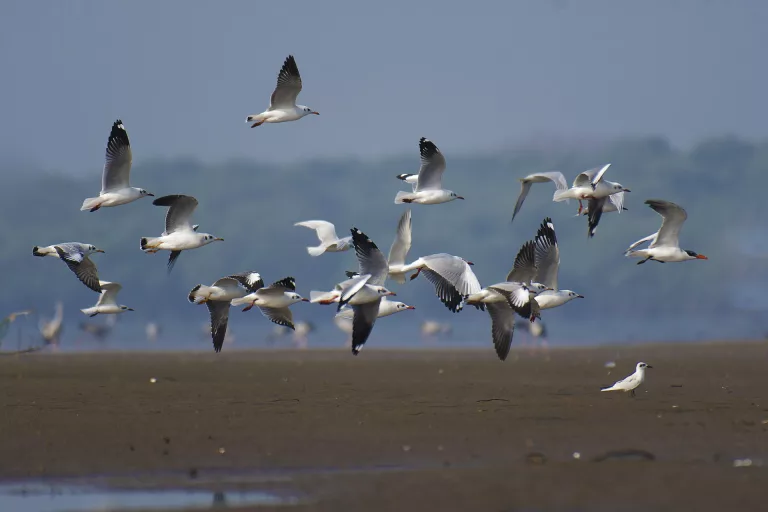
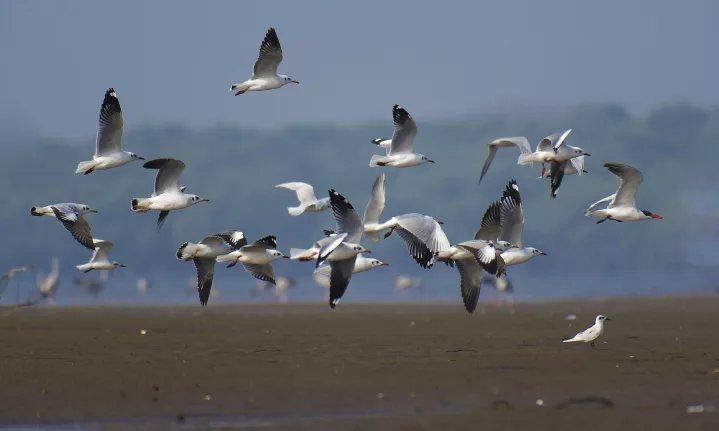
Black-headed Gulls in flight/Shiv’s fotografia/Wikimedia Commons
South Africa is both a destination and a passage point for birds moving between breeding and non-breeding grounds. Some arrive from Europe and Asia to spend the southern summer here, while others move within Africa in response to rainfall, food and breeding opportunities.
These journeys are less concentrated than the sardine run and may be spread across weeks or months. Yet they are among the most important wildlife movements connecting South Africa with the rest of the world.
For birdwatchers, the seasonal arrival of migrants can change the character of a familiar wetland, woodland or coastal reserve. Waders may gather at estuaries, while other species make use of grasslands, rivers and temporary pools created by summer rains.
Where and when to see them
Migratory bird activity changes throughout the year, with many northern-hemisphere migrants arriving during the southern spring and summer. The best viewing opportunities depend on the species and habitat.
Wetlands, estuaries and bird-rich reserves are useful places to start. Visitors can check local birding reports or consult regional bird clubs to find out which migrants have arrived and where they have been seen.
Following the seasons
South Africa’s animal migrations reveal a country connected by far more than roads and borders. Sardines draw predators along the coast, whales return to familiar marine areas, butterflies cross urban skies, and birds and flamingos move between habitats across the region.
These journeys also show why wildlife encounters require a degree of flexibility. Rainfall, ocean currents, food supplies and changing environmental conditions all influence where animals travel and when they arrive.
For travellers, that uncertainty is part of the appeal. A successful wildlife trip is not always about finding a single famous animal. It can be about understanding a seasonal event, watching a landscape change, or recognising that even an ordinary city or coastal walk may coincide with a much larger natural journey.
South Africa’s great migrations may not all involve herds crossing the plains, but they offer plenty of reasons to pay attention to the movements taking place above, around and beneath us.
Follow us on social media for more travel news, inspiration, and guides. You can also tag us to be featured.
Instagram | Facebook | Twitter | Spotify
ALSO READ:
The magnificent frigatebird is a sky pirate with an unusual dating strategy