
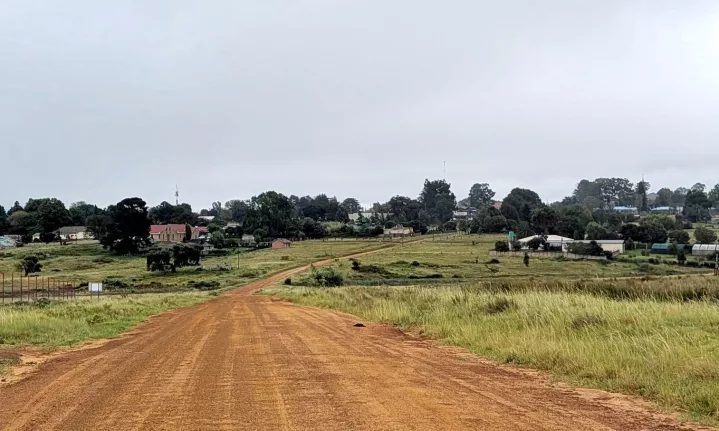
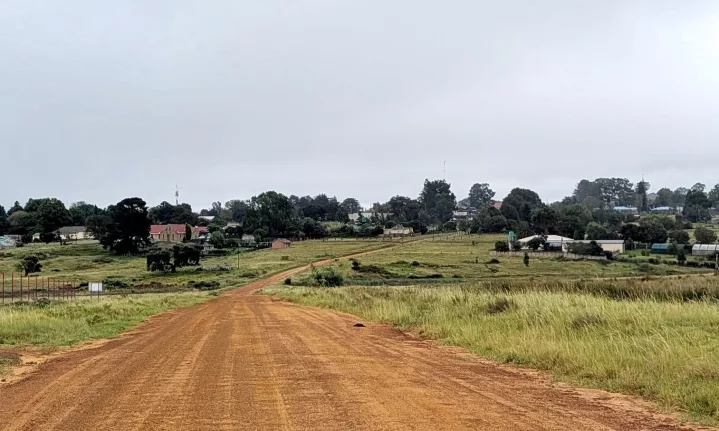
At first glance, the Chrissiesmeer lakes don’t look like the lake district you might expect. There is grassland, and lots of it. The Highveld rolls out in thick green and gold, interrupted by fences, farm roads and the occasional cluster of trees. Then suddenly, the water appears and one pan becomes another. Then another.
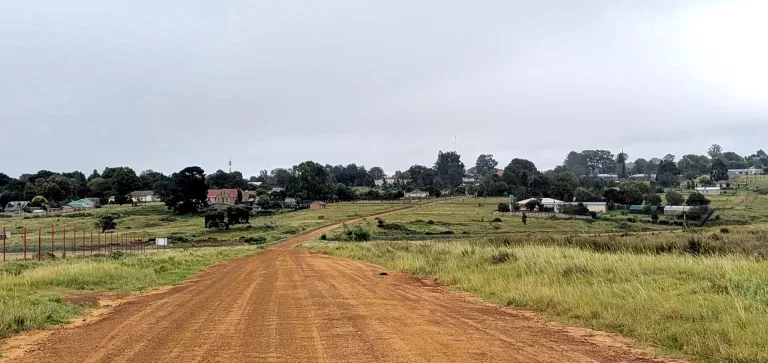
A view of the town of Chrissiesmeer, a town in the Mpumalanga Lakes District (MLD) / Rooiratel / Wikimedia Commons
There are hundreds of lakes and pans surrounding the small Mpumalanga village of Chrissiesmeer, forming one of South Africa’s most unusual inland water landscapes. The local tourism association puts the number at about 270 within a 20km radius.
This is the real draw of Chrissiesmeer: you don’t arrive at just one lake. You step into an entirely different world shaped by water.
Follow the pans
To truly understand the landscape, you have to fully immerse yourself in the experience of it. The surrounding pans of the village are connected by a network of roads. This lends the landscape the feeling of deep exploration, following your curiosity and just a little bit of whimsy, rather than feeling like your typical sightseeing destination.
This is a bird enthusiast’s dream come to life. The Chrissie Pans support 287 bird species, while September to March is regarded as the best period for wetland birding. Cranes can be seen throughout the year, including Blue and Grey Crowned Cranes, with Wattled Cranes also possible.
During late summer, thousands of lesser flamingos gather in the wetlands and, once again, the landscape takes on a new shape. The local tourism association records one season when 18,000 flamingo chicks were counted at Blinkpan.
You don’t need to be an obsessive birder to appreciate this spectacle. Anyone with a love for all things nature can appreciate the shifting landscape as the road moves between open grasslands, shallow waters and reed-fringed pans.
Come back in another season
Chrissiesmeer is entirely unique in the sense that your timing greatly affects your experience of it.
If you’re travelling between August and February, you’ll encounter wildflowers appearing across the grasslands. The region is known for its floral diversity and 12 wild orchid species, while January brings the annual Wild Flower Day.
In December, however, the focus shifts after nightfall. Frog Night takes visitors into the wetlands with torches, gumboots and buckets in search of frogs. It’s an unusually hands-on way of experiencing a wetland, especially when the landscape that looks so open and quiet by day becomes alive with sounds at night.
The history of the village
The sandstone buildings that live in Chrissiesmeer have another part of its story to tell. Among them are the old jail, which has now been converted into accommodation, the former Methodist church, Barclays Bank, trading store and mill, as well as several historic churches and the old post office.
The village also has connections to the Anglo-Boer War. The Battle of Chrissiesmeer took place on 6 February 1901, when British troops commanded by Smith-Dorrien were attacked by Boer forces under Louis Botha.
You don’t need to be a historian to appreciate the rich history Chrissiesmeer has to offer, but if you open yourself up to it, this town can really show you how much life has truly been lived long before you entered. Chrissiesmeer may feel small today, but the landscape surrounding it has long since been part of a much bigger story.
Why the wetlands matter
More than just an aesthetic backdrop, the Chrissiesmeer area forms part of the Chrissiesmeer Protected Environment and contains the endangered Chrissiesmeer Panveld ecosystem. The concentration of wetlands is regarded as highly important for biodiversity and water security, making the landscape significant far beyond its appeal to visitors.
This matters when you’re travelling through it. The pans aren’t simply scenery to tick off along a weekend route. They are the reason this particular landscape exists, and the reason so many different species gather here.
Make a weekend of it
A trip to Chrissiesmeer works because there isn’t just one experience waiting at the end of the road. It’s a place where the landscape is the adventure. You start looking at the lakes, and suddenly there are birds, flowers, history and wildlife attached to them.
This makes Chrissiesmeer much more interesting than a destination simply built around a single attraction. And that’s probably the best reason to spend some time here: not because there is one big thing to see, but because the further you allow yourself to look, the more depth the landscape gives you.
Follow us on social media for more travel news, inspiration, and guides. You can also tag us to be featured.
Instagram | Facebook | Twitter | Spotify
ALSO READ:
Bontebok National Park partially reopens after devastating floods