





De Hoop Nature Reserve is often spoken about in the same breath as the Whale Trail, the famous 55km route that crosses the reserve from Potberg to Koppie Alleen. It’s fairly easy to assume that if you’re not hiking the trail, you’re missing the main event, you’re not.
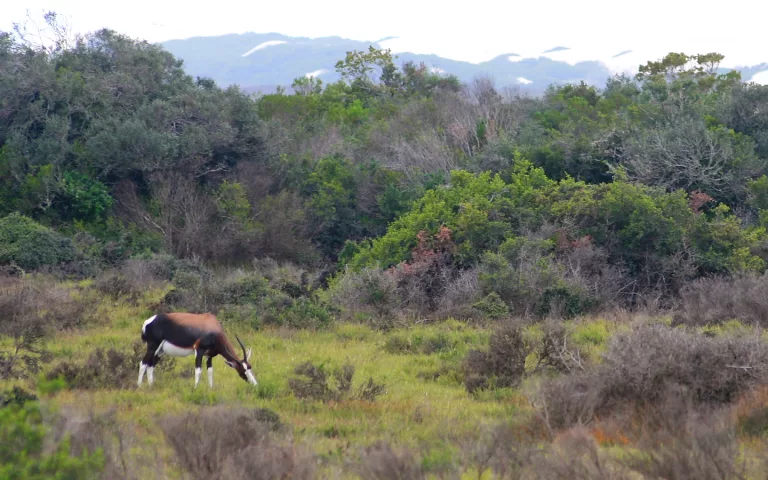
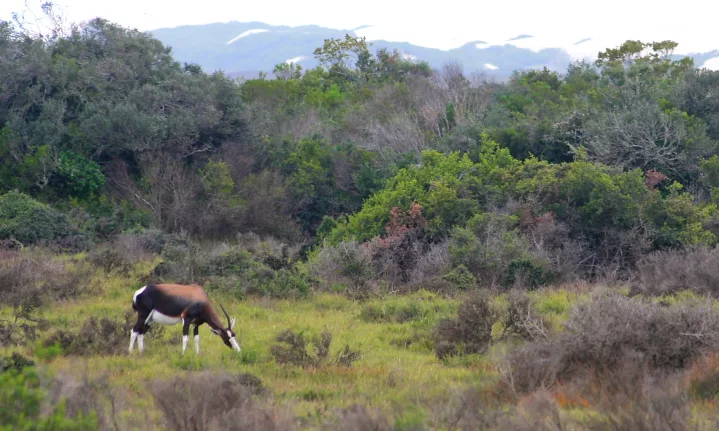
De Hoop Nature Reserve: Bontebok / Hendrik van den Berg / Wikimedia Commons
For first-time visitors, two nights is satisfying enough to get a proper taste of what makes De Hoop memorable. The reserve is approximately three hours from Cape Town and stretches across 34 000 hectares in the Overberg, where fynbos, mountains, wetlands and coastline collide. Its neighbouring marine protected area extends about 5km offshore and protects an extraordinary diversity of marine life, including the southern right whales that return annually to the coast to calve and mate.
The trick with De Hoop is to choose a few experiences instead of trying to do everything at once. Leave space between them and allow yourself time to simply be there. Here’s how to spend two nights at De Hoop without putting on a backpack and committing to a 55km walk.
Day 1: Explore on two wheels and enjoy the slow pace
Once you’ve settled in at the Opstal area, don’t give in to the temptation to immediately fill the afternoon with activities. De Hoop is the kind of place where the transition from road trip to wilderness is part of the experience, so this can be a challenging task if you’re naturally inclined to seek adventure.
The Opstal area is the main hub of the De Hoop Collection, with various accommodation options available to suit different types of travellers, from simple rondawels and campsites to family-friendly cottages and more luxurious suites. You’ll also find The Fig Tree Restaurant, a swimming pool, tennis court and boules courtyard.
The De Hoop Village cottages and Opstal houses offer more space and self-catering facilities for families. The cottages are designed as a home-from-home base, while the three-bedroom Opstal houses have fully equipped kitchens and outdoor braai areas. For couples, the smaller suites around Opstal would be a more suitable choice. The Vlei Suites overlook the water, while the Stable Suites sit around the fig-tree courtyard and are within reach of the restaurant.
Once you’ve unpacked, hire a mountain bike and head out. De Hoop has four mountain-bike trails, and bikes can be used with a guide or independently. The reserve is home to wildlife such as bontebok, Cape mountain zebra, eland, baboons and ostriches.
The path through the reserve offers you much more than just the activity you’re currently engaged in, so look around you. Stop once in a while and try to spot some wildlife grazing nearby. If two wheels aren’t your thing, swap your bike for an easy walk and let the afternoon unfold at its own pace.
Once you’ve had your fill of the day, come back for dinner at The Fig Tree Restaurant. De Hoop’s clear skies make it a particularly good place for stargazing, and there is simple satisfaction in ending the first day without a screen in sight. Your nervous system will thank you.
Day 2: From the vlei to the sea
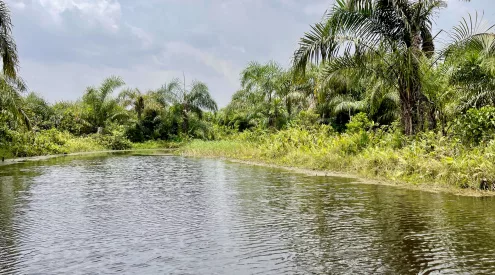
This is where the fun really starts to kick in. Start with the De Hoop Vlei. If you’re not up for another hike, the guided eco boat cruise is one of the easiest ways to experience this side of the reserve. The cruise takes about one and a half to two hours and offers the chance to see waterbirds and other wildlife, with possible sightings of otters and even porcupines. Confirm availability with reception, as cruises are dependent on water levels.
The reserve supports more than 260 bird species, and the wetland can attract thousands of waterbirds. So, if you’re an avid birdwatcher or just discovering your new hobby, this experience will definitely assist in refining those skills.
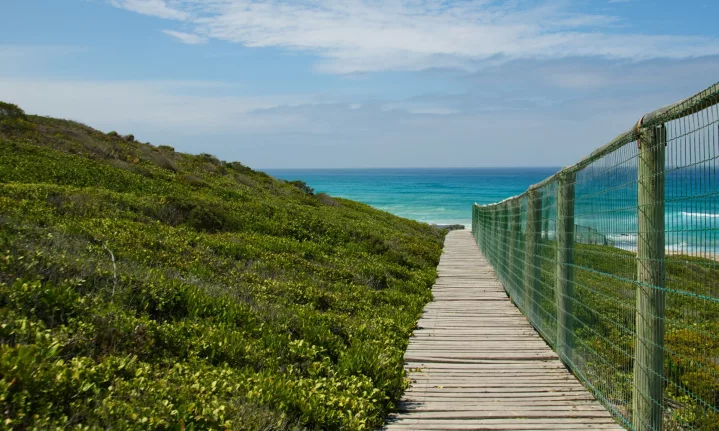
After breakfast, slowly make your way towards Koppie Alleen and the coast. Koppie Alleen is a renowned whale-watching viewpoint and gives visitors the choice of walking along the beach or exploring the rocky shore.
If conditions are suitable, pack your swimsuit. And even if they aren’t, pack it anyway, just in case. Who doesn’t love a bit of spontaneity when on holiday? The rock pools and sheltered coastal areas are among the reserve’s simple pleasures, especially for families with children who are happy to spend an afternoon exploring the life that exists between the rocks.
If you’re looking for a more immersive experience of the coastline, book the Interpretive Marine Walk. The guided walk takes approximately two hours, following sandy beaches and coastal rock pools while a guide explains the marine life found along the shore. The walk is tide-dependent and departs around an hour before low tide, so check the day’s timing with reception.
Day 2 afternoon: Choose your own adventure
After a morning spent on the coast, keep your afternoon flexible.
If you want more wildlife without more walking, book a Nature Drive. The two-hour guided drive travels through wetland and fynbos landscapes in an open safari vehicle, providing opportunities to look for species such as bontebok and Cape mountain zebra. The experience ends with sundowners and snacks, giving you a slower second half of the day.
If you’re travelling with older children or a partner who wants something more active, another option is the guided mountain-bike experience.
For a wellness-minded weekend, though, I would do less. The reserve is big enough that simply being somewhere quiet becomes an activity in itself.
Day 3: One last walk before home
Don’t make the mistake of leaving early just because you have somewhere else to be. Have your breakfast, take one final walk around the Opstal area or cycle a short route before packing up. If you missed the coastline the previous day, a final stop at Koppie Alleen is worthwhile, especially during whale season.
If you have young children, let them have one last run on the beach or explore the rock pools. Then turn back towards Cape Town, with that slightly strange feeling that comes from leaving somewhere where the loudest interruption was probably a bird calling from a nearby tree.
Should you skip the whale trail?
You don’t have to. If you’re visiting between June and November, it’s a hard experience to miss and why should you? It’s spectacular in its own right.
The Whale Trail remains one of De Hoop’s iconic experiences, but it is a serious commitment. For experienced hikers, it is an excellent reason to return. For everyone else, two nights at the Opstal area can be enough to discover why De Hoop deserves a place on the weekend-away list. You can see wildlife, walk beside the ocean, cycle through fynbos, watch birds over the vlei and, in the right season, see whales from land.
There is no need to conquer De Hoop, sometimes the best way to experience a place this wild is to slow down enough to appreciate it.
Follow us on social media for more travel news, inspiration, and guides. You can also tag us to be featured.
Instagram | Facebook | Twitter | Spotify
ALSO READ:
6 South African wildlife experiences that are better on foot