
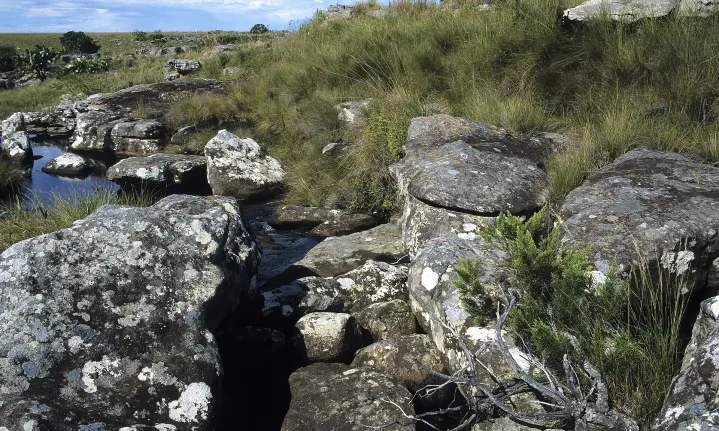
There are places on the Wild Coast where it feels as though the landscape has been deliberately designed to make you stop.
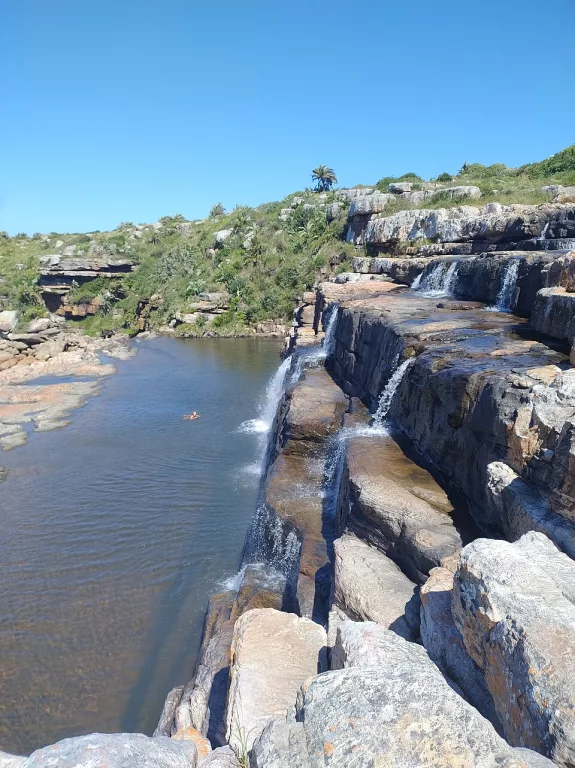
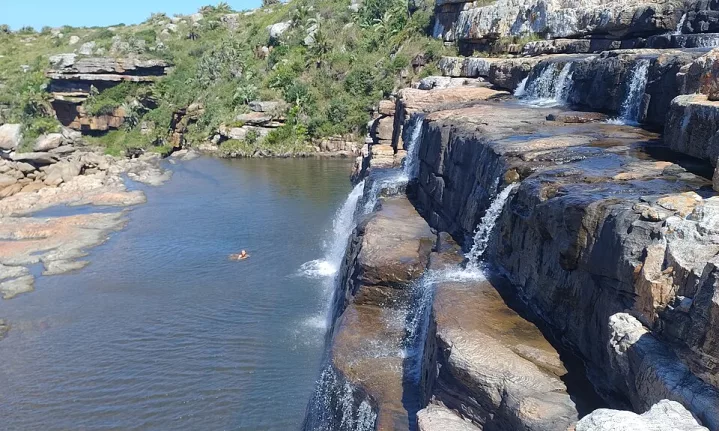
kambati Falls – Mkambati Nature Reserve, South Africa / OpenDEM / Wikimedia Commons
Mkhambathi Nature Reserve is one of them. Here, rolling grasslands give way to forested ravines, rivers cut through the landscape and waterfalls tumble towards the Indian Ocean. There are secluded beaches, rocky coastline, freshwater pools and enough open space to spend a day walking without seeing much more than wildlife, birds and the sea.
It is also one of the Eastern Cape’s important conservation areas. In 2025, the reserve became South Africa’s 31st Ramsar Site, making it the province’s first Wetland of International Importance. The designation recognises its rare wetlands, estuaries, swamp forests and biodiversity.
You don’t need to be a serious hiker or a dedicated wildlife enthusiast to appreciate it. Mkhambathi works just as well for a family looking for simple outdoor adventure, a couple wanting a few quiet days beside the sea, or anyone who simply wants to trade screens and traffic for fresh air.
Start with the waterfalls
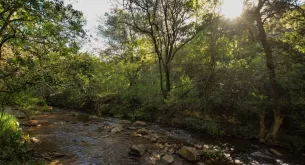
The waterfalls are probably Mkhambathi’s biggest draw, and for obvious reasons. The Mkhambathi River runs through the reserve, forming a series of pools and falls before eventually reaching the coast. The most well-known is Horseshoe Falls, where the river spills over a sandstone terrace in a wide arc. Further downstream, the river tumbles over Strandloper Falls and Mkhambathi Falls before reaching the Indian Ocean.
Horseshoe Falls is reached on foot along the Mkhambathi River, making the journey part of the experience rather than simply another drive to a viewpoint. The walk allows you to take in the grasslands, river and changing landscape along the way.
Pack a pair of walking shoes, swimwear and a picnic basket, and spend the day following trails, stopping at pools and finding your own favourite view. It’s important to remember that this is still a wilderness area rather than a manicured family attraction. Conditions can change, and visitors should stick to designated routes and follow local guidance.
A coastline made for wandering
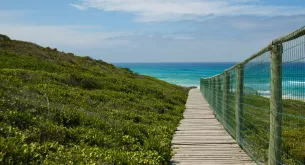
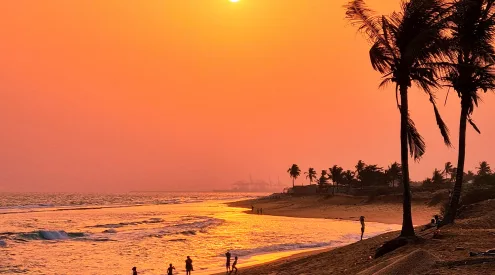
Mkhambathi’s coastline stretches for roughly 10km, with rugged rocky beaches and sandy coves backed by grasslands, forests and open coastal landscapes. There is something exciting about exploring a coastline where the landscape still feels largely untouched. Beachcombing, photography, walking and simply finding a quiet place to sit all fit naturally into a day here.
Visitors can explore the coastline and rock pools, while activities such as fishing and diving are available in designated areas and subject to the relevant permits. Whale and dolphin watching is also listed among the reserve’s activities, giving you another reason to spend time looking towards the horizon rather than at your phone.
For couples, this is perhaps where Mkhambathi’s appeal becomes most obvious. You don’t need a packed itinerary. A long coastal walk, a picnic, a swim where conditions allow and an evening listening to the ocean can be enough in this corner of the Wild Coast.
Bring your binoculars
If birding is your hobby, definitely do not leave your binoculars at home. Mkhambathi’s mixture of grassland, forest, rivers, wetlands and coastal habitats supports a wide variety of birdlife. Species recorded in the reserve include Trumpeter Hornbill, Rameron Pigeon, African Fish Eagle, Crowned Eagle, Gurney’s Sugarbird, Greater Double-collared Sunbird, Yellow-throated Longclaw and Croaking Cisticola.
The reserve’s Ramsar status adds another layer to its importance. Its wetlands and river systems support important biodiversity, while the Mtentu and Msikaba gorges provide habitat for threatened species including Cape Vultures.
That makes a walk through Mkhambathi about more than just reaching the next waterfall. Look closely at the grasslands, forests and river valleys and the reserve starts to reveal another layer to its already captivating character.
Wildlife with an ocean backdrop
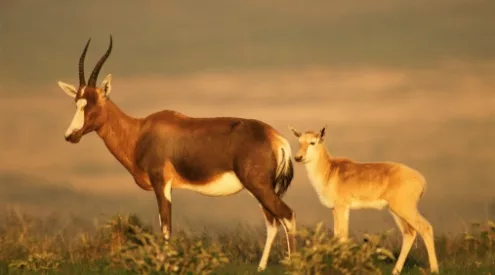
Mkhambathi is not your traditional Big Five safari destination. It’s appeal lies in its combination of coastal wilderness and game. The grasslands support introduced populations of eland, red hartebeest, blue wildebeest, blesbok and gemsbok, although eland and red hartebeest are indigenous to the area.
The open spaces make for memorable wildlife encounters, particularly when animals appear against the backdrop of the Indian Ocean. Game drives are among the listed activities, although large sections of the wilderness are explored on foot.
This is one of the reasons Mkhambathi feels different from many conventional wildlife getaways. You could be watching a herd of antelope on the grasslands one minute, then looking towards a waterfall or the sea the next.
A place to switch off
There are many ways Mkhambathi can occupy long stretches of your time without you ever looking at your watch. You can hike a trail, practise your birding skills or go for a swim where conditions allow. You can fish in designated areas with the necessary permits, canoe, explore the coastline or simply sit somewhere with a view and do very little.
There is enough to keep active visitors occupied, but no pressure to fill every hour. That makes the reserve particularly appealing as a refreshing escape from the usual pace of everyday life.
For families, it offers the chance to spend time outdoors together, with hiking, wildlife, waterfalls and swimming among the activities available. For couples, the same landscape lends itself to a quieter kind of getaway. And for anyone interested in photography, birding, fishing or nature, there is plenty to focus on without needing a structured tour.
Where to stay
Mkhambathi has accommodation within the reserve, including the Main Lodge and Stone Cottage. Additional accommodation options, including rondavels and larger lodges, are available in the GweGwe area.
Mkhambathi is fairly remote, so don’t expect long lists of shops and restaurants. You should come prepared to spend most of your time outdoors.
That may sound slightly daunting when we spend so much of our time constantly connected and within easy reach of convenience. But that is also the point of Mkhambathi. You come here to disconnect from the noise, spend time outside and let the landscape set the pace.
Getting there is part of the adventure
Mkhambathi sits on the Wild Coast in north-eastern Pondoland, roughly 71km from Flagstaff. The reserve is a 7,720-hectare coastal wilderness between Port Edward and Port St Johns.
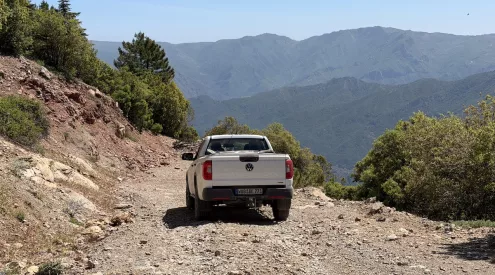
Access is via the R61 and the road towards Holy Cross Hospital, with the final approach involving gravel roads. That remoteness should be factored into your planning. Bring the essentials you will need for the day, make sure your vehicle is suitable for the roads ahead and check the latest reserve conditions before setting off.
Mkhambathi also has specific visitor rules. Activities such as fishing require permits, while certain activities and events within the protected area require approval. Check the latest information with the Eastern Cape Parks and Tourism Agency before travelling.
Why Mkhambathi belongs on your Wild Coast list
The Wild Coast has no shortage of spectacular places, but Mkhambathi manages to bring several of its best qualities together in one reserve. And now, with its Ramsar designation, there is another reason to pay attention to this corner of the Eastern Cape. Mkhambathi is not simply beautiful. Its wetlands, estuaries, forests and grasslands form part of a globally important ecological landscape that deserves protection.
You can visit for the waterfalls and stay for the quiet. You can arrive looking for an adventure and end up spending an afternoon watching birds. You can come as a family, as a couple or simply with a camera and a pair of walking shoes.
Either way, Mkhambathi is the kind of place that reminds you why the Wild Coast earned its name. Here, the best experiences are often the simplest ones: follow the trail, find the waterfall, look towards the sea and let the landscape do the rest.
Follow us on social media for more travel news, inspiration, and guides. You can also tag us to be featured.
Instagram | Facebook | Twitter | Spotify
ALSO READ:
The great hotel reset: Why luxury is no longer just about where you stay