




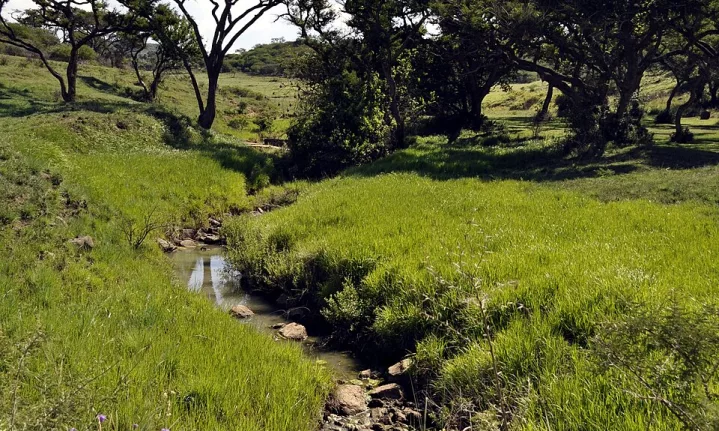
High in the hills of KwaZulu-Natal, Spioenkop is deceptively peaceful. Grass moves in the wind, the Drakensberg rises in the distance and the Tugela valley stretches below. Then you notice the trenches.
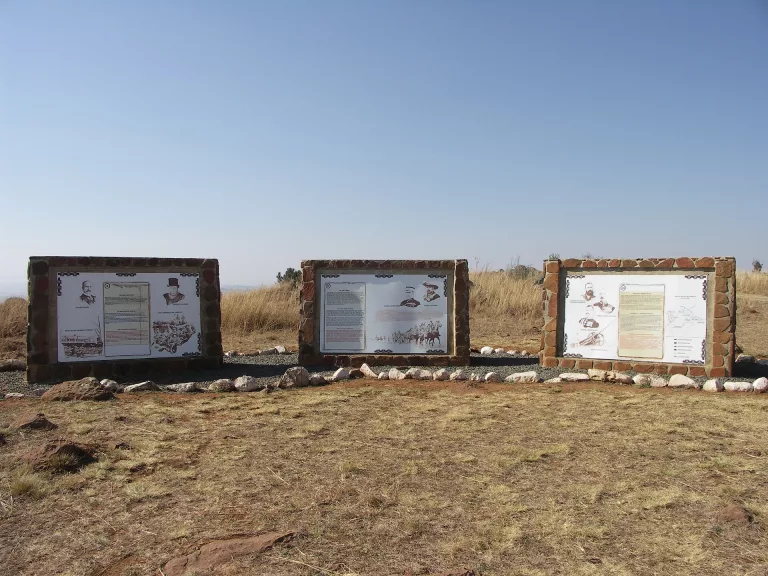
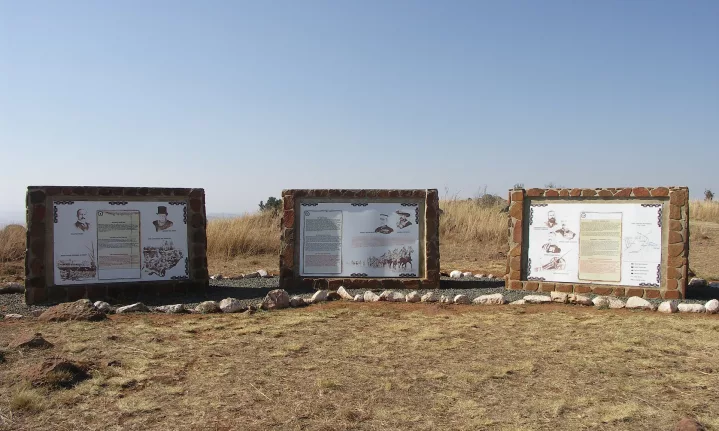
Visitors information boards on the Spion Kop battlefield / NJR ZA / Wikimedia Commons
Cut into the summit are the remnants of a battle fought more than 120 years ago. Memorials stand among the grass, graves mark where soldiers were buried and the landscape itself still reveals why this hill mattered.
A brief history
On 24 January 1900, Spioenkop became the scene of one of the bloodiest battles of the South African War, then known as the Anglo-Boer War. British forces were attempting to break through Boer positions and relieve the besieged town of Ladysmith. Spioenkop was a strategic high point overlooking the surrounding terrain.
The British occupied the summit during the night of 23 January. When daylight arrived, the position was exposed to Boer fire from surrounding heights. Fighting intensified throughout the day, with British troops attempting to hold the summit under heavy fire. Major-General Edward Woodgate, who had led the occupation, was fatally wounded. By nightfall, the British withdrew and Boer forces reoccupied the hill.
The attempt to open a route towards Ladysmith had failed. The town remained under siege until it was relieved on 27 February 1900.
Walking the battlefield
Today, the most striking thing about Spioenkop is how little imagination is needed to picture the battle.
The trenches remain visible on the summit, including the earthworks used by British troops and burial trenches where many of the dead were laid to rest. Historical photographs and maps in the National Archives document the trenches and positions on the battlefield.
The site was declared a national monument in 1978, and memorials across the summit commemorate those who died during the fighting. One of the most sobering areas is known as the Acre of Massacre, where many British soldiers were buried after the battle.
Casualty figures vary between historical sources depending on how deaths, wounded and missing personnel are counted. The Anglo-Boer War Museum records 322 British dead, 563 wounded and approximately 300 missing, while 58 Boers were killed and 140 wounded.
Standing beside the burial trenches, those numbers become less abstract.
The landscape tells part of the story
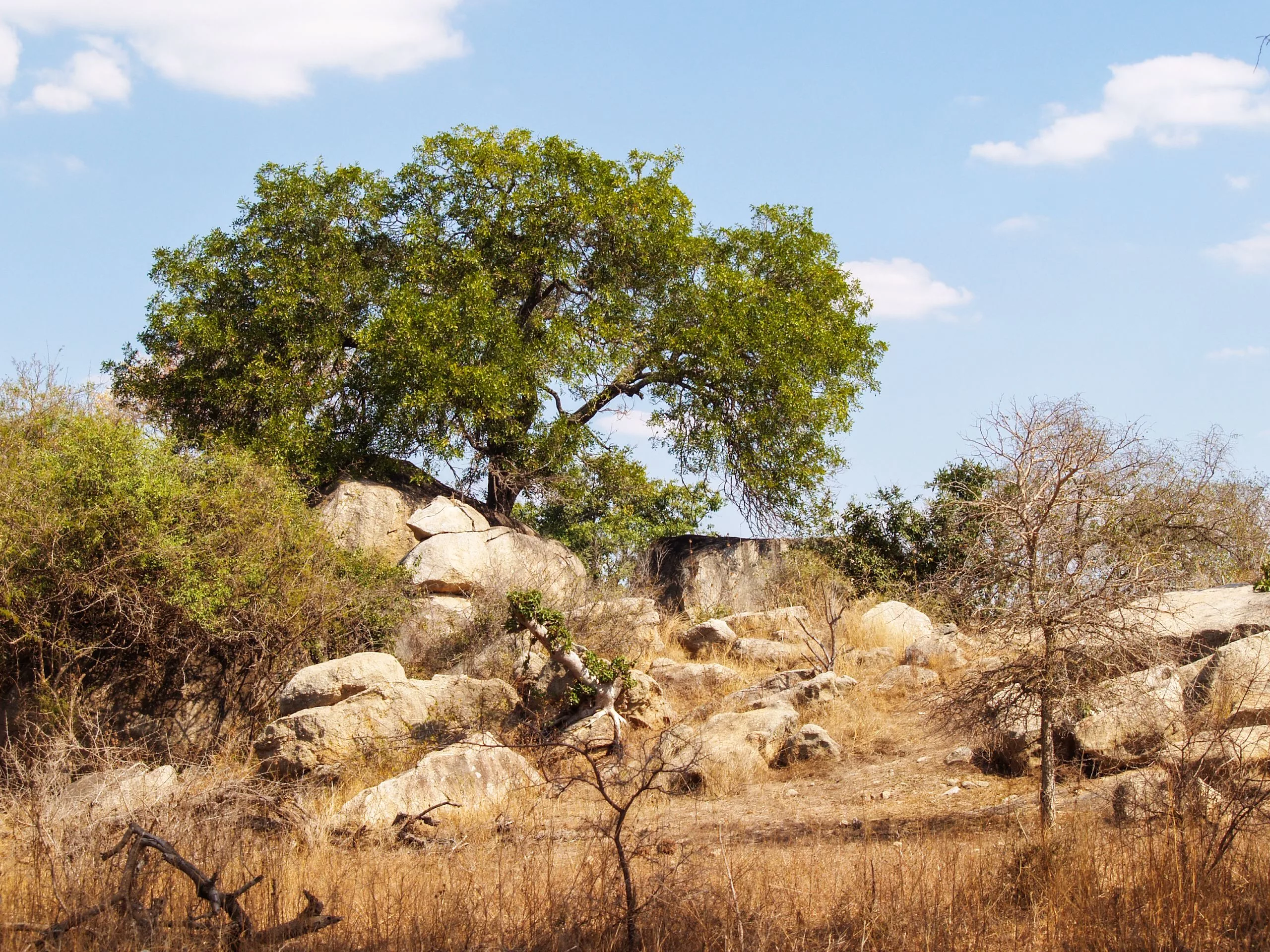
Spioenkop sits within the wider Spioenkop Nature Reserve, a landscape of grassland and thornveld that rises roughly between 1 070 and 1 210 metres above sea level. The reserve is also recognised as an Important Bird Area, with species including Cape vulture and bearded vulture recorded here.
From the summit, the surrounding terrain makes the strategic importance of the hill easier to understand. The Tugela valley lies below, while the Drakensberg forms a dramatic backdrop. It’s this striking combination of history and landscape that makes the KwaZulu-Natal Battlefields Route so compelling. Across the province, historic sites connected to Zulu, Boer and British conflicts remain woven into the countryside.
At Spioenkop, you can quite literally follow the ground where the fighting happened.
See it with a guide
Although the battlefield can be explored independently, a specialist guide can add considerable context. The Battlefields Route lists guides who specialise in the Spioenkop and Ladysmith area, helping visitors understand the opposing positions, movements and significance of the terrain.
It changes the experience. A trench is one thing when viewed on its own. Knowing who occupied it, where the opposing forces were positioned and what happened there makes the landscape far more immediate. Wear comfortable shoes, carry water and allow time to walk rather than simply stopping for the view.
A battlefield beneath the grass
Spioenkop is a reminder that some of South Africa’s most significant history is not always behind glass.
It’s under your feet. The trenches, memorials and graves remain part of the landscape, while the hills beyond them still frame the battlefield much as they did in 1900. Today, there is little noise beyond the wind and birdsong.
You arrive for the history, but it’s the landscape that makes it real. Walking across the summit, looking towards the Tugela valley and tracing the old trenches through the grass, the distance between the present and a battle fought more than a century ago suddenly feels that much smaller.
Follow us on social media for more travel news, inspiration, and guides. You can also tag us to be featured.
Instagram | Facebook | Twitter | Spotify
ALSO READ:
From Salem to Transylvania: The world’s spookiest destinations to visit this Halloween