


Climbers are returning to Nepal’s 7,126m Himlung Himal just days after an avalanche at its base camp killed 16 people, raising questions about safety, commercial expeditions and the risks faced by local mountain workers.
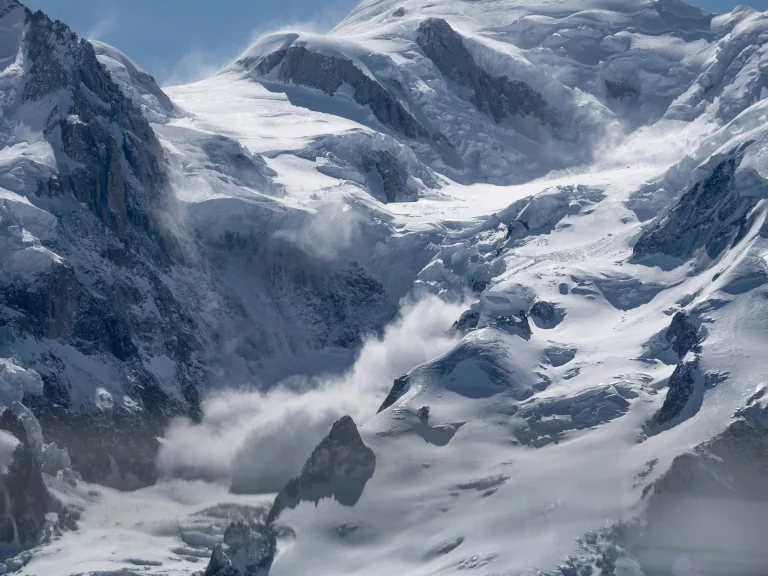
Photo: Unsplash
More than 30 foreign climbers, guides and support staff are expected to head towards the mountain, according to ExplorersWeb, which reported on 7 October that expedition operators had begun mobilising teams following the tragedy.
The return comes after a major recovery operation at Himlung Base Camp, where 15 of the 16 people killed in the avalanche have been recovered. One person remains missing.
What happened on Himlung Himal?
The avalanche struck Himlung Base Camp at around 3am on 27 September, burying 14 local staff members and two Sherpa guides beneath the snow.
A rescue operation was launched soon afterwards, with the Nepal National Mountain Guide Association putting together a team led by mountaineer Mingma G, founder of Imagine Nepal. Two members of his own staff were among those killed.
Four bodies were recovered during the first two days of the operation. However, severe weather and heavy snowfall made further recovery increasingly difficult.
According to ExplorersWeb, around four metres of fresh snow had covered parts of the camp, prompting the initial recovery team to halt its efforts.
A larger team later returned to Himlung, reportedly following requests from the families of those who died. Rescuers dug tunnels through the snow and recovered a further 11 bodies.
One person is still missing.
Expeditions are returning to Himlung
Despite the scale of the disaster, commercial climbing on Himlung is continuing.
The Tourism Times reported that expedition operators have mobilised additional climbers and teams to reopen and secure the route between Koto and Himlung Himal Base Camp after snowfall and landslides damaged sections of the trail.
Several Nepali expedition companies are involved in the work, including Satori Adventures, Seven Summit Treks, 8K Expeditions, Pioneer Adventure, Himalayan Summit Club and Snowy Horizon Treks and Expeditions.
According to an update from Nepal’s Department of Tourism cited by ExplorersWeb, 34 foreign climbers had applied for permits to climb Himlung, including 28 men and six women.
The mountain had already been promoted this season as an option for climbers looking to gain experience on a Nepalese 7,000m peak.
Questions over worker safety
The decision to continue expeditions so soon after the avalanche has prompted difficult questions about how safety decisions are made on commercial climbs.
One of the key concerns centres on the local workers who remained at base camp before the avalanche.
Mingma G said on social media that workers had been urged to leave the area ahead of the bad weather, but had chosen to remain at the camp.
However, Nepal-based Everest Today questioned whether enough had been done to protect the workers, particularly given the severity of the weather forecasts.
The publication called for an independent investigation into the circumstances surrounding the deaths and questioned whether commercial pressures could have influenced safety decisions.
It also raised a broader issue facing high-altitude mountaineering: whether local workers receive the same consideration for their safety as paying international clients.
“These workers went to the mountains to build a future for their families,” Everest Today noted, according to ExplorersWeb. “They never returned.”
Himlung is becoming an increasingly important climbing peak
At 7,126m, Himlung Himal is significantly lower than Everest but remains a serious high-altitude mountaineering objective.
Its growing popularity is partly linked to proposed changes to Nepal’s Everest climbing requirements. The mountain has increasingly been promoted as an opportunity for climbers to gain experience on a 7,000m peak before attempting higher mountains.
That makes the decision to continue climbing on Himlung particularly significant.
Supporters could argue that mountaineering inherently carries risk and that expeditions do not simply stop because conditions in the mountains are dangerous. But the Himlung avalanche was an exceptionally serious loss of life, particularly because most of those killed were local workers supporting commercial expeditions.
Himlung tragedy echoes earlier Nepal disasters
The questions surrounding Himlung are not entirely new.
In April 2014, a serac collapse in the Khumbu Icefall killed 16 Nepali mountain workers on Everest. The deaths prompted widespread anger among Sherpa communities, with climbers calling for better working conditions and increased insurance coverage. Climbing on Everest’s south side was subsequently cancelled for the season.
The following year, the 2015 Nepal earthquake caused an avalanche at Everest Base Camp that killed 19 people and led to the cancellation of the climbing season.
Both disasters highlighted the risks faced by the people working on some of the world’s highest mountains, many of whom support expeditions without being the climbers who ultimately summit the peaks.
The Himlung avalanche has now brought similar questions back into focus.
The debate over whether climbing should continue
For now, Himlung remains open to commercial expeditions, with route-opening and rope-fixing teams working to restore access to the mountain.
But the return of climbers so soon after the avalanche has created an uncomfortable contrast. At the same base camp where recovery teams were recently searching through metres of snow for the bodies of workers, new expeditions are preparing to climb.
The mountain may be reopening, but questions about how the tragedy happened, whether the risks could have been better managed and how Nepal’s mountain workers are protected are unlikely to disappear as quickly.
ALSO SEE: Six South Africans still missing after devastating Nepal flash floods
Six South Africans still missing after devastating Nepal flash floods