





The ocean holds extraordinary discoveries, from tiny creatures tucked beneath rocks to sharks gliding through underwater forests. And while boat trips and diving excursions offer their own adventures, they are far from the only ways to explore the marine world.
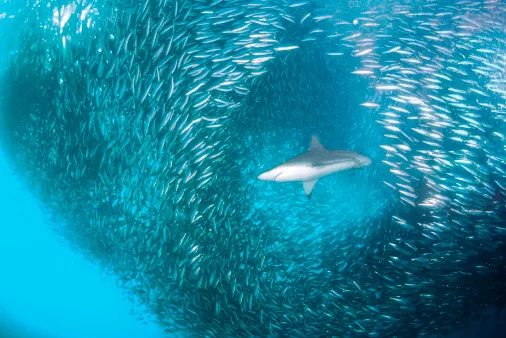
Bronze whaler shark swimming through a giant ball of sardines, waiting to feed on them in a sardine run, off the East coast of South Africa/By:wildestanimal/Getty Images
Across South Africa, aquariums, environmental education centres and rocky coastlines provide opportunities to learn about the creatures that inhabit our oceans and the ecosystems that sustain them. Some experiences bring visitors face-to-face with marine animals in carefully maintained exhibits, while others encourage a closer look at the natural world along the shoreline.
For families travelling with children, these outings can turn a day trip into an opportunity to learn through observation, questions and hands-on discovery. From Cape Town’s marine education hubs to coastal attractions further along the South African shoreline, here are some places where the ocean can be explored without stepping aboard a boat.
Explore marine life at an aquarium
Two Oceans Aquarium, Cape Town
Situated at Cape Town’s V&A Waterfront, Two Oceans Aquarium is an excellent starting point for anyone wanting to understand the diversity of South Africa’s marine life without entering the water. Its exhibits explore the Atlantic and Indian oceans, introducing visitors to the animals and habitats found around the country’s coastline.
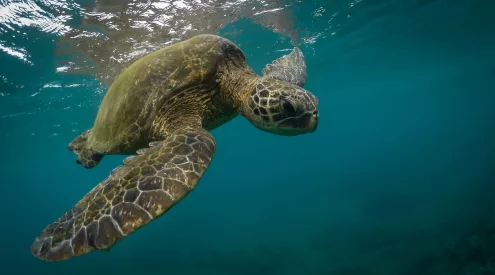
The highlights include a living kelp forest, colourful fish, jellyfish, penguins and the impressive I&J Ocean Exhibit, where visitors can observe rays, rescued turtles and other marine species through a large viewing window and transparent tunnel. The aquarium’s shark exhibit offers another perspective on some of the ocean’s most misunderstood inhabitants.
For children, the experience is about more than spotting their favourite animals. It offers an introduction to how marine species behave, how they adapt to their environments and why healthy ocean ecosystems matter. The Two Oceans Aquarium Foundation also offers educational lessons covering topics such as rock-pool life, sharks, biodiversity and marine sustainability.
Find out more: Two Oceans Aquarium
uShaka Sea World, Durban
On KwaZulu-Natal’s coastline, uShaka Sea World offers another opportunity to explore marine environments from dry land. Its aquarium forms part of the larger uShaka Marine World complex and showcases aquatic species through exhibits designed to introduce visitors to the diversity of underwater life.
The immersive setting makes it an engaging outing for families, particularly children fascinated by sharks, rays and colourful fish. Rather than simply admiring the animals, visitors can use the exhibits as a starting point for learning about marine habitats, feeding behaviour and the pressures facing ocean ecosystems.
For families spending time in Durban, it is a useful way to combine an entertaining day out with a closer look at the underwater world.
Find out more: uShaka Marine World
Learn from marine educators
Save Our Seas Foundation Shark Education Centre, Kalk Bay
The Save Our Seas Foundation Shark Education Centre focuses on one of the sea’s most misunderstood groups of animals: sharks.
Located in Kalk Bay, the centre uses interactive exhibits, art, technology and play to introduce visitors to shark diversity, anatomy and habitats. Its educational programmes also explore the rocky shores and kelp forests of False Bay, helping visitors understand how different marine species depend on one another.
It is particularly worthwhile for children who are curious about marine biology or want to understand the role sharks play in healthy ocean ecosystems. Rather than presenting sharks simply as predators, the centre encourages visitors to consider their ecological importance and the need for conservation.
The centre welcomes enquiries from families and groups interested in visiting, but it is generally not open for casual walk-ins. Arrange a tour in advance by emailing [email protected].
Find out more: Save Our Seas Foundation Shark Education Centre
ALSO READ:
What it’s like to sleep beneath the Indian Ocean at The Muraka
Blaauwberg Nature Reserve Environmental Education Centre, Cape Town
At the Blaauwberg Nature Reserve Environmental Education Centre, the coastline becomes an outdoor classroom. The centre offers programmes covering rocky shores, biodiversity, sustainable harvesting, oceans and the relationship between people and the environment.
Its approach connects marine conservation to the wider coastal environment. Visitors can learn how organisms survive in changing shoreline conditions, why biodiversity matters and how human activities affect natural habitats.
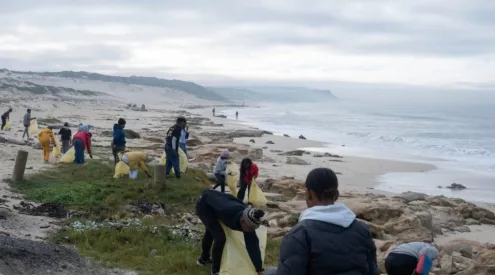
The centre also hosts holiday programmes and special environmental events, with activities that can include beach clean-ups, talks and guided hikes. Bookings are essential, making it particularly suitable for families seeking an organised educational outing or school groups looking for learning beyond the classroom.
Find out more: Blaauwberg Nature Reserve Environmental Education Centre
Soetwater Environmental Education Centre, Kommetjie
On the Atlantic coast of the Cape Peninsula, the Soetwater Environmental Education Centre offers a different kind of learning experience. Situated within Soetwater Resort, the centre runs environmental education, life-skills training and adventure camps for children.
The surrounding coastline provides a natural setting for exploring the connections between people, wildlife and marine ecosystems. In June 2026, a City of Cape Town educational programme at Soetwater brought learners together to investigate rocky shores, kelp forests, coastal birds, sandy-beach ecosystems and plastic pollution, demonstrating how coastal visits can combine observation with practical conservation.
Nearby tidal pools and rocky shoreline also provide opportunities to look more closely at the coastal environment. Families should contact the centre to establish which educational activities are available to the public, as organised programmes may require advance arrangements.
Find out more: Soetwater Resort and Environmental Education Centre
Discover the ocean in its natural habitat
Muizenberg to St James, Cape Town
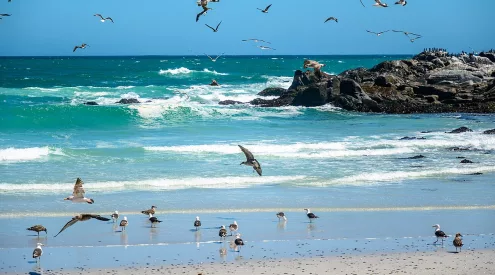
Some of the most rewarding ocean discoveries happen without an admission ticket or an exhibition hall. Along the coastal route between Muizenberg and St James, the rocky shoreline provides opportunities to observe the small creatures that inhabit the intertidal zone.
At low tide, rock pools can reveal sea anemones, sea stars, sea urchins and small marine animals adapted to life between the tides. Each pool offers a glimpse into a miniature ecosystem, where creatures must cope with changing water levels, temperatures and exposure to the air.
The nearby Save Our Seas Foundation Shark Education Centre highlights several Cape Town rock-pooling locations, including Dalebrook Beach, Mouille Point, Saunders Rock and Kommetjie. Its educational resources help visitors identify marine life and understand how these organisms survive along the coast.
For families, the appeal lies in slowing down and looking closely. A walk can become a lesson in animal adaptations, food webs and biodiversity, especially when children are encouraged to observe rather than collect or disturb what they find.
Check tide times before setting out, wear shoes with a good grip and keep a safe distance from breaking waves. Rock pools can be slippery, and ocean conditions around Cape Town can change quickly.
Soetwater tidal pools, Kommetjie
The tidal pools at Soetwater Resort offer families another way to get closer to the marine environment without venturing beyond the shoreline. Located on Lighthouse Road near Slangkop Lighthouse, the resort has two large tidal pools, picnic facilities and access to a rugged stretch of the Cape Peninsula’s Atlantic coastline.
The pools provide an opportunity to observe the coastal environment and discuss how marine animals survive in changing conditions. Children can compare the sheltered water inside a pool with the waves beyond it, or look for differences between seaweed-covered rocks and sandy patches.
A visit works particularly well when paired with a coastal walk or an educational activity at the nearby environmental centre. It is a reminder that the ocean does not have to be experienced from a vessel to inspire curiosity.
As with any tidal pool, take care around slippery surfaces, supervise children closely and check local conditions before entering the water.
Saunders Rock tidal pool, Sea Point
For visitors looking for a coastal stop closer to central Cape Town, Saunders Rock tidal pool offers a convenient opportunity to combine a seaside outing with a little marine observation.
Situated along the Sea Point coastline, the tidal pool is popular with swimmers and visitors enjoying the promenade. Although it is not a formal marine education centre, the setting offers a starting point for conversations about tides, coastal habitats and the creatures that live along rocky shores.
Bring a simple field guide or use an identification resource before visiting, and encourage children to notice details they might otherwise overlook. Even a short visit can introduce concepts such as habitat, adaptation and the importance of keeping coastal environments clean.
The key is to explore responsibly. Avoid removing animals or shells, do not disturb creatures attached to rocks, and leave the shoreline as you found it.
Make ocean learning part of every coastal adventure
You don’t need a formal lesson or a specialist guide to encourage children to become more curious about the sea. Sometimes, a few thoughtful questions can change the way they experience a beach visit.
Before heading out, look up the tide times and choose a suitable stretch of coastline. Bring a notebook, pencils and a field guide to help identify marine life, and encourage children to record what they see rather than removing creatures from their habitats.
Why do some animals cling tightly to rocks? How do sea anemones survive when the tide goes out? What happens to a rock pool when the water warms up? These observations introduce children to the relationships between marine animals, their environments and the wider ocean.
It’s equally important to model responsible behaviour. Avoid handling unfamiliar creatures, never prise animals off rocks, leave seaweed in place and take all rubbish home. Check whether a site lies within a marine protected area, where collecting or disturbing marine life may be restricted.
For families who prefer a structured experience, an aquarium or environmental education centre can provide the context needed to understand what they later encounter along the shore. Combining the two approaches can make a coastal outing both enjoyable and educational.
Follow us on social media for more travel news, inspiration, and guides. You can also tag us to be featured.
Instagram | Facebook | Twitter | Spotify
ALSO READ:
6 reserves in Southern Africa offering a different kind of wildlife experience