






Across the Japanese island of Shikoku, a network of ancient temples, forest trails and quiet country roads traces one of the country’s most remarkable spiritual journeys.
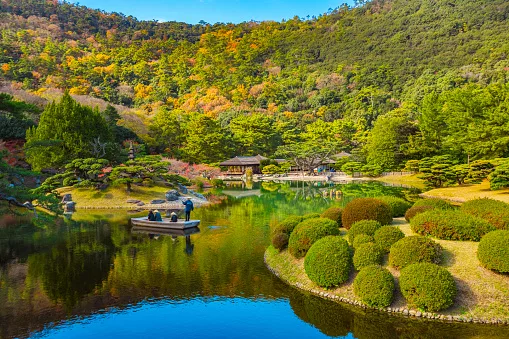
Ritsurin Garden in Takamatsu City, Kagawa Prefecture, Shikoku Island/By: Gonzalo Azumendi/Getty Images
Known as the Shikoku Henro, the pilgrimage takes visitors to 88 Buddhist temples spread across four prefectures, following a tradition that has connected travellers, religious communities and rural villages for centuries.
Covering approximately 1,200km, the circular route offers more than a series of temple visits. It winds through mountain landscapes, coastal settlements and traditional Japanese communities, providing an opportunity to experience a quieter, more contemplative side of the country. While some pilgrims undertake the entire journey on foot, others explore shorter sections, discovering the temples and landscapes at their own pace.
Whether motivated by faith, personal reflection or an interest in Japanese culture, those who follow the Shikoku pilgrimage encounter a journey shaped as much by the people along the way as by the sacred sites themselves.
A pilgrimage shaped by centuries of tradition
The origins of the Shikoku pilgrimage are closely associated with Kobo Daishi, also known as Kukai, a Buddhist monk born in 774 who founded the Shingon school of esoteric Buddhism in Japan. Shikoku is particularly significant in his story, as it is believed that he spent time training and practising asceticism at various locations across the island.
Following his death in 835, monks and religious followers began visiting places associated with his life and spiritual practices. Over time, these journeys developed into a more established pilgrimage, eventually bringing together the 88 temples that make up the route today.
The pilgrimage is unusual in that it does not lead to one final destination. Instead, it forms a circuit around the island, with each temple representing another stop along the journey. The modern route takes visitors through Tokushima, Kochi, Ehime and Kagawa, collectively known as Shikoku’s four prefectures.
Although the tradition dates back more than a thousand years, the formal route of 88 temples developed over several centuries. Today, it remains an important part of the island’s cultural and religious identity.
Discovering the 88 temples of Shikoku
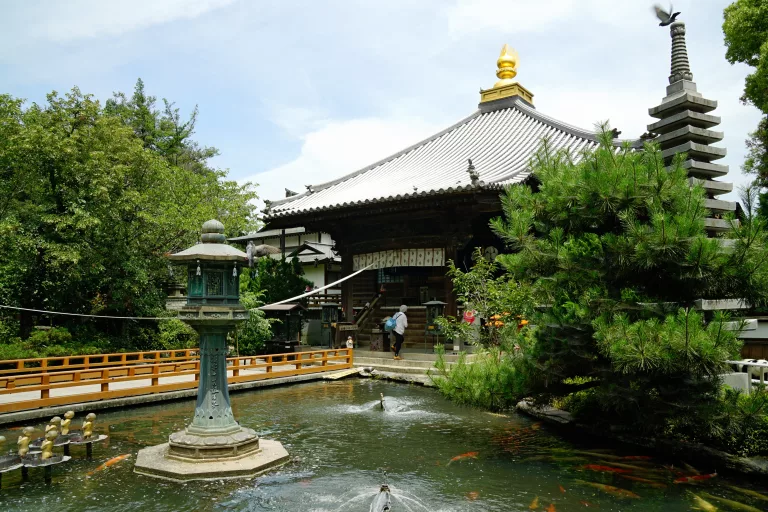
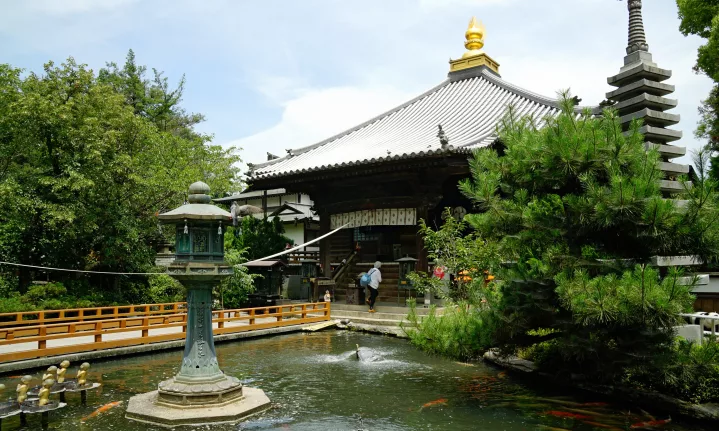
Ryozenji Temple/663highland/Wikimedia Commons
Each of the 88 temples has its own character, architectural features and connection to the pilgrimage’s spiritual history. Some are found in towns and villages, while others occupy secluded positions among mountains and forests, reached by steep staircases and winding paths.
Ryozenji Temple: Where the journey begins
In Tokushima Prefecture, Ryozenji Temple is traditionally regarded as the starting point of the pilgrimage. Located in Naruto, the temple is known as the first of the 88 sacred sites and welcomes pilgrims preparing to undertake the journey.
Its wooden entrance gate, landscaped grounds, pond and two-storey pagoda offer a glimpse into the traditional architecture found throughout the pilgrimage. The temple also has a shop where visitors can purchase traditional pilgrimage equipment, including white robes, walking sticks and woven hats.
Even those who are not planning to complete the entire route can visit Ryozenji to learn about the pilgrimage and experience the atmosphere surrounding its beginning.
Iwayaji Temple: A sanctuary among the mountains
Further along the route, in Ehime Prefecture, Iwayaji Temple offers a striking contrast to the more accessible temple grounds found in towns.
The 45th temple sits among dramatic rock formations and dense woodland, with its buildings appearing almost integrated into the surrounding mountainside. Reaching it involves following a steep forest path, making the visit as much about the journey through nature as the temple itself.
Nearby, the route connecting Iwayaji with Daihoji Temple passes through the mountainous landscape of Kumakogen, offering visitors an opportunity to experience some of Shikoku’s more challenging and scenic pilgrimage paths.
ALSO READ:
Walking through Shikoku’s changing landscapes
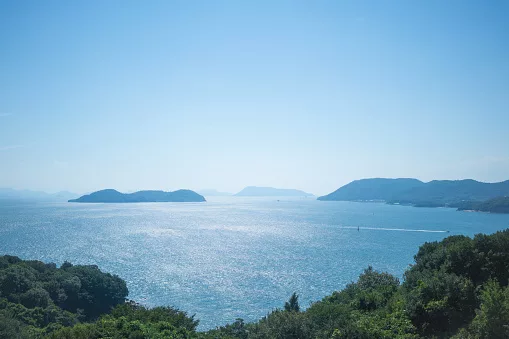
Seto Inland Sea seen from island/By: qrsk/Getty Images
One of the most appealing aspects of the pilgrimage is the opportunity to experience Shikoku beyond its temples. The route covers approximately 1,200km, passing through landscapes that change considerably as it circles the island.
Inland, pilgrims encounter forest-covered mountains, wooded valleys, rivers and traditional settlements. Some sections follow ancient stone paths and steep mountain trails, while others wind through farmland and quiet rural communities.
Along the coast, the scenery opens up to fishing villages, beaches and views across the Pacific Ocean and Seto Inland Sea. These quieter stretches offer a different perspective of Japan, away from the crowds and busy streets of its larger cities.
Not every section is an easy walk. Some mountain routes are particularly demanding, with steep climbs and uneven terrain. Known collectively as henro korogashi, certain paths are so challenging that their name loosely translates to places where pilgrims might stumble or fall.
For those who enjoy hiking, these trails offer an opportunity to combine outdoor exploration with cultural discovery. Along the way, stone markers, Buddhist statues and small roadside shrines serve as reminders of the generations of pilgrims who have travelled these paths before.
The Shikoku Trail also highlights selected sections of the pilgrimage, making it easier for visitors to experience some of its most scenic walking routes without committing to the entire circuit.
The communities that make the pilgrimage special
Beyond the temples and scenery, the Shikoku pilgrimage is also a story about hospitality and the relationships between travellers and local communities.
One of its most distinctive traditions is osettai, a longstanding custom in which residents offer pilgrims food, drinks, small gifts or practical assistance. These gestures are given freely and are rooted in the belief that supporting someone undertaking the pilgrimage is itself a meaningful act of kindness.
For pilgrims, an unexpected offer of refreshments or a helping hand can become one of the most memorable parts of the journey. The tradition also reflects the importance of the pilgrimage to communities along the route, many of which have supported travellers for generations.
Visitors may also encounter local accommodation, traditional guesthouses and small businesses catering to pilgrims. These provide opportunities to experience regional hospitality, sample local food and learn more about everyday life on the island.
The sense of connection extends beyond religious practice. People from different countries, backgrounds and faiths undertake the pilgrimage, each bringing their own reasons for making the journey.
A different way to experience Japan
Although traditionally undertaken on foot, completing all 88 temples is not a requirement for experiencing the Shikoku pilgrimage. Modern travellers can explore the route in several ways, depending on their available time, interests and fitness levels.
Walking the full circuit is a considerable undertaking. The approximately 1,200km journey generally takes around six weeks, although the duration depends on walking speed, rest days and the route followed. Some pilgrims complete it in stages, returning to the island over several visits rather than attempting the entire journey at once.
For those with less time, guided tours, bus excursions and self-drive itineraries offer alternative ways to visit selected temples. Shorter walking sections can also provide a taste of the experience without requiring weeks away from home.
Spring and autumn are particularly appealing seasons for walking, when temperatures are generally more comfortable for spending extended periods outdoors. The changing scenery also adds to the experience, from spring greenery and blossoms to the autumn colours of the island’s forests.
Visitors should allow time to understand the customs associated with temple visits. These may include washing one’s hands and mouth at the purification fountain, approaching the main hall respectfully and observing local practices around prayer and incense. Appropriate clothing and considerate behaviour are important, as these remain active places of worship rather than simply tourist attractions.
A journey worth taking slowly
The Shikoku Henro offers a different perspective on Japan, one shaped by quiet landscapes, centuries-old traditions and the communities that continue to welcome travellers along the way.
For some, the pilgrimage is a deeply personal spiritual experience. For others, it is an opportunity to discover historic temples, explore lesser-known parts of the country and spend time immersed in nature.
There is no need to complete all 88 temples to appreciate what makes the journey special. Even a short section can introduce visitors to the island’s religious heritage, traditional architecture and generous local culture.
More than a route connecting sacred sites, the Shikoku pilgrimage is an invitation to slow down, explore beyond Japan’s familiar tourist destinations and experience a tradition that continues to bring people together.
Follow us on social media for more travel news, inspiration, and guides. You can also tag us to be featured.
Instagram | Facebook | Twitter | Spotify
ALSO READ:
Greece wants travellers to look beyond its beaches and islands