




A young orangutan rescued from an apartment in Mumbai, India, has finally been returned to Indonesia after nearly two years of delays, marking a significant step in efforts to tackle the illegal wildlife trade.
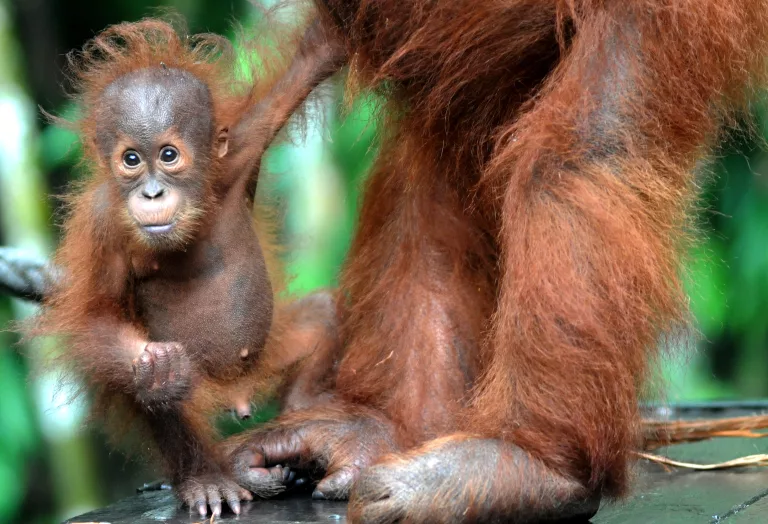
Image of baby orangutan used for illustrative purposes/Arie Bas/Wikimedia Commons
The endangered orangutan was seized in 2024 and has since been repatriated to the Sumatra Rescue Alliance facility on the Indonesian island of Sumatra. There, conservation specialists will assess its condition and prepare it for a possible return to the wild.
According to Mongabay India, the repatriation was delayed by health concerns and administrative procedures. It is the first successful repatriation of a seized animal under the Convention on International Trade in Endangered Species of Wild Fauna and Flora (CITES) from India.
“This is the first successful repatriation of a seized CITES animal from India and my office did everything in our capacity to make it happen,” said Yogesh Nilkand Warkad, assistant management authority of CITES in Mumbai.
A long road back to the forest
The juvenile will first undergo a designated quarantine period before beginning forest school, where it will learn essential survival skills.
Sinan Serhadli, a conservation scientist and adviser to the Orangutan Information Centre, which manages the rescue facility, said the process would help prepare the animal for life in its natural habitat.
If rehabilitation progresses as expected, the orangutan could be released into the wild in approximately four years.
ALSO READ:
How one giant tortoise helped save an entire species in the Galápagos
Five more orangutans await their return
The successful transfer has also raised hopes for five infant orangutans rescued from forests in India’s Odisha state in September 2026.
Estimated to be between one and one-and-a-half years old, the infants are currently being cared for at Nandankanan Zoological Park in Bhubaneswar while authorities investigate their origins and possible links to wildlife trafficking.
Indonesia has proposed sending a seven-member delegation of government officials, veterinarians and orangutan specialists to India to assess the animals and establish the documentation required for their return.
Initial observations suggest the infants may be Sumatran orangutans (Pongo abelii), although genetic testing will be needed to confirm their species.
Panut Hadisiswoyo, founder of the Orangutan Information Centre, said the attention surrounding the Odisha case had helped accelerate discussions around repatriation.
He also called for stronger cooperation between India and Indonesia to address the international networks responsible for the illegal capture and movement of wildlife.
Tackling the illegal orangutan trade
Orangutans are listed under Appendix I of CITES, which prohibits international commercial trade in wild-caught specimens. All three orangutan species are also threatened by habitat loss, poaching and illegal wildlife trafficking.
The return of the Mumbai orangutan offers a positive example of international cooperation, but the fate of the five infants highlights the work still needed to protect these endangered great apes.
For conservationists, the hope is that the latest repatriation will help establish a stronger precedent for returning trafficked wildlife to its country of origin and tackling the networks that put these animals at risk.
Follow us on social media for more travel news, inspiration, and guides. You can also tag us to be featured.
Instagram | Facebook | Twitter | Spotify
ALSO READ:
Two pangolins rescued at Rustenburg mall as four suspects are arrested