







For most travellers, an African safari conjures images of lions slinking through golden grass, elephants marching across dusty plains, or wildebeest braving crocodile-filled rivers. But there’s another safari unfolding in the skies, forests, and wetlands of the continent—one where feathers replace fur, and flight takes centre stage.

Image used for illustrative purposes/Annie Spratt/Unsplash
With over 2,300 recorded species, Africa is a birder’s paradise, from dazzling endemics confined to a single biome to global spectacles like flamingo migrations. Here’s your bucket-list guide to Africa’s most spectacular avian encounters.
1. The Shoebill Stork

Sushi a Shoebill Stork at the Uganda Wildlife conservation education Centre in Uganda/Melissa Askew/Unsplash
Where: Uganda’s Mabamba Swamp, Zambia’s Bangweulu Wetlands
Imagine a bird that looks like it belongs in a dinosaur documentary. Standing over a metre tall with a massive, shoe-shaped bill and piercing stare, the shoebill stork is one of Africa’s most extraordinary sightings. Often motionless for hours as it stalks lungfish in papyrus swamps, this bird radiates an almost mythical presence.
Your best chance of spotting one is in Uganda’s Mabamba Swamp, a short boat ride from Entebbe. Local guides pole dugout canoes through narrow channels, scanning the reeds for that unmistakable silhouette. Zambia’s Bangweulu Wetlands also offer sightings, often alongside black lechwe antelope.
Traveler’s tip: Visit in the dry season (June–August) when low water levels make shoebills easier to locate.
2. Flamingo migrations

Flamingos at Ngorongoro Crater/Pasha Simakov/Unsplash
Where: Kenya’s Lake Nakuru, Tanzania’s Lake Natron, Botswana’s Makgadikgadi Pans
Few natural spectacles rival the massing of flamingos across Africa’s alkaline lakes. At their peak, millions of lesser and greater flamingos gather, turning entire shorelines into a surreal wash of pink. These gatherings aren’t just for show—they’re vital breeding events, especially at Tanzania’s Lake Natron, one of the world’s most important nesting sites for lesser flamingos.
Kenya’s Rift Valley lakes, such as Nakuru and Bogoria, host enormous flocks in shimmering shallow waters, while Botswana’s Makgadikgadi Pans stage another dramatic breeding event after seasonal rains flood the salt flats.
Traveller’s tip: Timing is everything. Check migration updates before your trip, as flamingo movements are tied to rainfall and food availability.
3. Cape Endemics

Cape sugarbird/Paul Hoekman/Wikimedia Commons
Where: Western Cape, South Africa
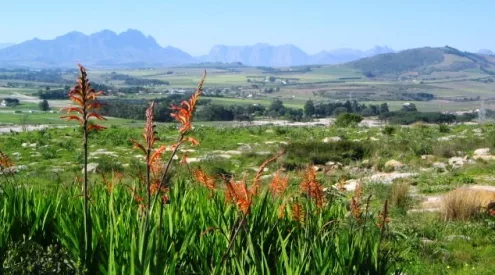
South Africa is home to more than 70 endemic bird species, and many of them thrive in the unique fynbos biome of the Western Cape. Here, bursts of proteas and ericas provide nectar and perches for some of the region’s most dazzling species.
The orange-breasted sunbird, with its iridescent chest, is a fynbos favourite, while the Cape sugarbird—with its dramatically elongated tail—perches on protea blooms like a living emblem of the Cape. More elusive are species like the protea canary, often found in mountainous terrain.
Kirstenbosch Botanical Gardens in Cape Town is one of the most accessible birding spots in the world, offering close-up encounters with fynbos endemics against the backdrop of Table Mountain. For those keen to go deeper, road trips into the Overberg, Cederberg, and Garden Route reveal even more diversity.
Traveller’s tip: Visit during spring (August–October) when both the flowers and birdlife are at their peak.
4. Raptors of the Rift Valley

Raptor at Simien Mountains National Park, Ethiopia/A. Davey from Where I Live Now: Pacific Northwest/Wikimedia Commons
Where: Kenya, Tanzania, Ethiopia
Africa’s landscapes are patrolled by some of the most powerful birds of prey on the planet. From the Serengeti to the Ethiopian highlands, raptors soar over escarpments and valleys, commanding the skies with dramatic aerial displays.
Highlights include Verreaux’s eagle, often seen gliding along cliffs; the martial eagle, capable of taking down small antelope; and the lammergeier, or bearded vulture, which drops bones from heights to crack them open. The Rift Valley, with its thermals and sweeping escarpments, is particularly rewarding for raptor enthusiasts.
Traveller’s tip: Combine raptor-watching with classic game drives. Look skyward as often as you scan the savanna—you may see as many predators above as below.
5. Forest ghosts and elusive endemics

Grey-necked picathartes in Cameroon/martin ingemansson/Wikimedia Commons
Where: Central and West Africa, Albertine Rift
Africa’s rainforests are among the hardest birding environments, but they reward persistence with some of the continent’s most sought-after species. In the Albertine Rift, spanning Uganda, Rwanda, and the DRC, you’ll find gems like the handsome francolin and the red-collared mountain babbler.
Cameroon’s forests are home to the elusive grey-necked picathartes, a bizarre, rock-nesting bird sometimes nicknamed the “prehistoric crow.” Meanwhile, Ghana’s Kakum National Park offers canopy walkways that bring you eye-level with turacos, hornbills, and the ever-popular African grey parrot.
Traveller’s tip: Patience is key in forest birding. Go with local guides who know calls and nesting sites, and pair your trip with primate tracking for a richer experience.
Practical tips for avian safaris
- Best seasons: November–April is peak for migratory species, while endemics can be spotted year-round.
- Essential gear: Binoculars (8×42 is a good balance), bird guide apps like Roberts or eBird, and a camera with decent zoom.
- Local guides: Birding in Africa can be overwhelming—specialist guides help unlock sightings you’d otherwise miss.
- Combine with wildlife safaris: Birding doesn’t have to stand alone. Many prime birding destinations overlap with iconic safari regions, making it easy to enjoy both.
An African safari doesn’t end with the Big Five. For those who look skyward or pause in the wetlands, the continent’s birds offer moments every bit as thrilling: the shoebill’s unblinking stare, the sudden lift of a million flamingos, and the iridescent flash of a sunbird in the fynbos.
Follow us on social media for more travel news, inspiration, and guides. You can also tag us to be featured.
TikTok | Instagram | Facebook | Twitter
ALSO READ: Africa’s most scenic conservation canoe trails








.jpg)
