




There are places you visit for the checklist. And then there are places where the whole point is to slow down, look around and remember what silence actually sounds like. Sutherland is the latter.
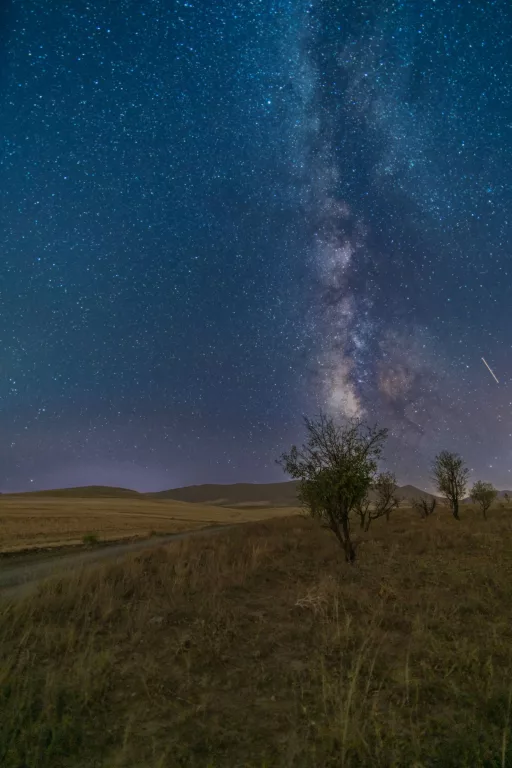
Photo: Pexels
High on the Roggeveld Plateau in the Northern Cape, at roughly 1 450 metres above sea level, this small Karoo town is surrounded by great swathes of dry landscape, mountains, sheep farms and some of the darkest skies in the country. It is remote enough to feel properly removed from everyday life, yet close enough to Cape Town to make a very good long weekend away.
The drive from Cape Town takes around four hours, depending on your route and stops along the way. From the N1, turn off at Matjiesfontein and follow the road into the mountains, where the landscape becomes increasingly dramatic as you climb towards Sutherland.
Sutherland is best known for two things: stars and cold. Winter temperatures regularly drop below freezing, and the town recorded a minimum of −16.4°C on 12 July 2003. But while the cold has earned it a reputation as one of South Africa’s coldest places, it is the skies that have really put this otherwise tiny Karoo settlement on the map.
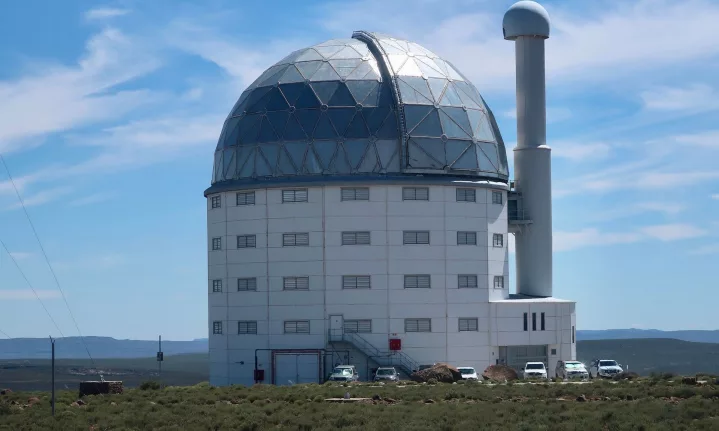
The South African Astronomical Observatory lies outside town, where the dry climate, altitude and exceptionally low light pollution create ideal conditions for astronomical observation. It is also home to the Southern African Large Telescope, better known as SALT – the largest optical telescope in the Southern Hemisphere.
But come to Sutherland only for the stars and you will miss half the story. This is a town of old stone buildings, Anglo-Boer War history, sheep farmers, Karoo lamb, Afrikaans literature, strange little roadside stops, mountain passes and a surprisingly interesting relationship with tulips. And, of course, there is that silence.
The church that became a wartime fort
One of the first places to look for Sutherland’s history is its large Dutch Reformed church in the centre of town. The church was completed in 1899 and designed by architect Charles Freeman, who was also responsible for the Dutch Reformed church in Graaff-Reinet. But its early history was anything but peaceful.
During the Anglo-Boer War, British troops occupied Sutherland and used the church as a fort and barracks. British graffiti can still be seen inside the building, while the ruins of a wartime fort remain on Rebelskop on the outskirts of town. The Anglo-Boer War cemetery can also be found as you enter Sutherland from the Matjiesfontein side.
Sutherland even experienced its own mini-siege, when a Boer force reportedly fired on the British-held town for around ten hours.
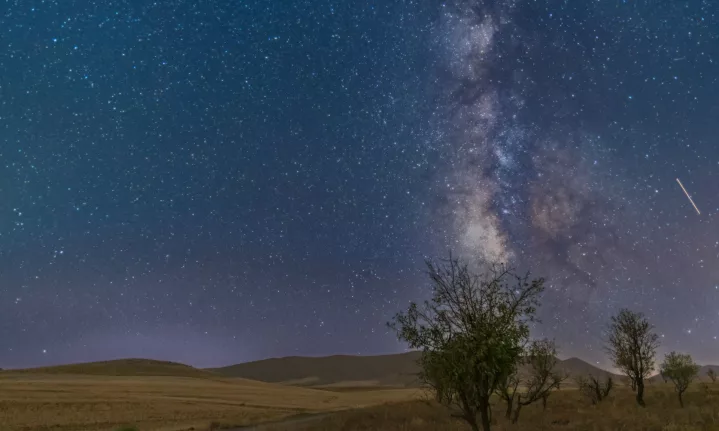
Look up: Sutherland’s famous night skies
This is the big one. Sutherland’s isolation is exactly what astronomers love. There is little artificial light, the air is dry and the observatory site sits high above the surrounding Karoo. These conditions make the area particularly well suited to astronomical observation.
The result is a night sky that can make even someone who normally couldn’t tell Orion from a garden sprinkler stop and stare.
Visit the Southern African Large Telescope
The Southern African Large Telescope, or SALT, is the star of the show. Its primary mirror is 11 metres across and made up of 91 individual hexagonal mirrors, each measuring one metre. It is the largest optical telescope in the Southern Hemisphere and one of the largest optical telescopes in the world.
SALT is used by astronomers to study faint and distant objects in the universe. Its huge light-collecting capability allows scientists to investigate objects that are far too faint to be seen with the naked eye.
And while you cannot simply wander into the research facility at night, visitors can take guided tours of the observatory during the day and learn about the telescope and the science being conducted there.
Go stargazing
The SAAO also offers night-sky experiences using visitor telescopes. These tours are weather dependent and seasonal timings can change, so it is worth checking the current schedule before you go.
You can also stargaze without heading up to the observatory. The privately operated Sutherland Planetarium offers digital planetarium shows and evening stargazing, while establishments such as Sterland offer their own guided astronomy experiences. Current tourism listings also include dedicated stargazing experiences at local accommodation and farms.
Take the word cold seriously. Even in summer, standing outside beneath the Karoo sky at night can be chilly. In winter, it can be downright brutal. Bring layers. Then bring another layer.
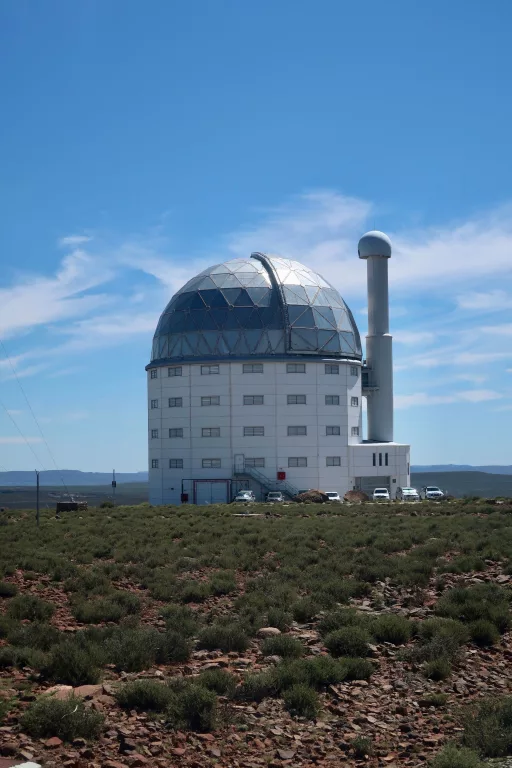
Photo: Pexels
Sutherland is becoming an astro-tourism destination
South Africa’s National Astro-Tourism Strategy identified Sutherland as an important astronomy tourism destination, noting that the area was already attracting between 14 000 and 15 000 visitors annually. It also recorded the growth of accommodation, restaurants, stargazing experiences and other tourism services around the observatory.
And that impact has continued. In 2025, SALT celebrated 20 years since its inauguration. Its annual report noted how the telescope had helped reshape Sutherland’s economy and society, with the town by then having 74 guesthouses employing nearly 500 people. The anniversary celebrations also included community events in Sutherland and highlighted the role of astronomy, education and tourism in the town.
Follow the Planetarium Highway
You don’t need to wait for darkness to get your astronomy fix. Along Sutherland’s main road are a series of planet plinths representing the planets of the solar system. They were designed to give visitors an idea of the relative sizes and distances involved.
It is an appropriately Sutherland thing to do: walk along a quiet Karoo street while thinking about the size of the universe. The route is often referred to as the Mile of Stars.
Look out for Salpeterkop
Not far from the observatory is Salpeterkop, an extinct volcanic feature that was last active around 66 million years ago. It is a particularly strange sight in this landscape: an ancient volcano in one of South Africa’s best-known astronomy destinations.
For those who want to do more than admire it from a distance, guided Salpeterkop hikes are currently offered in the area, including at Rogge Cloof. The hike adds a completely different dimension to Sutherland – instead of looking billions of years into space, you are looking back into the geological history of the earth beneath your feet.
Chase the snow
Sutherland in winter is a different animal. Snow is not guaranteed, but when it arrives, the town’s stone buildings, mountains and dusty roads can suddenly look more European than Karoo. Snowfall is erratic, so you cannot simply book a weekend in July and expect a white town waiting outside your guesthouse. But if the forecast is promising, accommodation can fill quickly.
The cold is part of the attraction, too. Sutherland’s −16.4°C record is impressive enough, but even ordinary winter nights can be properly icy.
Pack accordingly. And don’t be too disappointed if there is no snow. The clear winter skies are arguably the bigger spectacle.
Wander through town
Sutherland is small enough that you should not spend the whole weekend on the main attractions. Put away the itinerary for an hour and walk.
Look for old Karoo houses, stone buildings, Victorian stoeps, weathered walls and the little details that are easy to miss when you are driving through town. There are old cemeteries, handmade gravestones and reminders of the people who passed through this isolated settlement.
The Anglo-Boer War cemetery and Jewish cemetery are particularly interesting stops for anyone curious about the people who lived and died here. And then there are the old farmhouses and clay-roof houses – buildings that tell you something about how people adapted to the harsh climate long before modern insulation and underfloor heating came along.
Get out of town
Sutherland is wonderful precisely because the town itself is only part of the story.
Ouberg Pass
About 45 km from town, Ouberg Pass takes you through dramatic Karoo mountain scenery, with views across the lower-lying landscape and towards the distant Ceres Karoo mountains.
It is the sort of drive where the journey is very much the point. Take your time, stop when it is safe to do so and let the landscape do the talking.
Verlatenkloof Pass
If you arrive from the Matjiesfontein side, Verlatenkloof Pass is one of the memorable parts of the journey. The pass climbs dramatically into the Roggeveld and was designed by Thomas Bain, son of famed South African road builder Andrew Geddes Bain.
Skurweberg
For something more adventurous, Skurweberg offers 4×4 routes through rugged Karoo terrain, along with hiking and mountain-biking opportunities. The surrounding landscape is spectacular, but this is not a gentle little scenic drive. Check conditions, make sure your vehicle is suitable and book ahead.
Photo: Unsplash
Look for Karoo plants
Sutherland’s landscape can look stark at first glance, but look closer and there is plenty happening.
The Roggeveld takes its name from Secale africanum, a wild rye found in the region. Other interesting plants include the sterboom, olifantspoot and Daubenya aurea. The sterboom is particularly lovely when it flowers in spring, adding unexpected colour to an otherwise earthy landscape. And then there are the tulips.
Yes, Sutherland grows tulips
It seems slightly absurd to think of tulips in the Karoo. Yet Sutherland has a long association with them.
The story goes that Reverend M.B. Brink, who had studied in the Netherlands, recognised the similarities between the Dutch climate and Sutherland’s cold conditions and began experimenting with tulips. The flowers flourished in the cold climate, and tulip growing became an unusual part of the area’s agricultural story.
The bulbs are planted in autumn and generally flower in spring, making September a particularly interesting time to visit if you want to see some colour in the Karoo.
Eat Karoo lamb (and stay for something stronger)
After all that driving, walking and staring upwards, you are going to be hungry. Fortunately, Sutherland is sheep-farming country, and Karoo lamb is one of the obvious things to order while you are here. South African Tourism itself highlights traditional Karoo meals and lamb as part of the Sutherland experience.
For a sit-down meal, The Blue Moon is one of the established local options, while Karoo Kombuis offers traditional Karoo-style fare. Sutherland Hotel is another useful stop in the centre of town, particularly if you want that old-school Karoo hotel atmosphere rather than something polished and modern.
For something different, Discover Sutherland & Planetarium & Coffee shop combines tourism information and coffee with the town’s astronomy story – a useful place to start if you want to get your bearings.
And then there is Tjol se Gat. Tjol se Gat sits in an old toll house on the Verlatenkloof route and makes a particularly characterful stop on a road trip out of town. It is the kind of place that feels very Sutherland: remote, informal and slightly unexpected.
For the road, look out for farm-stall treats such as homemade pies, biltong, droëwors, rusks and preserves. The Karoo is not really a place for rushing through a drive-thru. Stock up, find a view and have lunch somewhere with more sheep than traffic.
Where to stay in Sutherland
For a town this small, Sutherland has a surprisingly broad choice of accommodation.
Rogge Cloof
For a more immersive Karoo stay, Rogge Cloof is one of the better-known options in the wider Sutherland area. It combines accommodation with the landscape and astronomy experiences that make the region special. Current tourism listings show 15 accommodation units with capacity for up to 50 guests.
It is particularly worth considering if you want your Sutherland weekend to be about more than sleeping in town and driving out to attractions.
Karoo Rustigheid Gasteplaas
If you would rather wake up on a working sheep farm than in the middle of town, Karoo Rustigheid Gasteplaas offers farm accommodation, hiking and biking trails and the sort of open Karoo scenery that makes the drive here worthwhile.
Blue Moon Guest House
The Blue Moon is in a quieter part of Sutherland and combines accommodation with a restaurant, making it a convenient option if you want to keep things simple.
Settle-Inn
If you want to be able to walk to the shops, restaurants and planetarium, Settle-Inn is centrally located in town.
Sterland
For astronomy enthusiasts, Sterland is worth a look because of its connection with stargazing. It is one of several local establishments that have built astronomy into the accommodation experience.
There are also plenty of self-catering options, guesthouses and farm stays. Current Visit Sutherland listings include Jack of the Karoo, Die Heks se Huis, Die Prokureurshuis, Stellar Dust, Pa se Engel and others.
When is the best time to visit Sutherland?
There is no single correct answer.
Winter is for snow, fires, icy mornings and brutally clear nights. If seeing snow is your main goal, keep an eye on the forecast rather than relying on a particular month.
Spring brings flowers, including the region’s tulips and sterboom, and the landscape starts to soften with colour.
Summer is warmer during the day, but the evenings can still be cool. The clear skies remain the main event.
And autumn brings cooler temperatures and excellent conditions for road trips, hiking and settling in for a long evening beneath the stars.
The skies are one of Sutherland’s constants. The weather, thankfully, is not.
ALSO SEE: Barrydale crowned South Africa’s best small town