



Palaeontologists have identified a new species of ancient marine crocodile in Egypt’s Western Desert, shedding light on the evolution of these formidable reptiles.

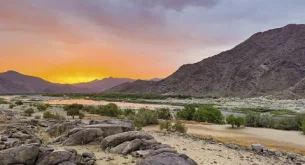
Egypt western desert/Ahmed.magdy.88/Wikimedia Commons
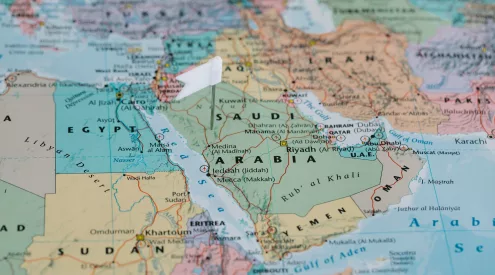
According to BBC Wildlife, the discovery, based on the remains of four animals excavated in the arid plains of the Kharga Oasis, suggests the species lived around 80 million years ago.
It is believed to be the earliest known member of the dyrosauridae family—a group of ancient crocodiles that once thrived in coastal and marine environments.
Named Wadisuchus kassabi, the predator measured about 3.5 to 4 metres in length. Its long, narrow snout and sharp teeth indicate it preyed on fish and turtles. The research, published in The Zoological Journal of the Linnean Society, provides key insight into how reptiles adapted and diversified after the extinction of the dinosaurs.
“The fossils of Wadisuchus kassabi were excavated near Kharga and Baris oases in Egypt’s Western Desert,” says senior author Professor Hesham Sallam of the Mansoura University Vertebrate Palaeontology Centre (MUVP). “They include two partial skulls and two snout tips from four individuals at different growth stages, giving us rare insight into how dyrosaurids developed.”
Using high-resolution CT scans and 3D surface models, the research team studied the animals’ anatomy in unprecedented detail. The species, roughly the size of today’s Nile crocodile, differs from other dyrosaurids in several ways. According to lead author Dr Sara Saber from MUVP, Wadisuchus kassabi had “four teeth at the front of its snout instead of five, nostrils on top of the snout for surface breathing, and a deep notch at the tip of the jaws.”
“These features show a gradual adaptation in the dyrosaurid bite, marking an important step in their evolutionary history,” Saber explains.
The findings also suggest that dyrosaurids originated in Africa earlier than previously believed—possibly between 87 and 83 million years ago—rather than 72 to 66 million years ago, as traditionally thought.
The name Wadisuchus kassabi combines “Wadi,” Arabic for “valley,” referencing the New Valley where it was found, and “Suchus,” after the ancient crocodile god Sobek. The species also honours Professor Ahmed Kassab, a pioneer in Egyptian palaeontology.
Belal Salem, curator of fossil reptiles and birds at MUVP, highlights the broader significance of the find: “The importance of Wadisuchus lies not only in what it reveals about crocodile evolution but also in what it reminds us of—Egypt’s Western Desert still holds untold treasures that preserve the secrets of our planet’s deep past. Our mission is to uncover these fossils and protect the fossil-rich sites from urban and agricultural threats. They are a legacy for future generations of Egyptians.”
Follow us on social media for more travel news, inspiration, and guides. You can also tag us to be featured.
TikTok | Instagram | Facebook | Twitter
ALSO READ: ENVI Addo opens the door to conscious travel in the Eastern Cape