



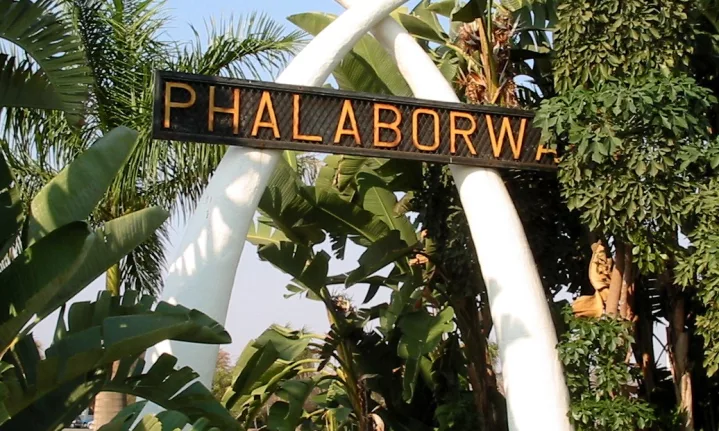
There are certain places that stop you in your tracks and make you wonder why you were in such a hurry to get to the destination to begin with. Phalaborwa is definitely one of them.
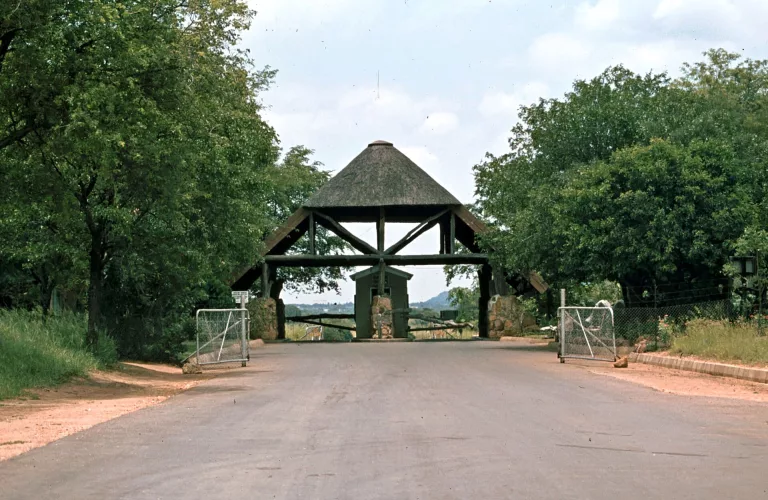
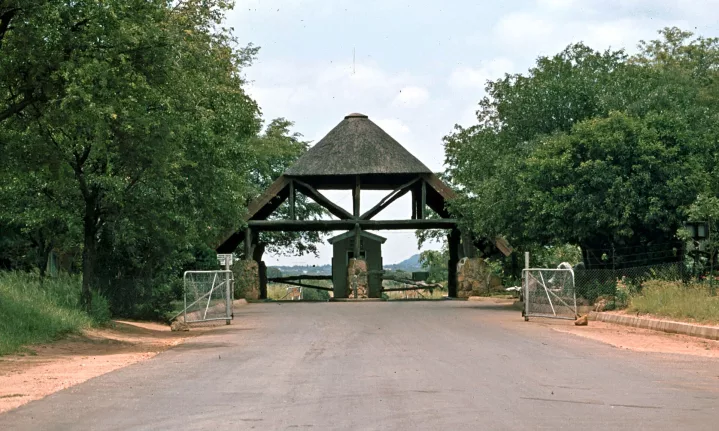
Phalaborwa Gate, Kruger National Park (1980) / qwesy qwesy / Wikimedia Commons
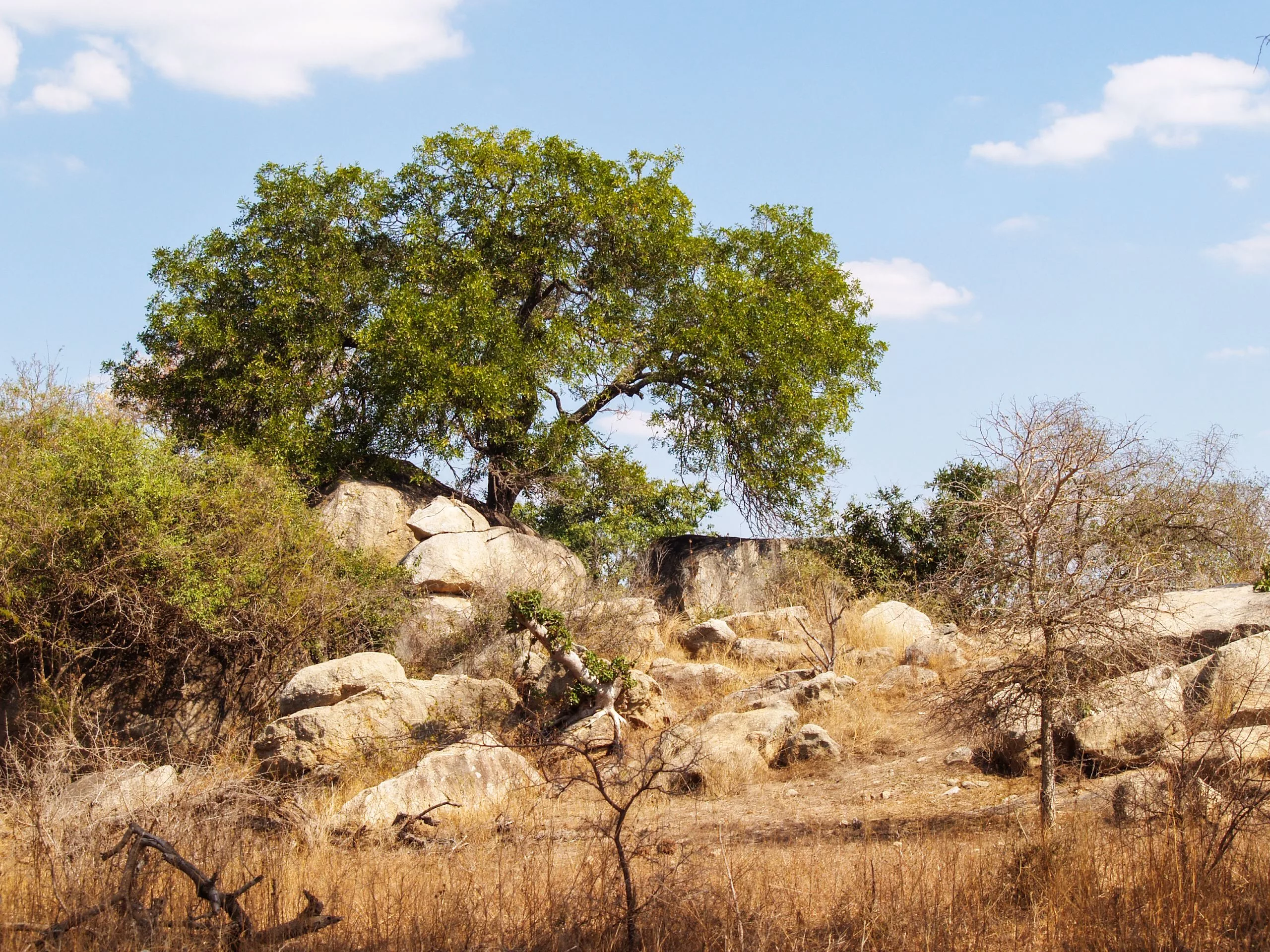
Situated in Limpopo’s Lowveld and just minutes from the Phalaborwa Gate of the Kruger National Park. This town exists alongside wildlife, rivers, ancient mining sites and one of South Africa’s most fascinating archaeological landscapes. It’s close enough to Kruger for an easy game drive, but there is plenty here to keep you around once you leave the park.
Phalaborwa’s story stretches back centuries. The Ba-Phalaborwa settled here in the 1800s, drawn by the region’s iron ore and its position near the Olifants and Letaba rivers. Mining and metalworking became central to life in the area, with iron goods traded along routes that connected communities across the Lowveld.
Today, those layers of history are woven into one of South Africa’s great wildlife destinations.
A town built on what lies beneath
Seperating mining from the identity or story of Phalaborwa is practically impossible.
The Phalaborwa Complex is approximately 2.05 billion years old and contains deposits of copper, phosphate, iron, and other minerals. During the mid-20th century, modern copper mining began developing and the town began growing around the industry. But long before the introduction to modern mining, people were already extracting and working metal here.
At the Masorini Ruins, about 12km from Phalaborwa Gate, reconstructed furnaces and homesteads tell the story of the Ba-Phalaborwa’s iron-smelting tradition. The site shows how sophisticated the region’s early mining and trading economy was, with iron products including spears, arrowheads and agricultural tools.
It’s a worthwhile stop for anyone seeking to understand the landscape beyond the wildlife it has to offer.
Then there is the Kruger
Phalaborwa’s biggest draw is, of course, its closeness to the Kruger National Park. In 1961, The Phalaborwa Gate opened and provided access to the central and northern parts of the park. The gate is only about 1km from town, making Phalaborwa one of the easiest places to center yourself if your priority is spending time in the bush.
Once inside, the landscape changes with the rivers, woodland and open areas, and the pace naturally slows. You could try to fight it, but in this setting, why would you?
The drive towards Letaba is exceptionally rewarding. Letaba Rest Camp sits alongside the Letaba River, with its sandy riverbed creating a green corridor through the surrounding bush. Elephants are a major attraction here, while buffalos, waterbuck and many other wildlife can also be seen.
For something quieter, Sable Dam is around 8km from Phalaborwa Gate. The hide overlooks the water and is majorly popular with birders, while the surrounding area attracts a wide range of wildlife. There is even a Sable Sleepover Hide for travellers wanting a more immersive experience night in the park, with no electricity, shop, restaurant or cellphone reception.
A different side of the Lowveld
While the wildlife is deeply alluring, you don’t necessarily have to spend all your time in the bush to encounter them. Phalaborwa also lends itself to slower days outside the park.
At the Hans Merensky Golf Course, visitors can play an 18-hole championship course alongside the wildlife of the Lowveld. Giraffe, hippo, crocodiles and an impressive variety of birdlife are among the species found around the course and its waterholes.
Alternatively, the rivers offer you another way to experience the landscape. The Olifants and Letaba have shaped settlements, trading histories, wildlife movements and tourism here for generations, and today they remain some of the defining features of the Lowveld.
Come for the wildlife, stay for the story
Phalaborwa works because it offers more than one reason to visit. You can come for the Kruger, spend a day watching elephants along the Letaba River, explore the remains of an ancient iron-smelting settlement, or simply take a slower day between game drives.
The town is also known as the home of the marula, a tree deeply connected to the region’s culture and economy.
That combination gives Phalaborwa a unique layer to it’s already captivating character. It’s a gateway to the Kruger, yes, but it’s also rich in history and has so much more to say beyond the arrival of safari vehicle.
The place before the gate
In Phalaborwa, the history is tangible. It’s beneath your feet, the rivers are part of the landscape and the Kruger is practically on the doorstep. It’s a place for game drives and exploration, but also for doing a little less. For lingering over the Lowveld landscape, following its history and allowing the bush to set your pace.
Perhaps that’s what makes places like Phalaborwa so easy to escape to. Nature doesn’t ask you to arrive as anything other than yourself. It doesn’t ask you to hurry, achieve or keep up. It simply exists, quietly and consistently, whether you are paying attention to it or not.
And maybe that’s what we are really looking for when we seek out places like this. Not just wildlife or adventure, but a chance to step away from everything that asks something of us and reconnect with something that asks for very little in return.
Phalaborwa may be the place before the Kruger gate, but it doesn’t feel like somewhere you simply pass through. Sometimes, the escape begins long before you enter the park.
Follow us on social media for more travel news, inspiration, and guides. You can also tag us to be featured.
Instagram | Facebook | Twitter | Spotify
ALSO READ: